The Spectator

Barometer | 28 February 2019

From our UK edition

Success of the SDP The breakaway Labour MPs would have an uphill task emulating the SDP’s early success. It fought its first by-election in the July 1981 — losing by 1,700 votes in Warrington. Yet that autumn it reached 50 per cent in the opinion polls, with by-election triumphs following in Crosby, in November 1981, and Glasgow Hillhead in March 1982. Eventually, 28 MPs defected from the Labour party but only one from the Conservatives. Early success, however, failed to translate into a breakthrough in general elections. In 1983 it won six seats (out of 23 won by the Liberal-SDP Alliance); that fell to five seats in 1987. Unfair fares Rail companies called for a simpler ticketing system.

Read all about it | 28 February 2019

From our UK edition

The announcement this week that Capital, Heart and Smooth radio are cutting back their local news shows might not in itself seem important — they have loyal audiences keen to know what’s happening outside London — but it’s part of a worrying trend. Over the past two decades, important powers have been devolved to regions and local areas, a process that began with Tony Blair’s regional assemblies and picked up with David Cameron’s ‘localism’ agenda. We now have several elected mayors, while local authorities have more responsibility over the NHS. The decisions that affect our lives are more likely to be taken locally than nationally. And yet at the same time the local media that once held local government to account has atrophied.

Portrait of the week | 28 February 2019

From our UK edition

Home Theresa May said in the Commons that if MPs voted on 12 March against her draft withdrawal agreement with the EU, they would be able to vote on 13 March on whether to leave the EU on 29 March without a deal and, if that was not supported, could then vote on whether to ask the EU to agree to an extension of negotiations under Article 50. Three cabinet ministers, Greg Clark, Amber Rudd and David Gauke, had earlier said they would defy government policy in order to vote for a delay; they were called ‘kamikaze cabinet ministers’ during a heated cabinet meeting. Mrs May had returned from an EU-Arab League summit at Sharm el-Sheikh, Egypt, where Donald Tusk, the President of the European Council, had said that ‘an extension would be a rational solution’.

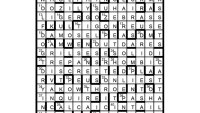
to 2394: Opening time

From our UK edition

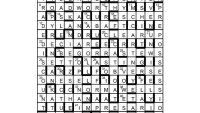
‘Never eat an oyster unless there’s an R in the month’ (Brewer). Eight unclued lights (in appropriate order) start with abbreviations of the months said to be safe for OSTREOPHAGES (1): SEPTIME (18), OCTANDRIA (26), NOVICE (34), DECELERATING (43), JANIFORM (11), FEBRIFACIENT (13), MARION (19D) and APRICOT (28).

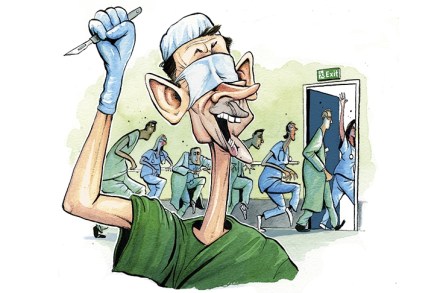
In normal times, the government would be boasting of falling unemployment

From our UK edition

At any other time, news that Honda intends to close its Swindon plant in two years’ time with the loss of 3,500 jobs would have been seen for what it is: a tragedy for those affected, their families and businesses it supports. But the story was used by both sides in the Brexit wars to prove their point. Certain Remainers saw it as proof of what leaving the EU will bring, while some Leavers were almost callous in the way they shrugged off the closure. When news like this is being exaggerated for effect, it’s hard to form a clear view of what’s going on. But through the fog, a pattern is discernible. The car-making industry is in great difficulties worldwide, as Ross Clark argued in our cover piece a fortnight ago.

Letters | 21 February 2019

From our UK edition

The breakaway seven Sir: ‘In both parties there are fools at one end and crackpots at the other, but the great body in the middle is sound and wise.’ One of the magnificent seven speaking this week? Well, the sentiment is surely present day, but rather they are the words of Churchill in 1913 trying to engineer a centrist national movement from ‘a fusion of the two parties’. In those days, it was the Conservative and the Liberal parties, but the history of the middle ground since then augurs poorly not just for the breakaway seven, but for those of us who feel disenfranchised by politics. We can argue who currently represents the devil and who the deep blue sea, but right now neither seems an attractive or palatable home.

Portrait of the week | 21 February 2019

From our UK edition

Home Seven MPs resigned from the Labour party and sat in the Commons (next to the DUP) as the Independent Group, or Tig. They were Luciana Berger, Ann Coffey, Mike Gapes, Chris Leslie, Gavin Shuker, Angela Smith and Chuka Umunna. The next day they were joined by Joan Ryan and the following one by three Tories, Anna Soubry, Sarah Wollaston and Heidi Allen. The Labour eight said they objected to anti-Semitism in the party, the security risk should Jeremy Corbyn become prime minister and Labour’s lukewarm attitude to a second referendum. Derek Hatton, who had been the deputy leader of the Militant-controlled council which set an illegal budget in Liverpool, was readmitted to the Labour party after 34 years.

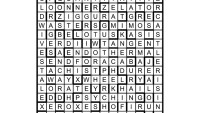
to 2393: Monster Mash-up

From our UK edition

HORROR FILM (1D) ACTOR (15) BORIS (10) KARLOFF (26), né PRATT (21A) died on 2 February 1969. Most famous for THE (7A) MUMMY (37), he was also in HOWARD HAWKS (1A)’s SCARFACE (24).   First prize M.J.

Full text: Heidi Allen, Anna Soubry and Sarah Wollaston’s Tory resignation letter

From our UK edition

Dear Prime Minister. It is with regret that we are writing to resign the Conservative whip and our membership of the Party. We voted for you as Leader and Prime Minister because we believed you were committed to a moderate, open-hearted Conservative Party in the One Nation tradition. A party of economic competence representing the best of British business, delivering good jobs, opportunity and prosperity for all, funding world class public services and tackling inequalities. We had hoped you would also continue to modernise our party so that it could reach out and broaden its appeal to younger voters and to embrace and reflect the diversity of the communities we seek to represent.

Ragwort: an apology

From our UK edition

An article published in The Spectator on 11 August 2018, Root out ragwort!, stated that the Wildlife and Countryside Act 1981 obliges landowners to stop ragwort spreading to adjacent grazing land. In fact, orders to stop ragwort spreading may be made under the Weeds Act 1959. We also said that the RSPCA ‘will prosecute’ the owners of horses found grazing among ragwort. We are happy to clarify that, while the RSPCA may prosecute such owners, they will only do so when horses have no choice but to eat ragwort. The article also stated that a website, Ragwort Facts, ‘insists there is no evidence that horses are being killed by ragwort’. The website in fact says ragwort ‘doesn’t really kill many horses’.

Letters | 14 February 2019

From our UK edition

We need a generosity report Sir: Your leading article bemoaning the lack of charitable giving in Britain misses the mark (‘The power of giving’, 9 February). It is not a lack of generosity that’s the problem, but a lack of acknowledgement. Our lifeboats and air ambulances are kept in operation by charitable donations. In 2016/17 Cancer Research UK raised £190 million from individual donations. First aid and other services at public events are supplied by volunteers. Every NHS trust in the land has buildings and equipment funded by charitable donations. Every art gallery, theatre and museum has facilities funded by donations.

Break point

From our UK edition

Even the most fervent Brexiteer would have to admit to being impressed at the cohesion and chutzpah of the European Union negotiating team. Michel Barnier talks as if it is the UK that most needs a deal, while the rest of the EU could carry on just as well as before, or better, without one, given that it would be able to attract business and investment away from us. For the EU to concede a trade deal, therefore, would seem to be little more than an act of kindness towards a fallen friend. As a diplomatic bluff, it is strikingly successful. But the economic reality is rather different. A free-trade deal benefits all. But if there were to be no deal, then what would happen?

Portrait of the week | 14 February 2019

From our UK edition

Home Theresa May, the Prime Minister, returned from a trip to Brussels and Dublin and hurried to the Commons to ask for more time to do something or other about the Irish backstop. The much-kicked Brexit can was expected to land in the parliamentary road again on 27 February, though the government envisaged no ‘meaningful vote’ until March. Oliver Robbins, Britain’s chief Brexit negotiator, was overheard in a bar saying that the choice might be between Mrs May’s deal or a delay to Brexit, to which the EU would agree.

David Harding’s donation to Cambridge is the perfect antidote to Jeremy Corbyn 

From our UK edition

The British are said to be among the most generous people on earth. When it comes to ordinary people scraping together pennies to give to children’s hospitals or donkey sanctuaries, this is unquestionably true. Yet when it comes to wealthy individuals using large slices of their fortunes to make transformative donations to institutions such as universities and schools, we are a long way behind America. Where are the Carnegies, the Rockefellers? We do have wealthy donors, but they are generally on a much smaller scale, and quite often feel inclined to make their donations anonymously, as if it were an embarrassment to be seen to be acting with generosity.

Letters | 7 February 2019

From our UK edition

Fawning over China Sir: In reading your recent leading article on Huawei (‘Red-handed’, 2 February), I feel I should point out that it is not solely the British government who have been wrong-footed by the rise of China. Here in Canada, Prime Minister Trudeau has long desired to open up Canadian markets to Chinese companies, going so far as to express admiration for the country’s ‘basic dictatorship’. The Chinese press even bequeathed him with a charming nickname: the Little Potato. Now, in the face of the Huawei charges, Mr Potato has been forced to change course and has fired his ambassador, John McCallum, after he defended Huawei’s Chinese executives rather than supporting Canadians who have recently been imprisoned in China.

The power of giving

From our UK edition

The British are said to be among the most generous people on earth. When it comes to ordinary people scraping together pennies to give to children’s hospitals or donkey sanctuaries, this is unquestionably true. Yet when it comes to wealthy individuals using large slices of their fortunes to make transformative donations to institutions such as universities and schools, we are a long way behind America. Where are the Carnegies, the Rockefellers? We do have wealthy donors, but they are generally on a much smaller scale, and quite often feel inclined to make their donations anonymously, as if it were an embarrassment to be seen to be acting with generosity.