Tanya Gold

Tanya Gold

Tanya Gold is The Spectator's restaurant critic.

A beautiful monster: the Aston Martin Vantage reviewed

The new Aston Martin Vantage is shorter and hotter than the DB11: a smaller, truer sportscar, though slightly less elegant. 'Gentlemanly' is what the copywriter calls the DB11, but this is a 'hunter' and 'predatory'. Ferraris, meanwhile, are a little too hot for me – though I accept that they are sublime, if Ferraris are your thing – and the Toyota Supra, which I love – even shorter, even hotter, much cheaper – doesn’t make quite the same impression on the A30. People (I mean men over 40) love Aston Martins. They view them as an expression of British pride, and coo over them like babies, by roaring past, overtaking, and slowing down, and then insisting you overtake them in turn. The whole encounter is managed by hand signals and engine snorts, and it is delightful.

Eat here now: Darjeeling Express reviewed

Darjeeling Express lives at the top of Kingly Court, just off Carnaby Street, which was once the world-famous embodiment of Swinging London but now seems the global capital of the sports shoe. No matter – Kingly Court, which is built in the shape of a medieval coaching inn, is a happy nook: it is shut away, which means you can’t see sport shoes from the window. It is small in scale; it is for Londoners in their thinning melting pot. Kingly Court already has a superb restaurant in Imad’s Syrian Kitchen. Darjeeling Express, newly opened, joins it on the second floor. My companion calls the chicken kati the platonic ideal of aa KFC wrap, and he is right It used to be a yoga studio, but I don’t let that bother me: the yoga hags have fled.

All mirrors and monochrome: Mister Nice reviewed

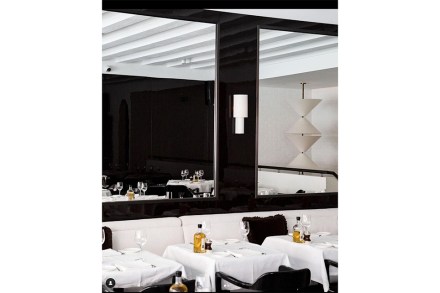
Mister Nice is not so much a restaurant as a pre-dawn thought flung into the drag between Piccadilly Circus and Oxford Street. Mayfair is becoming a drug for me, in that I both hate it and can’t stop eating here: a recent review was so poisonous that the owner telephoned, with fake bonhomie, to ask what I thought his next Mayfair site should be. Social housing, I replied: he won’t telephone again. Here is the next one: Mister Nice. It sits opposite 21 Davies Street, which houses Lynch Pest Control Mayfair, and has a motto from Louis de Saint-Just etched into the stone: Les mots juste et injuste sont entendus par toutes les consciences. And ‘Too many laws, too few examples’. Say what?

The cult of Morse

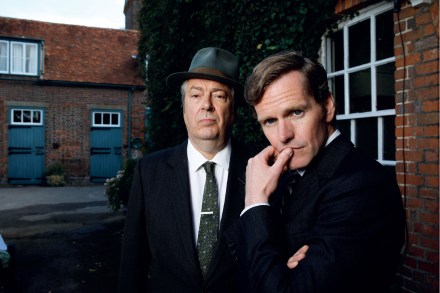
I am on the Inspector Morse walking tour in Oxford, which is led by a donnish man called Alastair. We look like the funeral cortege of a man whose death is under investigation. Oxford is a major character in Morse. I think of it as the antagonist. There is something very cold about the city, and unexpressed. Oxford’s novels are few – elves, talking lions, a bit of class. Its subconscious is rarely exposed: crime fiction must do it.  Three series grew out of Colin Dexter’s 13 novels: Inspector Morse (1987-2000); Lewis (2006-2015), in which Morse is a spectral presence, which suits him (he would be a good ghost); and Endeavour, the prequel (2012-23), which ended last week.

Michael Caine: no, Zulu doesn’t incite far-right extremism

Michael Caine is 90 this week, and he offers to accept questions by email, which he will then answer by email, as if we are communicating between galaxies. Normally this would bother me – gah, actors – but it is Michael Caine, so I can’t mind. Maurice Micklewhite’s invention Michael Caine – he named himself after The Caine Mutiny – is as luminous a piece of 20th-century British culture as Eleanor Rigby. There are some people you want to be happy. They deserve it.  He replies quickly: this is a functional man. What did I expect? He has been nominated for an Academy Award six times in four separate decades, and won twice, and he is still working. This is work.

Too perfect for Instagram: Cédric Grolet at the Berkeley reviewed

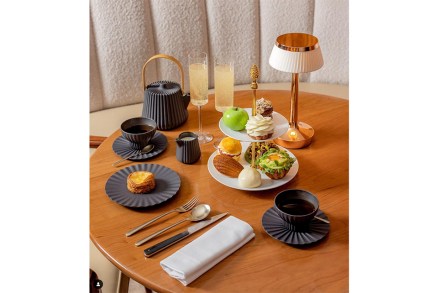
The Cédric Grolet at the Berkeley lives in the shiniest hotel in Knightsbridge, though I prefer the Mandarin Oriental, because it looks like the crown of a toppling king: no matter what they spend on it, it seems in danger of falling into Hyde Park. The Berkeley operates a pass the parcel for restaurants and, for now, Cédric Grolet (the World’s Best Pastry Chef 2017) has it. The cakes sit under glass domes like sculptures: a fake mango, a fake apple, a fake fried egg The Berkeley has a fondness for mad teas, which is, by itself, a cognitive dissonance, as I haven’t seen a fat person in Knightsbridge since the 1990s: perhaps they are all dead.

Style on a plate: Bentley’s Flying Spur Hybrid reviewed

Britain makes the world’s best luxury cars: we got there early, as we did with the Industrial Revolution, which is why our infrastructure is fraying, though our cars aren’t. You can argue about Rolls-Royce vs Bentley, and both be right, though the late Queen chose a Bentley for the state limousine and a Jaguar Land Rover for the state hearse in Royal Claret. (It was little discussed, for reasons of taste, but it was a very beautiful hearse. The claret was right.) Perhaps a Rolls-Royce is too elitist though; with minimal specification, it could be made to look like a crown. Here is the Bentley Flying Spur Mulliner: the Bentley saloon, a GT with four doors. You can take a 4.0 litre V8 or a 6.0 litre W12 engine, but electrification is coming: this is the 2.

An innate contradiction: Mount St Restaurant reviewed

The Mount St Restaurant lives above the Audley Public House on Mount Street, ‘a traditional neighbourhood pub, carefully restored, and where history and contemporary art collide’, and which once appeared in a Woody Allen film called Match Point. It is owned by Artfarm, founders of the Hauser and Wirth Gallery, who have created an art gallery above the pub and inserted a restaurant into it. I have been rude about Hauser and Wirth in the past. Its Somerset gallery featured a recording of a cow mooing in a former cowshed, which was insulting to the cows, but people do terrible things to farms nowadays: perhaps we could pay for Jeremy Clarkson’s screams in his tool shed. Here, though, is real art, and it is for sale: in acknowledgement of this the King came to the opening.

Murder most romantic: Burgh Island Hotel reviewed

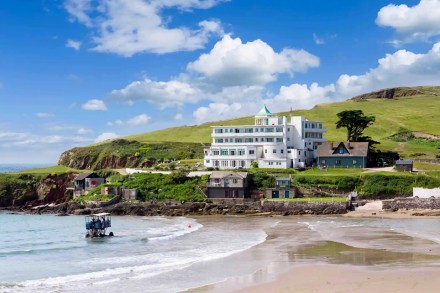
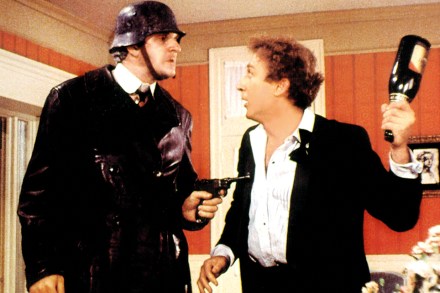
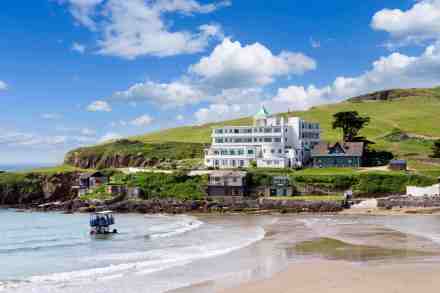
The Burgh Island Hotel lives on a tidal island in a deserted part of south Devon. The directions for visiting are very detailed. You drive along the deserted country road, and at a certain point – just before you lose mobile telephone reception – you must stop to telephone the hotel, and they tell you where to park your car on the mainland, and they will send the car across the beach and meet you in Bigbury-on-Sea. You drive on and eventually you see a brightly lit Art Deco palace under a cliff. It was built by a filmmaker called Archibald Nettlefold (Human Desires, The Hellcat), the heir to an engineering fortune. I think he was a very odd man. There is very little information about him, but he left this hotel, and there is probably an old monastery underneath it.

Still thrilling: the Wolseley reviewed

Restaurant and dog years are similar, and so the Wolseley, which is 20 this year, seems as if it has always been here. Other restaurants fall so swiftly you have only fragments of impressions. Breakfast on Bond Street in what feels like a one-bedroom flat belonging to Patrick Bateman. Pasta in a cellar with art, and they only care about the art. Salad at an Aslan-style stone table without mice. Nudity and berries. The original Wolseley was so good it spawned a slew of bad impersonators It was opened by Chris Corbin and Jeremy King, the best restaurateurs of the age, in the old Wolseley building at 160 Piccadilly, between Caviar House and the Ritz hotel. Wolseley is a forgotten brand of motorcar, and this was its preening showroom.

Better than the original: Scott’s Richmond reviewed

Scott’s, Richmond, is a fish, champagne and oyster bar, and a new branch of Scott’s, Mayfair. The original Scott’s was part of what became the Trocadero Centre. (Ian Fleming was a regular. He would take captured U-boat officers there to get them drunk and chatty. James Bond visited too.) It moved to Mount Street and was bombed by the IRA in 1975. This Scott’s is on the Thames at Richmond and is part of a development by the King’s favourite architect Quinlan Terry, who managed, in the mid 1980s, to throw up a Domestic Revival village on the water. It looks very weird, but I’ve always liked it because the alternative is worse.

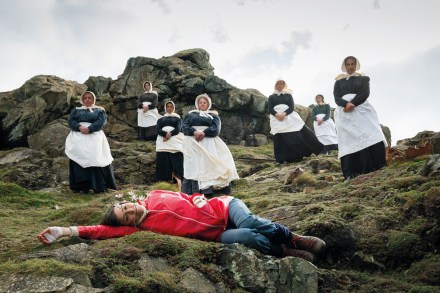
Petrol, seawater and blood: the horror of Cornwall

Penwith isn’t an island, but it feels like one. The heathland above the cliffs is filled with mine workings and Iron and Bronze Age relics: menhirs, fogous and quoits. To most visitors Cornwall is as simple as the GWR posters: gaudy pastels, happy children, ice cream. This Cornwall exists for six weeks in the summer holidays, the setting for a visitor’s bourgeois childhood – Enid Blyton’s Cornwall, principally – but it’s not the essential one. There are multiple real Cornwalls, and they have nothing to do with the tourist aesthetic, which the visitors bring with them. In this spirit, Cornwall’s famous writers are usually from outside: Virginia Woolf (Kensington); Daphne du Maurier (Hampstead); John le Carré (Dorset).

Rich pickings: Alex Dilling at Hotel Café Royal reviewed

Alex Dilling at the Hotel Café Royal is a minute restaurant above Regent Street, which has the type of British imperial architecture that looks most like a cake: that is, the most preening, deceptive and pale. For someone who did almost no exercise, the Prince Regent built quite a lot of roads and there my interest in him ends, like the road itself. In this hotel, which is very fine, stone cake vies with the tepid luxury of this age, which indicates invisibility, and with it guilt. There’s not much to do in central London nowadays beyond watching wealth aesthetics fight it out. The Hotel Café Royal used to be more interesting. This is the hotel where Oscar Wilde decided to sue the Marquess of Queensberry for libel. I think he was drunk. I hope he was.

Beyond satire: Richard Caring’s Bacchanalia reviewed

Bacchanalia is the new restaurant from Richard Caring – I sense he would like me to call it a ‘landmark’ or ‘super-restaurant’, so I won’t – in the old Porsche showroom on the corner of Mount Street and Berkeley Square, and all nightingales have fled. Caring, who has doused Britain with his metal Ivys, is the Ludwig of Bavaria of Mayfair. If he hasn’t bought the silver swan tap at Neuschwanstein Castle, he should open negotiations. I will review his interpretation when it appears: what will he do with the Bavarian Alps? Marshmallows I suppose. Or mashed potato.

The best Ukrainian restaurant you will find: Mriya reviewed

Mriya lives at the end of Old Brompton Road where South Kensington turns into Earl’s Court and, as if by some alchemy, becomes interesting. It is a Ukrainian restaurant, but something more touching too: a memorial and a retreat. It opened in August, in the sixth month of Putin’s war. Twelve of its 15 staff are displaced Ukrainians and their stories are common immigrant stories of renewal and loss. The kitchen porter is a mathematics teacher, the waiter is an English teacher, and the chef, Yurii Kovryzhenko, is one of the most famous in Ukraine. Mriya is the name of the largest cargo aircraft ever built, designed by Ukrainian engineers, which was destroyed by the Russians at the beginning of the war.

The new vandals

31 min listen

This week: In his cover piece Douglas Murray writes that museums are turning against their own collections. He is joined by the historian Robert Tombs to discuss whether a culture of self-flagellation is harming British museums (00:56). Also this week: For the magazine The Spectator’s assistant editor Cindy Yu writes that the tune is changing in China. She is joined by Professor Kerry Brown, director of the Lau China Institute at King’s College London to consider what the recent protests could mean for the Chinese Communist Party (13:24). And finally: Nicholas Lezard writes in The Spectator about how to beat London's expanding Ultra Low Emissions Zone. He is joined by journalist Tanya Gold to investigate an elegant loophole in the plans (24:56).

The rich complexity of Britain’s Jewish population

Of all the European countries that Jews have lived in, none has been so welcoming as Britain. There is a caveat: the first blood libel was in Norwich, of all places, in 1144, and after Edward I expelled us in 1290 we had to wait almost 400 years for Oliver Cromwell to ask us back. Jewish immigration to Britain was severely limited in the 1930s, as was immigration to British-controlled Palestine. Even so, Anglo-Jewry was – a handful of casualties from the occupied Channel Islands aside – the only community in Europe not ravaged by the Shoah, and Anglo-Jews are both peculiarly fortunate and haunted. My grandfather, a highly rational man, bought poison in 1940. He was going to kill his family if the Nazis reached them.

Another wasteland lost: Battersea Power Station reviewed 

The rude fingers of Battersea are repointed, and barely rude at all. The power station by Giles Gilbert Scott and J. Theo Halliday is no longer a wasteland to contemplate as you sit on the Waterloo to Shepperton night train. It has become a small town with shopping centre, restaurants and a pier on the river, so a middle-aged woman can get on an Uber Boat by Thames Clippers and pretend to be Cardinal Wolsey without others knowing it. I have only ever known it as a ruin and so approaching it from its Underground stop feels subversive, but then all subversion ends. It is glossy, tinny: a dinosaur skeleton painted in glitter with glass apartments stacked on the head and satellite glass apartments all around for fellowship.

Mark Galeotti, Katja Hoyer and Tanya Gold

19 min listen

This week: Mark Galeotti tells us why Ukraine has become a weapons testing ground (00:53), Katja Hoyer discusses Germany’s extreme monarchists (09:12), and Tanya Gold reads her Notes on … espressos (15:24).  Produced and presented by Oscar Edmondson.

Theme of despair: Drop’N Chicken at Chessington reviewed

Chessington World of Adventures sits in a bowl near the A3. I went in the 1970s when it was a zoo, home to some unhappy orangutans who lived in a cage which made me scream. Being a lonely sort of child, I hugged concrete dinosaurs in the rain. Now it is owned by Merlin Entertainments – a sort of National Trust for people who prefer rollercoasters to country houses – which is owned by a hedge fund that employs teenagers. We are here to feel fear because my son, who is nine, has never really felt it, which is a good thing: and Merlin Entertainments monetises this, offering fear for a price, with parking. I am Jewish, and queuing for fear isn’t my thing, but I like to consider myself a loving mother so here we are.