Tanya Gold

Tanya Gold

Tanya Gold is The Spectator's restaurant critic.

‘Vital but fraying’: Five Guys reviewed

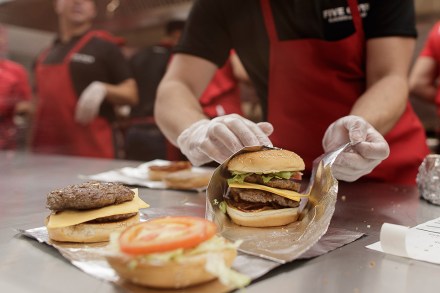
Five Guys is a burger house from Arlington, Virginia, based on the premise that if you can serve a drink, cut a fringe, or make a hamburger, you will always make money in America. Thirty years and 1,700 restaurants later, it sits on Coventry Street off Piccadilly, soaking up the alcohol of a thousand British stomachs. If central London is a strip-lit bin alley between palaces, this is its restaurant: vital but fraying. I am here because I will not eat at McDonald’s, even when I am sad. I do not think my McDonald’s burger is all from the same cow, and this disturbs me: I can eat one cow happily, but a multitude frightens me. McDonald’s doesn’t fill you either, no matter what you eat: is it just an idea?

‘Five stars, no notes’: Arlington reviewed

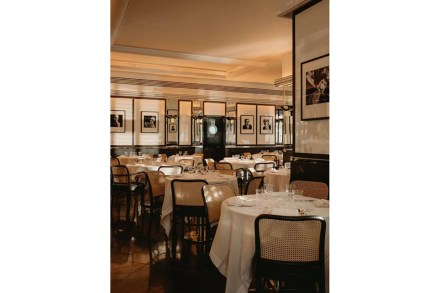
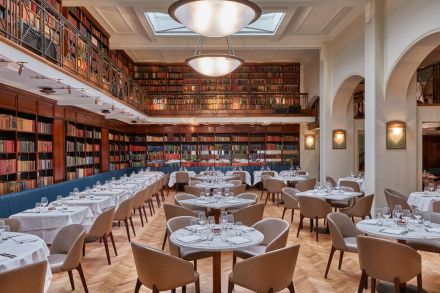
Arlington is named for the 1st Earl of Arlington and his street behind the Ritz Hotel. It used to be Le Caprice, which was opened in 1947 by the Italian Mario Gellati, who would not, by the new rules, get into Britain now, but this is not a column about pain. In 1981 Le Caprice was taken over by Chris Corbin and Jeremy King, and it became the most fashionable restaurant in London. Princess Diana dined here and when Jeffrey Archer was released from prison, he ate here. None ofthese dishes could be improved. Five stars, no notes After an interregnum from Richard Caring, under which Le Caprice closed in 2020 – it could not compete with Caring’s mad themed restaurants across Piccadilly – Jeremy King, who is more emotional and skilful than most restaurateurs, returned here.

James Heale, Madeleine Teahan, Tanya Gold and William Moore

23 min listen

On this week’s Spectator Out Loud: James Heale suggests that the London mayoral race could be closer than we think (1:02); Madeleine Teahan argues that babies with down’s syndrome have a right to be born (6:15); Tanya Gold reports from Jerusalem as Israel’s war enters its seventh month (12:32); and William Moore reveals what he has in common with Kim Jong Un (18:25). Produced and presented by Patrick Gibbons.

Even pilgrims are staying away from Jerusalem

Israel has a new train line: 25 minutes from Ben Gurion airport to Jerusalem. The Christian pilgrims would love it but they’re not here. Instead, there are soldiers and visiting American Jews. My taxi driver says American Jews come with thousands of dollars of cigarettes and drive around looking for soldiers to give them to. He says American Jews love Israel more than Israelis. Then he moves his machine gun – it’s on the front seat – and says: ‘Welcome to Israel.’ The American Jews go south to the massacre sites of 7 October to stare at the bullet holes. I don’t. You can’t forget the war here. At the airport you are greeted by photographs of hostages. They are up in windows and on street corners. Some say, ‘Bring them home NOW’, an anti-Netanyahu message.

‘Can’t help but exude warmth’: Paper Moon at the OWO, reviewed

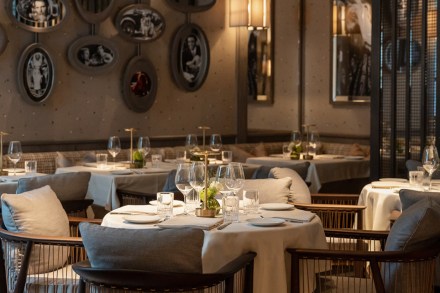
Paper Moon is the Italian restaurant inside the Old War Office on Whitehall, now a hotel called Raffles London at the OWO. It has nine restaurants and bars, because it is a Disneyland for the 1 per cent in the fraying centre of the British state, which is enraging and hilarious. I reviewed Saison in November and found it as chilly and finessed as the British state pre-crisis. OWO reminds me of a theme park I visited in Georgia, Russia, two decades ago in winter. It was a fine endeavour but pointless, the happy children had fled. You can’t have a grand hotel inside a post-Imperial bin fire. It makes no sense. Paper Moon is grey, and Art Deco, of course: the pre-calamity aestheticof choice Paper Moon is rather better than Saison: perhaps Italian food can’t help but exude warmth.

‘The interiors are happily insane’: Dear Jackie, reviewed

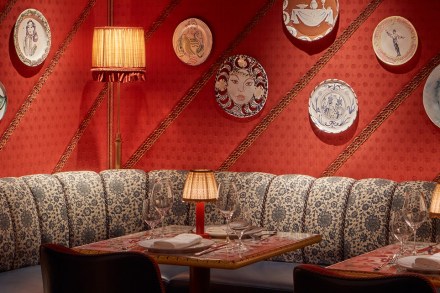
Dear Jackie is the restaurant in the new hotel Broadwick Soho on Broadwick Street in Soho, which is most famous, if you are an infectious diseases nerd, for being the site of the 1854 cholera outbreak and its cure. Dr John Snow isolated it to the street’s water pump, noted local brewers were immune, and proved cholera is not airborne. When children stopped dying, Soho eased into its time of moral rot. This is as spirited an attempt to re­animate the 1970s as I have found beyond musical theatre This is a changeable thing. Drama fled Soho in the 1970s, and Broadwick Soho is an attempt to put it back. This is no generic hotel.

‘As good as you will find in London’: Noble Rot Mayfair, reviewed

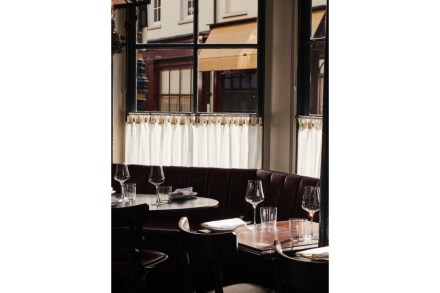
Noble Rot, which is named for a sickness that afflicts grapes, a self-aware name for a restaurant in London, is becoming a chain. Don’t get me wrong. The Rots in Lamb’s Conduit Street and Greek Street (which replaced the Gay Hussar that died in sympathy with the intelligent left) are two of the best restaurants we have. My only complaint is that, like the Plastics in Mean Girls, they know how lovely they are and have their own promotional magazine. This food has a loving intensity to it, and it is as good as you will find in London Now they have expanded into Mayfair – but the least horrifying part, which is Shepherd’s Market.

Airbnb has ruined Cornwall

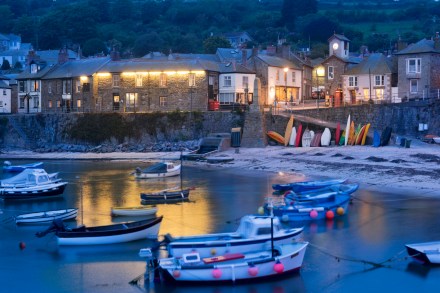
Michael Gove’s restrictions on Airbnb are too late for Mousehole, the next village along. It mirrors Dull-on-Sea in The Pirates Next Door: ‘Too busy in the summer and in winter it shuts down’. Last year there was so much traffic in Mousehole that the bus couldn’t get through, and it dumped trippers at the top of the hill. Down by the harbour, at the bus stop, I saw a Sainsbury’s van instead. And that, to paraphrase Niall Ferguson, is how empires fall. ‘What about my view?’ is their worldview. My husband calls them coffin dodgers Any analysis of the impact of Airbnb on Cornwall must include the question: what happened to staying in hotels? As a child I stayed at the Treyarnon Bay Hotel near Padstow.

‘You can stare at a cow you will soon eat’: The Newt, Hadspen, reviewed

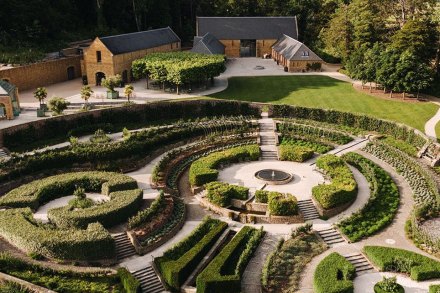
The Newt is an idealised country house in Somerset which won the World’s Best Boutique Hotel award last year. It is small, beautiful and mind-meltingly expensive, even for the Bruton Triangle and its mooing art galleries. Poor Somerset! It never wanted to be monied enough to have a triangle, but the rich make their own mythology. Since they paint every-thing grey – and now green, I learn at the Newt – they need it. A triangle fills the day. The Newt is for people who think that Babington House is stupid (it is) and though the Newt has its own issues – like the King, its taste is almost too immaculate – you never feel that the chief executive of a media conglomerate will bounce past you on a space hopper eating a fishfinger sandwich and shouting into an iPhone.

‘Is it France? I don’t know’: Hôtel de Crillon, Paris, reviewed

Hôtel de Crillon sits on the Place de la Concorde, a vast square renamed for bloodshed, then the lack of it – it was the Place de la Révolution, with knitting and bouncing heads. Now it is placid, and the Crillon is the most placid thing in it. No one does grand hotels like the French, except perhaps the Swiss, who have nothing better to do. Hôtel de Crillon was one of twin palaces commissioned by Louis XV before the French butchered his grandson and his wife outside them: it looks like Buckingham Palace but prettier and with possible PTSD. It has been a hotel for 115 years and next to it our Ritz and Savoy look grubby, needy even, but they were built for the bourgeoisie. They have a different kind of grandeur, a kind I prefer.

In praise of the big, fat Range Rover

Cars mirror humans: that is what they are for. (If they didn’t, everyone would drive a 2012 Ford Fiesta). And so, cars are obese too now. They are growing 1cm wider every two years, and only half of new cars now fit into on-street parking spaces, though car parks – presumably elitist! – fare better. Hellish, isn’t it? If I could choose a car to drive – Aston Martin aside – it would be a Range Rover I could fill this page with the horrors the Sports Utility Vehicle inflicts, particularly in cities. It’s a trope but in my experience it’s young men in hot hatches who reverse round corners at 30mph and, as such, exist in a state of pre-manslaughter, who are the danger. It’s true that the SUV driver who used to reverse into our drive in Hampstead each morning at 8 a.m.

‘I pity MPs more than ever’: the Cinnamon Club, reviewed

The Cinnamon Club appears on lists of MPs favourite restaurants: if they can still eat this late into a parliament. It lives in the old Westminster Library on Great Smith Street, a curiously bloodless part of London, and an irresistible metaphor wherever you are. When once you ate knowledge, you now eat flesh, but only if you can afford it. Now there is the Charing Cross Library, which lives next to the Garrick Theatre, and looks curiously oppressed. Perhaps soon it will be a falafel shack and knows it. There is also the Central Reference Library, which could be a KFC, and soon will be. Public spaces are shrinking. They will all be online soon, and we will see how that goes. (It will be bad.) The Cinnamon Club, which identifies as ‘fine dining’, seeks finesse. What for?

The strangeness of Charles III

There are two narratives in Robert Hardman’s Charles III. The first is an account of the King’s first year on the throne. This is superbly researched and fascinating. We learn, for instance, that when Queen Elizabeth II died, the state trumpeters were on a plane to Canada and the bearer party was in Iraq. (Their first order on their return was to get a haircut. Their second to carry a comb.) The second is about magic, but since Hardman doesn’t admit this explicitly, the book has the flavour of an intellectual trying to cast a spell. I don’t understand why royalists can’t just say that a monarch occupies a space to prevent something worse occupying it. Monarchism is practical, is the royalist line, considering what people are. It is republicans who are dreamers.

‘The lasagne is perfect’: Hotel La Calcina, Venice, reviewed

Pensione La Calcina is one of John Ruskin’s houses in Venice. He stayed here in 1877, after completing The Stones of Venice and going mad, and there is a plaque for him on the wall: a stone of his own. It is next to the Swiss consulate on the Zattere, but never mind them. I think the Zattere is for people who have tired of Venice. It has a view to the Giudeccacanal, and the waterbus to the airport: to the exit. You can breathe here. I am staying in San Marco, where I can’t. My son falls from a water gate into a canal, and Italian grandmothers tut at us, and we get sick, which my friend says is ‘very chic in Venice’. Before we get sick, we eat at La Calcina.

Cornwall’s fishermen are being drowned by bureaucracy 

Bill Johnson is the assistant harbour master in Mousehole and skipper of the pilot Jen, a small boat of the inshore fleet. I know him because in summer, when tourists fill the tiny harbour with pleasure craft, he stands on the wharf offering conversation and advice. He is, of course, regarding the wreckage of Mousehole as a centre of the pilchard industry and home to Cornish people. A century ago, the harbour was a forest of masts: now just six fishing boats sail out of here. The rest are kayaks and paddleboards. But Bill is a kindly man, and he smiles on them. Fishermen were poster boys for Brexit, much lauded, discussed and used. It was easy to persuade them to the cause: fishermen understand freedom.

‘The chocolate soufflé is too good for people’: Pavyllon at the Four Seasons Hotel, reviewed

One in, one out, as Rick says in Casablanca. Le Gavroche, which was the first restaurant in Britain to win three Michelin stars – and this was before Michelin stars indicated poor mental health in gifted chefs – closes in January, which is serious news in the land of London restaurants: a kind of Congress of Vienna with Michel Roux bowing out with the blood of infinite chickens on his knife. I don’t love Le Gavroche the way other critics do but I admire it, even if it means ‘urchin’, which is not witty when you consider its prices. There was a scandal involving staff’s tips going to management – an ongoing obscenity, though this one was resolved – and I also think that if you desire French food you could just go to France. It’s not far, at least in miles.

‘This is generous food’: The Salt Pig Too, reviewed

Swanage is a town torn from a picture book on the Isle of Purbeck: loveliness and vulgarity both. It is famous for fossils, Purbeck marble, a dangerous-looking small theme park, and Punch and Judy. My husband is very attached to Swanage, because it exists in a state of 1952 – in homage to this, it has a branch line with a station from The Railway Children. In the summer, on the beach, you see fat sunburnt people with handkerchiefs on their heads. I didn’t think they existed anymore: I thought they were all dead. Some parts of Dorset have gentrified, though this doesn’t really describe what has happened to Sand-banks, the Bishop’s Avenue of the coast. That is closer to calamity, or invasion by space aliens who love concrete and glass.

‘The potential for jeopardy’: Pullman Dining on the Great Western Railway, reviewed

I am lazy and nosy, and so I spend a lot of time on the GWR service from Penzance to London Paddington. Each journey is a play with a unique atmosphere. Some are seething, particularly in summer when an eight-carriage train cannot fit everyone who wants to swim in the ocean but dine in west London that same night. Some are non-committal; some restful. I rage at usual things: luggage in the disabled space, which is almost always occupied by the non-disabled, though they may be fat; videos played without headphones; young people swearing at older people because they grapple with a rage they cannot understand. You can measure the social contract on any long train journey, and I have. It’s broken.

‘The food is as good as you will find in London’: Saison at Raffles London, reviewed

The Old War Office (bad acronym OWO) on Whitehall is now a Raffles hotel: you can stay in Winston Churchill’s office if that helps you sleep at night. I’m not sure I could, but this is the rational endgame of privatisation: you can sleep inside British history, which is quite close to sleeping through it. War isn’t the jolly marketing riff it was five weeks ago, and the atmosphere in the OWO reflects this. Even so, you need the money of a (fleeing) Tory donor to stay here, and perhaps they won’t notice that pre-war is outside their door in the form of children setting off fireworks and picking fights with the police during marches ‘for’ Palestine.

‘They do better spaghetti bolognese in Hampstead for a tenner’: The Lobby at The Peninsula, reviewed

The Peninsula is a new hotel at Hyde Park Corner. It is part of the trend for absurd expense: rooms start at £1,400 a night and express the kind of preening mono-chrome blandness that will be the London of the future. It is a building of great ugliness – I would type the names of planners who allowed it, but on these pages it is incitement to violence. It sits on its six-lane round-about between the Lanesborough hotel and a long peeling red-brick late Victorian terrace that once appeared in a Stephen Poliakoff film about how things always fall apart. This food knows nothing of beauty, delicacy or comfort: it’s a grift It isn’t really a hotel, I think, staring: it doesn’t have that much identity.