Tanya Gold

Tanya Gold

Tanya Gold is The Spectator's restaurant critic.

A family affair | 25 July 2019

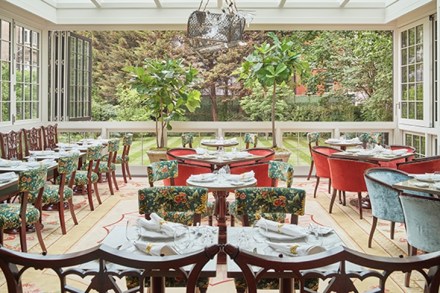
The Goring is a tiny grand hotel near Victoria Station and the Queen’s garden wall. Victoria is not pleasant — traffic fumes —but this only makes the Goring more determined to be the grandest of all London’s tiny grand hotels. That it is in the wrong place — it should be in Mayfair in 1858 — makes it more histrionic. It is another daydream made of class anxiety; another hotel that voted for Brexit. It was built in 1910, the first hotel, says the website, to be entirely ensuite. Did the Savoy use buckets? Its windows are fantastically clean, which must be agonising this close to Victoria Coach Station. It has two doormen dressed in red and gold, like Jewish sofas. The Goring is covered in bunting, like a fête that never stops.

Fashion plates

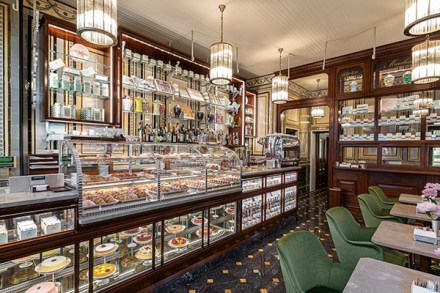
The Prada Café is both a cake shop and a historical inevitability. It sits on Mount Street, almost opposite the Connaught hotel, and between what used to be Nicky Clarke’s hairdressing salon and a luggage shop so expensive it has a queue outside. People are queuing up to explore late capitalism through the prism of luggage but, that aside, they seem quite disinterested in the world around them. Perhaps they are marvelling at their own stupidity in yearning for a £1,000 bag with no zip. The Prada Café is a nickname. Its real name is Patisserie Marchesi 1824 and it travelled from Italy to the silliest part of Mayfair to join the vogue for fashion cafés in London.

Feeding the five thousand

Decks is a restaurant built on the Sea of Galilee. It is Benjamin and Sara Netanyahu’s favourite restaurant (it is occupying the sea, if you like) and it is huge: two storeys of decking (hence ‘decks’) walking into the sea where Jesus of Nazareth fed his 5,000 Biblical Corbynistas. The view is of young Jewish girls jumping up and down in unison on a disco boat. From a distance it looks like one happy creature with 800 legs. I came from the north where bluffs — once military installations — are tourist attractions with cafés. I stood on the Golan Heights and peered into Syria, and then I went to the new settle-ment named for Donald Trump.

Perfectly preserved

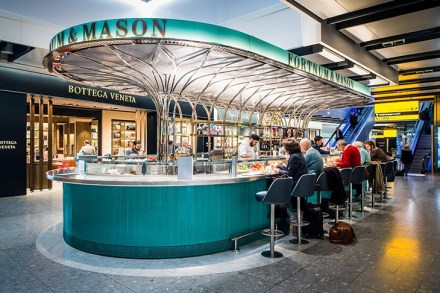
I am obsessed with Fortnum & Mason, and the jams of the England that never was but could be. It is, of course, a class-based obsession for the lower-middle to the upper-middle classes (but not below or above): a very pantomime of Englishness. It is, essentially, imperialism made gaudy with jam. Where do you think all those hampers were going in 1880? Kent? So Fortnum & Mason is rather more than a department store with a pleasing clock and a faint air, even now, of Grace Brothers. It serves also to make rootless cosmopolitans — I mean Jews obviously — feel safe, even if we are supplanting, by demonic and any other means to hand, everything that is noble in the fake socialist dystopia that is the Labour party.

Children of the revolution: Protest has become so puerile

As the left sinks into psychosis, what remains? The answer is sugar, profanity, snacks and toys. Protest now resembles Clown Town, a dystopic toddler play barn near Finchley Central. To mark the American President’s trip to London this week, the Donald-Trump-in-a-nappy balloon rose again. There was also a Donald Trump robot. It sat on a toilet in Trafalgar Square and farted. ‘The fart we couldn’t get from him,’ said its creator, Dom Lesson, ‘so we had to use a generic fart’. Meanwhile, a man mowed a penis shape into a lawn to protest against climate change. He was hoping that Trump might see it from his aeroplane. The fashion, when faced with a politician you despise, is to attack them with milkshake.

Children of the revolution

As the left sinks into psychosis, what remains? The answer is sugar, profanity, snacks and toys. Protest now resembles Clown Town, a dystopic toddler play barn near Finchley Central. To mark the American President’s trip to London this week, the Donald-Trump-in-a-nappy balloon rose again. There was also a Donald Trump robot. It sat on a toilet in Trafalgar Square and farted. ‘The fart we couldn’t get from him,’ said its creator, Dom Lesson, ‘so we had to use a generic fart’. Meanwhile, a man mowed a penis shape into a lawn to protest against climate change. He was hoping that Trump might see it from his aeroplane. The fashion, when faced with a politician you despise, is to attack them with milkshake.

A princess of greasy spoons

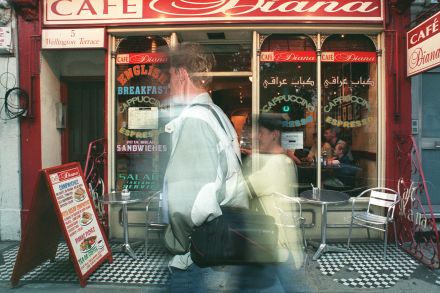
Café Diana is a Princess Diana-themed greasy spoon in Notting Hill Gate. It is a mad place, but it is still the sanest part of Notting Hill because it has the integrity to state its madness bluntly. There is a huge photograph of Diana smiling in the window because she was happy to collaborate in myth-making of any kind. She delivered this photograph herself, and this café returns her love. Its website, which is formal, like a fragment of the Almanach de Gotha that flew away, remembers that she was Baroness of Renfrew when most people never knew it or forgot. Café Diana is more thrilled by the object of its devotion than the average themed restaurant.

It’s no surprise that Jamie Oliver’s restaurant empire has collapsed

I am not surprised that Jamie Oliver’s restaurant empire has collapsed into administration. I reviewed his flagship restaurant on Piccadilly, Barbecoa, in 2017, and damned it because the food was bad and the atmosphere non existent. (Well, it was almost empty; you cannot create joy in a void). I knew Oliver was in trouble before that when I ate – reluctantly, but not everyone is a food critic – at Jamie’s Italian in Victoria in late 2016. It was, like Barbecoa, queasily large, the food was bad, and, again, it was almost empty. The punters may have been buying Oliver’s cookery books but they weren’t dining at his restaurants. Or if they did, they only went once, and there is no lower praise.

Tantrums and tabbouleh

Ergon House is an epicurean boutique hotel in downtown Athens. (I quote the blurb — I never write ‘boutique’ willingly.) Did Pericles know that Athens had a downtown? I shall dispense with the politics, except to say that we should return the Parthenon friezes, for it’s lonely on the Acropolis, and only a fool would insult Athena, the most interesting of the Olympian gods because she was less of a shagger than Zeus. Likewise, the next time the Venetians complain about cruise ships ruining their mouldering city, remind them that they blew up the Acropolis during a war with the Turks. During the Grand Tour it looked like a Cornish garden, but nowadays they are trying. They lay rubble in rows, or in stacks, and put plastic tape around them.

The dark side of Soho

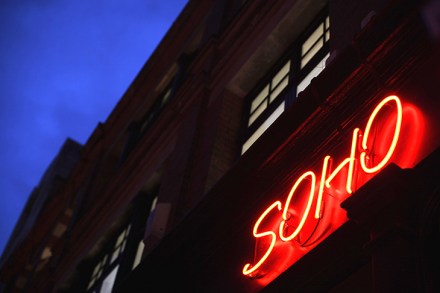
Each suburban soul yearns for the Soho of their youth. It isn’t that Soho was better in the 1990s when I invaded the Colony Room, twitching, and took a fag off Sarah Lucas. It is that I was. This was the view of a friend after I last wrote on Soho restaurants. We once ran holding hands through the sprinklers in St James’s Park laughing at Peter Mandelson, who was passing with his dog, and that is my memory of the Blair years. So Soho, which is thick with metaphor anyway — its very name is a hunting call: death for one and ecstasy for another — is a district to measure your age. The new buildings barely matter in this reasoning, even if I hate them. The stones — and the possibilities — remain. You can’t erase the energy of that much bad sex.

Top brass

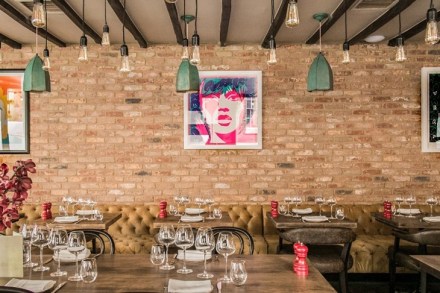
Bellamy’s is a Franco-Belgian brasserie in Bruton Place, a dim alley in the charismatic part of Mayfair; the part that has not been ruined. There isn’t much you can do with an alley except blow it up. It feels like a survivor from a more ancient time: 2004. Its rivals from that time are broken or gone. Annabel’s is now enormous. The Ivy is a franchise like KFC. The new generation of fashionable restaurants have glittering statuary by cretinous artists, professional PRs and spin. They are ideas. What use is an idea when you want three courses of French--Belgian cuisine for £29.50 a head in central London? Bellamy’s is named for the club in Evelyn Waugh’s Sword of Honour trilogy.

Garlic and easy listening

I grew up in south-west London in the 1970s when Italian restaurants had exposed brick walls and paper tablecloths in red and white squares and giant pepper pots and were owned by people called Franco who slapped your father on the back. The lasagne came in individual dishes, oozing deep red tomato sauce so hot it stuck to the edges of the dish and burnt your tongue. You cried the first time, but not again, because you loved Spaghetti Junction more than your own home. The perfect Italian restaurant was fixed for me then, in 1979, and that was it, because restaurants are about joy, not food. And so I never liked their high-street descendants: Carluccio’s and Jamie’s Italian. The first was too pale and interesting, and the second too sloppy and disinterested.

Chop off the old block

I love the drug of television, which is slightly less awful than the drug of social media because the conversation is one way, and so I have been rewatching Whitechapel. It’s a drama series about murder, and possibly the supernatural, set in Whitechapel, and it is slightly rude to its residents because it posits the idea that Whitechapel is the gateway to hell. It is mostly set in the coalition years, but it has an ancient aesthetic. People in hipster suits are butchered horribly; the east London churches of Nicholas Hawksmoor lurk wonderfully; murders take place in courts and alleys which I am certain have been glassed over in life, and sold on. Is anywhere in east London remote enough for murder now?

Ducks and bills

Imperial Treasure is a restaurant in the part of St James’s where Leopold von Hoesch, the German ambassador to George V, buried his dog Giro after Giro electrocuted himself by eating a cable. (Everyone is a food critic. Giro was merely an unlucky one.) And this seems apt. Because it’s rare to see people in St James’s these days. Dog bones and tourists and BBC crews shooting dramas in which actors are spying or arguing about politics are multiple. I wouldn’t be at all surprised to see Benedict Cumber-batch pretending to be Liz Truss pretending to be Josip Tito. But not real people. They have all gone, presumably to Zone 3. Or they have died of Brexit-related ennui and despair. Not that this is a column about alienation disguised as a restaurant review.

‘Brexit shows democracy doesn’t work’: An interview with Titania McGrath

Titania McGrath, 24, is a radical intersectionalist vegan activist, feminist slam poet and the author of Woke: a Guide to Social Justice. She won’t meet me in person for security reasons – she fears doxxing – or send me a photograph of her face. Rather, she consents to an interview by email from her gîte in the Buis-les-Baronnies district of France, where she is “working on a new anthology of slam poetry which will end the patriarchy” in the nude. This is from her poem Cultural Appropriation: Plunderbeast of history. My ancestors scream in your hollow wigwam, Ghostrolling in the ectoplasm of your hate. I staunch the flow of simpering tribal sauce, A digital sombrero clings deafblind To a face falsely smeared in a coalish hue.

Notting Hill misanthropy

A serious restaurant for serious times: the Ledbury in Notting Hill. It’s a good time to do it, as the dreams of the Notting Hill set crumple to dust and Jacob Rees-Mogg rides out in his stupid hats. It has sat in its former pub on Ledbury Road since 2005. It won — and has held for seven years — two Michelin stars. It has featured in the gruesome S. Pellegrino World’s 50 Best Restaurants List, which is, among other things, a rebuke to tap water. Its most interesting moment was during the riots of 2011, when the nation conspired to make David Cameron return from his summer holidays early. Annoying David Cameron is always fun, because he takes himself very seriously.

Candace Owens and the rise of the know-nothing public intellectual

From our US edition

Adolf Hitler ruined nationalism for everyone, says Candace Owens, which is something of a niche complaint. (She had nothing to say about the toothbrush mustache which, in the 1920s, was a sign of moral seriousness.) Owens is African-American, and a rising star in Trump circles in the way that if you are African-American, or gay, and a Trump supporter, you become a rising star, because the pool of talent is thin and the airwaves – I mean Twitter and Instagram - are fat. ‘Whenever we say “nationalism,”’ Owens said, like a woman reciting a wonky Wikipedia page from memory, ‘the first thing people think about, at least in America, is Hitler.

candace owens turning point usa

Cakes, bubbles and whimsy

Cakes & Bubbles is an unhappy woman’s restaurant. I thought it was a child’s restaurant, but I took a child there and he hated it and begged for a Double Decker. It is a patisserie and champagne bar inside the Hotel Café Royal on Regent Street. It sells sugar wound and smashed and spun — that is, it sells traumatised sugar — in front of a picture window featuring people looking for less inedible redemptions. It is, therefore, a place for people to get very slightly wasted after shopping at Liberty. Last time I went to Liberty I met Jeremy Corbyn’s head of strategic communications James Schneider on the stairs. I always thought Liberty was Tory. Shouldn’t he be in Equality?

The way we dine now

The 1930s aesthetic is not quite as fun as it used to be. You can enjoy the detritus of fascism quite happily when you’re living in a secure liberal democracy, but when that liberal democracy begins to look unsafe, it feels more like threats in the form of tableware. Still, the art deco style is everywhere, an oblivious pathway from decadence to something worse. It dictates restaurant design. It is as if the food knows something we don’t yet, and that makes us very stupid indeed — if, for now, not hungry. The Holborn Dining Room is a gloomy barn brasserie in London WC1, a filthy postcode at the best of times. I think I would like this restaurant if Tony Blair — or even John Major — were still prime minister.

Bob, booths and buttons

In January, you could go to Bob Bob Ricard in Soho. I do not know why it is called Bob Bob Ricard; and I do not really care. I am currently reviewing cars for another magazine and cars’ names make restaurants’ names sound reasonable. Perhaps Bob Bob Ricard is always slightly drunk and needs to mumble its name — ‘Bob?’ — for fear of forgetting it, like the people in the VIP field at Glastonbury. I do know that it is a restaurant for affluent halfwits, of which there is an infinite supply in Soho. I wonder if it might have been Jimmy Savile’s favourite restaurant. It occupies the ground floor of a dull brown block on Upper James Street, in the ‘functional’ part of Soho. It may be Edwardian, but probably isn’t.