Tanya Gold

Tanya Gold

Tanya Gold is The Spectator's restaurant critic.

A tax on intellectuals: Terrace Cafe at the British Library reviewed

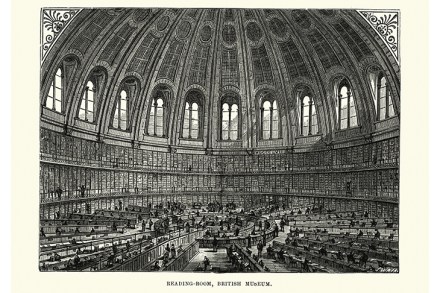
The British Library is the national library of the United Kingdom, and it sits like a red-brick crab on the Euston Road, on the site of an old goods yard between St Pancras and Euston. The older British Museum Library, whose collection was founded on the books of George III, Sir Hans Soane, Robert Harley and Sir Robert Cotton, was in the British Museum, but that gorgeous reading room is now a glass atrium with overpriced cafés and shops selling historical tat for children: cultural vandalism, then, and incitement to migraine. Instead we have the red-brick crab. It was opened by the Queen in 1998 and it is Grade I-listed, so, unless there is a war, we are stuck with it. Perhaps architects don’t read books. When I look at this library, I wonder if they have eyes.

‘I feel compelled to be disgraceful’: Miriam Margolyes interviewed

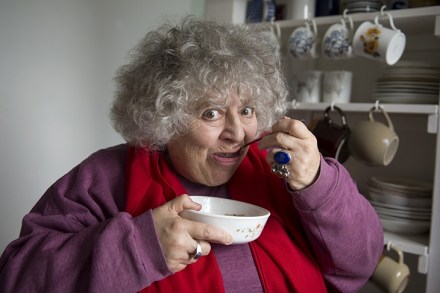
I meet Miriam Margolyes in her large Victorian house in Clapham. She is very small and round, with a shock of grey hair, and the clear and open gaze of a curious child. There is an innocence to her, like someone who has not quite grown up. She has a wonderful voice, which bought this house. When it rests it is low and serious; but when she is telling a good story it takes flight. She is best known, now, for Harry Potter films and Blackadder; and for The Graham Norton Show which she dominates by speaking filth while looking delighted. This is deceptive though. When she wants, she can be very serious, although she struggles to be serious for long, which is why, I think, she does not have Janet Suzman’s career. When I say I find her serious she is delighted.

I have always liked angry food: Ugly Butterfly reviewed

Ugly Butterfly is a zero-waste restaurant and champagne bar on the King’s Road, Chelsea. The ‘champagne bar’ addition is so awful as to be pantomime villainous — I think of zero-waste diamonds and zero-waste wars — but perhaps they need this kind of duplicity to seduce the punters, who move so slowly towards wisdom? ‘Zero-waste’ isn’t an advertising catchphrase designed for Chelsea and its constituent tractors and immaculate blondes, unless they are very drunk. It is from Adam Handling, who has six venues, including the Frog in Hoxton and the sustainable deli Bean & Wheat in Old Street. Ugly Butterfly is pretty, because anything ugly in Chelsea would shrivel through lack of identification.

Criminally good food: The Yard at Great Scotland Yard reviewed

The Yard is a defiantly themed restaurant in Hyatt’s new Great Scotland Yard Hotel, an Edwardian red-brick block which once housed the Central Detective Unit of the Metropolitan Police and its constituent darkness. You have to work hard to dispel that kind of horror, and Hyatt tries: the hotel is extraordinarily lush and over-styled, even for these mad days. The lobby, for instance, features a chair that is half rhinoceros but, in dreaming up the rhinoceros chair, Hyatt has invented a piece of furniture only a rhinoceros could appreciate or reach. The sofa opposite has three sequential cushions, which when placed together create a picture of a dachshund, and I can’t imagine anything more pointless.

The food is almost too superb: Wild Honey reviewed

Wild Honey is a ludicrous name for this restaurant: there is nothing wild about it, and I do not think that is even its intention. Rather, it is a cloistered, almost sombre restaurant in the grandest part of the West End, almost opposite the Athenaeum Club, whose goddess, I fancy, is weeping metal tears. I depend on old maps of London. They offer perspective and consolation, and I know this part was once marshland from the River Tyburn on its way from Hampstead to Westminster. Now it is Pall Mall and Wild Honey lives in one of its palest, grandest buildings: it glows like a slightly restrained Versailles, signifying power and brickwork. It was once home to the royal printers, a bank, and what became, in its pomp, Aviva insurance.

The Michelin Guide’s tiresome sustainability award

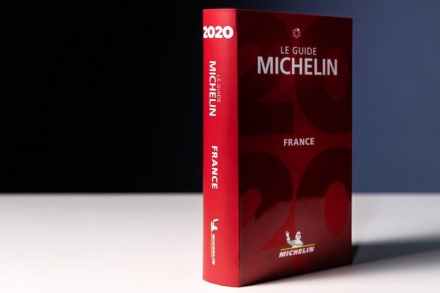
The Michelin Red Guide is a marketing device to sell tyres by selling pastries. The guide was invented in 1900 by Michelin, the French tyre company, which is now the second-largest tyre company in the world. The guide initially covered restaurants in France, then spread to Belgium, the Alps, Germany, north Africa, Britain and, eventually, the USA and Japan. It began to award stars – the golden number is three – for restaurants in 1926, copying Baedeker’s and Murray’s guides and it insinuated the idea that French food is the best in the world. The Guardian quoted someone calling the Red Guide, 'a tool of Gallic cultural imperialism'. One Michelin inspector – the Frenchman Pascal Remy - wrote about a book about it.

Fairy food for fairy wives: Julie’s Restaurant reviewed

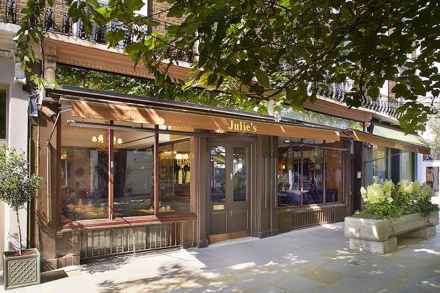
Julie’s is a 50-year-old restaurant in Holland Park, London, newly emerged from three years of closure as plushly renovated as its customers. The website calls it ‘a Holland Park favourite, neighbourhood classic and hangout for the Hollywood set, high society and rock stars since 1969’. Whenever I hear the words ‘high society’ I reach for my water pistol, as Hermann Goring didn’t say, but I do remember a birthday party at Julie’s 20 years ago when it seemed pleasingly decadent. It was designed by the owner, Julie Hodgess, the designer of the Biba boutique. I remember a series of deeply coloured rooms and dusty curtains and a faint and thrilling sense of mystery.

This food needs a little less grandeur, and a little more love: Simpson’s in the Strand reviewed

Simpson’s in the Strand stopped serving breakfast in 2017, after it had been renovated to stop it smelling of cabbage. Fat men wept, but worse things have happened here. Simpson’s is built on the site of John of Gaunt’s Savoy Palace, in which Geoffrey Chaucer, Gaunt’s brother-in-law, wrote part of The Canterbury Tales. The palace was destroyed during the Peasants’ Revolt of 1381; it is all detailed in Anya Seton’s romance novel Katherine. Of the palace’s successor, Henry VII’s Savoy Hospital, only a small chapel remains. It looks deeply oppressed. Instead we have the Savoy hotel, created by Richard D’Oyly Carte.

Sumptuous, remote – and forgettable: Locket’s reviewed

Locket’s is a new café from the owners of Wiltons in Jermyn Street. Wiltons is the restaurant that dukes visit when they have fallen out with White’s. It has a sign featuring a lobster that looks like Benjamin Disraeli wearing a top hat. When a bomb fell nearby in 1942, its anxious owner immediately sold it to the banker Olaf Hambro, who was sitting at the bar, by adding the price of the restaurant to his bill. It appeared, thinly disguised, in Jeffrey Archer’s First Among Equals as Walton’s, in which a fictional Tory minister plots the seduction of a woman called Amanda. I like Wiltons, even if the female staff are dressed as Edwardian housemaids, which is the second worst uniform in existence after hessian smocks.

Nauseating, but I like the garlic bread: Legoland Windsor reviewed

The theme music to Legoland in Berkshire is the theme music to The Exorcist. It appears from speakers hidden in the grass. I hear it as I wander out of some un-enchanted wood filled with Lego: we have lost our ancient woods and need new ones. These ones smell slightly of drains. The Exorcist music is a joke for parents; or perhaps an acknowledgment that there is something demonic at Legoland. You can, from the fake hills — everything is fake here, and that is both bewitching and awful — see Windsor Castle, which probably means that from Windsor Castle you can see Legoland. I wonder if Legoland will outlive the monarchy; if Legoland and the monarchy have a lot in common.

Back in the Babington Triangle: Roth Bar & Grill reviewed

The Roth Bar & Grill exists on an art-farm called Durslade in Bruton, Somerset, which is also the country outpost of the Hauser & Wirth gallery, which is the silliest art gallery in Britain. It specialises in decapitated gnomes. It is only 13 miles from Babington House, Soho House’s monstrous country house with its playrooms for adults and giant fish-finger sandwiches. This is a world of electric Agas, black Range Rovers and pink wellington boots; and it is, almost by itself, the reason why country dwellers despise town dwellers. If people live in homage to what they read in Sunday newspaper supplements, they deserve to be despised. When I visited it three years ago, it was both abuzz and the silliest restaurant I had ever seen.

‘Utterly betrayed’: Britain’s Jews are now politically homeless

We Jews have evolved to be neurotic; so neurotic that, in certain circumstances, the Syrian border feels slightly safer than Muswell Hill. I’ll take Muswell Hill. Polls say that only 7 per cent of British Jews will consider voting for Labour on 12 December, while 47 per cent of British Jews will consider leaving the country if Labour win. I’d rather fight Dave (generic name) from the Labour Representation Committee than Dave from Hezbollah (likewise generic). But I shouldn’t joke; and nothing feels funny any more. Things are always OK until they aren’t. Jews have fled Labour since Ed Miliband’s time. In 2010 we were split quite evenly between Labour and the Tories: but Gordon Brown is a serious man.

Stringfellows for the sex robot age: Bob Bob Cité reviewed

Bob Bob Cité is a restaurant dangling like testicles from the underside of the Leadenhall Building in the City of London. It is shaped like a series of yellow train carriages, for a voyage no one will ever make; the building above it manages, in the way of the age, to be both absurd and frightening. People call the Leadenhall Building the cheese--grater, but it does not make me think of kitchens. Kitchens are human and intimate; from the atrium, which is guarded by security men, this building looks like the innards of something vast and inhuman. This is the sequel to Bob Bob Ricard, a Soho restaurant for rich men with anxiety disorders, hollow legs, and nervous thumbs.

An enemy of the people? Or an above-average sandwich chain? Pret A Manger reviewed

The sandwich restaurant Pret A Manger is accused of harbouring centrists. Those are words I never thought I would type, but these are mad days. A Corbyn supporter called Aaron Bastani, the author of a book called Fully Automated Luxury Communism — or, as wags call it, Luxury Space Robot Communism — has accused Rory Stewart of being unfit to be mayor of London because he likes Pret A Manger. It is, in Bastani’s mind, a sandwich-themed agent of evil, indicating a deeper evil which may or may not have something to do with wizards. I did not know that Pret A Manger’s smoked salmon sandwiches (they are quite good, but I am a bourgeoise, so what do I know?) and mediocre coffee could be so perilous to civilisation, but I can safely be ignored.

I’ve had my fill of brasseries: Moncks reviewed

If you review restaurants professionally you would not think Britain wanted to leave the EU. You would think she wanted to live happily in the twinkling golden stars of Europe like Emily Thornberry’s neck fat, eating, semi-eternally, at a European-style brasserie. British restaurants are a silent acknowledgement that native food is not very good unless you really like cabbage. Please don’t write to me about fungus from Maidenhead. I don’t care. Our cities reflect it; every-where I see European-style brasseries glinting with the promise of European--style bliss. Where is the courage of our seething psychological imperatives? Why don’t we put our madness where our mouths are? I daydream about a new Brexit-themed restaurant in Britain, but I have yet to see it.

The untold story of Judy Garland

Judy Garland is now a myth, a paradigm and a warning: don’t let your daughter on the stage! It’s the cognitive dissonance that is thrilling and awful, like a child that dies: Dorothy kicked off her ruby slippers and turned to Benzedrine. It is a narrative that erases Garland as surely as the drugs ever did. When I think of Garland, I don’t think of the chaos, born at MGM Studios where they drugged her to make her slender and biddable. They called her the ‘little hunchback’ and because she was schooled with Elizabeth Taylor and Ava Gardner she believed it. I marvel at the music. She was extraordinary, not because of her illness, but despite it.

It’s so easy to go mad in Oxford: Chiang Mai Kitchen reviewed

Oxford is a pile of medieval buildings filled with maniacs, and is therefore one of the most interesting places on earth. It is easy to go mad in Oxford — it’s the damp — or grow other worlds, like John Tolkien, whose Middle Earth, I suspect, was largely an emotional defence against the conversation at High Table. I found the cognitive dissonance between the landscape and its purpose so alarming, like finding David Cameron riding an Ent, that I went mad, and so know far less about Tudor foreign policy than I should. It was more awful than it sounds — that is youth’s anguish — and I could not, for years, visit Oxford. But I went last week, holding copy of Pevsner’s The Buildings of England: Oxfordshire as a comfort blanket.

I wouldn’t suggest you eat here, but I doubt there’s a better place to drop acid: Camelot Castle reviewed

The Camelot Castle Hotel is a pebble-dashed late-Victorian excrescence on a cliff. It overlooks the ruins of Tintagel Castle. A baby-blue Rolls-Royce Wraith and a floral Aston Martin are parked outside. They are the owners’ cars. Everyone else is in a banger. This hotel played the lunatic asylum in the 1979 Dracula starring Frank Langella, and this is more apt than you can know. Inside there is faded Victorian grandeur mashed with Arthurian legend mashed with Kazakh oil baron chic mashed with three-star hotel in fading south coast resort. There is sinister tiling, dark wood, fraying carpets, staff dressed for serving tea at some ghostly parallel Claridge’s and, from every window, the sea.

Like Twitter, but with food: Market Hall Victoria reviewed

The Market Hall Victoria is an international food shed opposite the station terminus. I have long hated Victoria, thinking it the most provincial part of central London. It longs for the provinces, it impersonates them, it summons them. It is odd because the station itself is beautiful: a grimy Edwardian fantasy with tall grimy chimneys and a fantastical clock. But the rest of it is painful: the ugly road to parliament; the immense new blocks with their hideous restaurants; the sad and stripy Roman Catholic cathedral, which searches for grandeur but just looks weird; the Queen’s back wall, which I marvel at, because it tells so much. Victoria is a disappointment to itself. It sags and gasps. It is a stage with the scenery removed; a road out of town.

Lunchtime on Hydra

The Pirate Bar is an oddity, even for this column: a bar and restaurant themed in homage to a pirate, whom I consider to be generic, and Leonard Cohen. It is in Hydra, a three-hour boat ride from Piraeus, and Cohen’s home in the 1960s with his muse — this means unpaid female servant who also provides sex — Marianne Ihlen. He bought a house on the hill with an inheritance from his grandmother. Thus are famous hippies made — with inherited money. Hydra is known as Leonard Cohen Island. The locals don’t mind living on Leonard Cohen Island. ‘Cohen?’ asked a native, as I loitered on the steps of his house on the hill. ‘He was my friend.’ The pharmacist was also his friend.