Tanya Gold

Tanya Gold

Tanya Gold is The Spectator's motoring critic

Stringfellows for the sex robot age: Bob Bob Cité reviewed

From our UK edition

Bob Bob Cité is a restaurant dangling like testicles from the underside of the Leadenhall Building in the City of London. It is shaped like a series of yellow train carriages, for a voyage no one will ever make; the building above it manages, in the way of the age, to be both absurd and frightening. People call the Leadenhall Building the cheese--grater, but it does not make me think of kitchens. Kitchens are human and intimate; from the atrium, which is guarded by security men, this building looks like the innards of something vast and inhuman. This is the sequel to Bob Bob Ricard, a Soho restaurant for rich men with anxiety disorders, hollow legs, and nervous thumbs.

An enemy of the people? Or an above-average sandwich chain? Pret A Manger reviewed

From our UK edition

The sandwich restaurant Pret A Manger is accused of harbouring centrists. Those are words I never thought I would type, but these are mad days. A Corbyn supporter called Aaron Bastani, the author of a book called Fully Automated Luxury Communism — or, as wags call it, Luxury Space Robot Communism — has accused Rory Stewart of being unfit to be mayor of London because he likes Pret A Manger. It is, in Bastani’s mind, a sandwich-themed agent of evil, indicating a deeper evil which may or may not have something to do with wizards. I did not know that Pret A Manger’s smoked salmon sandwiches (they are quite good, but I am a bourgeoise, so what do I know?) and mediocre coffee could be so perilous to civilisation, but I can safely be ignored.

I’ve had my fill of brasseries: Moncks reviewed

From our UK edition

If you review restaurants professionally you would not think Britain wanted to leave the EU. You would think she wanted to live happily in the twinkling golden stars of Europe like Emily Thornberry’s neck fat, eating, semi-eternally, at a European-style brasserie. British restaurants are a silent acknowledgement that native food is not very good unless you really like cabbage. Please don’t write to me about fungus from Maidenhead. I don’t care. Our cities reflect it; every-where I see European-style brasseries glinting with the promise of European--style bliss. Where is the courage of our seething psychological imperatives? Why don’t we put our madness where our mouths are? I daydream about a new Brexit-themed restaurant in Britain, but I have yet to see it.

The untold story of Judy Garland

From our UK edition

Judy Garland is now a myth, a paradigm and a warning: don’t let your daughter on the stage! It’s the cognitive dissonance that is thrilling and awful, like a child that dies: Dorothy kicked off her ruby slippers and turned to Benzedrine. It is a narrative that erases Garland as surely as the drugs ever did. When I think of Garland, I don’t think of the chaos, born at MGM Studios where they drugged her to make her slender and biddable. They called her the ‘little hunchback’ and because she was schooled with Elizabeth Taylor and Ava Gardner she believed it. I marvel at the music. She was extraordinary, not because of her illness, but despite it.

It’s so easy to go mad in Oxford: Chiang Mai Kitchen reviewed

From our UK edition

Oxford is a pile of medieval buildings filled with maniacs, and is therefore one of the most interesting places on earth. It is easy to go mad in Oxford — it’s the damp — or grow other worlds, like John Tolkien, whose Middle Earth, I suspect, was largely an emotional defence against the conversation at High Table. I found the cognitive dissonance between the landscape and its purpose so alarming, like finding David Cameron riding an Ent, that I went mad, and so know far less about Tudor foreign policy than I should. It was more awful than it sounds — that is youth’s anguish — and I could not, for years, visit Oxford. But I went last week, holding copy of Pevsner’s The Buildings of England: Oxfordshire as a comfort blanket.

I wouldn’t suggest you eat here, but I doubt there’s a better place to drop acid: Camelot Castle reviewed

From our UK edition

The Camelot Castle Hotel is a pebble-dashed late-Victorian excrescence on a cliff. It overlooks the ruins of Tintagel Castle. A baby-blue Rolls-Royce Wraith and a floral Aston Martin are parked outside. They are the owners’ cars. Everyone else is in a banger. This hotel played the lunatic asylum in the 1979 Dracula starring Frank Langella, and this is more apt than you can know. Inside there is faded Victorian grandeur mashed with Arthurian legend mashed with Kazakh oil baron chic mashed with three-star hotel in fading south coast resort. There is sinister tiling, dark wood, fraying carpets, staff dressed for serving tea at some ghostly parallel Claridge’s and, from every window, the sea.

Like Twitter, but with food: Market Hall Victoria reviewed

From our UK edition

The Market Hall Victoria is an international food shed opposite the station terminus. I have long hated Victoria, thinking it the most provincial part of central London. It longs for the provinces, it impersonates them, it summons them. It is odd because the station itself is beautiful: a grimy Edwardian fantasy with tall grimy chimneys and a fantastical clock. But the rest of it is painful: the ugly road to parliament; the immense new blocks with their hideous restaurants; the sad and stripy Roman Catholic cathedral, which searches for grandeur but just looks weird; the Queen’s back wall, which I marvel at, because it tells so much. Victoria is a disappointment to itself. It sags and gasps. It is a stage with the scenery removed; a road out of town.

Lunchtime on Hydra

From our UK edition

The Pirate Bar is an oddity, even for this column: a bar and restaurant themed in homage to a pirate, whom I consider to be generic, and Leonard Cohen. It is in Hydra, a three-hour boat ride from Piraeus, and Cohen’s home in the 1960s with his muse — this means unpaid female servant who also provides sex — Marianne Ihlen. He bought a house on the hill with an inheritance from his grandmother. Thus are famous hippies made — with inherited money. Hydra is known as Leonard Cohen Island. The locals don’t mind living on Leonard Cohen Island. ‘Cohen?’ asked a native, as I loitered on the steps of his house on the hill. ‘He was my friend.’ The pharmacist was also his friend.

A family affair | 25 July 2019

From our UK edition

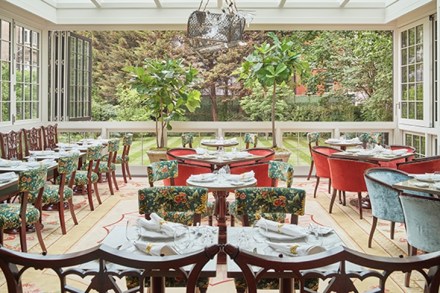
The Goring is a tiny grand hotel near Victoria Station and the Queen’s garden wall. Victoria is not pleasant — traffic fumes —but this only makes the Goring more determined to be the grandest of all London’s tiny grand hotels. That it is in the wrong place — it should be in Mayfair in 1858 — makes it more histrionic. It is another daydream made of class anxiety; another hotel that voted for Brexit. It was built in 1910, the first hotel, says the website, to be entirely ensuite. Did the Savoy use buckets? Its windows are fantastically clean, which must be agonising this close to Victoria Coach Station. It has two doormen dressed in red and gold, like Jewish sofas. The Goring is covered in bunting, like a fête that never stops.

Fashion plates

From our UK edition

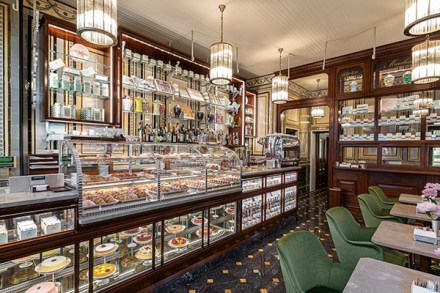
The Prada Café is both a cake shop and a historical inevitability. It sits on Mount Street, almost opposite the Connaught hotel, and between what used to be Nicky Clarke’s hairdressing salon and a luggage shop so expensive it has a queue outside. People are queuing up to explore late capitalism through the prism of luggage but, that aside, they seem quite disinterested in the world around them. Perhaps they are marvelling at their own stupidity in yearning for a £1,000 bag with no zip. The Prada Café is a nickname. Its real name is Patisserie Marchesi 1824 and it travelled from Italy to the silliest part of Mayfair to join the vogue for fashion cafés in London.

Feeding the five thousand

From our UK edition

Decks is a restaurant built on the Sea of Galilee. It is Benjamin and Sara Netanyahu’s favourite restaurant (it is occupying the sea, if you like) and it is huge: two storeys of decking (hence ‘decks’) walking into the sea where Jesus of Nazareth fed his 5,000 Biblical Corbynistas. The view is of young Jewish girls jumping up and down in unison on a disco boat. From a distance it looks like one happy creature with 800 legs. I came from the north where bluffs — once military installations — are tourist attractions with cafés. I stood on the Golan Heights and peered into Syria, and then I went to the new settle-ment named for Donald Trump.

Perfectly preserved

From our UK edition

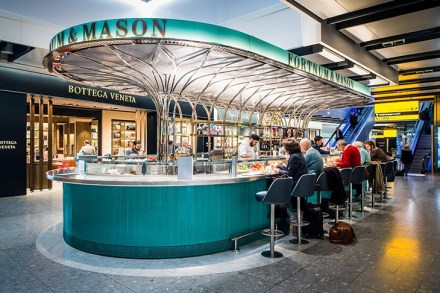
I am obsessed with Fortnum & Mason, and the jams of the England that never was but could be. It is, of course, a class-based obsession for the lower-middle to the upper-middle classes (but not below or above): a very pantomime of Englishness. It is, essentially, imperialism made gaudy with jam. Where do you think all those hampers were going in 1880? Kent? So Fortnum & Mason is rather more than a department store with a pleasing clock and a faint air, even now, of Grace Brothers. It serves also to make rootless cosmopolitans — I mean Jews obviously — feel safe, even if we are supplanting, by demonic and any other means to hand, everything that is noble in the fake socialist dystopia that is the Labour party.

Children of the revolution: Protest has become so puerile

From our UK edition

As the left sinks into psychosis, what remains? The answer is sugar, profanity, snacks and toys. Protest now resembles Clown Town, a dystopic toddler play barn near Finchley Central. To mark the American President’s trip to London this week, the Donald-Trump-in-a-nappy balloon rose again. There was also a Donald Trump robot. It sat on a toilet in Trafalgar Square and farted. ‘The fart we couldn’t get from him,’ said its creator, Dom Lesson, ‘so we had to use a generic fart’. Meanwhile, a man mowed a penis shape into a lawn to protest against climate change. He was hoping that Trump might see it from his aeroplane. The fashion, when faced with a politician you despise, is to attack them with milkshake.

Children of the revolution

From our UK edition

As the left sinks into psychosis, what remains? The answer is sugar, profanity, snacks and toys. Protest now resembles Clown Town, a dystopic toddler play barn near Finchley Central. To mark the American President’s trip to London this week, the Donald-Trump-in-a-nappy balloon rose again. There was also a Donald Trump robot. It sat on a toilet in Trafalgar Square and farted. ‘The fart we couldn’t get from him,’ said its creator, Dom Lesson, ‘so we had to use a generic fart’. Meanwhile, a man mowed a penis shape into a lawn to protest against climate change. He was hoping that Trump might see it from his aeroplane. The fashion, when faced with a politician you despise, is to attack them with milkshake.

A princess of greasy spoons

From our UK edition

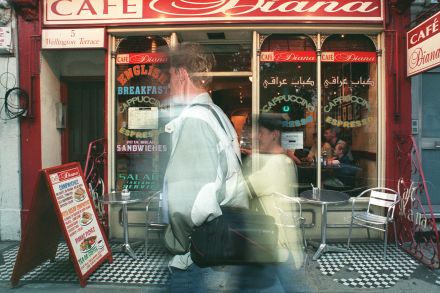
Café Diana is a Princess Diana-themed greasy spoon in Notting Hill Gate. It is a mad place, but it is still the sanest part of Notting Hill because it has the integrity to state its madness bluntly. There is a huge photograph of Diana smiling in the window because she was happy to collaborate in myth-making of any kind. She delivered this photograph herself, and this café returns her love. Its website, which is formal, like a fragment of the Almanach de Gotha that flew away, remembers that she was Baroness of Renfrew when most people never knew it or forgot. Café Diana is more thrilled by the object of its devotion than the average themed restaurant.

It’s no surprise that Jamie Oliver’s restaurant empire has collapsed

From our UK edition

I am not surprised that Jamie Oliver’s restaurant empire has collapsed into administration. I reviewed his flagship restaurant on Piccadilly, Barbecoa, in 2017, and damned it because the food was bad and the atmosphere non existent. (Well, it was almost empty; you cannot create joy in a void). I knew Oliver was in trouble before that when I ate – reluctantly, but not everyone is a food critic – at Jamie’s Italian in Victoria in late 2016. It was, like Barbecoa, queasily large, the food was bad, and, again, it was almost empty. The punters may have been buying Oliver’s cookery books but they weren’t dining at his restaurants. Or if they did, they only went once, and there is no lower praise.

Tantrums and tabbouleh

From our UK edition

Ergon House is an epicurean boutique hotel in downtown Athens. (I quote the blurb — I never write ‘boutique’ willingly.) Did Pericles know that Athens had a downtown? I shall dispense with the politics, except to say that we should return the Parthenon friezes, for it’s lonely on the Acropolis, and only a fool would insult Athena, the most interesting of the Olympian gods because she was less of a shagger than Zeus. Likewise, the next time the Venetians complain about cruise ships ruining their mouldering city, remind them that they blew up the Acropolis during a war with the Turks. During the Grand Tour it looked like a Cornish garden, but nowadays they are trying. They lay rubble in rows, or in stacks, and put plastic tape around them.

The dark side of Soho

From our UK edition

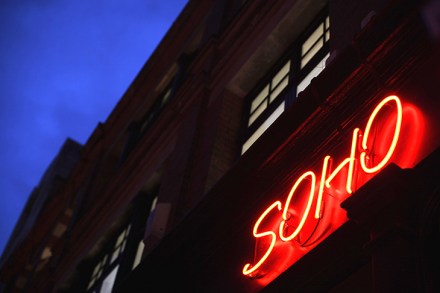
Each suburban soul yearns for the Soho of their youth. It isn’t that Soho was better in the 1990s when I invaded the Colony Room, twitching, and took a fag off Sarah Lucas. It is that I was. This was the view of a friend after I last wrote on Soho restaurants. We once ran holding hands through the sprinklers in St James’s Park laughing at Peter Mandelson, who was passing with his dog, and that is my memory of the Blair years. So Soho, which is thick with metaphor anyway — its very name is a hunting call: death for one and ecstasy for another — is a district to measure your age. The new buildings barely matter in this reasoning, even if I hate them. The stones — and the possibilities — remain. You can’t erase the energy of that much bad sex.

Top brass

From our UK edition

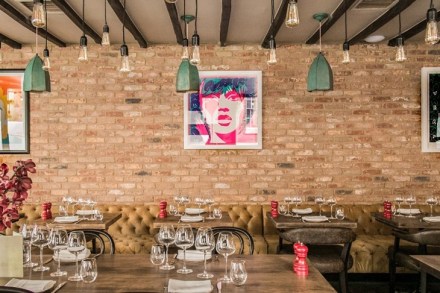
Bellamy’s is a Franco-Belgian brasserie in Bruton Place, a dim alley in the charismatic part of Mayfair; the part that has not been ruined. There isn’t much you can do with an alley except blow it up. It feels like a survivor from a more ancient time: 2004. Its rivals from that time are broken or gone. Annabel’s is now enormous. The Ivy is a franchise like KFC. The new generation of fashionable restaurants have glittering statuary by cretinous artists, professional PRs and spin. They are ideas. What use is an idea when you want three courses of French--Belgian cuisine for £29.50 a head in central London? Bellamy’s is named for the club in Evelyn Waugh’s Sword of Honour trilogy.

Garlic and easy listening

From our UK edition

I grew up in south-west London in the 1970s when Italian restaurants had exposed brick walls and paper tablecloths in red and white squares and giant pepper pots and were owned by people called Franco who slapped your father on the back. The lasagne came in individual dishes, oozing deep red tomato sauce so hot it stuck to the edges of the dish and burnt your tongue. You cried the first time, but not again, because you loved Spaghetti Junction more than your own home. The perfect Italian restaurant was fixed for me then, in 1979, and that was it, because restaurants are about joy, not food. And so I never liked their high-street descendants: Carluccio’s and Jamie’s Italian. The first was too pale and interesting, and the second too sloppy and disinterested.