Svitlana Morenets

Svitlana Morenets

Svitlana Morenets is a Ukrainian journalist and a staff writer at The Spectator. She was named Young Journalist of the Year in the 2024 UK Press Awards. Subscribe to her free weekly email, Ukraine in Focus, here

Putin’s blitz marks the next phase in Ukraine’s war

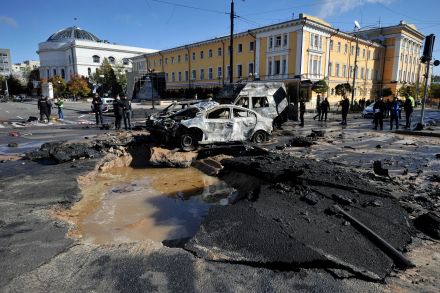
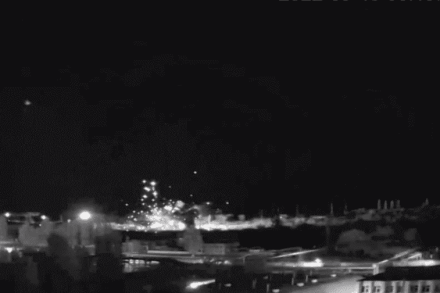
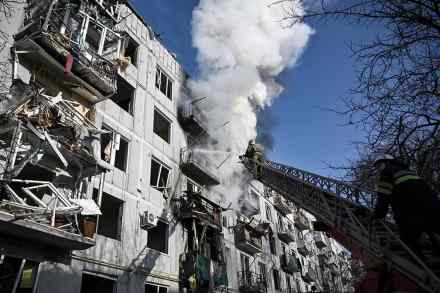
Since the attack on the Kerch bridge in Crimea, the world has been awaiting Putin’s answer. It came this morning in the form of Russian missiles fired over Ukrainian cities. To add to this, Belarusian media is also reporting the deployment of Belarusian troops to the conflict for the first time. Of the 83 Russian missiles fired into the country, 43 have been intercepted by Ukraine’s air defence system (which has also intercepted dozens of Iranian Shahed-136 kamikaze drones) but Kyiv has been hit. Lviv, Dnipro, Kharkiv and Odesa have also been targeted – large and small cities are under attack. The number of dead and wounded is unknown. All schools in Ukraine have been instructed to switch to remote learning.

What Elon Musk doesn’t get about peace

The power one person can hold should never be underestimated. They can take people’s lives, as Vladimir Putin does, or save them as Elon Musk did in Ukraine. Two days after Putin’s invasion, Ukraine’s minister for digital transformation, Mykhailo Fedorov, tagged Musk on Twitter and asked him to help Kyiv with Starlink. The communication centres were one of the first targets for Russian missiles. ‘While you try to colonise Mars, Russia tries to occupy Ukraine! While your rockets successfully land from space, Russian rockets attack Ukrainian civil people!’ tweeted Fedorov. The answer was immediate. Musk tweeted: ‘Starlink service is now active in Ukraine. More terminals en route.’ It was stunning – and transformative.

Will Nato accept Ukraine?

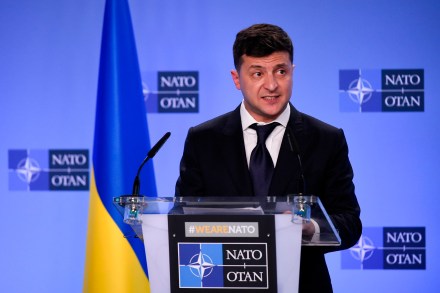
Shortly after the invasion of Ukraine, Volodymyr Zelensky made an offer to Vladimir Putin. Ukraine would drop its ambition to join Nato and would instead stay neutral, he said. It would not align with the West, in exchange for an end to hostilities. It was a sincere offer, and unpopular with Ukrainians. Yet it was significant: Putin had cited Ukraine’s Nato ambitions as the main reason for the invasion, saying it showed the West was somehow threatening Russia. But today, that offer ended and Zelensky is seeking the ‘accelerated’ Nato accession granted to Finland and Sweden this year. Will Nato accept? Jens Stoltenberg, Nato Secretary-General, dodged the question when asked today.

Putin calls up 300,000 reservists

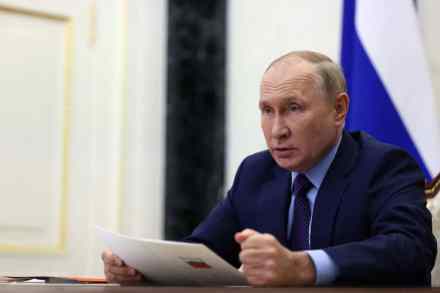
While most attention has focused on Vladimir Putin’s repetition of nuclear threats in his speech this morning, the takeaway in Ukraine is different: conscription has begun. This is deeply controversial in Russia given the war’s high mortality rate, but after the rout in the Kharkiv region Putin is running out of options. After his speech, given at 9 a.m. Moscow time, Russia’s minister of defence Sergei Shoigu announced that 300,000 reservists will be called up. ‘We are now at war not just with Ukraine but with the collective West too’, he said. Putin had referred to this in his speech. ‘The decree on partial mobilisation has been signed. Mobilisation activities will begin today, September 21.’ he said.

Ukrainian nuclear power plant shelled by Russia

If Putin is losing the ground war in Ukraine and running out of troops, what other options does he have? The obvious fear is that he’d use nuclear weapons or attack Ukraine’s nuclear power stations. Last night, the Pivdennoukrainsk nuclear power plant in Mykolaiv oblast, 300 km (200 miles) south from Kyiv, was struck, with more than 100 windows destroyed by the blast. Such plants are designed to withstand explosions although not missile attacks. The reactor was not hit and there (as yet) are no reports of any radioactive leakage.   For nuclear plants to be shelled at all shows a dangerous turn of events.

The horrors of Russian occupation are being uncovered in Ukraine

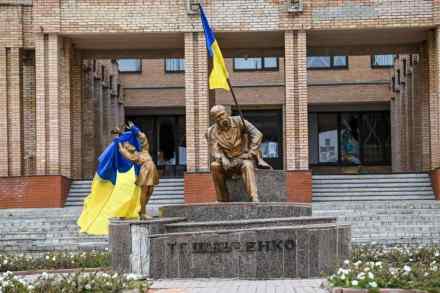
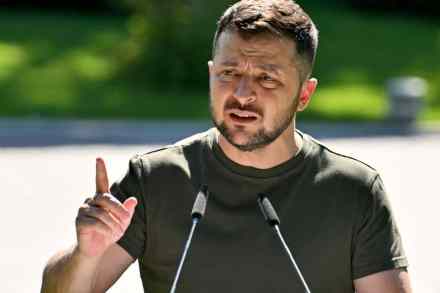
Ukraine is racing to establish control over the newly-liberated Kharkiv region. The country's president Volodymyr Zelensky paid a surprise visit to the city of Izyum, until recently a strategic point for Russia’s occupation reinforcements (photos here). ‘We are moving in only one direction – forward and towards victory’, he said after the Ukrainian flag was raised in the city centre. The restoration of civic apparatus in these liberated areas is being carried out with military speed. Some £9 million  been allocated from the state budget to rebuild critical infrastructure. The national postal providers are already resuming work, delivering aid kits with medicine, food, clothing.

This could be a turning point in the war

There is extraordinary news from Ukraine this weekend. An offensive in Kharkiv region, bordering Russia on the northwest, has stunned Russia – which had been moving troops south to defend against Ukraine’s Kherson offensive. Kharkiv region has been left only lightly defended by Russia: Moscow had assumed that Ukraine didn’t have the military strength to open a second offensive, to fight in the north as well as the south. Surprised by Ukraine’s attack, Russia’s weakened defences folded quickly and Ukraine has now liberated more ground in a few days than the Russians had taken since April. The strategically-important city of Izium is now freed from Russian control.

Ukraine stuns Russia with a counter-offensive in Kherson region

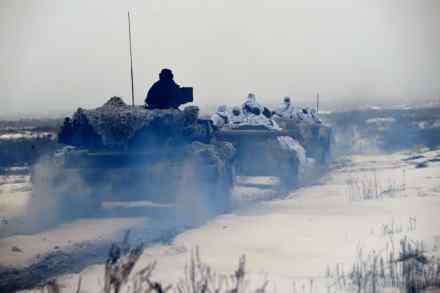
The southern city of Kherson, which fell to Russian forces in the first few days of the war, is one of the places Ukraine would need to liberate if Putin’s army is to be repelled. But what realistic chance is there? Many argued that the Russian occupation is a one-way process: that having taken Crimea, Putin would extend his reach northwards and westwards – with the only question being how long Ukraine could hold off an offensive from its far-bigger enemy.  But that conversation is changing, and fast. This morning, the Ukrainian army broke through the first line of the Russian defence in Kherson region – a move that was only recently seen to be beyond the capability of Ukrainian troops.

Svitlana Morenets, Cindy Yu and John Connolly

18 min listen

This week on Spectator Out Loud, Svitlana Morenets discusses the changes to the syllabus in Ukraine and the difficult decisions parents are having to make over whether to send their children back to school (00:59). Cindy Yu argues that she would be the perfect communist shill (07:45), and John Connolly tells us why cow attacks are no laughing matter (13:26). Produced and presented by Oscar Edmondson.

What’s on Ukraine’s new school syllabus

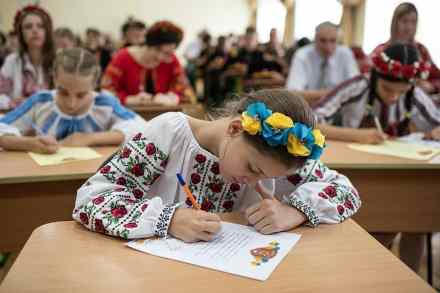
For the first time since Russia’s invasion, schools in Ukraine are starting to re-open. For many parents, including my own, this presents a dilemma. Is it safe for pupils to return? My brother is seven and has spent the past year doing ‘remote learning’, which is hard enough in countries at peace, let alone those fighting an invasion. A return to school would be good for his education, but then again, might there be the danger of Russian air strikes? Parents at my brother’s school have been asked to vote on whether they would prefer pupils to continue with online learning, or return, with all the risks involved. It’s estimated that at least 3,000 of Ukraine’s 12,800 schools will reopen their doors.

Can Zelensky afford to freeze Ukraine’s gas prices?

This morning, Volodymyr Zelensky signed a moratorium on energy prices – so while gas bills are rising all over Europe, Ukraine will remain unaffected. This honours a pledge he made on his election. Freezing energy bills is a standard populist policy in Ukrainian politics (in a country where temperatures can reach -25ºC and the elderly can’t afford to buy medicine, it’s hard to win without making such promises). But there are now serious worries about whether it could bankrupt a government that needs all the money it can get to fight a war. Energy prices will be frozen until six months after martial law ends in Ukraine: the pledge is good for as long as the war lasts.

Is it fair for the West to ban Russians?

To start with, Volodymyr Zelensky was careful not to blame Russians for a war Vladimir Putin started. Appealing to them and speaking in his native Russian, he asked: ‘Do the Russians want war?’ He called on them to rise up to make Putin listen. But this did not happen. Zelensky appears to have decided that they do, in fact, want war. So he has now said that western countries should ban all Russian citizens from entering their countries on the grounds that ‘the population picked this government and they’re not fighting it’. His foreign minister Dmytro Kuleba said Russians ‘must be deprived of the right to cross international borders until they learn to respect them’.

Ukrainians aren’t surprised by Amnesty’s victim-blaming

Is Amnesty International victim-blaming? The Ukrainian military has been endangering civilians, it said, by establishing military bases and putting weapons systems in residential areas. Agnès Callamard, the organisation's secretary-general, remarked that ‘being in a defensive position does not exempt the Ukrainian military from respecting international humanitarian law’. It was a bizarre statement. Russian forces are attacking villages and large cities with dense populations. The Ukrainian armed forces can’t sit in a field, or put their weapons on a boat and sail away from coastal cities. As well as the morality of shifting the blame on to the aggressor, Amnesty’s statement doesn’t recognise the realities of the war situation.

Ukraine and Russia sign grain deal – what next?

This afternoon Kyiv and Moscow signed a UN-backed agreement to free up at least 20 million tons of grain from blocked ports. Ukraine said it would not sign a deal with Russia directly, only with Turkey and the UN. As Wolfgang Münchau noted this morning, it marks the first successful mediation between the two sides since the start of the war. This deal will complicate Vladimir Putin’s efforts to strangle the Ukrainian economy. But the Russian leader needs to show countries that are neutral – or more inclined towards Russia (in Africa and Asia) – that he saved them from hunger and rising food prices. Otherwise, Algeria could increase gas supplies to Europe and Egypt could supply Ukraine with hundreds of units of Soviet weapons and military equipment.

How Justin Trudeau caved to Putin

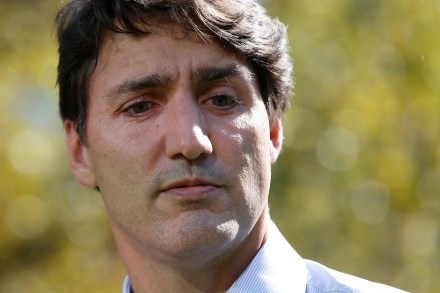
When Russia invaded Ukraine, the West was certain that its sanctions were worth the pain. But there always was a question as to whether this resolve would last once the domestic difficulties actually started. This week, western countries moved closer to admitting it might be too much to bear. At the time of the invasion in February, a massive Russian turbine was being repaired in Montreal. It was one of many turbines used to send gas through the Nord Stream 1 pipeline from Russia to Germany. When the Russians moved into Ukraine, it was kept in Canada as punishment. Over the next few weeks and months Russia replied, cutting off gas supplies to the continent.

Ukrainians are in mourning for Boris

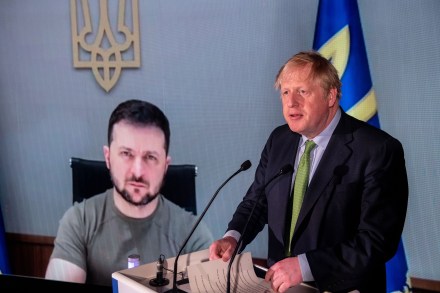
Boris Johnson’s support for Ukraine looked like a gimmick for many in Britain. Whenever the PM was in trouble, he called president Zelensky. When things got too much in Westminster, Boris popped up in Kyiv. But for Ukrainians, Boris’s backing of Ukraine is no joke: he is a national hero. He is the most popular foreign politician: his approval ratings are 90 per cent, only 3 per cent behind Zelensky. He recently became an honorary citizen of Odessa. Four streets are named after him, and one cafe in the capital even makes a ‘Boris Johnson’ croissant (with vanilla ice cream on top, which is supposed to look like his hair).

Russia’s referendum weapon

Preparations for a ‘referendum’ have begun in Kherson Oblast, the Russian-occupied region north of Crimea, according to Kirill Stremousov, deputy head of the Kherson regional administration and one of Moscow’s puppet governors. ‘Kherson Oblast will never return to an environment of Nazism, debauchery, and cynicism,’ he said. A date for the referendum has not yet been announced, but Stremousov previously mentioned that it could take place in the autumn.
 The residents of Kherson are currently forced to have Russian passports or their salaries and pensions will be cut off Russian troops went into the region at the beginning of March. Since then, the Kherson city has been under occupation.

The recapturing of Snake Island shows what Ukraine can do

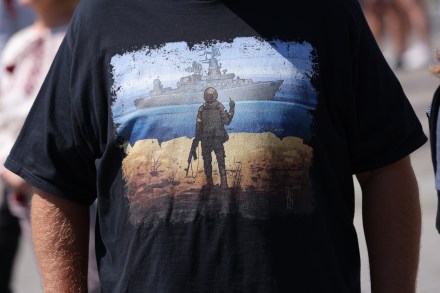
After days of missile strikes, Ukrainian forces have forced Russia off Snake Island in the Black Sea. ‘The enemy hastily evacuated the remnants of the garrison in two speedboats and left the island’, according to the Ukrainian Operational South Command. Russia's defence ministry appeared to concede defeat, saying that ‘Russian forces have completed the assigned tasks and withdrew as a step of goodwill’. The retreat is huge news in Ukraine, as Snake Island is not only important strategic territory, but has acquired a cult status as a representation of Ukraine’s resistance. Snake Island became world famous on the first day of the war when Ukrainian troops broadcast a message saying: ‘‘Russian warship, go fuck yourself’.

Is Russian Orthodoxy dying in Ukraine?

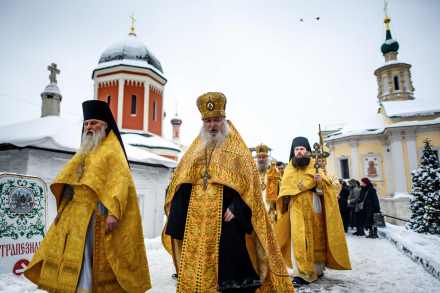
Ivano-Frankivsk has just become the first city in Ukraine to have no Russian Orthodox Church, amid a mass defection of churches away from the Moscow patriarchate and towards the breakaway Orthodox Church of Ukraine.  At the start of the invasion in February, almost two-thirds of Orthodox churches were still formally aligned with the Russian Orthodox Church whose leader – Patriarch Kirill – is a close ally of Putin. Until recently, the Russian Orthodox Church claimed dominion over Ukraine for centuries. The 2014 invasion of Crimea dampened its appeal. In 2019 a new Orthodox Church of Ukraine was recognised by Patriarch Bartholomew – the archbishop of Constantinople and the de facto leader of Orthodoxy.

Does Putin’s shopping centre strike signal a new strategy?

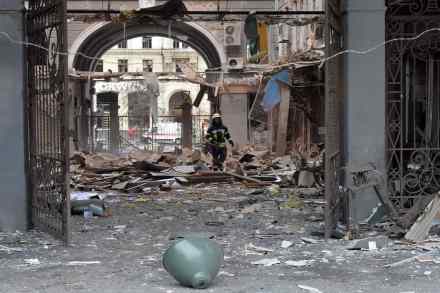
A crowded shopping mall in Kremenchuk has become the latest target for Russia’s missile attack. There were more than a thousand civilians’ in the mall, Volodymyr Zelensky said, ‘The mall is on fire, rescuers are fighting the fire. The number of victims is impossible to imagine’. X-22 missiles were fired from Tu-22 M3 long-range bombers, with launches made from the Kursk region, according to Ukrainian Air Force Command. The death toll so far is 13 with about 40 injured. An air raid siren sounding shortly before the blast may have allowed some to escape to safety, but rescuers are seeking to salvage bodies now.