Svitlana Morenets

Svitlana Morenets

Svitlana Morenets is a Ukrainian journalist and a staff writer at The Spectator. She was named Young Journalist of the Year in the 2024 UK Press Awards. Subscribe to her free weekly email, Ukraine in Focus, here

Ukraine’s next move

39 min listen

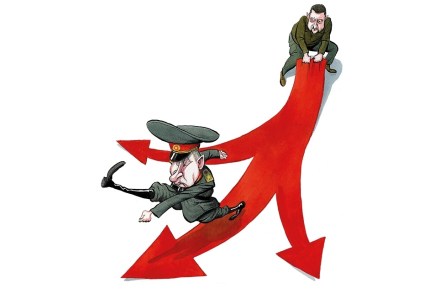
This week: In his cover piece, journalist Mark Galeotti asks whether Putin can be outsmarted by Zelensky’s counter-offensive. He is joined by The Spectator’s own Svitlana Morenets to discuss Ukraine's next move. (01:08) Also this week:  Journalist David Goodhart writes a moving tribute to his friend Jeremy Clarke, The Spectator’s much-missed Low Life columnist who sadly passed away earlier this week. David is joined by Cass Pennant and Freddy Gray, The Spectator’s deputy editor, to remember the life and writing of Jeremy Clarke. (12:52)  And finally: The Spectator’s deputy features editor Gus Carter writes this week about the curious business of fertility.

Has Ukraine’s counter-offensive been overhyped?

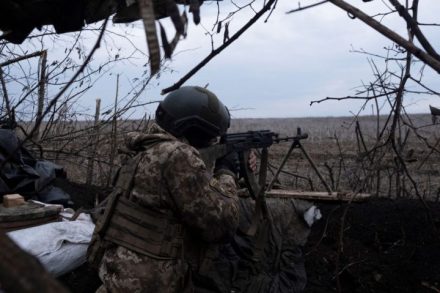
The talk about a big spring counter-offensive has been beneficial for Ukraine. It has helped persuade western allies to donate arms, while unnerving Russia and offering hope to those longing for the conflict to end. The idea has been promoted by every Ukrainian official from the President downwards, but when hope turns to hype, there’s a problem – and Kyiv may soon end up paying the price for its own PR success. People are asking where the ‘big push’ is and Volodymyr Zelensky’s team is trying to manage expectations. They are speaking of whatever comes next as another stride in the ongoing war, rather than the final step to an inevitable victory. The trouble is, the high expectations of Ukraine’s allies may now turn into a liability.

Has Ukraine launched a ‘special military operation’ in Russia?

While the world is waiting for Ukraine’s spring offensive, something very different happened this morning: an incursion into Russian territory. The soldiers involved are not from the Ukrainian army, but two legions of exiled Russians (including soldiers who defected from Russian forces) allied with Ukraine but are not part of Kyiv’s official military command. While Ukraine is not claiming responsibility, it’s hardly condemning the raid The ‘Russian Volunteer Corps’ and the ‘Free Russia Legion’, both expat legions based in Ukraine, are moving towards Russian towns in the Belgorod region (north of Kharkiv) and have so far claimed to have ‘liberated’ the village of Kozinka and captured the town hall in the village of Gora-Podol. As of 1.30 p.m.

Russian-occupied Ukraine is running out of water

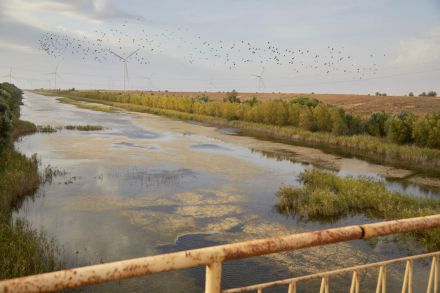
In a way, the war in Ukraine is a fight for resources. Water is one of them. For half a century, most of the water in Crimea has been piped in from Ukraine through the North Crimean Canal – but Kyiv stopped the supply when Moscow annexed the peninsula in 2014. Cue panic. Moscow officials tried to reassure the population that they could solve the problem. There was talk of building a water pipeline from Russia, but they went for a bridge instead. Crimean agriculture and industry started to suffer from drought and once-fertile fields, the steppes, slowly turned into desert. Moscow offered Kyiv cash for water, but was ignored. By 2017, Russian officials had admitted that the area of irrigated land in Crimea had shrunk by 92 per cent, halting rice production.

The tragedy of Ukraine’s stolen children

One of the most appalling and perplexing atrocities committed by Vladimir Putin has been the abduction of Ukrainian children. At least 20,000 boys and girls, some just babies, have been separated from their parents and placed in Russian camps, orphanages or foster homes. They are portrayed in Russia as grateful orphans being saved from ‘Kyiv’s war’ – but this is a lie. Most of the deported children have families who are searching for them, desperate to find them and take them back home before their names are changed and they become untraceable. The abduction of another nation’s children is a form of genocide. But Russia’s population is decreasing and Putin is obsessed with expanding the Russky Mir or ‘Russian World’.

Ukraine’s plan to rain on Putin’s Victory Day parade

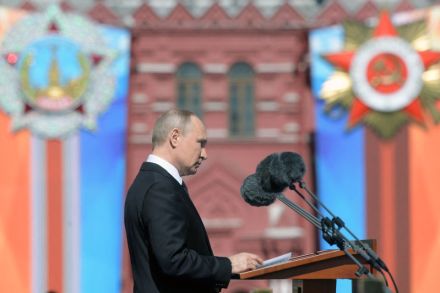
The presence of drones over the Kremlin earlier this week was reported widely as the first attack on Moscow since the Napoleonic era: after an explosion, Russian officials claimed that this was an attempt on the life of a suddenly vulnerable Vladimir Putin. But it’s actually more akin to 1987, when an amateur German pilot landed on a bridge near Red Square, fooling the Soviet air defence system. Mathias Rust said he’d gone to Moscow on a mission of peace – but ended up humiliating the communist military leadership, who had to resign one after another. This – the humiliation – is what Ukrainians plan to repeat during the upcoming victory parade in the Russian capital.

Can Ukraine afford to keep paying its soldiers a fighting salary?

What salary should a soldier receive in a war-torn country? Obviously, there is no number that can make up for the sacrifice Ukrainians make on the frontline. But a proper salary is still necessary. When Russia invaded last year, Volodymyr Zelensky increased the payment for the military to seven times of the average salary in Ukraine. ‘We will pay 100,000 hryvnias (£2,200) monthly to military personnel who hold weapons… so that they know that the country is grateful to them. And so it will be until this war ends,’ Zelensky said. The war, as it has turned out, is well into its second year – and the Ukrainian President is faced with the costs. In peacetime, Zelensky would have been called a populist by offering cash that he doesn’t really have.

Will Xi really bring peace to Ukraine?

11 min listen

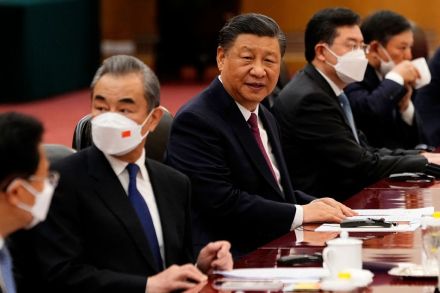
Xi Jinping said he will send diplomats to help broker peace in Ukraine after he had a phone call with Volodymyr Zelensky. But are China’s aims really as noble as they seem? Fraser Nelson speaks to Isabel Hardman, Svitlana Morenets and Cindy Yu.

Wagner mercenaries claim to have killed Ukrainian children

‘She is screaming, she is a little kid, you know – five, maybe six years old. And I took a kill shot, you know? I was told to let no one out’, said Azamat Uldarov, blowing cigarette smoke at his phone camera. Yesterday Russian human rights organization Gulagu.net published a video with two ex-convicts and ex-commanders of Wagner Group subdivisions – Azamat Uldarov and Aleksey Savichev – confessing their potential war crimes in Ukraine. Both Russians were recruited by Wagner’s founder Evgeny Prigozhin in penal colonies and pardoned by Vladimir Putin’s decree last year in exchange for fighting at war.  https://youtu.be/XgbypRBLyf8 ‘I hold a cigarette in this hand. I carried out an order with this hand – I killed children’, continued Uldarov.

The blurred lines between patriotism and profiteering in Ukraine

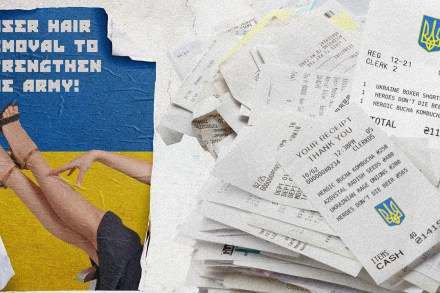
What is the right way to commemorate a war when it is still being fought? Many victories, tragedies and acts of defiance have already been depicted in Ukrainian books, films and art. Popular subjects include the liberation of Snake Island, the defence of the Azovstal plant, the horrors of the Bucha massacre, a woman offering sunflower seeds to an occupying Russian soldier so they can grow when he dies, and the sinking of the Moskva warship. However, it doesn’t take much to blur the lines between patriotism and profiteering. Anything with a military logo sells. Military--patriotic themes are being used to flog all sorts of products. War symbols have been slapped on socks, flip flops, vodka labels, designer clothes, sweets and even sex shops.

Why Russian priests are being expelled from a monastery in Kyiv

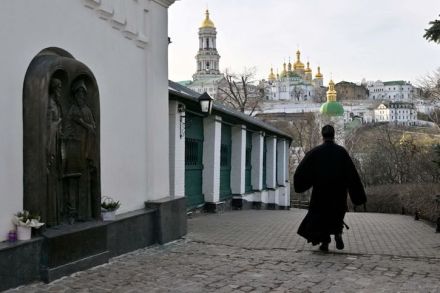
In my hometown we have three Orthodox churches, two of which are formally aligned with the Moscow patriarchate. They mostly say Russian prayers but, growing up, this was not seen as important. My family would go to both and see them as interchangeable: you’d stand, pray, kiss icons, take communion. Many Ukrainians never gave it much thought. This all changed when Vladimir Putin invaded last year. Only then was it clear just how he had been using the Russian church as a tool of his state: not just in Russia, but in Ukraine too. Previously neutral priests publicly prayed for Putin’s success, telling their parishioners how to help the invading forces. When Ukrainian forces investigated, they found guns, rubles and Soviet symbols in some church vaults.

Russian missiles suggest Putin isn’t interested in a ‘peace plan’

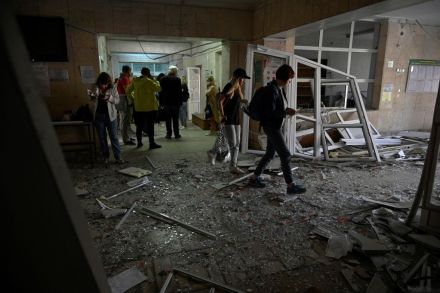
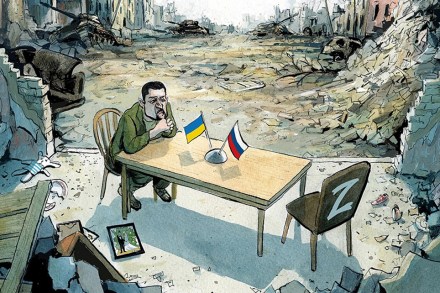
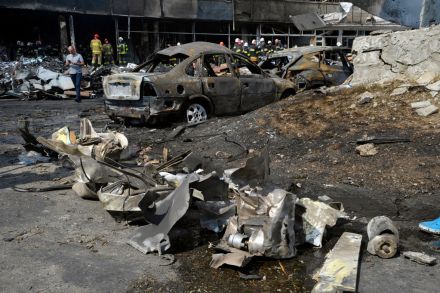
On Xi Jinping’s recent visit to Moscow, Vladimir Putin suggested that China’s peace plan could potentially resolve the ‘conflict in Ukraine’ once the West and Kyiv are ready for it. However, last night, Russia launched a series of missile and drone attacks on Ukraine, indicating that Moscow’s intentions are to resolve the conflict through force. While rescuers try to find survivors under the debris of the apartment blocks, the US has warned Kyiv that Putin may launch another offensive in the coming weeks, possibly on different fronts.  Amid reports that Russia is running low on missiles, it now relies on Iranian drones for assaults on Ukrainian cities. Last night, 21 Shahed-136 drones were fired: the Ukrainian military said it downed 16 of them.

Russian missiles blown up in Crimea

Ever since last February’s invasion, Russia has used Crimea – annexed in 2014 – as a base for its military. But that base is now under regular attack. Last night, cruise missiles being transported from Crimea were blown up by drones. The attack was in Dzhankoi, a junction just north of Crimea used by Russia to supply troops in the mainland. The attack exposes not just the vulnerability of Putin’s military (the $6m-a-throw Kalibr missiles should not be vulnerable to drone attack) but the quality of Ukraine’s intelligence. It appears that someone on the inside leaked information about moving the missiles. These missiles – with a 1,500-mile range – have been used to hit Ukrainian critical infrastructure. Russia is anyway understood to be running low on supplies.

Why did a Russian jet and a US drone collide?

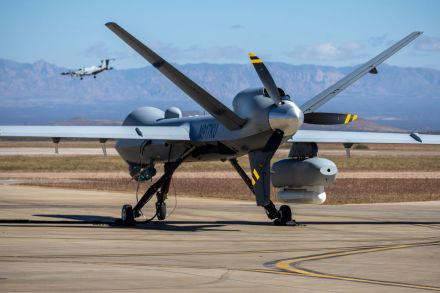
The United States and Russia are blaming each other for an incident which led to an American drone crashing into the Black Sea. Yesterday morning, a Russian Su-27 fighter jet collided with a US MQ-9 Reaper surveillance drone. The US claimed that Russian aircraft struck the drone’s propellors, so US forces had to bring the Reaper down in international waters. Moscow has denied this, saying the US drone flew erratically and collided with the water’s surface. US general James Hecker said the drone was conducting ‘routine operations’ when two Russian jets ‘dumped fuel on and flew in front of the MQ-9 in a reckless, environmentally unsound and unprofessional manner’. He also said that ‘this unsafe and unprofessional act by the Russians nearly caused both aircraft to crash’.

Ukraine can sympathise with Georgia’s pro-EU movement

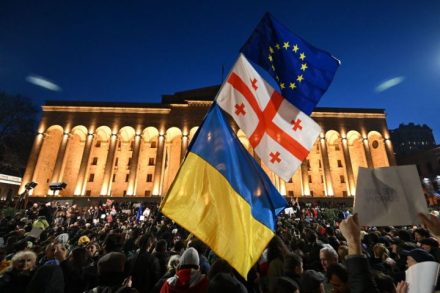
Protests that broke out in Tbilisi against adopting a controversial Russian-style law have turned into a pro-European movement with political demands. The law could have seen media and non-government groups which take funding from abroad classed as ‘foreign agents’. Although the Georgian government has released all arrested protesters and dropped the proposed law, which copied repressive Russian legislation and threatened to ban NGOs and independent media from operating in the country, the opposition is now demanding the resignation of the current Georgian government – along with early elections.  Looking at the EU flags raised by upset Georgians, Ukrainians are comparing the rallies in Tbilisi with the 2014 Maidan revolution in Kyiv.

The rationale for Putin’s latest attack on Ukraine

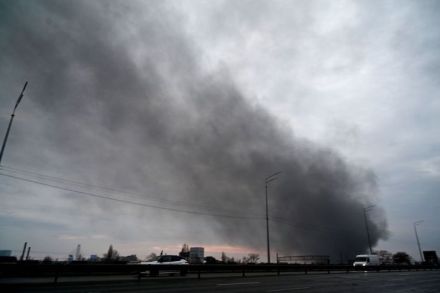
It has long been suspected that Russia was going to mount a renewed military offensive in Ukraine as spring approached. This fear was realised overnight. From midnight to 7.a.m., Ukraine suffered one of the worst barrages of Russian bombing this year: some 81 missiles were fired at residential buildings and critical infrastructure from air, land and sea, including several hypersonic Kinzhal missiles. Some 34 missiles were intercepted in total, Ukrainian authorities said. Ukraine was not able to down many, as it does not yet have the Patriot system that can intercept them. The commander-in-chief of Ukraine’s armed forces, General Valeriy Zaluzhny, said eight Iranian-made drones were also launched; four were intercepted. The BBC reported that at least nine civilians have been killed.

Why are Russian soldiers videoing their war crimes?

One of the strange aspects of the conflict is that Russian troops not just commit war crimes but film themselves doing so. Another one was released today: a captured soldier surrounded by his soon-to-be executioners. He is standing over a hole he appears to have dug himself. He looks at his Russian captors with contempt, smoking a cigarette and then says ‘Glory to Ukraine’. He is then shot dead. Where and when the video was shot is not yet known. To publish such videos, the Russian soldiers have to be sure that they won’t be punished for it by their own command This is not the first time Russians have publicly committed war crimes.

Will Ukraine retreat from Bakhmut?

‘Is Putin winning?’ asks the cover of this week’s Spectator. Until recently the overall narrative around the war focused on how much land Ukraine was liberating from Russian occupation – but the Kremlin's strategy of throwing soldiers into the meat-grinder is paying off, with significant progress on their way to the encirclement of the city of Bakhmut. For over six months Bakhmut has been the hottest spot on the Donbas front, with Ukrainian soldiers holding steady against the Russian regular army and Wagner Group mercenaries. But the loss of the salt town of Soledar in January and overwhelming Russian artillery and man density has allowed Russian forces to cut off two of Ukraine’s three main supply routes to Bakhmut. Now, they hold the last major road under fire control.

Is Putin winning?

37 min listen

This week:Is Putin winning?In his cover piece for the magazine, historian and author Peter Frankopan says that Russia is reshaping the world in its favour by cultivating an anti-Western alliance of nations. He is joined by Ukrainian journalist – and author of The Spectator's Ukraine In Focus newsletter – Svitlana Morenets, to discuss whether this could tip the balance of the war (01:08).Also this week:The Spectator's assistant online foreign editor Max Jeffery writes a letter from Abu Dhabi, after he visited the International Defence Exhibition. He is joined by author and former member of the ANC Andrew Feinstein, to uncover the covert world of the international arms trade and how governments seek to conceal it (17:52).