Svitlana Morenets

Svitlana Morenets

Svitlana Morenets is a Ukrainian journalist and a staff writer at The Spectator. She was named Young Journalist of the Year in the 2024 UK Press Awards. Subscribe to her free weekly email, Ukraine in Focus, here

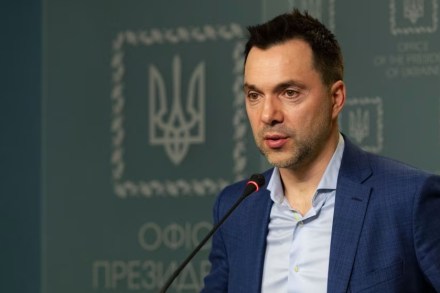
Oleksiy Arestovych is no friend of Ukraine

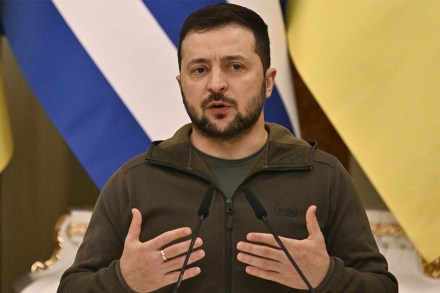
The debate over the necessity of Ukraine’s presidential elections is creating chaos in a nation at war. The ceasefire among Ukrainian politicians is crumbling as some of them start to chase votes. Oleksiy Arestovych, a scandal-hit former adviser to the head of the presidential office, has called Volodymyr Zelensky a dictator and announced he will run for office in the next presidential election, whenever it happens. Arestovych now wants to surrender Ukraine's occupied territories to Russia Arestovych, 47, was one of the most famous members of Zelensky's team and gained popularity at the beginning of the full-scale invasion.

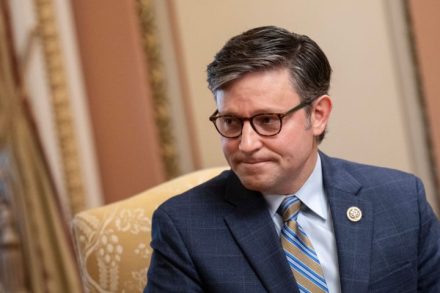
Will the new US Speaker spell trouble for aid to Ukraine?

For the past few weeks, the US House Speaker’s chair has sat empty. Kevin McCarthy was ousted from the position on 3 October amid accusations from some Republicans that he was colluding with Democrats in a ‘secret deal’ to assist Ukraine. While the position has been vacant, critical legislation, including aid for Ukraine, has not been able to pass. But with the election of Mike Johnson, an ally of Donald Trump who is known to be Ukraine-sceptic, US politicians may have chosen their stance on the conflict. This development follows a decline in support for aid to Ukraine among both Democratic and Republican voters.

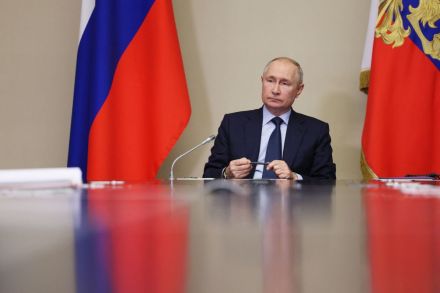
Is Russia’s latest offensive faltering?

Russia’s latest offensive has exacted a heavy toll on its forces. They have lost 127 tanks, 239 armoured personnel vehicles and 161 artillery systems in the past week, according to Kyiv, with the casualties reaching more than 3,000 military personnel. Vladimir Putin is trying to change the narrative, framing Russian forces’ actions as ‘active defence’ rather than ‘active combat operations’. While Putin tries to temper expectations of major frontline gains, the battle for Avdiivka persists, albeit with waning intensity. ‘I hope that these dirtbags who settled in Avdiivka will be levelled with three-ton bombs in a similar way Israel is levelling Gaza right now’, said Sergey Mardan, a Russian state TV host.

Russia is trying to break through Ukraine’s front line before winter

Ukraine is on fire. Russian forces have launched an offensive across the entire front line in their final push before winter. About a hundred combat clashes took place yesterday, one of the most decisive of which is unfolding in Avdiivka. A suburb of occupied Donetsk, Avdiivka fell under the control of pro-Russian militants for three months back in 2014 before it was liberated. Now Avdiivka is under attack again, with Ukrainian soldiers trying to stop the largest offensive on the city since the onset of the war. Avdiivka has been semi-encircled by Russian forces from the north, east and south for months, with little change on the ground. In the initial assault on Tuesday, approximately 2,000 Russian soldiers and up to a hundred armoured vehicles descended upon the city.

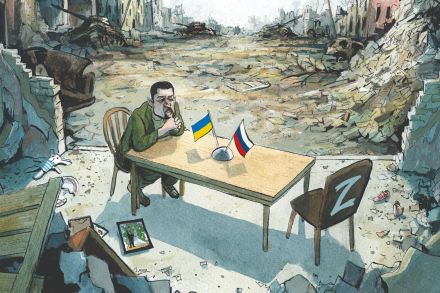
Should Ukraine hold a general election next year?

In the months before Russia invaded Ukraine last year, Volodymyr Zelensky was fighting for his political life. The former comedian was elected in 2019 on a pledge to end the war in Donbas by an electorate exasperated with its political class. Zelensky initially set out to negotiate with Vladimir Putin – but achieved nothing. He appeared naive and out of his depth. However, Zelensky’s transformation into a wartime leader captured the world’s imagination and rallied his allies. Yet some of those allies are beginning to ask whether, if this war is really about the free world versus autocracy, as Zelensky claims, Ukraine should hold a general election next year.

Can Poland and Ukraine end their grain spat?

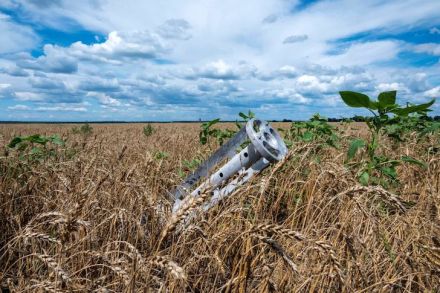
Poland has said it will no longer supply Ukraine with weapons, that it may cut aid to refugees and that it could restrict the import of a larger number of agricultural products. Polish president Andrzej Duda has compared Ukraine to a ‘drowning man’ capable of dragging his country ‘into the depths’. A month ahead of the Polish elections, it’s worrying language for Ukraine from a country that has, for so much of the war, been one of its staunchest allies. Ukraine needs Poland more than Poland needs Ukraine. Since the onset of the full-scale war, Poland has spent more than £2.5 billion to support Ukraine with weapons and financial aid, often prioritising Ukraine’s interests over its own.

Bombshell: Why aren’t we giving Ukraine what it needs?

36 min listen

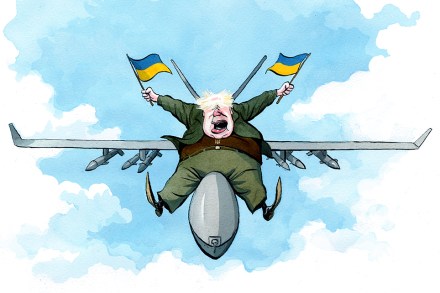
On the podcast this week: Boris Johnson writes The Spectator’s cover piece, urging the West to supply more military assistance to Ukraine, in order to bring a swift end to the war. Former commander of the joint forces Sir Richard Barrons and The Spectator’s Svitlana Morenets join the podcast to ask why aren't we giving Ukraine what it needs? (01:21) Also on the podcast:  Charlie Taylor, His Majesty’s chief prisons inspector, writes in the magazine about the state of crisis in British prisons. This is in light of Daniel Khalife's escape from Wandsworth prison last week. Charlie is joined by David Shipley, commentator and former inmate at Wandsworth to discuss the state of crisis in British prisons.

Ukrainian pupils face an impossible dilemma

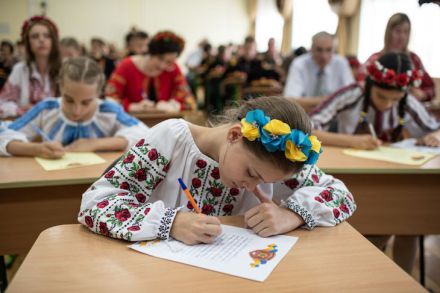
Today, almost five million Ukrainian pupils have gone to school – in person or remotely. Most didn’t have festive assemblies with flowers, songs and first graders reciting poems by heart, as they would have done before the war. The first of September doesn’t feel like a day to celebrate anymore. Today, every third child in Ukraine stayed at home – schools that could not build bomb shelters or are in the 60-mile danger zone from the frontline have not been allowed to reopen. These precautions are in place as gatherings of Ukrainians, even children, can attract Russian missiles and drones. Lockdown demonstrated, starkly, the detrimental effects of ‘home learning’. Screens are no substitute for classrooms. Education has become a casualty of war.

Meet the soldiers clearing mines for Ukraine’s counteroffensive

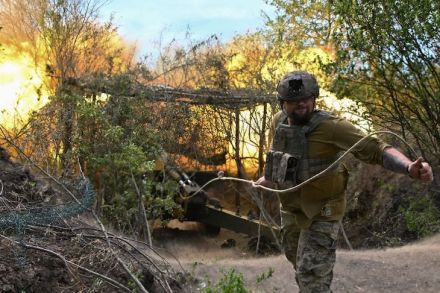
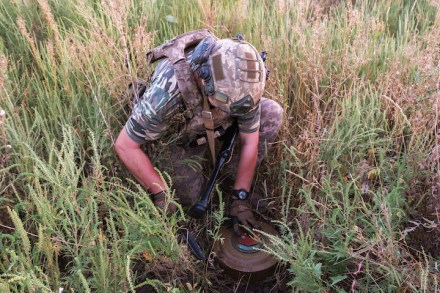
Nearly three months into their counteroffensive, the Ukrainian army has finally found a way to breach the first line of Russian defence. Ukraine has moved through minefields, 'dragon's teeth' defences and swarms of drones. They have retaken the village of Robotyne which lies on the highway to Tokmak, the next objective on the way to Melitopol (one of the main Ukrainian targets for blocking the land corridor to Crimea). Russia is trying to reinforce its defences, while Kyiv is anticipating a much-needed breakthrough.    https://datawrapper.dwcdn.net/CQwAn/3/ Russian forces have built some of the most extensive battlefield fortifications seen in Europe since the second world war to defend those borders it has managed to establish.

James Heale, Svitlana Morenets, Melanie McDonagh and Richard Madeley

28 min listen

This week James Heale describes the mess the Conservative Party has got itself into when selecting its parliamentary candidates (01.17), Svitlana Morenets is in Ukraine witnessing first hand the tragedy of how troops are dying for want of proper medical supplies and training (06.59), Melanie McDonagh discusses the art of kissing and when a kiss is not just a kiss (18.22) and Richard Madeley shares with us his diary in which he ponders Queen songs and cancel culture and the shocking case of Lucy Letby (22.07).

Ukraine’s real killing fields: An investigation into the war’s first aid crisis

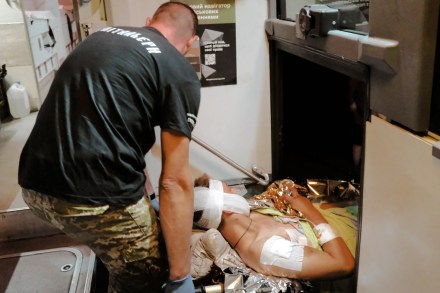
Donetsk It’s past midnight and I am standing in silence with the crew of a military ambulance on the edge of the Donetsk region. The village is dark to avoid attracting the attention of Russian drones. The paramedics move with quiet determination, lifting blood-soaked stretchers and ferrying moaning, injured soldiers from one vehicle to the next. I see a wounded man with bandages where his legs used to be. His severed limb sits next to him in a bag. There are no figures for how many Ukrainians have been maimed in this war. Nor are there proper figures for the dead. Kyiv doesn’t give body counts, saying only that Ukrainian casualties are ‘ten times less’ than Russia’s. Keeping the numbers secret prevents scrutiny.

Why was a Ukrainian fencer punished for not shaking a Russian’s hand?

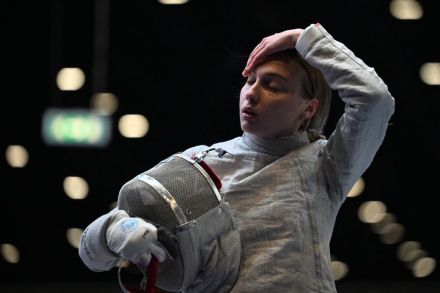
Must politics stay separate from sport? Ukrainian fencer Olha Kharlan has been disqualified from the World Fencing Championships in Milan after declining to shake hands with her Russian opponent having won the match yesterday. As it concluded, both athletes removed their masks and Anna Smirnova (who competed under a neutral flag) extended her hand. Kharlan responded by presenting her sword as if suggesting they touch sabres instead. Smirnova did not react.  Kharlan left the stage. Smirnova stood there for almost an hour, waiting for a handshake. Afterwards, Smirnova filed a complaint for lack of ‘show of respect’. The Ukrainian fencer was disqualified from the competition and suspended for 60 days from all further tournaments.

Inside Ukraine’s drone army

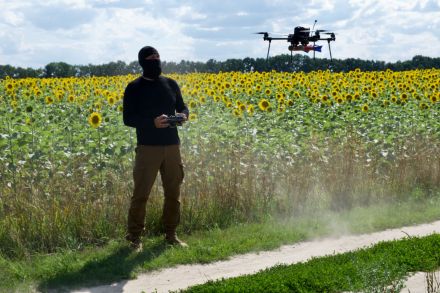
Kyiv ‘We will end this war with drones,’ says Mykhailo Fedorov, deputy prime minister of Ukraine. We meet at the Ministry of Digital Transformation, which he runs in Kyiv. It has become crucial to the counter-offensive. To reclaim occupied land, Ukrainian troops need to remove miles of landmines, and can do so only if kept safe by swarms of drones that fly ahead, searching for the enemy. Russia has drones too – many more of them – and is adept at jamming and downing Ukraine’s fleet. A drone arms race is under way. Soon after his election, President Volodymyr Zelensky asked the then 28-year-old Fedorov to run a new ministry aimed at turning Ukraine into a digital country (or, as he put it, a ‘paperless state’).

Targeting Odesa marks a new turn in the war

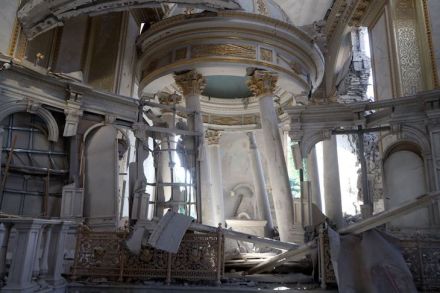
The world is waking up to pictures of fresh destruction in the Ukrainian port city of Odesa, which has been under constant Russian fire since the grain export deal collapsed last week. At least one person has been killed and 19 more injured following missile strikes overnight. The roof of the recently-rebuilt Transfiguration Cathedral has partially collapsed, and there have been films of local residents trying to rescue icons and other sacred artefacts. The footage is striking - but a tiny part of what’s now at stake. Back in July 2022, Russia agreed not to destroy Ukraine’s grain-exporting infrastructure given how important the foodstuff is to Africa and world food prices; Turkey and the UN negotiated the deal.

This week’s Nato summit will embolden Putin

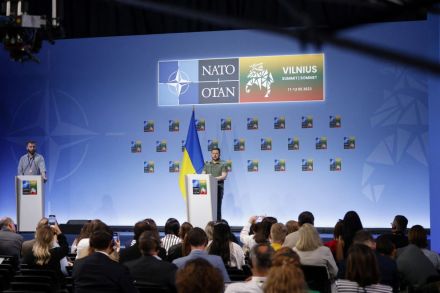
The Nato summit in Vilnius has not helped Ukraine. Rather than facilitating the country’s swift accession into Nato, the alliance introduced conditions for membership called the ‘Annual National Programme’: a fudge, in other words. Nato leaders said they would continually ‘regularly assess progress… on [Ukraine’s] path towards future membership’. Ukraine would be invited to join the alliance only once ‘conditions are met’, the document stated. Those conditions are Ukraine’s progress on democratic and security sector reforms. Volodymyr Zelensky, who nearly lost his temper, said that Ukrainians would like the allies to be more specific.

Exiled Belarusian opposition calls for army to rise against Moscow

With Vladimir Putin facing armed insurrection from Prigozhin’s Wagner Group, the exiled opposition in Belarus has called for its military to assert independence from Russia. Valery Sakhashchyk, Opposition defence spokesman, has released a video where he addressed his countrymen and the 38th Airborne Brigade, which he once commanded and is regarded as still loyal to him. His video (and my translation) are below: ‘All thinking people understood that the Russian Federation was built on lies, corruption and lawlessness and that it will fall apart sooner or later. We are witnessing the beginning of the active phase of this process. We do not know for sure what will happen tomorrow.

Russia’s nuclear blackmail

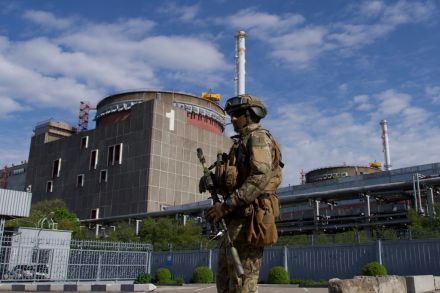
‘Dear Ukrainians! And all people of the world: everyone! I emphasise this,’ Volodymyr Zelensky said in a televised speech yesterday. Russia, he said, is planning a ‘terrorist attack’ using radiation leakage at the Zaporizhzhia nuclear power plant – Europe’s largest. Ukrainian intelligence repeatedly warned that Russian forces have sown mines in the plant, as it appears that they did with the Nova-Kakhovka dam. Ukrainians are gripped by an unsettling sense of déjà vu, fearing that the nuclear plant, which is under Russian control, will inevitably suffer the same fate. The Zaporizhzhia plant has been under Russian control since last March and has served as a safe facility for weapons and ammunition storage.

Key Ukrainian dam destroyed as counter-offensive begins

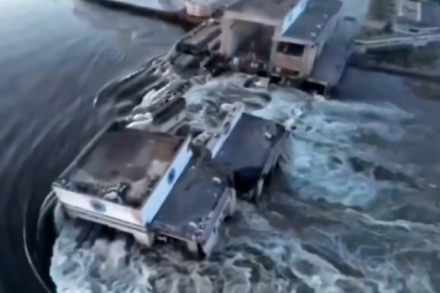
Hours after the Ukrainian army finally launched its long-awaited counter-offensive, the Nova Kakhovka dam has been blown up - which Zelensky blamed on 'Russian terrorists'. It belongs to the fifth largest hydroelectric plant in Ukraine, in the occupied part of the Kherson region, which was completely destroyed in the explosion. The flooding has been immediate: more than 80 settlements are in danger (with 16,000 people at risk) including Kherson itself. Kyiv has started the evacuation of the villages and towns located downstream of the Dnipro river. Whether Moscow will do the same for the people it now claims as Russian citizens remains to be seen.  https://twitter.com/ZelenskyyUa/status/1665952784665964545 As expected, Russia has denied responsibility.

Ukrainians are worried about the state of their bomb shelters

Russia fired more than 576 missiles and drones against Ukraine last month; Kyiv was shelled two days in three. Ukrainian air defence works smoothly, shooting down nearly 90 per cent of missiles – but even a successful intercept can lead to debris, causing death. This happened yesterday, in a case that is causing a national scandal. As the siren sounded over Kyiv, a man, his wife and his daughter headed with their neighbours to their shelter in Desnianskyi district – only to find it locked. The man, known as Yaroslav, ran to find someone to open it up. ‘People knocked and knocked again for a very long time. And no one [opened the door],’ he said, ‘and at that moment, the debris [of the missile] fell.’ That debris killed Yaroslav’s wife and two others, including a child.