Stephen Daisley

Stephen Daisley

Stephen Daisley is a Spectator regular and a columnist for the Scottish Daily Mail

Trump is a bully but it’s a mistake to stand up to him

Everything they taught you in school is a lie. Carthage was not salted, Canute knew he couldn’t control the tide, Marie Antoinette never said ‘let them eat cake’, and Mrs O’Leary did not start the Great Chicago Fire. Yet the biggest fallacy of the best years of your life is peddled not by teachers but by parents and schoolmates: namely, that you must always stand up to bullies. The logic is tempting. It sounds right all of the time, proves right some of the time, but gets you punched in the face most of the time. Bullies are bullies because they have power and should only be confronted directly if you have, or can amass with others, a greater quantity of power.


What Europe can learn from the White House clash

The Trump-Zelensky summit is a geopolitical Rashomon. Some saw a lying, maniacal bully and his snarling sidekick berate a patriot for telling the truth about his nation’s attacker and refusing to surrender to him. Others witnessed a bratty ingrate haughtily shaking his begging bowl while dictating to his benefactors the terms on which he would accept their charity. Or you might, like me, have watched a medley of the two, a war-worn leader grown impatient with diplomacy and unwilling to tell the great despotic lump in front of him whatever he wanted to hear. It’s possible to sympathise with Volodymyr Zelensky’s desperate situation, and his nation’s larger cause, and still regret his tactlessness in handling a neuralgic personality.

Palestinians blew their best chance for peace

Every time the Palestinians rebuff a peace proposal, commentators reach for an observation by the Israeli diplomat Abba Eban: ‘The Arabs never miss an opportunity to miss an opportunity.’ It’s pithy, and depressingly accurate, but I’ve always been more struck by another Eban aphorism: ‘Men and nations behave wisely when they have exhausted all other resources.’ Not as witty, I’ll grant you, but it gets closer to the psychology at play in this conflict. The Palestinians have been able to miss one opportunity after another because doing so has brought no lasting diplomatic consequences.

Scotland’s public sector is growing out of control

There is a perception that Scotland is a socialist basket case where a mammoth public sector is showered with English money, and I’m here to tell you that this perception is racist, offensive and… not entirely without foundation. The latest Scottish budget analysis from the Institute for Fiscal Studies (IFS) examines public sector pay north of the border and concludes that the burgeoning bill poses a ‘fiscal challenge’ to Scottish government finances. State employees now account for 22 per cent of the entire workforce, compared to 17 per cent in England, with an annual pay bill of £27 billion. Salaries for public sector workers, whose number has increased 11 per cent over the past seven years, represent more than half of all state spending in Scotland.

Parliament is embarrassing itself

Sidney Low said that ‘government in England is government by amateurs’, and parliament seems to be doing its level best to vindicate that view. The Assisted Dying Bill being rushed through the Commons with sinister alacrity has exposed structural flaws in our legislative procedures, not least the vulnerability of private members’ bills to exploitation by those determined that proper parliamentary process not hinder their legislation’s path to the statute books. Whether through truncated debate, a stacked committee, a lopsided witness list, unreliable undertakings, or the resolute incuriosity of scrutineers unwilling to scrutinise, the bill reminds us that institutions are only as reliable as the fidelity of those who populate them to a common ethos.

Israelis and Palestinians will be here again, and again, and again

‘When the Lord returned the captives to Zion,’ Psalm 126 goes, ‘we were like dreamers. Our mouths were filled with laughter and our tongues with songs of joy.’ Watching the images of Alexander Troufanov, Sagui Dekel-Chen, and Iair Horn paraded by their captors after almost 500 days of torment, there was no laughter and not a hint of joy. That the three Israelis have been reunited with their families will bring immense relief to those who know and love them, but it cannot give this nightmare the illusion of a dream. These captives have been returned, but others remain. Iair’s brother Eitan is still in Palestinian hands. Their mother Ruti says: ‘I am very happy, but the joy is partial. I still have one child who is there.’ Matan Zangauker is still there, too.

The question that should be asked about the West Bank

In all the argle-bargle over Donald Trump’s proposal for Gaza, there have been countless questions about legality, morality and feasibility. Isn’t the population transfer he suggests tantamount to ethnic cleansing? On what legal basis would the United States assert sovereignty over Gaza and enter into contracts with developers and investors? How could a country that fought a revolutionary war in the same of self-determination tell Gazans they must leave territory on which their families have been settled for generations? How would a redeveloped Gaza be paid for, governed, policed and populated? Would the Palestinians themselves benefit from it?  There is another question, a practical one, that seems to have been overlooked in all this: what about Judea and Samaria?

Trump’s ICC sanctions will test an outdated institution

Once you get beyond trade and maritime borders, you will find that much of international law is, pace Clausewitz, the continuation of policy by other means. The International Criminal Court (ICC) was continuing policy by other means when it issued arrest warrants for Israeli prime minister Benjamin Netanyahu and former defence minister Yoav Gallant. The two stand accused of crimes against humanity and war crimes over Operation Swords of Iron, Jerusalem’s response to the Palestinian invasion of its territory and mass murder of its citizens on 7 October 2023.

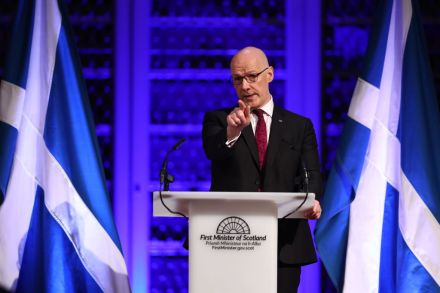
How John Swinney changes his stripes

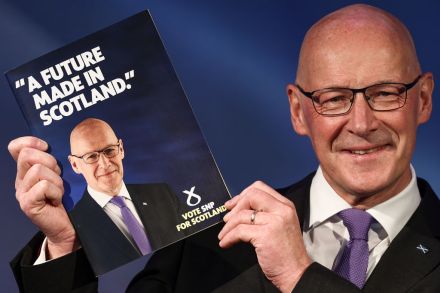
Turning around a government that has lost its way is one of the trickiest feats in politics, all the more so if that government has enjoyed a long stretch of incumbency. The big beasts are gone, everyone who’s left is exhausted, the voter coalition is coming apart, and some begin to question the party’s purpose in power. ‘Time for a change’ is no longer just an opposition talking point: even insiders wonder if a spell out of office wouldn’t be for the best. A party veteran or a rising star steps forward, pledging renewal, a fresh direction and a fighting chance come the next election. That was the offer made by James Callaghan in 1976, Gordon Brown in 2007 and Rishi Sunak in 2022. They each failed and their parties went down to significant defeats.

At least Rachel Reeves is trying

Rachel from accounts is settling up. In a speech at Siemens Healthineers near Oxford, the Chancellor signalled her commitment to development by backing a third runway at Heathrow, placing her on a collision course with net-zeroers, Nimbys and the other forces of decline. The interests ranged against her are mighty and loud, but if she delivers she will draw crucial battle lines for the next general election: a Labour government that gets things done versus the party of inertia and stagnation. The UK spent 14 years in stasis under a succession of Tory governments that preferred the maintenance of office to the exercise of power.

Against the death penalty, even for Axel Rudakubana

Should the Southport killer swing? Lee Anderson thinks so. The Reform MP posted an image of a noose on X, with the words: ‘No apologies here. This is what is required!’ It’s not the first time Anderson has backed the return of the rope, and not the first time I’ve contended that he’s wrong, but there’s something I want to say before getting into the nitty gritty. Wanting Axel Rudakubana dead is a thoroughly mainstream and entirely understandable view. Among those who have children, I would go further and suggest that it is the natural response.

Axel Rudakubana should never have been free to kill

Coulter’s Law, named after its originator, the right-wing polemicist Ann Coulter, holds that the longer it takes the authorities or the news media to identify the suspect in a terrorist attack or other notorious incident the less likely that suspect is to be white. Allow me to propose a British corollary to this rule: the law of displaced culpability. Where the identity or motivation of the suspect in a major crime requires the British state to confront shortcomings in its established doctrines, such as multiculturalism, untrammelled immigration or autonomy-maximising liberalism, it will displace culpability onto another factor, one that is secondary or even irrelevant to the crime but which the authorities feel more comfortable talking about.

Nine reasons why Trump means business this time

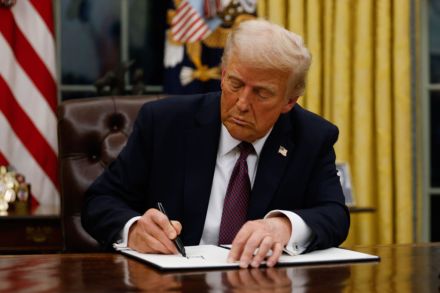
Since Franklin D. Roosevelt, every new US administration has been judged on its first hundred days, but it is in the first 24 hours, with a flurry of executive orders and memorandums, that a president sets the tone for the coming four years. The first 24 hours hint at nine themes that will define Donald Trump’s second administration. Trump is determined to settle scores Theme one: Trump II will see ‘America First’ placed at the heart of White House policy even more so than during Trump I.

It’s no surprise that democracy is losing its appeal

The Guardian reports that one in five voters under the age of 45 would prefer to do away with democracy and have an authoritarian strongman govern Britain. It’s almost touching that so many think Britain is still capable of being governed, but it’s concerning that a fifth of millennials and Gen Z have adopted the Kent Brockman position: ‘I’ve said it before and I’ll say it again: democracy simply doesn’t work.’ The findings come from the as yet unpublished FGS Global Radar report. More than 2,000 UK adults were asked to say whether ‘the best system for running a country effectively’ was democracy or ‘a strong leader who doesn’t have to bother with elections’.

Devolution is shortchanging England

The English taxpayer is not the primary audience for the Scottish government’s annual Budget, but one wonders what they might make of today’s announcements from SNP finance minister Shona Robison. An extra £2 billion for health and social care, bumping the overall cost of that portfolio to just under £22 billion. An additional £800 million for social security benefits and £768 million for affordable housing, taking the total spend on social justice to £8.2 billion. Plus, £1 billion for roads, raising the transport budget to £4 billion; £355 million for two new prisons as part of the £4.2 billion justice and home affairs budget; and a boost of £158 million to the £4.2 nillion education and skills budget.

The slippery slope to the return of the death penalty

Parliament has voted to proceed with Kim Leadbeater’s assisted suicide bill, which will see the NHS offer terminally ill people the opportunity to kill themselves and the lethal drugs with which to do so. The debate over assisted suicide is complex and often heated, with sincere and well-intentioned people approaching its profound moral and ethical quandaries from very different but passionately held perspectives. I would like to set those questions aside for now and ask a different but related one: if the state can help end the lives of terminally ill people, why shouldn’t it end the lives of murderers? The state can now be a party to the premature death of a citizen The last time capital punishment was used in the UK was 1964.

Britain has a blasphemy law in all but name

Anyone outraged by Labour MP Tahir Ali calling on the government to introduce blasphemy laws has clearly not been paying attention, for there are already blasphemy laws in this country. All Ali wants to do is make them official. When he urges Sir Keir Starmer to prohibit the desecration of the Qur’an and other Abrahamic religious texts, as he did at Prime Minister’s Questions, he will be aware that people are already punished for desecrating the Muslim holy book, including children. The Prime Minister is too progressive to allow himself to disagree with a religious reactionary In March 2023, a 14-year-old boy was suspended from school in Wakefield after a copy of the Qur’an was ‘scuffed’.

Why Scots are less angry than the English

The Scots have long been stereotyped as dour, miserable whingers, and we finally have proof that this is pure slander. Ailsa Henderson, a political scientist at Edinburgh University, has produced a presentation into political anger in the wake of the general election. She finds that the English are three times as angry about politics as the Scots, with 60 per cent fuming south of the border and just 20 per cent north of the Tweed. Voters for the two most anti-mainstream parties, Reform and the Greens, are the angriest, and while Liberal Democrats are the least angry there are still 53 per cent of them fit to be tied. Meanwhile, only 25 per cent of Scottish Tories and 20 per cent of SNP supporters express similar feelings.

The International Criminal Court must fall

The arrest warrants for Israeli prime minister Benjamin Netanyahu and former defence minister Yoav Gallant should be the last the International Criminal Court (ICC) issues. The ICC accuses the men, whose nation is embroiled in a multi-front war against enemies sworn to its destruction, of using ‘starvation as a method of warfare’, ‘murder, persecution and other inhumane acts’, and ‘intentionally directing an attack against the civilian population’. Merely to say the charges out loud is to expose their absurdity. Not only is there no evidence that Israel is denying the Palestinians food as a military tactic, there is copious evidence to the contrary: 1.1 million tonnes, to be precise.

Democrats don’t need their own Joe Rogan

One of the new cliches of American politics is that progressives need their own Joe Rogan. The comedian turned podcaster has an audience that is four-fifths male and 51 per cent aged 18-34, and it has not escaped the Democrats’ notice that, while women aged 18 to 29 voted overwhelmingly for Kamala Harris, men in the same age group went narrowly for Donald Trump. This tracks with pre-election research which showed a majority of Rogan listeners, regardless of sex or age, planned to vote Republican while only a quarter intended to back the Democrats. Rogan himself endorsed Trump, crediting Elon Musk for making ‘the most compelling case for Trump you’ll hear’. Since Rogan is America’s most popular podcaster, with 14.