Stephen Daisley

Stephen Daisley

Stephen Daisley is a Spectator regular and a columnist for the Scottish Daily Mail

Auditions for Sturgeon’s replacement are already taking place

Nicola Sturgeon has told Andrew Marr: ‘I do intend to lead my party into the next Scottish Parliament election and hopefully win that and stay as First Minister.’ What’s this all about, then? Didn’t she just record a stonking General Election victory north of the border? Yes, she did. Isn’t polling support for the SNP at levels that would impress even Kim Jong-un? Not quite, but not far off. The SNP leader finds herself in an unusual position. Electorally, she is her party’s most successful leader – winning three Westminster elections in a row and a third term in office at Holyrood. But Scottish Nationalists didn’t become Scottish Nationalists to win Westminster elections; they yearn to break free from the clutches of colonial tyranny.

Nicola Sturgeon’s immigration hypocrisy

Living in Scotland, it’s depressing to hear the way UK Government ministers talk about immigration. I have one proposal in front of me right now that advocates ‘a points-based approach’ as part of ‘a controlled immigration system to meet our own economic, social and demographic priorities and needs’. Anyone who wishes to ‘work, study or live’ here ‘will have to meet a set of reasonable and fair requirements to gain entry or approval to remain’. Predictably, for all the usual talk about attracting ‘skilled individuals from overseas’, there is the familiar obsession with numbers, especially of non-Europeans: ‘If there are higher than required numbers of non-European Economic Area/Swiss migrants...

What Lisa Nandy must do to reassure Britain’s Jews

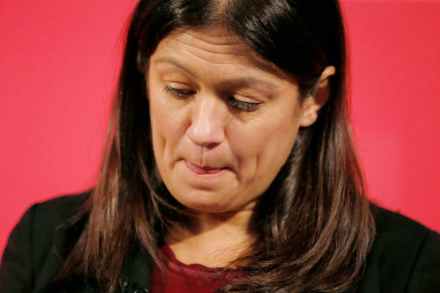
Lisa Nandy is the best candidate for Labour leader. That’s what I said last week and since then, she’s been endorsed by the Jewish Labour Movement (good) and backed calls for the Israel-ending ‘right of return’ (less good). So was I wrong to back Nandy? I’m not so sure. My argument for Nandy wasn’t of the Liz-Kendall-should-be-queen-of-everything variety. It was an acknowledgement that good governance requires an effective opposition. It reflected my view that Nandy is the candidate best placed to hold the Conservative government to account. But, yes, it was also a contention that Nandy’s speeches and proposals for addressing anti-Jewish racism were strong and impressive.

Sturgeon’s main strength is her lack of real opposition

The SNP’s ability to defy political gravity — a poll conducted last month put them on 51 per cent in Holyrood voting intentions — is easier to understand when you consider the alternatives. Jackson Carlaw, unveiled on Friday as Ruth Davidson’s successor at the helm of the Scottish Tories, is a pleasant chap with a certain flair but unlikely to bring the House of Sturgeon to its knees. Scottish Labour is led by Richard Leonard, a man so anonymous there are members of the witness protection programme with better name recognition. Scots go to the polls next May for the Scottish Parliament election and the choice is between the least effective government of the devolution era and an opposition most voters aren’t aware exists.

The UN should be ashamed of its anti-Israel boycott list

I knew if we waited long enough, the United Nations would make itself useful. The Office of the High Commissioner for Human Rights (OHCHR) has produced a handy catalogue of companies that supporters of Israel can give their business to. Of course, this was not Michelle Bachelet’s intention. Bachelet is the commissioner and before that she was an exquisitely unpopular Chilean politician and head of UN Women, the all-girl Ghostbusters of UN agencies that fights global mistreatment of women by putting out hashtags and putting Saudi Arabia on its executive board. Now Bachelet has released ‘a database of all business enterprises involved in certain specified activities related to the Israeli settlements in the Occupied Palestinian Territory’.

Will Boris come to regret his Treasury power grab?

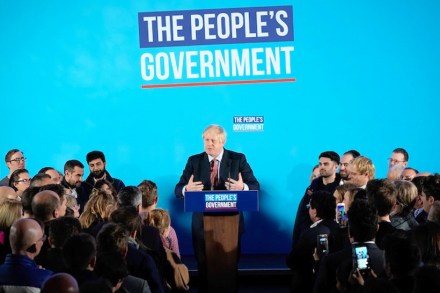
Has Boris Johnson made the first major error of his premiership? Choosing his adviser over his Chancellor could be seen as a bold gamble of the sort that won him a sweeping election victory and got the UK out of the European Union. We of little faith in the commentariat have often misread this prime minister and have been left looking like chumps as a result. But where Boris has succeeded is in defying the rules of politics and the circumstances of Sajid Javid’s departure have more to do with the rules of governance. Robert Peston says: ‘The PM and [Dominic] Cummings believe the success of the government in these challenging times require Downing Street and the Treasury to act, as far as possible, as one seamless unit.

Lisa Nandy is the best of a bad bunch

If Labour had chosen Liz Kendall instead of Jeremy Corbyn in 2015, she’d be prime minister by now. She was young. She had ideas. Inevitably, she got 4.5 per cent of the vote. It is therefore my solemn duty to inform Lisa Nandy that I consider her the best candidate for Labour leader. On balance, she seems to have the surest chance of saving the party. Not, of course, that Labour deserves to be saved. But it is in the country’s interest that the party that emerges over the next few years is the least extreme and least anti-Semitic one possible. Like anyone of good sense, I endeavoured to avoid this leadership election entirely, but then I started reading Nandy’s speeches and got hooked. ‘For decades...

Boris’s leaked tax plans suggest a truly radical Toryism

‘You want the dowry, but you don't like the bride’ is how Israeli prime minister Levi Eshkol summed up his colleagues’ wish to keep Judea and Samaria but not the Arabs living there. I feel much the same about right-wingers losing their shizzle over a report in the Sunday Telegraph about new taxes being mulled by Downing Street. Christopher Hope has two sources who say the Prime Minister and Chancellor are contemplating a ‘mansion tax’ (either in the form of an annual wealth tax or a higher council tax band) and cutting pension tax relief on those earning over £50,000 from 40 per cent to 20 per cent. ‘Had we wanted Labour, we'd have voted for Corbyn,’ huffed the Bruges Group.

Boris Johnson’s greatest challenge is nothing to do with Brexit

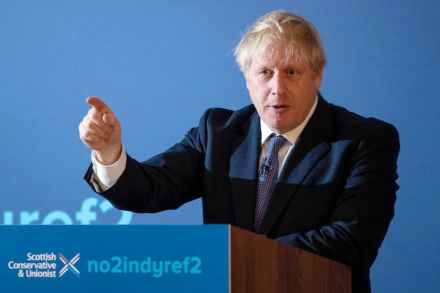
The Scottish papers carry two difficult polls for Downing Street. One, from Survation, puts support for independence at 50/50; another, from Panelbase, has it at 52 per cent in favour and 48 per cent against. The cursed percentages. I say difficult polls for Downing Street rather than Westminster in general because the Union — not Brexit, or terrorism, or northern regeneration — is the number one challenge facing Boris Johnson’s government. I appreciate that I banged on about this as recently as Friday but I intend to keep banging on about it because a) it’s true, and b) I cannot bring myself to care about Nish Kumar.

Labour’s Richard Burgon problem

Richard Burgon is an idiot. Yes, I know you subscribe to The Spectator expecting more high-brow invective but I believe in being direct. Now, ordinarily I’d be in favour of leaving such a simple creature to his own devices, but this is the Labour Party we’re talking about, so Daisley’s First Law applies: The worst candidate in any Labour election is the one most likely to win. Elections for the deputy leader of the Labour party are generally to be filed under ‘private grief’, but Burgon is bent on spreading the misery around. He wants to be ‘campaigner in chief’ and pledges that, ‘within the first month of being deputy leader I will visit every single seat we lost’.

Boris Johnson must start taking Scexit seriously

Polls come and go and the YouGov survey showing support for Scottish independence at 51 per cent should be read with that in mind. The Nationalists have been ahead before and have fallen behind again. What Downing Street cannot take in its stride is this: five years since the Scottish referendum, and with the SNP government in Edinburgh plagued by crises in health and education, support for secession has not fallen away. The separatists still enjoy a solid base of support, around 45 per cent, which delivered them 47 of Scotland’s 59 seats in the general election. They lost the 2014 referendum 55 per cent to 45 per cent and have been inching forwards ever since.

British universities are a modern-day racket

One of the great myths of Scottish higher education is that it’s free. Outside observers can be forgiven for making this error because Nicola Sturgeon asserts it so very often. She has boasted that ‘one of this government’s proudest achievements is the restoration of free higher education’, claimed to ‘stand for universal services, such as... free education’, and argued, naturally, that independence is ‘the only way to protect the advances that Scotland has made with devolution through the social contract, which has delivered vital universal benefits such as free university education’.

Taking the Lords out of London should be just the start

The proposal to relocate the House of Lords to York is harmless enough, though residents of York might disagree. The idea of an upper chamber of philosopher kings to check democratic excitability is sound in principle but when your definition of a philosopher king extends to John Prescott, you begin to question the merits of philosophy. If immediate abolition is too radical for the Tories, let’s punt the peers to the north east, note the inevitable drop-off in attendance and go in for the kill at a later date. But just as important as the de-Londonisation of the state (and the economy) is the de-Londonisation of the intellectual life of the UK.

The necessary case for Ian Murray as Labour’s deputy leader

Ian Murray is standing for a post last won by a Scot 88 years ago. Since its creation in 1922, the deputy leadership of the Labour Party has been filled by five Londoners, four Welshmen, three Yorkshiremen, two Lancastrians, one Cumbrian, one Plymothian and William Graham, the solitary Scot. Graham was also an Edinburgh MP, though having died in office after just four months, he may not be Murray’s desired role model. The case for ending nine decades of Scottish exile from Labour’s number two position seems particularly strong in light of the General Election. Murray was left, as he was in 2015, the only Labour MP in Scotland; his colleagues swept away in another SNP yellow wave.

Boris must correct the mistakes of Scottish devolution

Boris Johnson’s refusal to grant a second independence referendum is a source of relief rather than joy for Scottish unionists. Unionists won decisively in 2014 but their opponents’ failure to accept the referendum result has held Scotland in constitutional limbo ever since. Five years on a permanent campaign has been as healthy for the body politic as one might imagine, and while the discord over Brexit last year was unfortunate, it was hard to watch as a Scot without channelling Crocodile Dundee: That’s not bitter constitutional division. This is bitter constitutional division. Nicola Sturgeon has held Scotland hostage in pursuit of her constitutional agenda and allowed its health service and education system to deteriorate through neglect.

The gloriously unhinged progressive pushback against the Babylon Bee

From our US edition

Going viral is ordinarily pay-dirt for a small website: new readers, more subscribers, and a bigger slice of that sweet, sweet Google Ads revenue pie. Unfortunately for satirical Christian news-site the Babylon Bee, it went viral in the wrong way: it made fun of Democrats. Last week, its spoof story 'Democrats Call For Flags To Be Flown At Half-Mast To Grieve Death Of Soleimani' attracted 750,000 shares on social media. The headline and the body of the text are patently absurd and obviously satirical. Of course Democrats didn’t call for the flag to be flown at half-mast for Soleimani. It’s not like he was Osama bin Laden or anything. Donie O’Sullivan, who covers ‘disinformation, politics and technology’ for CNN, saw darker forces at work.

babylon bee

Can anyone stop the SNP’s drive for independence?

Nicola Sturgeon’s reshuffle of her Westminster team is more than a post-election shake-up of the Nationalist front bench. For one thing, it represents a shift to the next generation. Mhairi Black (25), who became something of a political superstar upon her election in 2015, has been promoted to Scotland spokeswoman; freshly elected Stephen Flynn (31) is suddenly shadowing the chief secretary to the Treasury; David Linden (29) will head up housing and local government policy; and Amy Callaghan, the 27-year-old who unseated Jo Swinson in East Dunbartonshire, will lead on pensions. The SNP has a wealth of talent coming up and is giving them their first step on the ladder. The SNP’s front bench line-up is markedly more impressive than Labour’s.

Boris Johnson’s dismal response to Qasem Soleimani’s assassination

Two weeks ago, I asked what kind of prime minister Boris Johnson might be and whether he could be ‘the great disruptor’ on foreign policy, defying standard practices and elite assumptions as Donald Trump has. I think I might have my answer. On Trump’s decision to take out Iranian terrorist-in-chief Qasem Soleimani, the Prime Minister was silent for two days. When he finally spoke, it was hardly worth it. Of course Johnson was right to say, given the Quds Force head’s role in the killing of thousands of civilians, ‘we will not lament his death’. He was right too to warn Tehran against escalation.

Labour’s defeat has not ended anti-Semitism

The defeat of Jeremy Corbyn and the Labour Party has afforded little respite to British Jews. Residents of Hampstead and Belsize Park woke on Sunday to storefronts and a synagogue daubed in the Star of David and ‘9/11’, apparently invoking the conspiracy theory that Jews were behind the September 11 attacks. December has been sweeps month for anti-Semitism across Europe. Two teenagers were charged after allegedly beating a rabbi in Stamford Hill while shouting ‘kill Jews’. A man was arrested on suspicion of racially or religiously aggravated assault after a United Synagogue official was attacked near his east London home. An Israeli student was assaulted on the Paris Metro for speaking Hebrew.

On foreign policy, Boris can be the great disruptor

Much of the post-election attention has gone on the next stage of Brexit and the government’s attempts to set down a domestic reform agenda that works for the Tories’ new northern constituencies. As such, the Integrated Security, Defence and Foreign Policy Review, briefed as ‘the deepest review of Britain's security, defence, and foreign policy since the end of the Cold War’, has so far been somewhat overlooked. Yet, as the terms of both the Queen’s Speech and Downing Street’s briefing underscore, this review will ‘reassess the nation’s place in the world’, a pretty significant remit. The Sovereign committed her ministers to ‘promot[ing] the United Kingdom’s interests...