Stephen Daisley

Stephen Daisley

Stephen Daisley is a Spectator regular and a columnist for the Scottish Daily Mail

Can the Tories hold on to their Scottish seats?

The prospect of a Christmas election is one the Scottish Conservatives do not greet with enthusiasm. The party has lost its leader, must fight a Brexit election in a country that voted 62 per cent Remain, and faces an SNP riding high in the polls. It is not difficult to imagine a scenario in which the party is flattened by another 1997-style wipeout. After that election, it took the Tories 20 years to recover their standing north of the border. Another trip to the ballot box will be a retention operation: how many of their 13 seats can the Scottish Tories hold onto? The SNP could not ask for a better set of circumstances in which to fight an election.

Voters are likely to turn their frustration on Parliament’s Brexit-blockers

Rumours of the Prime Minister’s death in a ditch have been greatly exaggerated. Parliament’s rejection of the Government’s programme motion for its withdrawal agreement bill makes it all but impossible for Boris Johnson to extricate the UK from the EU by 31 October as promised. It is an obvious defeat for a PM who got the job by swearing to Tory members that he would have us out by Halloween, no tricks, no treats, no last-minute scares. It is also, however, probably the optimal way for Johnson to break his oath. To the uninvested voter with only a passing interest in the goings-on at Westminster, tonight was not about the PM’s new withdrawal agreement or the programme motion or which Labour MPs trotted through the Aye lobby.

What Caroline Flint’s Brexit critics fail to understand

It must feel pretty lonely being Caroline Flint right now. The Labour MP has made herself unpopular with her comrades by backing Boris Johnson’s deal to leave the EU. Flint campaigned for Remain but accepts that her Don Valley constituency voted 68 per cent Leave. In the former mining towns of her South Yorkshire seat, Flint points out, the figure was closer to 80 per cent. ‘The voices in our mining villages remain unheard, despite their support for Labour over many decades,’ she records in her Labour case for respecting the outcome of the 2016 referendum.  Both Flint and her case have now felt the ire of the progressive Brexitariat, the analysts, academics and activists who frame elite debate on EU withdrawal.

Spain was wrong to jail the Catalan separatists

Some things just don’t pass the gut test. Your head tells you they’re right, all the facts point in their favour, but you can’t suppress a dyspeptic rumbling. The jailing of Catalan separatist leaders should give us all political indigestion. On Monday, Spain’s Supreme Court sentenced 12 activists and key figures from the autonomous government and parliament of Catalonia, all of whom helped organise an illegal referendum in October 2017 to secure independence for the Spanish region. Nine defendants, including former ministers and the parliamentary speaker, were jailed for up to 13 years for offences including sedition and misuse of public funds. Three others were fined for lesser offences.

Mumsnet, Flora and the spread of the corporate culture wars

There is something endearingly British about Mumsnet’s bloodymindedness. A website that, in theory, should be about the extortionate cost of childcare and moaning that Dear Husband forgot to take the bins out again has somehow found itself in the vanguard of the radical feminist movement. That quirk has now cost the site a partnership with Flora, which severed ties over what activists called ‘trans-hostile posts’ on Mumsnet’s forums. A margarine substitute producer might not be the kind of firm you’d expect to have strong political views but women discussing their sex-based rights on the internet seems to scrape their toast the wrong way. I can’t believe it’s not misogyny. Here’s what happened.

Thwarting Brexit probably won’t stop Brexit

What if they succeed in thwarting Brexit? The odds seem weighted against Boris Johnson delivering his do-or-die (-in-a-ditch) promise to get the UK out of the EU by Halloween. The Benn Act has tied the government’s hands so there is no need for Brussels to budge. Donald Tusk can wait until Johnson cracks and complies, or until the Remain Parliament ousts him and installs a prime minister who will hold a second referendum or revoke Article 50 altogether.  Because MPs have no commonly agreed position, we can’t be sure which eventuality we’re heading for, but we can agree that Britain’s membership continuing on November 1 would represent a big defeat for the Prime Minister, his government and the Brexit movement.

10 questions for Remainers, from a Remainer

We told them so, didn’t we? We said it was a terrible idea and would all end in tears. We pointed out that the UK doesn’t send £350 million a week to Brussels, that Turkey was not about to join the EU, and that Britain held the weaker hand and couldn’t dictate the terms of any new relationship. Now, 30 days out from our supposed departure date, Remainers find ourselves in the strongest position yet to thwart Brexit. Parliament has been unprorogued, the government’s hands have been tied, its majority obliterated, and opposition parties have learned to work together (more or less) to frustrate ministers.

Is the UK heading towards a US-style Supreme Court?

Ruth Bader Ginsburg likes her office. The US Supreme Court justice, a spry 86-year-old who trains twice a week with an ex-Special Forces soldier, is a liberal icon on America’s highest court. A decade ago, she gave an interviewer a tour of her chambers, explaining: ‘I like a quiet place and I am glad to be overlooking the courtyard and not the front of the building, and so I’m not disturbed by demonstrators.’ Demonstrators are a hazard of the job for a court that is, when all the polite artifice is stripped away, a supreme legislature of nine. On sitting days, when the rawest of issues are being decided, the more excitable among the citizenry gather for a spirited discussion about which side has the greater predilection for infanticide.

The truth about David Cameron’s progressive legacy

One of the downsides of all this snarking at David Cameron over Brexit is that the rest of his legacy is getting away relatively snark-free. Fraser Nelson has resumed his valiant campaign to repackage the Cameron years as a well-spring of progressive Toryism, specifically in job creation, the expansion of academies, and shifting the tax burden. This effort has always struck me as iffy. For one thing, shouldn’t conservatives want the credit for economic dynamism, school choice and tax cuts to go to conservatism, rather than concede them as ‘progressive’ outcomes which conservatives have achieved in spite of their unfortunate philosophy? But Fraser isn’t really a conservative.

Justin Trudeau isn’t a racist, he’s a spoiled rich kid

I don’t like to say I told you so — I bloody love it. Lo, a whole 19 months ago, I wrote on Coffee House that there was something iffy about Justin Trudeau’s behaviour on an official visit to India: ‘He turned up for one event in a gaudy golden kurta, churidars and chappals. At another, he broke into the traditional Bhaṅgṛā dance only to stop midway through when no one else joined in. Only after the local press pointed out that this was a little condescending and a lot tacky was Justin-ji finally photographed wearing a suit. ‘It was less like a state visit and more like a weeklong audition for the next Sanjay Leela Bhansali movie. Here was Justin Trudeau, the progressive’s progressive, up to his pagṛi in cultural appropriation.

How to tame Scottish nationalism

Happy Union Day, the fifth anniversary of Scotland’s vote to remain in the United Kingdom. It’s gotten so commercial, though at least voting No to independence means the Scots still have a currency to buy their celebratory Union Jack bunting in. Only there’s not much in the way of celebrations today. In 2014, the Better Together campaign made a big deal of an independent Scotland starting life outside the EU. Unionists don’t bring that up anymore.  Opponents of nationalism have lost their figurehead in Ruth Davidson and as well as Brexit they have been lumped with Boris Johnson, a man who polls in Scotland like veganism in Alabama.

Is time finally up for Benjamin Netanyahu?

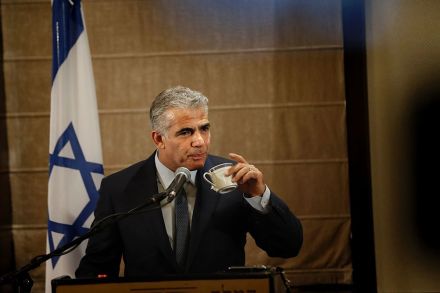
‘King Bibi’ they chanted at Likud’s victory party last night but Benjamin Netanyahu has not clinched victory and the crown could yet be snatched from his head. Israel’s second election of 2019 — a poll in April ended similarly in deadlock — is poised to end the reign of the country’s longest-serving prime minister. Votes are still being counted but centrist opposition Kachol Lavan is narrowly leading Likud. And when religious and other right-wing parties are counted, Netanyahu appears unable to reach the magic 61 seats required for a majority in the Knesset.

The truth about David Cameron’s ‘privileged pain’

The Guardian has achieved the not inconsiderable feat of whipping up sympathy for David Cameron. A leader column written for Monday’s edition of the paper, and posted online on Sunday, contained this bilious burp: ‘Mr Cameron has known pain and failure in his life but it has always been limited failure and privileged pain. The miseries of boarding school at seven are entirely real and for some people emotionally crippling but they come with an assurance that only important people can suffer that way. Even his experience of the NHS, which looked after his severely disabled son, has been that of the better functioning and better funded parts of the system.

Corbyn is the only unthinkable outcome in this political crisis

For something that has yet to and may never happen, Brexit has reordered the fundamentals of British politics in just three years. The Tories have shifted decisively from post-Thatcher ambivalence about their role as upholders of the prevailing order to a right-wing radicalism that views Parliament, the legal establishment, and captains of industry as threats to, rather than pillars of, British freedom. Electoral reformers who once downplayed the time-honoured link between constituent and parliamentarian now laud MPs who spurn a national result in deference to local opinion. Cultural identity has replaced austerity as the motor of progressive antagonism towards the Tories, who in turn have lost all interest in fiscal prudence and economic growth.

John Bercow has been a necessary defender of Parliament

John Bercow’s decision not to stand for re-election will bring some satisfaction to Brexiteers after several miserable weeks. The Speaker has been nakedly partisan, personally spiteful in the chair and done more to resist Brexit than the entire Labour Party put together. Many Tories consider him a jumped-up little twerp with an over-inflated sense of his constitutional significance but he is their jumped-up little twerp, one who entered Parliament by pandering to hard-right prejudices and whom backbench Tories rallied behind in 2015 when the Coalition government tried to get rid of him. Then Leader of the House William Hague concocted a plot to oust Bercow by introducing a secret ballot for electing a Speaker in the next Parliament.

Gatekeeper anxiety: a new disease for our times

A general election looms, the outcome could go almost any way and those who normally offer themselves as experts are seized by panic. Parliamentarians, journalists and academics who previously exerted a degree of control over policy, debate and knowledge — or flattered themselves to think they did — worry their grip is being loosened. Behold gatekeeper anxiety: political and media elites locked in a feedback loop of despair. Sufferers’ symptoms range from anguish to hysterical anger. The backlash against Boris Johnson’s decision to prorogue parliament is a good example. His move was political skulduggery — but the gatekeeper class hallucinated a ‘coup’ and imagined themselves as democracy’s last line of defence against tyranny.

The Glasgow riots reflect Scotland’s ugly political tribalism

In 2014, a young SNP activist called Aidan Kerr caused some consternation when he contended that Scotland was undergoing ‘Ulsterisation’. The nation’s politics, which for the past generation had pitched nationalism against social democracy, was becoming a battle between nationalism and unionism. The casus belli would be identity, not class or income. Kerr’s critics were soon silenced as his predictions began to pan out. The Scottish Tories replaced Labour as the main opposition on a single-issue pro-Union platform. Labour politicians who had avoided the term ‘Unionist’ because of its association with cultural Protestantism embraced the label, if often with evident discomfort.

Ruth Davidson’s departure would mean the end of the Scottish Conservatives

Ruth Davidson is set to quit as Scottish Conservative leader. A party source is quoted in the Scottish Sun saying Davidson’s departure will be as a result of the ‘huge pressure’ of new motherhood — she gave birth to a son, Finn, last October — and finding herself ‘at increasing odds with the new leadership in London’. What can we take from this? Twinning her objections to no-deal Brexit with the toll of mothering while in a high-pressured job dilutes her resignation as a protest against the course Number 10 has chosen today. And Davidson has been in politics (and before that journalism) long enough to know that.

Gordon Brown has done enough damage in Scotland

Gordon Brown has broken his silence again. The former prime minister told the Edinburgh International Book Festival that the Scottish Parliament had ‘failed to deliver a fairer and more prosperous Scotland’ and had instead become a ‘battering ram for constitutional warfare’. What’s that, Lassie? Timmy’s trapped down the well? And creating a Scottish parliament to run almost all of Scotland’s affairs separately from the rest of the UK helped rather than hurt the campaign for independence? Jeepers. The battering ram that Brown laments exists only because the party and government in which he played a somewhat senior role insisted on fashioning it.

Forget Greenland, Donald Trump should buy Scotland

Donald Trump’s attempted purchase of Greenland may have fallen through but if he’s still in the market, there’s some prime real estate in the neighbourhood. It’s smaller, yes, but just as cold, almost as sparsely populated and even has its own independence movement agitating for a breakaway. Happily, the president already owns a chunk of the country in question, so he might be able to get the rest for a bargain.  Scotland, not Greenland, is where Trump should redirect his interest. If it’s a few more golf resorts he’s keen on, we can provide the countryside. If he needs space for a military base or two the Highlands offer all the scenic seclusion you could ask for.