Stephen Daisley

Stephen Daisley

Stephen Daisley is a Spectator regular and a columnist for the Scottish Daily Mail

How should we handle progressives who spread coronavirus fake news?

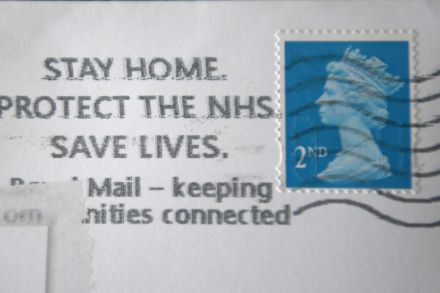
Here’s a thought experiment: Imagine there was a burgeoning global pandemic in a world in which there was also a universally accessible publishing platform without editors or regulation. Now, imagine some of the most influential contributors on that platform were spreading misinformation about the response to the contagion. Their conduct carries obvious risks: governments are dependent on public trust to ensure life-saving advice is heeded. In health emergencies, government can usually expect citizens’ in-built cynicism to be tempered by concern about the crisis at hand. But what if influential users of the publishing platform, through negligence or malice, caused public confidence to corrode in dangerous ways?

Israeli voters have reasserted an iron law of politics – Bibi always wins

‘Bibi Melech Yisrael’ they chanted at the Likud victory rally. ‘Bibi, king of Israel’. The Israeli media, the organised left and the international community have been reacquainted with the lesson they keep forgetting: never write off Benjamin Netanyahu. With counting so far putting Likud on 36 seats, he has achieved his best ever result as leader and the party’s best performance since Ariel Sharon’s stonking 2003 victory. He is still two seats short of an overall majority but his people are already working to tempt a number of opposition MPs over to his side. Israel’s third election in a year has seemingly ended a political stalemate in which neither Netanyahu nor his centre-left opponents could form a government.

Why Pete Buttigieg wasn’t ‘gay enough’ for the activist left

As Pete Buttigieg ‘suspends’ (read: ends) his campaign for the Democrat nomination, a few words are in order about the first openly gay presidential candidate from a major party. One of the most remarkable aspects of Buttigieg’s run — unthinkable even a decade ago — is that his homosexuality was more of an issue in the gay press than in the mainstream media. He was somewhat caricatured as a Leave It to Beaver gay: he and his husband Chasten look for all the world like your average middle-class suburban marrieds. They’re chablis and J Crew sweaters, not marching, chanting heteronormativity-smashers. This didn’t sit well with the activist gay left. (You know the sort I mean: the ones who’ve turned it into a calling).

Are women’s libraries still a safe space for women?

When is a women’s library not a women’s library? When the wrong sort of women try to use it. That seems to be the problem with Glasgow Women’s Library (GWL) which accepted then cancelled a booking from a feminist group, which it now claims does not meet its ‘values’. What kind of feminist organisation wouldn’t meet the values of a women’s library? You can probably guess where this is going. For Women Scotland isn’t just any feminist group; it’s a Bad Feminist group, one of those feminist groups that says women share a sex, not a ‘gender identity’, and questions proposed changes to the Gender Recognition Act to abandon medically-supported gender transition in favour of self-identification.

Pure chutzpah: the breathtaking daring of Operation Moses

Menachem Begin was Israel’s most reviled and misunderstood prime minister. Reviled by Britain for his paramilitary activities against the British Army in Palestine, Begin was a keen admirer of the Westminster parliamentary system and English common law. Reviled by Jimmy Carter as a hawk who refused to cede an inch of territory, this ultra-nationalist signed the peace treaty with Egypt that returned the Sinai. Reviled by the left as a racist and fascist, Israel’s first right-wing prime minister summoned the head of the Mossad soon after his victory and instructed him: ‘Bring me the Jews of Ethiopia.

The rise and rise of the SNP’s Kate Forbes

Few ministers are tested as abruptly as Kate Forbes has been. The SNP’s junior finance minister was promoted to the Scottish cabinet ten days ago and three weeks after Derek Mackay’s resignation forced her to deliver the budget with hours’ notice. Nicola Sturgeon’s minority government can typically rely on the dutiful support of the nationalist Scottish Greens but, come budget time, the finance secretary has to crack out the national credit card and buy the swampies off. Given the circumstances of Mackay’s departure and Forbes’ sudden elevation aged just 29, the Scottish government was more vulnerable than ever. Green leader Patrick Harvie could have produced a wish list and come away with his biggest ever budget haul.

Labour’s trans rights problem

How do you save a party that doesn’t want to be saved? Tony Blair doesn’t know but it hasn’t stop him trying. He is now warning Labour against retreating into a safe space of identity politics and angry, hectoring progressivism. Specifically, he has in mind the transgender movement and its astonishingly swift march through the institutions, including the Labour party. Blair cautioned: ‘You have got to distinguish between the advocacy of things that are right — gay rights, transgender rights, whatever it is — and launching yourself politically into a culture war with the right. If you go, “Transgender rights is our big thing,” and the right goes, “Immigration controls is our big thing,” you’re going to lose that.

Auditions for Sturgeon’s replacement are already taking place

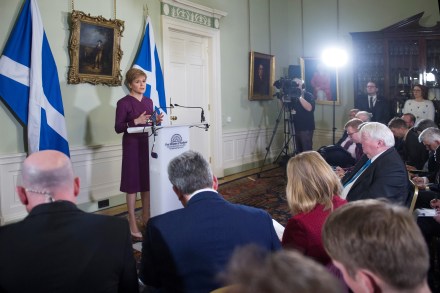
Nicola Sturgeon has told Andrew Marr: ‘I do intend to lead my party into the next Scottish Parliament election and hopefully win that and stay as First Minister.’ What’s this all about, then? Didn’t she just record a stonking General Election victory north of the border? Yes, she did. Isn’t polling support for the SNP at levels that would impress even Kim Jong-un? Not quite, but not far off. The SNP leader finds herself in an unusual position. Electorally, she is her party’s most successful leader – winning three Westminster elections in a row and a third term in office at Holyrood. But Scottish Nationalists didn’t become Scottish Nationalists to win Westminster elections; they yearn to break free from the clutches of colonial tyranny.

Nicola Sturgeon’s immigration hypocrisy

Living in Scotland, it’s depressing to hear the way UK Government ministers talk about immigration. I have one proposal in front of me right now that advocates ‘a points-based approach’ as part of ‘a controlled immigration system to meet our own economic, social and demographic priorities and needs’. Anyone who wishes to ‘work, study or live’ here ‘will have to meet a set of reasonable and fair requirements to gain entry or approval to remain’. Predictably, for all the usual talk about attracting ‘skilled individuals from overseas’, there is the familiar obsession with numbers, especially of non-Europeans: ‘If there are higher than required numbers of non-European Economic Area/Swiss migrants...

What Lisa Nandy must do to reassure Britain’s Jews

Lisa Nandy is the best candidate for Labour leader. That’s what I said last week and since then, she’s been endorsed by the Jewish Labour Movement (good) and backed calls for the Israel-ending ‘right of return’ (less good). So was I wrong to back Nandy? I’m not so sure. My argument for Nandy wasn’t of the Liz-Kendall-should-be-queen-of-everything variety. It was an acknowledgement that good governance requires an effective opposition. It reflected my view that Nandy is the candidate best placed to hold the Conservative government to account. But, yes, it was also a contention that Nandy’s speeches and proposals for addressing anti-Jewish racism were strong and impressive.

Sturgeon’s main strength is her lack of real opposition

The SNP’s ability to defy political gravity — a poll conducted last month put them on 51 per cent in Holyrood voting intentions — is easier to understand when you consider the alternatives. Jackson Carlaw, unveiled on Friday as Ruth Davidson’s successor at the helm of the Scottish Tories, is a pleasant chap with a certain flair but unlikely to bring the House of Sturgeon to its knees. Scottish Labour is led by Richard Leonard, a man so anonymous there are members of the witness protection programme with better name recognition. Scots go to the polls next May for the Scottish Parliament election and the choice is between the least effective government of the devolution era and an opposition most voters aren’t aware exists.

The UN should be ashamed of its anti-Israel boycott list

I knew if we waited long enough, the United Nations would make itself useful. The Office of the High Commissioner for Human Rights (OHCHR) has produced a handy catalogue of companies that supporters of Israel can give their business to. Of course, this was not Michelle Bachelet’s intention. Bachelet is the commissioner and before that she was an exquisitely unpopular Chilean politician and head of UN Women, the all-girl Ghostbusters of UN agencies that fights global mistreatment of women by putting out hashtags and putting Saudi Arabia on its executive board. Now Bachelet has released ‘a database of all business enterprises involved in certain specified activities related to the Israeli settlements in the Occupied Palestinian Territory’.

Will Boris come to regret his Treasury power grab?

Has Boris Johnson made the first major error of his premiership? Choosing his adviser over his Chancellor could be seen as a bold gamble of the sort that won him a sweeping election victory and got the UK out of the European Union. We of little faith in the commentariat have often misread this prime minister and have been left looking like chumps as a result. But where Boris has succeeded is in defying the rules of politics and the circumstances of Sajid Javid’s departure have more to do with the rules of governance. Robert Peston says: ‘The PM and [Dominic] Cummings believe the success of the government in these challenging times require Downing Street and the Treasury to act, as far as possible, as one seamless unit.

Lisa Nandy is the best of a bad bunch

If Labour had chosen Liz Kendall instead of Jeremy Corbyn in 2015, she’d be prime minister by now. She was young. She had ideas. Inevitably, she got 4.5 per cent of the vote. It is therefore my solemn duty to inform Lisa Nandy that I consider her the best candidate for Labour leader. On balance, she seems to have the surest chance of saving the party. Not, of course, that Labour deserves to be saved. But it is in the country’s interest that the party that emerges over the next few years is the least extreme and least anti-Semitic one possible. Like anyone of good sense, I endeavoured to avoid this leadership election entirely, but then I started reading Nandy’s speeches and got hooked. ‘For decades...

Boris’s leaked tax plans suggest a truly radical Toryism

‘You want the dowry, but you don't like the bride’ is how Israeli prime minister Levi Eshkol summed up his colleagues’ wish to keep Judea and Samaria but not the Arabs living there. I feel much the same about right-wingers losing their shizzle over a report in the Sunday Telegraph about new taxes being mulled by Downing Street. Christopher Hope has two sources who say the Prime Minister and Chancellor are contemplating a ‘mansion tax’ (either in the form of an annual wealth tax or a higher council tax band) and cutting pension tax relief on those earning over £50,000 from 40 per cent to 20 per cent. ‘Had we wanted Labour, we'd have voted for Corbyn,’ huffed the Bruges Group.

Boris Johnson’s greatest challenge is nothing to do with Brexit

The Scottish papers carry two difficult polls for Downing Street. One, from Survation, puts support for independence at 50/50; another, from Panelbase, has it at 52 per cent in favour and 48 per cent against. The cursed percentages. I say difficult polls for Downing Street rather than Westminster in general because the Union — not Brexit, or terrorism, or northern regeneration — is the number one challenge facing Boris Johnson’s government. I appreciate that I banged on about this as recently as Friday but I intend to keep banging on about it because a) it’s true, and b) I cannot bring myself to care about Nish Kumar.

Labour’s Richard Burgon problem

Richard Burgon is an idiot. Yes, I know you subscribe to The Spectator expecting more high-brow invective but I believe in being direct. Now, ordinarily I’d be in favour of leaving such a simple creature to his own devices, but this is the Labour Party we’re talking about, so Daisley’s First Law applies: The worst candidate in any Labour election is the one most likely to win. Elections for the deputy leader of the Labour party are generally to be filed under ‘private grief’, but Burgon is bent on spreading the misery around. He wants to be ‘campaigner in chief’ and pledges that, ‘within the first month of being deputy leader I will visit every single seat we lost’.

Boris Johnson must start taking Scexit seriously

Polls come and go and the YouGov survey showing support for Scottish independence at 51 per cent should be read with that in mind. The Nationalists have been ahead before and have fallen behind again. What Downing Street cannot take in its stride is this: five years since the Scottish referendum, and with the SNP government in Edinburgh plagued by crises in health and education, support for secession has not fallen away. The separatists still enjoy a solid base of support, around 45 per cent, which delivered them 47 of Scotland’s 59 seats in the general election. They lost the 2014 referendum 55 per cent to 45 per cent and have been inching forwards ever since.

British universities are a modern-day racket

One of the great myths of Scottish higher education is that it’s free. Outside observers can be forgiven for making this error because Nicola Sturgeon asserts it so very often. She has boasted that ‘one of this government’s proudest achievements is the restoration of free higher education’, claimed to ‘stand for universal services, such as... free education’, and argued, naturally, that independence is ‘the only way to protect the advances that Scotland has made with devolution through the social contract, which has delivered vital universal benefits such as free university education’.

Taking the Lords out of London should be just the start

The proposal to relocate the House of Lords to York is harmless enough, though residents of York might disagree. The idea of an upper chamber of philosopher kings to check democratic excitability is sound in principle but when your definition of a philosopher king extends to John Prescott, you begin to question the merits of philosophy. If immediate abolition is too radical for the Tories, let’s punt the peers to the north east, note the inevitable drop-off in attendance and go in for the kill at a later date. But just as important as the de-Londonisation of the state (and the economy) is the de-Londonisation of the intellectual life of the UK.