Stephen Daisley

Stephen Daisley

Stephen Daisley is a Spectator regular and a columnist for the Scottish Daily Mail

Scots are being sacrificed to a failed drug policy

The Scottish government’s attempts to spin the latest drugs deaths statistics are a grim response to a total failure of public policy, not to mention revealing of the attitudes of those responsible. While admitting the ongoing problem was ‘unacceptable’, the Scottish government could be found ‘welcoming an end to seven annual increases in drugs deaths’ in the opening line of its press release. Last year, 1,330 people died as a result of drug misuse in Scotland, nine fewer than in 2020. It was the first time in seven years that the number of fatalities did not increase overall, but it also marked the second-highest annual death rate since records began. Deaths have increased among women, over 35s and residents of Glasgow, Tayside and Ayrshire.

David Trimble was a true friend to Israel

Reflections on the life and legacy of David Trimble will naturally focus on his role in bringing peace to Northern Ireland, a feat for which he received the Nobel Peace Prize, but never the same esteem from the political and intellectual classes as went to the more romantic figure of Martin McGuinness. However, in his passing another worthwhile contribution he made to the world should also be remembered. Trimble was a steadfast friend of Israel, one whose friendship went far beyond mere statements of support. An officer of Conservative Friends of Israel, Trimble was frequently to be found accompanying new Tory MPs on their first visits to the Jewish state.

Viktor Orbán won’t save conservatism

It’s always the ones you most expect. Hungarian prime minister Viktor Orbán, nationalist strongman and post-liberal poster-boy gave a speech over the weekend on the evils of race-mixing. He was speaking on Saturday to attendees at Tusványos summer university in Băile Tușnad, Transylvania, previously an annual forum for Hungarian-Romanian dialogue but now an intellectual pep rally for the ultranationalist Fidesz party. According to the Budapest Times, he told his co-ideologues the West was ‘split in two’ between European nations and those in which Europeans and non-Europeans lived together. He declared: ‘Those countries are no longer nations.

Why won’t the UK recognise Jerusalem as Israel’s capital?

The opening of talks on a UK-Israel free-trade agreement (FTA) is a welcome development for both countries. The negotiations, launched by Trade Secretary Anne-Marie Trevelyan in a meeting with Israeli ambassador Tzipi Hotovely on Wednesday, follow a bilateral roadmap on cyber, tech and defence drawn up last year. As it stands, UK-Israel trade is worth £5 billion annually and 6,600 British firms sell to the Middle Eastern nation. The objective of the FTA would be to reduce commercial barriers further. Strengthening trade ties is of mutual benefit. More than 7,000 Brits are employed by Israeli-owned UK businesses and Israel is a key export market for London, the northwest and Scotland, who between them sell roughly half a billion worth of goods to the Jewish state every year.

The Union is in trouble whoever wins the Tory leadership race

It’s not a question that has enjoyed much play in the Tory leadership election but it’s a pretty important one: Should the United Kingdom continue to exist? That is essentially what Isabel Hardman tried to tease out of the three remaining candidates in The Spectator hustings, which comprised separate head-to-head interviews. Penny Mordaunt and Liz Truss were interviewed in person at The Spectator offices while Rishi Sunak spoke to Isabel down the line. https://www.youtube.com/watch?v=5Wfx5sWsl0I None of the candidates had any great insight into how to preserve the UK.

Kemi Badenoch’s last chance

Kemi Badenoch has one last chance. With Tom Tugendhat out on Monday evening, the MP for Saffron Walden is now bringing up the rear in the contest to replace Boris Johnson. With 58 votes from MPs, Badenoch is still substantially behind the third-placed Liz Truss on 71, with Penny Mordaunt coming second on 82 and Rishi Sunak far in the lead on 115. This would seem to confirm that Tory MPs want to offer their members a choice between A New Boris (Sunak) and either The Maybot Strikes Back (Mordaunt) or Return of the Maggie (Truss). Sunak and Mordaunt are continuity candidates and a victory for either would signal that the Tories have not changed and, in fact, see no need to change.

Penny Mordaunt’s worst trait

Right-wingers appear not to be terribly keen on Penny Mordaunt. Toby Young read her book Greater: Britain After the Storm and didn’t like what he found. Nor did Will Lloyd, over at UnHerd, who wrote that: ‘Mordaunt tacks to the centre, but ends up on the managerial left. What she writes sounds like it was dredged from a particularly poor speech given at Davos five years ago.’ Sam Ashworth-Hayes even goes so far as to suggest she would be better suited to leading the Labour party. Here we must draw the line. The Labour party is more than capable of anointing its own ideologically unsuited leaders, thank you very much. To her conservative critics, Mordaunt is not just liberal: she’s alarmingly woke.

We must believe the SNP when it says it wants independence

What is the most patronising response to Scottish nationalism? Received wisdom among the political, media and academic establishments north and south of the border says it is Unionism. Or rather, the sort of Unionism that says the constitution is reserved, Westminster should keep refusing another referendum, and perhaps should even legislate to inhibit or prohibit secession. I disagree. That sort of Unionism is the only one that respects nationalism. It listens to what the SNP has to say, takes its articles of faith at face value and, being of the opposite point of view, works to defeat the nationalists’ objectives. It is honourable intellectual combat. No, the most condescending response to the SNP comes from a particular kind of devolutionism.

Who will halt the SNP’s velvet revolution?

Where do the Conservative leadership candidates stand on the Union? Jeremy Hunt has ruled out another referendum in the next decade. Tom Tugendhat says the SNP ‘can’t keep asking the same question hoping for a different answer’. (Oh, sweet summer child.) Penny Mordaunt reckons ‘another divisive referendum’ is ‘the last thing Scotland needs’. The biggest question mark hangs over frontrunner Rishi Sunak, who once reportedly advocated English independence from Scotland on financial grounds. (Finally, a prime minister Nicola Sturgeon can do business with.) The Union ought to be front and centre in this leadership contest. It is under threat in a way entirely unique in its three-century history.

Does Suella Braverman understand welfare?

Suella Braverman’s welfare tirade exemplifies the current Tory pandering to baby boomer myths about social spending and moral decay. Interviewed by ITV News on Monday, the leadership candidate said: I think we spend too much on welfare. There are too many people in this country who are of working age, who are of good health, and who are choosing to rely on benefits, on taxpayers’ money, on your money, my money, to get by. I don’t think there’s enough rigour. Universal Credit’s been a brilliant thing in stamping out the culture of dependency but there’s further we can go, there’s more we can do. Since I’m about to be very critical, let's begin in a spirit of charity. There are roughly 3.

Who could replace Boris Johnson?

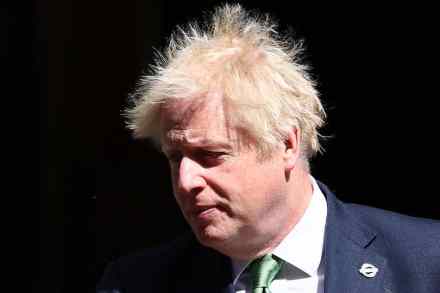
You have to wonder how much longer Boris Johnson can cling on. Sooner or later, he has to run out of ministers, right? Actually, I’m reminded of Australian prime minister Gough Whitlam who, unwilling to wait for Labor members to elect his cabinet after victory in the 1972 election, appointed himself and deputy Lance Barnard to a two-man ministry. For 14 days, the pair of them ran Australia on their tod, holding 27 ministerial portfolios between them. I used to think it an admirable feat.

Nicola Sturgeon has a key advantage in her independence fight

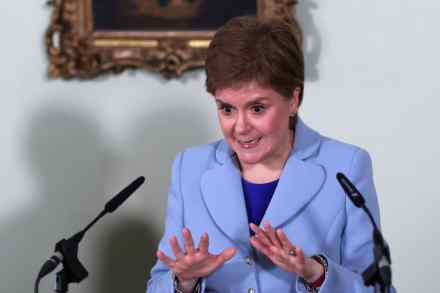
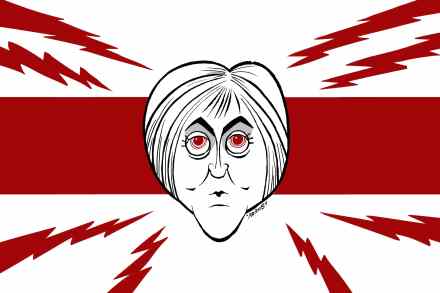
Nicola Sturgeon has unveiled her plan for another referendum on Scottish independence. The plebiscite – which Westminster will have to legislate for – will use the same question as in 2014 (‘Should Scotland be an independent country?’), and take place on 19 October 2023. The Lord Advocate, one of Sturgeon’s ministers, has referred the provisions of the Bill to the Supreme Court to determine whether they are in line with devolved powers. Writs have been served on the UK Government this afternoon. If the Court rules against the SNP, they will fight the next general election solely on independence, which Sturgeon asserts would be ‘a de facto referendum’.

Progressives, don’t cheer Rwanda’s setbacks

The last-minute halting of the first flight to Rwanda is humiliating for Boris Johnson’s government. An urgent interim measure from the European Court of Human Rights prompted a domino effect of domestic court orders that ended with the plane returning to base without passengers. The ECtHR’s order came down to three factors. First, that evidence from the UN High Commissioner for Refugees and others suggested asylum seekers transferred to Rwanda ‘will not have access to fair and efficient procedures for the determination of refugee status’.

It’s time for Westminster to take on the SNP

There will not be a legally binding referendum on Scottish independence next year. It’s important to bear this in mind when chewing over Nicola Sturgeon’s latest pronouncement. The SNP leader held a press conference on Tuesday morning to publish a paper on independence in advance of a plebiscite Sturgeon says will be held in 2023. She claims a mandate for such a vote from the 2021 Scottish Parliament election, in which the SNP and Greens ran on pro-referendum manifestos and won a majority of seats between them.

When will companies end their embarrassing Pride hypocrisy?

June is Pride Month, the annual exercise in rainbow-washing, and if you listen very carefully you may even hear gay rights mentioned. You might be familiar with Pride Month from past years. On 31 May, the bank is offering you a fixed rate with a four per cent APRC; on 1 June, it wants you to know that, on the off chance you’re non-binary, your mortgage-lender thinks that’s valid. The most obvious way for a corporation to signal its commitment to inclusivity is to emblazon its corporate branding with the Pride flag, but this is increasingly fraught with difficulty. Because, you see, the Pride flag is no longer inclusive.

Is this the answer to Scotland’s drug death epidemic?

Scotland could pioneer a scheme to cut drug deaths by allowing users to consume narcotics under supervision and with medical assistance on hand. The establishment of overdose prevention centres (OPCs) is proposed in a consultation launched yesterday by Labour MSP Paul Sweeney, who believes his Bill will 'implement changes that will save lives'. Sweeney, a former Royal Regiment of Scotland reservist, previously volunteered in an unofficial safe injection van in Glasgow and has told the Scottish parliament that he saw people saved from overdose. These centres would take what volunteers have already done and give it a legal framework. Although these centres are already used in parts of the US and Europe, Scotland would become the first UK jurisdiction to introduce them.

Are the Australian election results a bad sign for the Tories?

Scott Morrison’s Liberals were absolutely thrashed in the Australian elections this weekend. The party’s vote collapsed, and there were big-name defeats, with the man touted as Morrison’s successor – Josh Frydenberg – ousted in Kooyong, a suburb which had been in the party’s hands for 121 years. Whatever went wrong for the Morrison government, Saturday’s results might have relevance closer to home, even if teasing out domestic lessons from elections on the other side of the world is problematic. Australia is a different country, with a different political culture and a different electoral system. Scott Morrison was also an unloveable figure — stolid, gaffe-prone and not outwardly empathetic.

The partygate scalp hunters can’t complain about the fallout now

Robert Peston, the fiercely well-connected political editor of ITV News and a contributor to Coffee House, reports ‘a sense of injustice and considerable upset’ in Downing Street that ‘the 126 Partygate fines have been levied disproportionately on women and junior officials’. Robert quotes a source who complains that ‘the majority’ of those fined are ‘very junior diary managers’ on salaries of roughly £24,000 and that ‘these fines are really stacking up for them’. It seems there is considerable discontent among female staff fined ‘for events they were at with their male bosses who seem to have got away no problem’, and that ‘lawyering up’ appears to have made the difference.

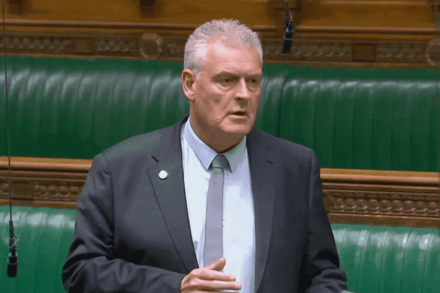
Why is Lee Anderson boosting Laurence Fox’s Reclaim?

Tory MP Lee Anderson has been having quite a week. It began with his declaration in the Commons that there was no ‘massive use for food banks in this country’ and that the problem was ‘generation after generation who cannot cook properly’ and who ‘cannot budget’. This earned him a few front pages and a ministerial disavowal on Sky News, plus a scathing response from food writer and anti-poverty campaigner Jack Monroe. Then, on Friday, Anderson popped up on Lozza’s Lock-in, a podcast co-hosted by Laurence Fox, the actor turned scourge of wokery who founded and leads the right-wing Reclaim party. Monroe’s criticisms were put to Anderson who responded with his assessment of the Guardian writer.

Lee Anderson is wrong about food banks

Who says the Tories don’t understand the cost-of-living crisis? So far obliviousness to the desperate circumstances of low-income (and not so low-income) families has been in evidence on the posho wing of the Conservative party. There was Rishi Sunak who said it would be ‘silly’ to provide more help with energy bills right now and better to wait and see what things looked like in the autumn. Not to mention environment secretary George Eustice who, offering some belt-tightening tips to struggling Brits, suggested ‘going for some of the value brands rather than own-branded products’ as a way to ‘contain and manage their household budget’.