Stephen Daisley

Stephen Daisley

Stephen Daisley is a Spectator regular and a columnist for the Scottish Daily Mail

The Tories are to blame for Scotland’s tax mess

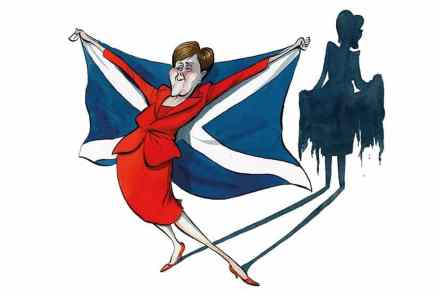
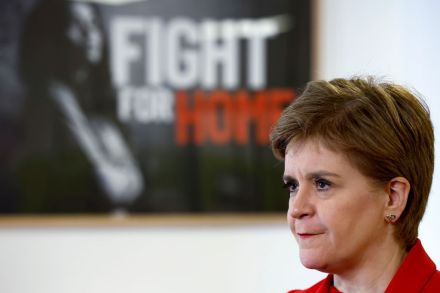
Lost amid much of the commentary on Kwasi Kwarteng’s income tax and stamp duty cuts is that they will not apply to Scotland. Income tax is largely devolved to Holyrood, as is stamp duty, or land and buildings transaction tax as it is now known north of the border. The Barnett formula, the fiscal mechanism by which the Scottish government is funded, means the devolved administration will be given an additional £630 million as a result of the Chancellor’s new measures. However, Nicola Sturgeon is under no obligation to use it for similar tax cuts in Scotland. She can spend it elsewhere or not spend it at all. The SNP leader was quick to deprecate Kwarteng’s tax cuts, saying the 'super wealthy’ would be ‘laughing all the way to the actual bank'.
In praise of France’s tributes to the Queen

The death of Elizabeth II has reacquainted Britain with all the cherished irrationalities that make us who we are. Hereditary monarchy. Unfathomable pageantry. Democratic grief. The joy taken in queuing. There’s no understanding these customs; tradition exists to be followed, not deduced. To love the British, you have to love, or at least accept, their curious foibles. There is one irrationality that is not exactly cherished but endures nonetheless and the Queen’s death has underlined just how irrational it is and how difficult to love. The British aversion to the French seems all the more perverse given la république’s extraordinary reaction to the passing of Britain’s longest-serving monarch.

Liz Truss should increase Universal Credit

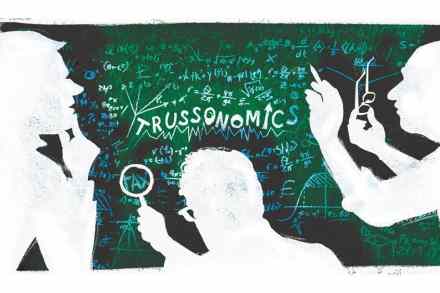
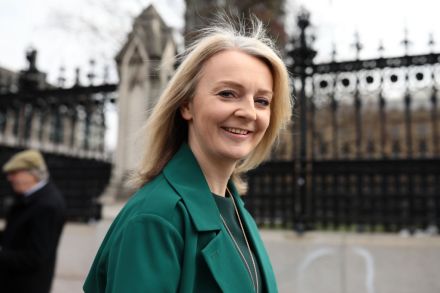
Liz Truss’s plans for a two-year energy bill freeze, estimated to cost £100 billion, underscore three points. One, the incoming Prime Minister expects the energy crisis to be with us for more than one winter. Two, she grasps how lethal it will be to the Tories’ hopes of re-election if the Treasury doesn’t intervene in a big way. Three, she is prepared to run up government debt even further in order to mitigate a crisis that threatens people’s quality of life. This third point is the crucial one. When a neo-Thatcherite like Truss concedes the merits of transformative interventions funded by borrowing, it opens up a broader conversation.

The case against a snap election

Unless Her Majesty throws us all a curveball, Liz Truss will be the next prime minister. So let’s knock something on the head here and now: she is under no obligation to call an election before January 2025. The replacement of one prime minister with another in the middle of a parliamentary term is not a democratic deficiency. It is parliamentary democracy in action. The prime minister and their cabinet colleagues are the Queen's ministers and when one ministry replaces another, power does not transfer directly but through the sovereign. It is the Queen who issues an invitation to form a government in her name and she does so on the basis of advice about who can command the confidence of the House of Commons.

A referendum act won’t thwart the Scottish nationalists

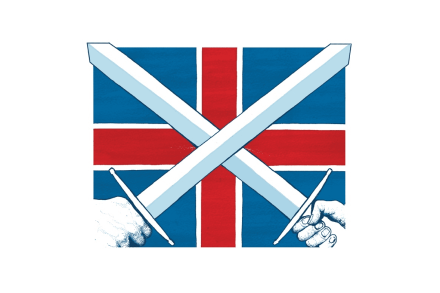
As someone who has been banging the drum for Westminster to legislate to secure the Union, it might seem churlish to gripe when legislation is proposed. In my defence, I am Scottish: churlishness is my birthright and griping my national pastime. So allow me to explain my grievances with the referendum act, which the Sunday Times says Liz Truss will introduce to ‘wreck the campaign for Scottish independence’. For one thing, I’m a traditionalist in these matters. I prefer the wrecking of the campaign for Scottish independence to be left to the experts: campaigners for Scottish independence. For another, passing a referendum act plays into the nationalist narrative that another referendum, or even independence itself, is inevitable. It is not.

The extremism on the unionist side of Scotland’s independence debate

When a nationalist mob descended on the Tory leadership hustings in Perth recently, those of us who criticise the SNP’s degrading of Scottish political discourse seized on the ugly scenes as another example. However, extremism is not limited to one side of Scotland’s constitutional divide. Last week, as she was attending an event at the Edinburgh Festival, Nicola Sturgeon was protested by a group called ‘A Force For Good’. Their number would generously be characterised as a handful and there is no suggestion they engaged in the sort of behaviour reported in Perth. In videos posted by the pro-Union outfit, a man can be heard shouting at Sturgeon, asking her to ‘apologise for damaging Scotland’ and asking when she will resign.

Can Lord Frost save the Union?

Lord Frost is tipped to head up the Cabinet Office under Liz Truss, making him the Prime Minister’s point man on the constitution. Is he the right man for the job? It’s hard to tell. He was willing to say what others wouldn’t about the Northern Ireland Protocol and the government has been nowhere on that matter since he left. He recently penned a piece on the looming constitutional crisis in Scotland, making him perhaps the only senior Westminster figure aware there is a looming constitutional crisis in Scotland. On the other hand, Unionists have been burned before. I remember one chump who heralded Michael Gove as the man to secure the Union.

Money won’t keep the Union together

Despite its name, Gers Day is not an annual celebration of the Ibrox side that makes up one half of Glasgow’s notorious Old Firm. If only it were that uncontentious. In fact, Gers stands for ‘Government Expenditure and Revenue Scotland’, the Scottish government’s yearly report on public finances. In a normal country, the publication of 76 pages of data tables and accountancy prose would go largely unremarked upon, so naturally in Scotland we have to turn it into another front in the independence wars. Because we really have nothing better to do. This year’s figures, like last year’s, reflect the unprecedented Treasury interventions during the Covid pandemic. However, they paint an otherwise familiar picture.

We shouldn’t accept the Channel crossings

Yesterday, 1,295 people arrived in the UK by crossing the Channel in small boats. That is the highest daily total since current records began being kept in 2018. More than 6,000 people entered the country this way in the first three weeks of August and more than 22,500 in the first eight months of the year. That is almost double the numbers seen at this point last year. From a video of the latest arrivals, there seem to be quite a number of young, fit, unaccompanied men. As an immigration liberal – someone who believes in safe, sustainable, legal immigration – it continues to baffle me that my fellow liberals are so relaxed about this. Supportive, even. These numbers are bad for us. There can be no liberal immigration system if there isn’t a system at all.

You can’t sit out the culture wars

As if Judy Murray wasn’t already a national treasure. When the tennis coach, mother of Jamie and Sir Andy, heard about a biological male poised to be awarded tour status by the Ladies’ Professional Golf Association, she tweeted: https://twitter.com/JudyMurray... The replies are what you might imagine but, refreshingly, Murray has not backed down or issued an apology. It’s important to have people as popular and high-profile as Murray speak out on the undermining of women’s sport. If we left it up to professional bodies and sports journalism, we’d get nothing but an endless stream of platitudes and craven championing of men taking women’s spots. It got me to thinking about who speaks out and why.

Can Israelis trust the UN?

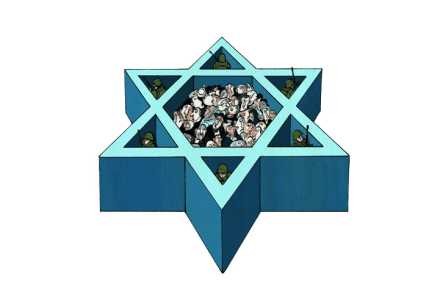
You probably think you’ve heard every story there is to hear about people getting fired over their tweets. Well, here’s the story of Sarah Muscroft. She’s got them all beat. Until last Friday, Muscroft was the head of the UN Office for the Coordination of Humanitarian Affairs in the Occupied Palestinian Territory (OCHA). For 72 hours beginning on 5 August, Islamic Jihad fired 1,000 rockets into Israel and Israel responded with 170 counterstrikes, with the terrorist group citing as its pretext Israel’s targeted killing of two of its senior commanders and the arrest of dozens of its members. Eventually, a ceasefire was brokered with the assistance of Egypt.

What the abuse of a BBC journalist says about Sturgeon’s Scotland

James Cook, the BBC’s Scotland editor, is ‘a traitor’. He is ‘scum’, ‘a scumbag’ and ‘a liar’. At least he is according to the Scottish nationalists who howled those epithets at him last night as he tried to report on the Tory leadership hustings. Outside Perth Concert Hall, a mob had gathered, as they invariably do when any of Scotland’s pro-Union parties meet, not for a spirited protest but to shout abuse and spew vitriol. These are the people who love Scotland so much they hate half the people living there. https://www.youtube.com/watch?

What exactly can the new PM do for Scotland?

Last night’s Tory leadership hustings in Perth saw Liz Truss and Rishi Sunak interrogated on their plans to tackle the energy crisis. As with other occasions on which they have fielded this question, neither of them gave particularly convincing answers. Both candidates have struggled to articulate an energetic government response to crippling increases in fuel bills for households and small businesses. At a time of acute anxiety for voters, when they are looking for reassurance, the message they are hearing from the Tories is that there’s only so much the state can do and it’s not very much at all. This pall of Whitehall impotence hangs even more heavily over Scotland.

Will the new PM recognise Jerusalem as Israel’s capital?

The race to replace Boris Johnson as Conservative leader and Prime Minister has been marked by acrimony. Rishi Sunak has established himself as the candidate of the centre and his rival Liz Truss the figurehead of the right. On one issue, however, they are on the same platform. Last night, Sunak spoke to Conservative Friends of Israel, a campaign group within the Conservative party that is popular with both MPs and grassroots activists. During the Q&A session, the former Chancellor was asked his position on moving the British embassy in Israel to Jerusalem, an issue that has sprung from relative obscurity in British politics to become a mainstream proposition.

The West cannot do business with Iran

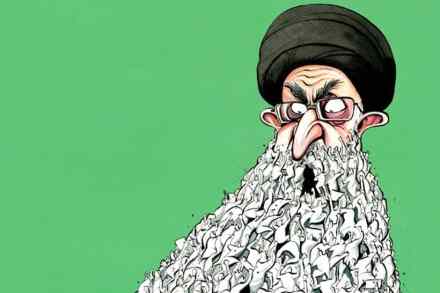
Salman Rushdie's would-be assassin might have been a lone wolf. He might have had no contact with military or intelligence figures. He might never even have set foot in Tehran. But be in no doubt: he acted, in effect, as an agent of the Islamic Republic of Iran. Under the terms of the fatwa issued by Ayatollah Khomeini in February 1989, Rushdie ‘and all those involved in its publication who were aware of its content, are sentenced to death’. Khomeini urged 'brave Muslims to quickly kill them wherever they find them so that no one ever again would dare to insult the sanctities of Muslims', adding: ‘Anyone killed while trying to execute Rushdie would, God willing, be a martyr.

Why everyone should be ‘quiet quitting’

The Devil Wears Prada, a 2006 box-office hit adapted from Lauren Weisberger’s best-seller, is the story of Andy Sachs (Anne Hathaway), an earnest reporter trying to break into New York journalism. Eventually she takes an entry-level job as a personal assistant to Miranda Priestly (Meryl Streep), the Anna Wintour-ish editor of Runway, a Vogue-ish fashion bible. Miranda runs her assistants and everyone else ragged with evermore unreasonable demands. One morning she gives Andy four hours to bring her a steak from Smith & Wollensky, a piping hot latte from Starbucks, and a copy of the new Harry Potter book. Not the one in bookstores: the unpublished manuscript for the next book, the one only JK Rowling and her publisher have copies of.

The next prime minister needs to stand up to Nicola Sturgeon

The next Prime Minister, whoever they are, really needs to get a grip on the declinism and defeatism of the UK government. A case in point is the statement issued today confirming ministers have submitted their case to the Supreme Court in the referendum showdown with Nicola Sturgeon. For those unfamiliar, the Scottish government intends to hold a referendum on independence next year, despite the Union being reserved to Westminster under the Scotland Act and Westminster declining to grant permission. So Sturgeon’s Lord Advocate — who isn’t herself convinced that her First Minister’s plan is lawful — will now argue before the Supreme Court that Holyrood doesn’t need Westminster’s permission to hold an ‘advisory’ referendum.

We need to talk about tasers

Donald Burgess is the latest Briton to die after being hit by a police taser. He won’t be the last, but the circumstances of his death underscore the need for a wider debate about conducted energy devices. Police were called to a care home in St Leonards-on-Sea on 21 June, where they found Burgess threatening staff with a knife. One officer sprayed him with PAVA, an incapacitant spray that the National Police Chiefs’ Council describes as ‘significantly more potent than CS’. The same officer then struck Burgess with a baton while another discharged a taser, sending an electric current coursing through the man’s neuromuscular system. He was then handcuffed and conveyed to hospital, where he died on 13 July.

Britain should follow Trump’s lead over Jerusalem

Liz Truss has signalled a historic shift in British foreign policy by saying she would review the location of the UK’s embassy in Israel in order to strengthen ties with the Jewish state. The announcement came in a letter sent by the Tory leadership candidate to Conservative Friends of Israel. The Foreign Secretary writes: ‘I understand the importance and sensitivity of the location of the British Embassy in Israel. I’ve had many conversations with my good friend Prime Minister Lapid on this topic. Acknowledging that, I will review a move to ensure we are operating on the strongest footing within Israel.’ The British Embassy is currently situated in Tel Aviv, despite Israel’s capital being Jerusalem.

Sturgeon isn’t an ‘attention seeker’

There is a lot of pearl-clutching over Liz Truss’s dismissive remarks about Nicola Sturgeon. Much of it involves conflating a dig at the leader of the SNP with a grave insult to Scotland. This is symptomatic not only of the fetid culture of grievance that permeates Scottish politics but of the steady merging of the party of government and the state itself. Were Emmanuel Macron to brand Boris Johnson an ‘attention seeker’, these same guardians of the public discourse would scoff at the suggestion it represented a slight against the British people. In fact, they would regard anyone proposing such an interpretation as a hysterical ideologue and perhaps even a jingoist. The difference is that Boris Johnson isn’t regarded as a semi-monarchical figure.