Stephen Bayley

Stephen Bayley is an honorary fellow of the RIBA, a trustee of the Royal Fine Arts Commission Trust and the co-founder of London’s design museum.

The faceless man in the bowler hat

From our UK edition

Surrealism was, at least initially, as much about writing as painting. A plaque on the Hotel des Grands Hommes in Paris’s Place du Pantheon records that the oneiric movement began in 1919 when André Breton and Philippe Soupault invented ‘l’ecriture automatique’ at numéro 17. Automatic writing, with consciousness suspended, was supposed to open a conduit to an internal dreamworld. René Magritte (1898–1967) became one of the most famous Surrealist painters, but he wrote throughout his life: detective stories, manifestoes, criticism, essays, prose-poems, lectures, surreal bric-a-brac. His Ecrits Complets was published by Flammarion in 1979 and ran to 764 pages.

Taking the pissoir

From our UK edition

You have to imagine the lines that follow in separate fonts to get the full sense of the nonsense in ‘Karawane’, one of Hugo Ball’s ‘verses without words’: jolifanto bambla ô falli bambla grossiga m’pfa habla horem égiga goramen And it ends not with a bang, but with ... ‘ba-umf’. See the original and it’s impossible not to be impressed by the industrial-strength madness of Ball’s absolute certainty. His poetics of nonsense claimed to drain words of meaning, but quite the opposite effect was achieved. The meaninglessness is itself meaningful: cognition is on an infinite loop. Sense or nonsense, Ball intended to show that ‘this humiliating age has not succeeded in winning our respect’.

These foolish things | 9 June 2016

From our UK edition

No reliable statistics exist — it’s not the sort of thing you can audit — but England is surely the most haunted country on earth. And haunted not just by white ladies, ghosts, headless highwaymen, spooks and phantoms, but by a recurrent dream of Eden and other more recently lost pre-industrial worlds. Thus follies and summer houses, Eden’s buildings, are among the nation’s most distinctive contributions to world architecture. They might be ‘fragile and neglected trivia’, according to Clough Williams-Ellis, but their ghosts remain and every garden centre pays tribute to a collective yearning for open-air theatricality, so that dreams dreamt in Shugborough might be replicated in Solihull.

The great pretenders

From our UK edition

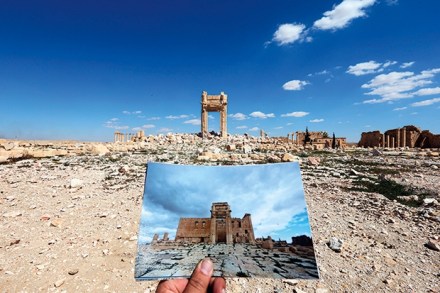
There is fakery in the air. And maybe the French are done with deconstruction. A drone operated by a French archaeology consultant called Iconem has been languidly circling Palmyra, feeding back data about the rubble with a view to reconstructing the ruins and giving the finger to Daesh. Cocteau said he lies to tell the truth. Iconem flies to tell the truth. In April, an exhibition called The Missing: Rebuilding the Past opened in New York which examined ‘creative means to protest preventable loss’. It was timed to coincide with the temporary erection of a frankly underwhelming two thirds-scale replica of the Palmyra Arch in Trafalgar Square, London. It goes to Times Square, New York, in September.

‘A good boy trying to be bad’

From our UK edition

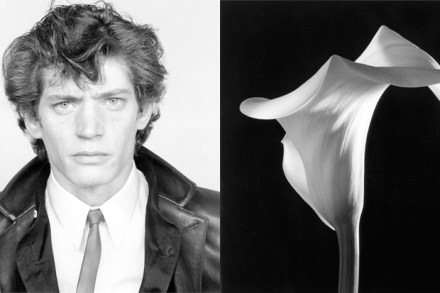
Robert Mapplethorpe made his reputation as a photographer in the period between the 1969 gay-bashing raid at the Stonewall Inn on Christopher Street and the identification of HIV in 1983. This was the High Renaissance, the Age of Discovery, the Bourbon Louis Romp, the Victorian imperial pomp, the Jazz Age, the Camelot moonshot, the Swinging Sixties of gay culture in New York. In the 18th century New York punished sodomy with death. This was later reduced to 14 years’ solitary or hard labour. By 1950, it was only a misdemeanour. By the Seventies, it was becoming positively fashion-able, like a ten-speed bike or a breadmaking machine.

You’ve been framed

From our UK edition

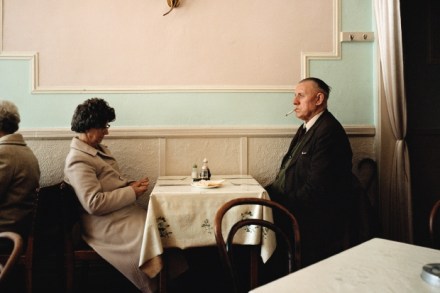
‘I like ordinary people,’ says the extraordinary photographer Martin Parr, pushing a few high-concept smoked sprats around his plate at St John, the Smithfield restaurant. Parr is Britain’s best-known photographer, but he is no acolyte of celebrity. Like the Italian anti-designers, his Seventies contemporaries who wanted to dull the sheen of modernism by elevating the mundane (or valorising crap, as I would put it), he is a devotee of the ordinary. But is he celebrating the everyday or mocking it? He never quite answers, although he does say, ‘I enjoy the banal.’ Ask me and I’d say the banal is what we want to avoid. Since 2014, Martin Parr has been president of Magnum, the celebrated international photographers’ collective.

Public offence

From our UK edition

[audioplayer src="http://rss.acast.com/viewfrom22/fightingovercrumbs-euroscepticsandtheeudeal/media.mp3" title="Stephen Bayley and Posy Metz from Historic England discuss public artwork" startat=1206] Listen [/audioplayer]There are, as adman David Ogilvy remarked, no monuments to committees. (That’s not quite true; Auguste Rodin’s ‘Burghers of Calais’ — you can find a version in Victoria Tower Gardens — is somewhat collectivist in subject matter.) But there are certainly abundant monuments to the committee mentality, the bureaucratic spirit and art-world groupthink. That is what most contemporary ‘public art’ amounts to.

The painter as poser

From our UK edition

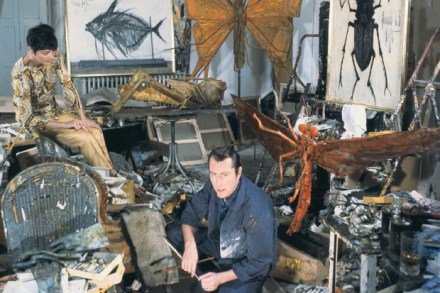
Bernard Buffet was no one’s idea of a great painter. Except, that is, Pierre Bergé and Nick Foulkes. Bergé was Buffet’s original backer and boyfriend, later performing identical roles for Yves Saint-Laurent, turning the sensitive designer into a global ‘luxury brand’ and turning himself into one of France’s richest men with pistonnage to spare. Foulkes is the accomplished writer on style who, in this new book, aims to rehabilitate an artistic reputation which he feels has been dissed by the narrow prejudices of the art-historical establishment. To a degree, this is true.

Eurovision

From our UK edition

Before cheap flights, trains were the economical way to discover Europe and its foibles. Personally, I enjoyed the old fuss at border crossings. By the time I was 18, I had memorised those warning notices in the carriages: Nicht hinauslehnen; Defense de se pencher au-dehors; E pericoloso sporgersi. Those three different ways of saying ‘don’t stick your head out the window’, one bossy, the other pedantic, another gently pleading, summarised the nice subtleties of national borders that were philosophical as well as political. Europe is a marvel.

The rise and fall of Sony

From our UK edition

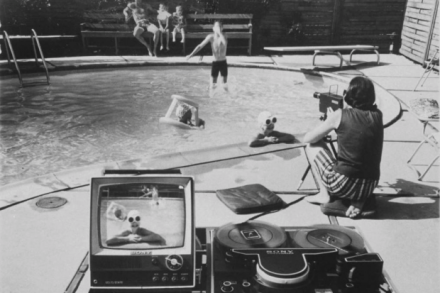
Here is a Japanese fairy tale for Christmas. An allegory of insight, opportunism and a fall from favour. It is 1945. Japan is devastated and disgraced, but two bright young men, Akio Morita and Masaru Ibuka, the first a salesman, the second an engineer, have a plan to turn toxic ashes into precious metal. They have discovered a curious typewritten document published by the Civil Information and Education division of the US Occupation Forces. It is called ‘999 Uses for a Tape-Recorder’. In those days, people needed to be told these things. Inspired, they form a company called TTK and Ibuka writes in its Purposes of Incorporation that it will make ‘imaginative use of technology ...to help restore national culture’.

The bicycle may have triumphed but it’s far from perfect

From our UK edition

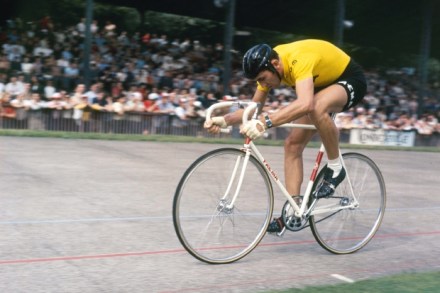
It’s extraordinary that it took civilisation so very long to discover the benefits of putting little wheels on suitcases. We knew how to fly before we realised it was no longer necessary to huff-and-puff baggage by hand. Even odder, steam and electricity were well understood before anyone got around to developing the ingeniously simple pedal-and-crank mechanism, an invention of decisive importance, which turned the ludicrous, wobbly old hobbyhorse into today’s smooth and sensible bicycle. Its eventual triumph over all our sensibilities can be seen today when, at some practical cost to the general mobility of the capital, London is being effortfully retrofitted with cycle lanes while oil-fired traffic is perpetually stalled in a noxious smog of its own making.

A soothing Negroni for la dolce vita

From our UK edition

The first draft of the famous story was called ‘A Martini as Big as the Ritz’. That’s not true, but F. Scott Fitzgerald was certainly at work in the First Cocktail Age. The Algonquin circle also floated into literary history on a choppy ocean of toxically high-ABV mixed drinks. The quotes and jokes are legend: Robert Benchley says to Ginger Rogers in a 1942 Billy Wilder film ‘Why don’t you get out of that wet coat and into a dry martini?’ (The line is also attributed to Mae West.) And ours is the Second Cocktail Age. While we wait for its literary heroes, three appreciative books are here to be enjoyed in immoderation. My generation prefers wine. Sometimes I feel we actually discovered Chardonnay, but a generation younger has rediscovered the cocktail.

Designing the swimming car, the Doodlebug and the Panzer tank was all in a day’s work for Ferdinand Porsche

From our UK edition

The aggressive character of the famous German sports car, in a sort of sympathetic magic, often transfers itself to owner-drivers. The joke goes: ‘When you get into a Porsche, you feel you want to invade Poland.’ In this fascinating and meticulously researched book, Karl Ludvigsen investigates the genetic spiral that gave Porsche cars the character of weaponry. All German manufacturers were forced to supply the Third Reich. The BMW-sponsored London Olympics 2012 were held on a site devastated by Luftwaffe planes powered by its engines.

Intelligent design | 29 October 2015

From our UK edition

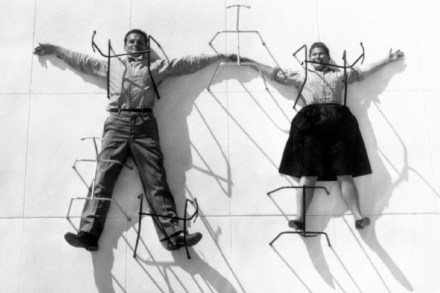
Peter Mandelson, in his moment of pomp, had his portrait taken by Lord Snowdon. He is sitting on a fine modern chair. Mandy would no doubt have been aware of the ancient historic associations, through bishoprics and universities, that chairs have with power. Since it is a chair much admired by architects, Mandy also looks quite cool, although these things are relative. The chair and its footstool are known as Eames Lounge 670 and Eames Ottoman 671, and they were first manufactured in 1956 by Herman Miller of Zeeland, Michigan. Curved plywood shells are veneered with Brazilian rosewood, upholstered with shallow black leather-studded cushions and supported, at a meaningful tilt (suggestive of relaxed authority), on a stellar metal support.

Stars in their eyes | 24 September 2015

From our UK edition

‘The dominant narrative of space,’ I was told, in that strange language curators employ, ‘is America.’ Quite so. Kennedy stared at the moon and saw a promotional opportunity. Nasa’s logo was designed by the flamboyant Raymond Loewy. A PR man wrote Neil Armstrong’s unforgettable lines. Every event at Cape Canaveral (later the Kennedy Space Center) was televised, while, in the USSR, Star City was built in furtive secrecy just outside Moscow. Tom Wolfe glorified the US space programme in The Right Stuff, his boisterous 1979 masterpiece of reportage where the cowboy mentality of the fly-boys co-mingled with the technical marvels of California aerospace, myth-making the while.

Zaha Hadid’s aggressive performance on Today confirms why architecture would be better off without her

From our UK edition

Zaha Hadid is the most famous woman architect in the world. Would women, or, indeed, architecture, be better off without her pushily hard-won, global celebrity? She established her studio in London in 1980. For nearly fifteen years Hadid, absurdly, became famous for not actually having built anything. Instead, her reputation was boosted by a clique of fawning admirers who saw in her uncompromising angles and, later, zoomorphic blobs a fearless repudiation of stuffy tradition. The competition entry for Cardiff Opera House was her celebrated cause. This, with genius, managed to alienate both the left and the right. The former thought it elitist, the latter outrageous. It was, after years of well-publicised struggle, abandoned in 1995. She became a martyr to taste and sexism.

Bursting the bubble

From our UK edition

The conventional history of modern art was written on the busy Paris-New York axis, as if nowhere else existed. For a while, nowhere else did. People wondered, for example, whyever the mercurial Whistler volunteered for the unventilated backwaters of Britain. But London was eventually allowed into the international conversation following successful pop eruptions that began in the Fifties. Germany followed. Now, perhaps as a response to a wired and borderless planet, where images can be instantaneously transmitted and sacred cows may be frivolously slaughtered, there is a revisionist and more inclusive policy for entrance to art’s pantheon. The braided cord has been lifted. Everyone can join the club.

God’s architect

From our UK edition

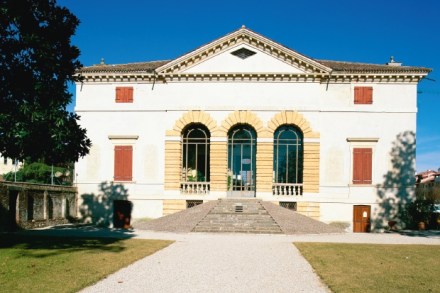
Somewhat magnificently, I made the notes for this article sitting in the back of a Rolls-Royce travelling between London and Goodwood. It’s a journey that provides ample evidence of how the classical language of architecture, at least in Palladio’s version, has infiltrated our imaginations and informed our concept of grandeur. I find Palladio’s spirit in the stately shell of the Rolls-Royce’s radiator, which apes a classical portico, in the famous Sussex country house itself, and in a bottle of Château Margaux: this finest of wines is made in a property of Palladian design. You can see it on the label. Palladio was the finest classical architect of them all, but he was much more than a slavish classicist.

Zaha Hadid

From our UK edition

Zaha Hadid is the most famous woman architect in the world. Would women or, indeed, architecture, be better off without her pushily hard-won, global celebrity? She established her studio in London in 1980. For nearly 14 years Hadid, absurdly, became famous for not having built anything. Her reputation was boosted by a clique of fawning admirers who saw in her uncompromising angles and, later, zoomorphic blobs a fearless repudiation of stuffy tradition. The competition entry for Cardiff Opera House was her celebrated cause. This, with genius, managed to alienate both the left and the right. The former thought it elitist, the latter outrageous. It was, after years of well-publicised struggle, abandoned in 1995. She became a martyr to taste and sexism.

City life

From our UK edition

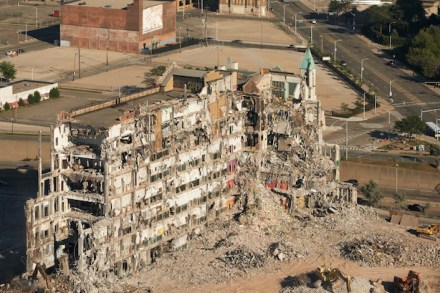
In its pomp, they used to say that what was good for General Motors, Detroit’s Medici, was good for America. Detroit was imperial. Like Rome, it stood for the whole. Michigan Avenue was like something from a Roman urbs: a decumanus maximus of this planned city that created and was enriched by the automobile. Then, like all empires, it began to collapse. By the time of my first visit 30 years ago, there were already clusters of youths on street corners picking their teeth with switchblades. All the signs of decay were present: boarded-up shops and discount stores. The Renaissance Center, a mirror-glass tubular tower whose form suggested a car’s cylinder, had just been built as a rearguard gesture. Its name mocked the encroaching reality.