Stephen Bayley

Stephen Bayley is an honorary fellow of the RIBA, a trustee of the Royal Fine Arts Commission Trust and the co-founder of London’s design museum.

The most inspiring gift for your child this Christmas

From our UK edition

One of the big differences between Frank Lloyd Wright and me is that, when he was nine, his mother gave him a set of wooden building bricks. When I was the same age, I wanted Lego for Christmas, but my own mother thought it a mere toy, a puerile gift. So she put away childish things and I was given something more high-minded. Perhaps a boring encyclopaedia or a hated chemistry set, useful only for making obnoxious smells. It was 1876 when Anna Wright presented her boy Frank with Froebelgaben, or ‘Froebel Gifts’, an educational tool devised by ur-pedagogue Friedrich Froebel, who also gifted us the Kindergarten idea: the belief that children’s intellects can be cultivated like flowers.

In the worst possible taste

From our UK edition

What are the rules of taste at Christmas? How might the fastidious chart a neat path through this garish and cluttered carnival of unreflective consumption? How might dignity be maintained in this tinselled and glitter-balled waste of space? Actually, how might we design it better? Nicky Haslam once and quite correctly, without a flicker of irony, advised me that ‘coloured lights are common’. There is value in such advice and we will return to this refreshing idea a little further down the page. Germans and Americans have a peculiar historic hold over our imaginations at this time of year. It was Victoria’s earnest German Prince, Albert of Saxe-Coburg and Gotha, who first imported the hitherto pagan Christmas tree.

Dear Simon Jenkins, please stop moaning about developers

From our UK edition

When architectural preservationists meet at the tedious conferences and grim councils of despair that feed oxygen to their nihilistic and unventilated ‘heritage’ world-view, the word ‘developer’ is spat out with contempt. It is as though they are speaking of Satan and his diabolical agents, who used to appear in the horror novels of Dennis Wheatley that I so enjoyed in my youth. To hear Simon Jenkins, for example, refer to a ‘developer’ is to appreciate the impressive range over which the human voice can express contempt. To Jenkins, a ‘developer’ is a loathsome thing bent on profaning all that is sacred. ‘Developers’ despoil the countryside and debauch the city.

Is Richard Rogers still a rebel?

From our UK edition

‘Lounge suit’ is normally a reliable signifier of supine gentility. But there it was on the invitation to Richard Rogers’s 80th birthday retrospective. Can this be the same architect once praised by a president of RIBA for his admirable ‘sod you’ approach to the public? The same man the Parisians sniffily called an ‘English hippie’ when working on the Centre Pompidou? Surely not the architect who had to buy a cheap suit and borrow a tie to visit his new client, Lloyd’s of London? And there he was at the head of the receiving line. Balsamic brown face, steel-grey buzzcut like a Florentine cab-driver, baggy grey cargo pants, signature violent-green collarless shirt and DayGlo pink sneakers with some sophisticated ventilation thing going on.

Adhocism, by Charles Jencks – review

From our UK edition

Here, for time travellers, is the whack-job spirit of ’68 in distillate form, paperbound and reissued in facsimile (with some exculpatory, older and wiser material fore and aft). Adhocism (re)captures with magical realism the boldness and silliness of its day.  This was the day when ‘new media’ meant colour television. Younger readers may need more instruction on the nature of this spirit. Students in Paris hurled St Germain cobblestones at gendarmes in clouds of teargas and students at Hornsey College of Art sat in to protest I cannot quite remember what in clouds of pot smoke. The Parisians read Guy Debord on situationism, the Hornseyites drooled over nudes in the International Times.

The Jaguar F-Type is no E-Type

From our UK edition

In 1951, Arthur Drexler, an influential curator at New York’s Museum of Modern Art, organised an exhibition called 8 Automobiles. Drexler, who used to wear a bow tie, was one of the people who helped make ‘design’ the credible subject it is today. The press release said it was the ‘first exhibition anywhere of automobiles selected for design’ — as, indeed, it was. Eight fine cars were presented on a dramatic fake roadway with huge photographic enlargements of details as a backdrop.

Folly de Grandeur, by Nicky Haslam- review

From our UK edition

Nicky Haslam is one of our best interior designers, a charmed and charming agent of style, a tastemaker for the sometimes directionless rich, a brighter star than most of his astronomically stellar client list. Considering a joint project, I asked him over lunch to tell me all the amazing people he had met. He demurred, but later that afternoon I got a 20-page handwritten document and on page one the names included John Kennedy, Svetlana Stalin, Picasso and Elvis. But Nicky is perhaps better known to Spectator readers as a contributor of meticulous, gossipy, beautifully crafted, super-well-informed and often rather saucy accounts of what used to be called high society. But how to describe the man to a reader who has not met him?

The new Design Museum: Prince Charles will prefer it. But should we?

From our UK edition

Twenty-five years ago I went to St James’s Palace to ask the Prince of Wales if he would open the new Design Museum. Before us was the model of the building, an elegant, austere, uncompromised white box that was very much along Bauhaus lines. We knew that ‘modern’ no longer meant ‘of-the-moment’ but had become a period style label. Even at the time we acknowledged the layers of irony in this historicist gesture. The Prince, sounding pained, I recall, asked, ‘Mr Bayley, why has it got a flat roof?’ And that was the end of that. Next time it will be different. The Design Museum is moving from a creatively reused banana warehouse near Tower Bridge to a creatively reused Commonwealth Institute on the edge of Holland Park.

Mauvais goût

From our UK edition

It was dinner at a prize-winning hotel in Burgundy. I looked, stupefied, at an awkward arrangement of trapezoidal plates, unaccommodating to food and unergonomic to both eater and plongeur. There was a water glass of triangular section and silly cutlery that would bring even Philippe Starck’s most empurpled morphological fantasies into the arena of commonsense. I thought wistfully about the simple charm of the old Duralex glass. The timelessly perfect round-shouldered Burgundy bottle’s unaffected handsomeness only served to make its table-top companions look all the more ridiculous. Modern France is in a terrible state as far as design is concerned. Renault’s peerless record of ingenuity is gone: it has not produced a worthwhile innovation for nearly 20 years.

The Dagenham Dustbin

From our UK edition

For those of us who find passion in national iconography, this is a melancholy historical moment. It’s a very bad time for British manufacturing and an even worse one for British symbols. The Chinese-owned maker of the London taxi (which Charles Eames described as one of the greatest designs of all time) is going bust. Soon, all London cabs will be efficient but characterless Mercedes-Benzes, Peugeots or Nissans. Penguin Books, the most influential and well-meaning Modernist experiment of them all, more useful than its contemporary, the BBC, more international than London Transport, has been acquired by a grim German multinational. And Britain, spiritual home of the commercial jet, long ago lost the ability to manufacture an entire aircraft.

A global hegemony of clean lines

From our UK edition

Phaidon Press invented the art book. It was in 1930s Vienna that Bela Horovitz and Ludwig Goldscheider established the format of the illustrated monograph: a short essay by an expert, usually an Austrian art historian hired for a modest fee, followed by a sumptuous range of high-quality repro. They left before the Anschluss and arrived in London, bringing their distinguished backlist with them. Effete British art history was immediately fortified by stern German-language methodology.  After several changes of ownership, direction and fortune, not all of them good, Phaidon is now perhaps the outstanding international publisher of illustrated books.

Science fiction as reality

From our UK edition

What’s that in your pocket? Magic or art? The near ubiquitous iPhone may be rammed with very new technology, but it is a witness of very old, even mysterious, values. Few of us understand its inner workings, even as we indulge ourselves daily with its impressive powers to astonish. ‘My life,’ Daniel Harris wrote in Cute, Quaint and Hungry, his witty critique of consumerism, ‘is suspended above an abyss of ignorance. Virtually nothing I own makes sense to me.’ This is a familiar feeling. If we had to start over, few of us would know how to light a fire, still less design and manufacture a beautiful smartphone. If civilisations are remembered by their most significant artefact, the iPhone is our memorial. Arthur C.

Happy Kitschmas everyone

From our UK edition

London is the creative capital of the planet. The city’s abundant talent — in design and media, in commercials and special effects, food, leisure, architecture, publishing, retailing and telly — will drive the economy from today’s precipice of the dark abyss to tomorrow’s sunkissed higher ground of recovery. Birds will sing and soft zephyrs will blow. So long dismissed as the visually illiterate of Europe, we are now known for our point and style. We are smart. And my own office is in the sturdy left ventricle of this powerfully pumping urban heart. Immediately, I am surrounded by the designers who work with me. Some of the world’s best restaurants are minutes from my door. There are even more film producers than baristas hereabouts.

Thank you, Germaine, I’m enjoying all the breasts

From our UK edition

Any week beginning with Germaine Greer inviting the nation’s women to crash my website by sending photos of their ‘unsupported breasts’ is bound to be an interesting one. Any week beginning with Germaine Greer inviting the nation’s women to crash my website by sending photos of their ‘unsupported breasts’ is bound to be an interesting one. Greer wrote a page of splenetic ‘comment’ on my new book, Woman as Design, in Monday’s Guardian. Her charge is that, like all knuckle-dragging males still emotionally located in the mastodon era, I fetishise and eroticise the female breast. This is said to be wicked.

Happy birthday Big Ben

From our UK edition

Though the moral fabric of Parliament is in tatters, its architecture remains an inspiration. Stephen Bayley celebrates Pugin’s crazy, magnificent clock tower Boing. That most familiar sound is now 150 years old. Because I am fortunate enough to live near Westminster, I often hear it during solitary moments at night in the bathroom. But, like the rest of the world, I know it even better from radio. At home or abroad, its sombre, magnificent melancholy is both reassuring and — somehow — a little bit disturbing, as time passing always is. In Mrs Dalloway Virginia Woolf wrote ‘There! Out it boomed. First a warning, musical; then the hour, irrevocable’. In peace and war, trouble and strife, mourning and celebration, here and now, Big Ben reminds us of ourselves.

Venice is the only city on earth going backwards

From our UK edition

The peril in Venice is the people trying to save it. But save exactly what for precisely whom? Venice is a corpse. It died in 1797 with the last, preposterous old Doge eased out by the French. Napoleon then insulted the Venetians by calling the Piazza San Marco Europe’s finest drawing-room. Now the drawing-room has become an undisciplined, overpriced, fatigued international playpen. In 1494 an itinerant Milanese canon, Pietro Casola, said there was nothing new to say about Venice. I’m not so sure. They say Venice defeats cynicism. Let’s see. Those cute street signs in the vernacular? I daresay there are study groups in South Kensington which practise the old language over an ombra or two of Waitrose prosecco, but Venetians themselves are quite happy with modern Italian.

Carnival of crassness

From our UK edition

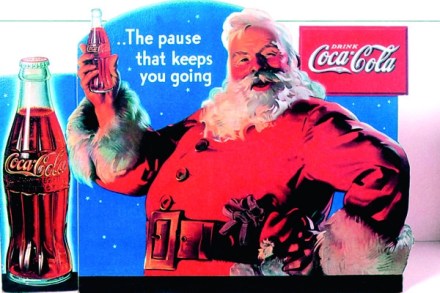
Stephen Bayley on why he despises December’s tawdry and sentimental retail landscape Christmas balls. This is a season to be forced into jollity. And one of mixed messages, dark ambiguities. Ghosts of Christmas past make me shudder. There is an old story about a Tokyo department store which, anxious to demonstrate its easy familiarity with sophisticated Western tastes, arranged for a vitrine to have an illuminated tableau of Santa Claus busy being crucified. Perhaps some similar installations on high streets and malls would have an admonitory effect on the sewers of avarice, cupidity and unreflective sentimental tosh that comprise Britain’s retail landscape in December. Then again, maybe not.

The age of the train

From our UK edition

Eight thousand years ago the Thames was a tributary of the Rhine. And if the cities had actually existed, you would have been able to walk from London to Rome without getting your felt-bound feet wet. Since then, geology has given us the Channel, a practical and psychological barrier that defines national identity. The idea of a tunnel beneath this barrier dates back to the Treaty of Amiens 1751. Here reach exceeded grasp and the first realistic — although the word is used loosely — proposals were made to Napoleon by a mining engineer, Albert Mathieu, in only 1802. Mathieu wanted to turn the mid-Channel Varne bank into an island, with shorter tunnels going north to England and south to France. Nothing came of it.

On the trail of Beauty

From our UK edition

In desolate Ventnor on the south coast of the Isle of Wight, alongside ‘antique’ shops selling yellowed and scratched plastic buckets and broken digital clocks, there is a hairdresser with a fascia board that elegiacally proclaims ‘Beauty’. The world’s largest cosmetics business runs a global campaign with the strapline ‘Defining Beauty’ in pursuit of mascara and depilatory cream sales. Meanwhile, popular culture is deeply conflicted on the matter.