Stephen Bayley

Stephen Bayley is an honorary fellow of the RIBA, a trustee of the Royal Fine Arts Commission Trust and the co-founder of London’s design museum.

Roy Strong’s towering egotism is really rather engaging

From our UK edition

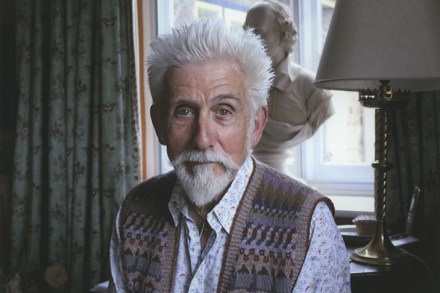
There is nothing wrong with being self-invented. The most interesting people in the world designed themselves. And in this matter Roy Strong, once upon a time the director of the Victoria & Albert Museum and National Portrait Gallery, can offer a master class. He has discovered the mines of self-invention to be very deep and

The 747 was the last moment of romance in air travel

From our UK edition

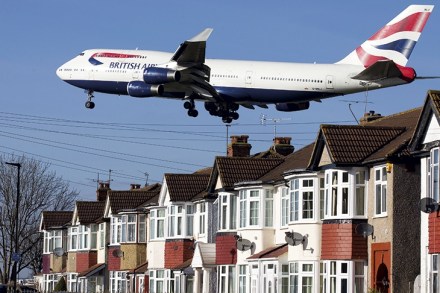
I felt a genuine pang when British Airways announced that it was retiring its fleet of Boeing 747s, the largest remaining in the world. But the jumbo’s final approach to the elephants’ graveyard in the sky was a long time coming. In the US, United and Delta retired their 747s three years ago. With a

René Dreyfus: the racing driver detested by the Nazis

From our UK edition

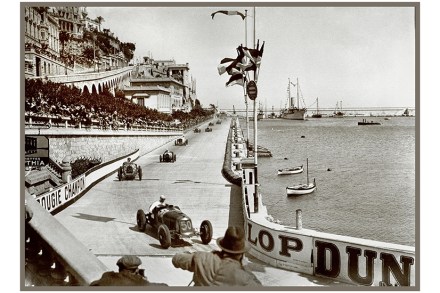
I have driven a racing car. On television, it looks like a smooth and scientific matter. It is not. A racing car is a fearsome environment of engulfing pyroclastic heat, metaphor-testing noise, vision-blurring vibration and nauseating centrifugal forces. Ninety years ago it was even worse. The cars had tyres with little grip, feeble brakes and

Clean lines and dirty habits: the Modernists of 1930s Hampstead

From our UK edition

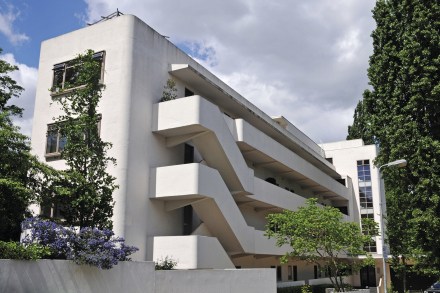
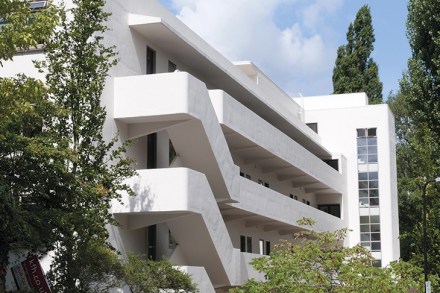
With its distinctive hilly site and unusually coherent architecture (significantly, most of it domestic rather than civic), Hampstead has always had a singular character. But it is as much a state of mind as an address. Although two of England’s greatest native artists, Keats and Constable, made it their home, over the past three centuries

Plumbing the mysteries of poltergeists

From our UK edition

This is a paranormal book — by which I mean it exists in a truly out of the ordinary netherworld of amiable smut and arch silliness not normally associated with titles reviewed in these pages. But hold on, there is a point — which I’ll come to later.‘Perhaps Wakdjunkaga was really Gef the Talking Mongoose.’

There’s something hot about a hat

From our UK edition

When an American describes a woman as wearing a ‘Park Avenue Helmet’ you know exactly what is meant. This is a hairdo so precise and sculpted that it trembles, category-wise, between coiffure and armour. Both natural and artificial, it also accurately signals social status. The link between hats, hair and caste was first made by

A museum-quality car-boot sale: V&A’s Cars reviewed

From our UK edition

We were looking at a 1956 Fiat Multipla, a charming ergonomic marvel that predicted today’s popular MPVs. Rather grandly, I said to my guide: ‘I think you’ll find the source of the Multipla in an unrealised 1930s design of Mario Revelli di Beaumont.’ He looked a bit blank. This exhibition is a rare attempt to

An unconventional biography of the visionary architect Frank Lloyd Wright

From our UK edition

Paul Hendrickson’s previous (and very fine) book was Hemingway’s Boat, published in Britain in 2012. It was a nice conceit to see the writer’s life through his singular obsession with Pilar, the boat he commissioned from a Brooklyn shipyard, which remained the steadiest companion in his choppy voyage. The enormous life of Frank Lloyd Wright

The slasher with the knife

From our UK edition

A stiff, invigorating breeze of revisionism is blowing through stuffy art history. Is it really true that all the valuable traffic was on a mainline between Paris and New York, with modest sidings in London, Barcelona and Zurich? Was the adventure of modern art an exclusively masculine journey across the North Atlantic? Suddenly, it has

An idea made concrete

From our UK edition

Was the Bauhaus the most inspired art school of all time or the malignant source of an uglifying industrial culture which has defiled our cities? Two books look at its influence abroad after 1933 when the Nazis put the jackboot in. The Bauhaus was nothing if not modern — even if ‘modern’ is now a

Maps of the mind

From our UK edition

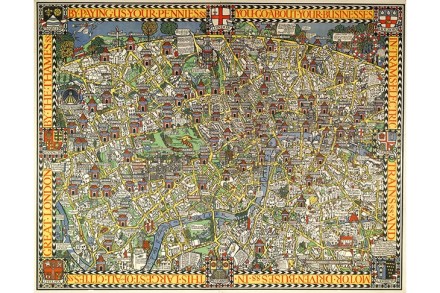
MacDonald ‘Max’ Gill (1884–1947) is less well known than his notorious brother, Eric. But was he less of a designer, less of an artist? The son of a Brighton clergyman, his career was built on a sequence of remarkable connections. The architect Halsey Ricardo, a descendant of the economist, was his tutor. While working for

An ambivalent icon

From our UK edition

Immigrants to the United States in the late 19th century discovered in Upper New York Bay, after a long, uncomfortable trans-Atlantic journey, a real portal and a symbolic one. There was Ellis Island: designer, William A. Boring. Then there was the Statue of Liberty on neighbouring Bedloe’s Island: designer, Frédéric-Auguste Bartholdi. The first was a

Houses of ill repute

From our UK edition

Architects and politicians have a lot in common. Each seeks to influence the way we live, and on account of that both, generally, are reviled. But architecture is more important than politics. Unless you are an anchorite or a polar bear, it’s unavoidable. And it lasts longer. The best architecture affects our mood. Exaltation, if

The billionaire’s toy box

From our UK edition

Today’s VHNWI wants a PRSHLS. That’s Very High Net-Worth Individual and Partially Reuseable Super Heavy Lift System. Or, in the demotic, the rich want space rockets. ‘It’s not rocket science’, people say when describing the technique of making, say, an omelette — even if making an omelette requires a certain deftness of hand and nice

Ferrari – heavy, expensive, wasteful, dangerous and addictive

From our UK edition

Has a more beautiful machine in all of mankind’s fretful material endeavours ever been made than a ’60 Ferrari 250 Granturismo? Go to the Design Museum and decide. I have driven many Ferraris and the experience is always unique. They are alive, demanding, feral, sometimes even violent or truculent. Addictive, too. Once, in Haverfordwest, I

Cold comfort | 7 December 2017

From our UK edition

Mrs Thatcher once explained that she adored cleaning the fridge because, in a complicated life, it was one of the few tasks she could begin and end to total satisfaction. In this way are refrigerators evidence of our struggles, our hopes and our fears. Moreover, if you accept that the selection and preparation of food

High wire act

From our UK edition

‘Mid-century modern’ is the useful term popularised by Cara Greenberg’s 1984 book of that title. The United States, the civilisation that turned PR and branding into art forms, wanted homegrown creative heroes. In design there were Charles Eames and George Nelson with their homey hopsack suits and wash’n’wear shirts, their sensible Wasp homilies: a counterattack

Vital signs

From our UK edition

Exhibit A. It is 1958 and you are barrelling down a dual carriageway; the 70 mph limit is still eight years away. The road signs are nearly illegible. You miss your turning, over-correct, hit a tree and die. The following year, graphic designer Margaret Calvert is driving her Porsche 356c along the newly built M1.