Stephen Bayley

Stephen Bayley is an honorary fellow of the RIBA, a trustee of the Royal Fine Arts Commission Trust and the co-founder of London’s design museum.

Trailing clouds of glory

From our UK edition

With Alpine wreckage still being sifted, this is either a very good or a very bad time to write about the mystery and beauty of aviation. I am a nervous flyer, always imagining the worst will happen, so when I hear that ‘the captain has turned off the seat-belt sign’ I feel a jolt of

The Spectator declares war on bad public art

From our UK edition

Like peace, love and lemon-meringue pie, ‘public art’ seems unarguably attractive. Who but a philistine curmudgeon would deny the populace access to the immediate visual thrills and the enduring solace of beauty that the offer of public art seems to promise? Public art is surely a democratic benefit. Never mind that in the past century

The art of Coke

From our UK edition

In 1915 D.W. Griffith’s Birth of a Nation was premièred, Henry Ford manufactured his millionth Model-T (‘a million of anything is a lot’, he said), Kafka’s Metamorphosis was published and so, too, was one of Einstein’s critical contributions to his own general theory of relativity. Mixed into this modernist cocktail of extreme achievement and harrowing

From classical to post-modern: a beginner’s guide

From our UK edition

My career at school and after was greatly enhanced by a series of books called The Bluffer’s Guide to….These gave mischievous advice, often on the reliable when-in-doubt-confuse-the-issue lines. A favourite of mine, still in use in emergencies, was: ‘I think Jack Kerouac was more a Franciscan Christian than Buddhist, don’t you?’ Martin Kemp’s Art in

The reopened V&A Cast Courts are a fabulous spectacle of Victorian theft and reverence

From our UK edition

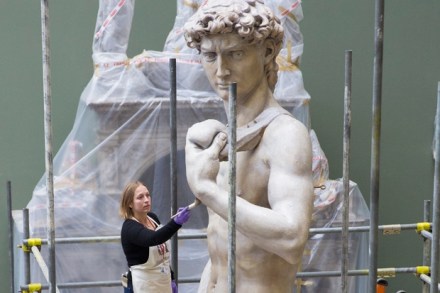
The great municipal museums are products of the 19th-century imagination, evidence of lofty ambitions and cringe-making limitations. They are exact contemporaries of department stores: the whole world acquired, catalogued, labelled, displayed and inspected. Only at the moment of consumer interaction do they differ. In a department store, everything is for sale. In a museum, everything

An armchair voyeur gets a glimpse into Nicky Haslam’s vast address book

From our UK edition

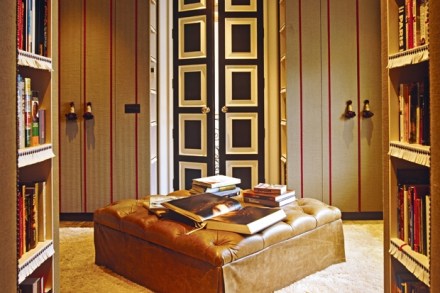
Phaidon pioneered the modern art-book in 1936. The formula was: large format, fine production, exceptional plates, and essays by the superstars of German art history. After Richard Schlagmann acquired the imprint in 1990 Phaidon maintained, even enhanced, its reputation for good design, but visual style was prioritised over editorial substance and writers were marginalised. That

The only way is Essex University

From our UK edition

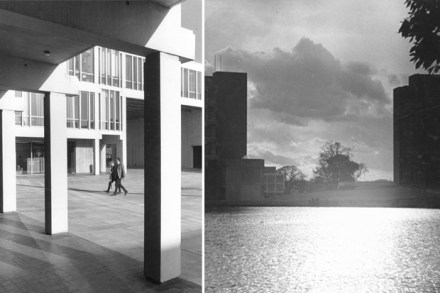
We are told this is now a ‘knowledge economy’. Strange, then, that there are so few recent educational buildings of note. An expansion of universities has not led to much enlightened architectural patronage. Rather the opposite, in fact. The university visual trope remains those dogged dreaming spires. And London’s skyline is punctuated not by grand

Frieze Art Fair: where great refinement meets harrowing vulgarity

From our UK edition

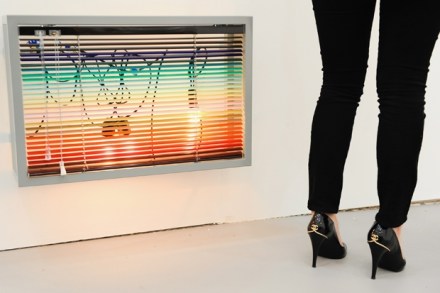
If you wanted to find a middle-aged man in a bright orange suit, matching tie and sneakers, Frieze is a good place to start looking. I found one. Or maybe he was a limited edition existing in several reproductions. Certainly, he was frequently spotted: conspiratorial of aspect, he was stooped and crouched over a mobile

The camera always lies

From our UK edition

Everyone knows about architecture being frozen music. The source of that conceit may be debated, but its validity is timeless and certain. For all its weightiness, architecture plays with ethereal proportion, harmony, resonance and delight: the stuff of music. But architecture is more fundamentally about the management of light and space. Or, at least, that’s

My addiction to the bullet train

From our UK edition

In 1963, Dr Richard Beeching, an ICI director with a PhD in physics, a qualification that clearly boondoggled his credulous political patrons, published a government report called ‘The Reshaping of British Railways’. It identified 8,000km of painstakingly created track for closure. At the time, road transport seemed just the thing. Lorries? Bring them on! Commuting

Ettore Sottsass, Jnr: more than just a funny name

From our UK edition

Personally, I have always been sensitive about a credibility gap, a difference in prestige, between literary and visual cultures.  More than 30 years ago, Frederic Raphael wrote a teasing piece in the TLS mentioning an Italian designer with a funny name, as if to disparage design as a whole. I boldly wrote in defence and,

The best exhibition of architecture I have ever experienced

From our UK edition

Curtain walls, dreaming spires, crockets, finials, cantilevers, bush-hammered concrete, vermiculated rustication, heroic steel and delicate Cosmati work are all diverse parts of the architect’s vocabulary. But while Gothic, Classical, Baroque and Modern are well-thumbed volumes in his library of style, the architect’s real language is profound and prehistoric. Or, at least, it consists of prehistoric-style

The man who gave the world (but not London) the glass skyscraper

From our UK edition

Modern Architecture, capitalised thus, is now securely and uncontroversially compartmentalised into art history, its bombast muted, its hard-edge revolutions blurred by debased familiarity. You have been to Catford? You have seen a heroic vision compromised. Modern Architecture is no more threatening than abstract art, although the Swiss-French Le Corbusier retains a heady whiff of the

The most inspiring gift for your child this Christmas

From our UK edition

One of the big differences between Frank Lloyd Wright and me is that, when he was nine, his mother gave him a set of wooden building bricks. When I was the same age, I wanted Lego for Christmas, but my own mother thought it a mere toy, a puerile gift. So she put away childish

Dear Simon Jenkins, please stop moaning about developers

From our UK edition

When architectural preservationists meet at the tedious conferences and grim councils of despair that feed oxygen to their nihilistic and unventilated ‘heritage’ world-view, the word ‘developer’ is spat out with contempt. It is as though they are speaking of Satan and his diabolical agents, who used to appear in the horror novels of Dennis Wheatley

Is Richard Rogers still a rebel?

From our UK edition

‘Lounge suit’ is normally a reliable signifier of supine gentility. But there it was on the invitation to Richard Rogers’s 80th birthday retrospective. Can this be the same architect once praised by a president of RIBA for his admirable ‘sod you’ approach to the public? The same man the Parisians sniffily called an ‘English hippie’