Simon Heffer

Vaughan Williams’s genius is now beyond dispute

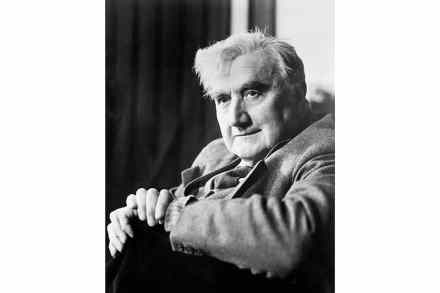
Classical music plays hell with people’s posthumous reputations, as any admirer of the works of Ralph Vaughan Williams will tell you. In 1972, on the centenary of his birth, ample respects were shown. Not only were there special concerts of his music but the Post Office, which is now more focused on commemorating gay pride, issued a stamp. Since the composer’s death in 1958 he and his works had gone into an eclipse, not least because of the atonalists who controlled the Third Programme and many of our concert halls. These were people who believed the British music-loving public should be fed on a diet of what Kathleen Ferrier called ‘three farts and a raspberry, orchestrated’. The eclipse resumed after 1972.

How Britain was misled over Europe for 60 years

Just as one is inclined to believe Carlyle’s point that the history of the world is but the biography of great men, so Christopher Tugendhat, in this level-headed account, is right to conclude that the history of the Conservative party in the past 60 or 70 years has been deeply affected by the biography of the movement for the European Union. And it would have shocked Carlyle that a great woman – Margaret Thatcher – played a central part and, according to Tugendhat, altered the course of the party’s relationship with Europe. She was certainly central to the debate, not least because rather too many Conservatives felt she had died a martyr’s political death in 1990 when she was forced from Downing Street by people they regarded as treacherous pro-Europeans.

The coal mining conundrum: why did the NUM fight so hard for its members’ right to suffer underground?

Anyone with a grasp of the history of Britain knows that its once considerable power, and much of its still considerable prosperity, was built on coal. The geological accident of these islands containing coal gave us the industrial revolution and the first railways, and consolidated British naval power. Implicit in that accident was the fact that a few landowners, under whose acres the coalfields spread, became astonishingly rich as a result — people such as the Butes, the Londonderrys and the Fitzwilliams, who lived self-indulgent lives in their stately homes while half a mile below semi-naked men crawled in coal dust five-and-a-half days a week to make them so wealthy.

What does it really mean to feel English?

Referring to the precarious future of the Union of England and Scotland, the authors of Englishness: The Political Force Transforming Britain conclude their book with the observation that ‘it is hard to imagine that any break-up would not be the source of regret and recrimination’. I imagine our present prime minister, even though he has a pandemic to handle, thinks of this with increasing force. There would be few faster routes from office for him than to awake one morning to find he had presided over the end of the Union. We are weeks away from elections in Scotland that seem certain to bring another SNP victory, and calls from its Maoist leadership for another referendum.

Rishi’s nightmare: Will inflation crush the recovery?

41 min listen

Could a blip in inflation ruin the UK's economic recovery? (00:50) Why is support for the IRA becoming normalised? (12:20) What makes a great diarist? (31:15) With The Spectator's economics correspondent Kate Andrews; economist Julian Jessop; writer Jenny McCartney; politician Mairia Cahill; satirist Craig Brown; and historian, journalist and author Simon Heffer. Presented by Cindy Yu.  Produced by Max Jeffery, Alex Valizadeh, Alexa Rendell and Matt Taylor.

R.B. Haldane: a great public servant, much maligned

This is a strange but valuable book. The author is a private equity magnate, whose fascination for Richard Burdon Haldane dates back to his childhood. In his acknowledgments he admits he lacked the expertise to write a proper book about his hero, and so enlisted the help of a young scholar, Richard McLauchlan, credited on the title page (but not on the front cover) as having written the book in collaboration with him. The research has been done superlatively. The bibliographies for each chapter are extensive, and some interesting archival material is deployed, such as the diary of Haldane’s sister, to whom he was devoted.

Political biographies to enjoy in lockdown

Here are ten political biographies, with a leavening of the classics, for those with time to kill in the present house arrest. The danger with such lists is that what has recently entered the memory becomes most prominent; so this one consists entirely of works published in the 20th century. Charles Moore’sThatcher, Leo McKinstry’s Rosebery and Andrew Roberts’s Churchill, all superb works, therefore do not figure; and I have arranged those that do in chronological order of their subjects. John Ehrman started his magnificent three-volume life of William Pitt the Younger in the late 1950s and published the final part in 1996. He was a gentleman-scholar of the old school who undertook pains-taking research but sought to produce a literary work as well as one of history.

It’s easy to forget how undemocratic Europe was 50 years ago

The subtitle of Simon Reid-Henry’s substantial work indicates its thesis: ‘The remaking of the West since the Cold War, 1971–2017.’ The Cold War had started in 1945, and the author takes us through the upheavals of the 1960s before the advertised start of his narrative. He describes a western world that, by 1971, had undergone the student-led convulsions of 1968, and that, as well as facing challenges from the Soviet Union, China and their satellites, would have new ones to grasp: notably those presented by the 1973 oil crisis and the resulting delinquency of western treasuries as they sought not to disappoint societies — and electorates — used to rising real wages and the indulgences of consumerism.

There’s no place quite like Excellent Essex

Those who think Essex is boring, or a human waste bin into which only the most meretricious people find themselves tipped, would require only one or two chapters of Gillian Darley’s widely researched book to tell them how wrong they are. Essex has experienced various types and degrees of civilisation since before the Romans arrived and did unspeakable things to Boadicea and her daughters, as the Queen of the Iceni chased them in her chariot up and down what is now the A12.

The might of the far right

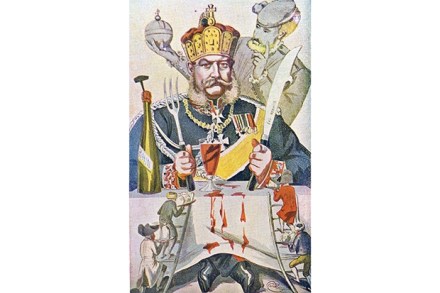
‘Why would anyone write a historical study of it?’ asks Gavriel Rosenfeld about the Fourth Reich at the start of this rather confusing, but at times entertaining, book. His answer is that the phrase has been used as a metaphor since the earliest days of the Third Reich to mean a wide variety of things. It has permeated politics and culture, and seems to be a term susceptible to any meaning a writer or speaker wishes to impose upon it. Some of us — and I plead guilty to this — have used the term simply to describe the present German state in its reunified, Europe-dominating form. While of course such usage is a bit of a tease, it also seems to be a matter of fact.

The pursuit of money

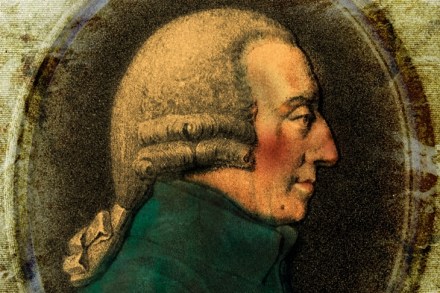
Jesse Norman is one of only three or four genuine intellectuals on the Tory benches in the House of Commons. It must vex him, as it does most of us with A-levels, to witness the distressingly ignorant, chaotic and unprincipled way in which the government, run by the party of which he is a member, conducts its business and that of the country. Those who control the destinies of that government would do well to read his book on Adam Smith, and indeed Adam Smith himself.

The Great War, viewed from all sides

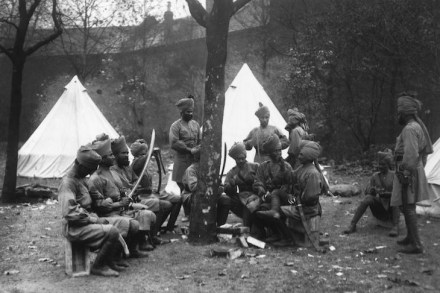
The historiography of the Great War is stupendous, the effects of the conflict being so far-reaching that even today historians are finding angles hitherto unexplored that they can make books out of; or, at the lower end of the scale, they are content to retell the old story in a different way. What we have been short of in the English canon is a view of the war not just from the other side, but from all sides: it was, as Colonel Repington termed it, ‘the first world war’, and not simply four years of carnage between the British and the Germans. Jörn Leonhard’s epic and magnificent work — unquestionably, for me, the best single-volume history of the war I have ever read — tries, with some success, to embrace everything.

Full steam ahead

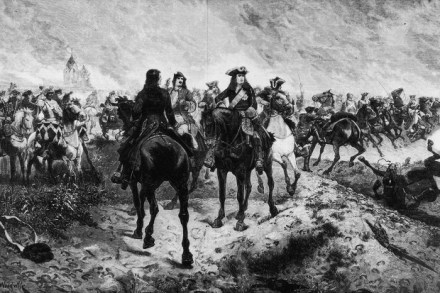
To write, and indeed to read, a history of considerable range, both in terms of chronology and of subject matter, is a profound challenge. The fourth volume in Peter Ackroyd’s History of England starts with the Glorious Revolution of 1688 and ends with Waterloo in 1815. It was a period that laid the foundations of the modern British state and created the basis of its prosperity, and of its status as the world’s greatest power later in the 19th century. During the 130 years Ackroyd covers there were revolutions in attitudes too: though when he writes of the coarse humour of cartoonists such as Gillray, and the aggressive expressions of public opinion in incidents such as the Gordon Riots, one wonders whether the temper of the English people is so very different today.

Revolution was in the air

The Penguin History of Europe reaches its seventh volume (out of nine) with Richard J. Evans’s thorough and wide-ranging work on the 99 years from 1815 to 1914. It comes between two formidable books by formidable scholars: his fellow Cambridge historian Tim Blanning took the story from the close of the Thirty Years’ War to Waterloo, and the Hitler authority Ian Kershaw covered 1914 to 1949. Each of those volumes is much as one would expect of the author: Blanning’s shows his background as a polymath, and his expertise in the histories of more than one major European power; Kershaw’s puts the rise of the Third Reich and its consequences at the centre of his. But Evans developed under the influence of E.H.

Going global

We can all identify decades in which the world moved forward. Wars are not entirely negative experiences: the social and technological advances of the 1910s and 1940s are obvious. Ben Wilson has been more thoughtful, and has chosen the 1850s — or, more specifically, the years from 1851 to 1862. It was a time when, as he says, Britain was at the peak of her power. The empire was not at its greatest — the Scramble for Africa had yet to occur — but Germany had not unified, and America was economically overdependent on slavery and, not least because of that abomination, about to fall into civil war. Wilson describes the Great Exhibition of 1851 as a showcase of Britain’s manufacturing might, when it was truly ‘the workshop of the world’.

A Horrible History of English Hymns

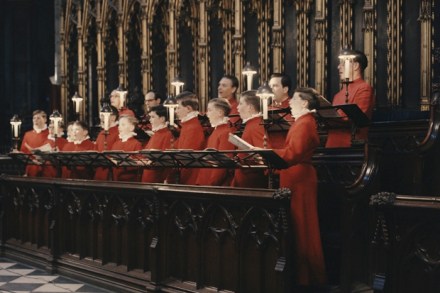
Given that for much of English history the country’s main musical tradition was that connected with the church, it is surprising that so little effort has been made to describe the evolution of, as the subtitle to Andrew Gant’s book puts it, the ‘History of English Church Music’. If we read biographical accounts of the lives of composers from Tallis to Vaughan Williams we pick up some of the story, but far from all of it. Gant is supremely well qualified to write about it. He has been organist and choirmaster of the Chapels Royal and worked at Westminster Abbey, Oxbridge colleges and the Guards’ Chapel; and he also composes.

Robin Hood v. the toffs

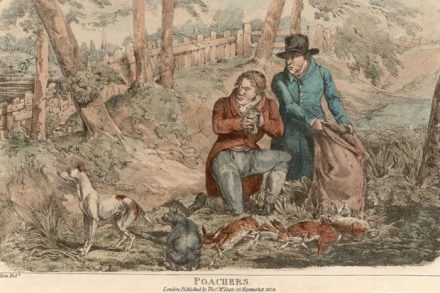
The publicity blurb about the two unpleasant criminals whom this dismal book romanticises says that they are ‘continuing their ancestors’ traditions, reluctant to surrender the old ways of sourcing food from nature’. Imagine a book about two men who were being celebrated for ‘continuing their ancestors’ tradition of beating their wives, raping them when necessary, treating them as their private property and forcing them into a life of drudgery and subjection’. Morally, this one is just as bad, and as a work of literature it is a joke. Bob Tovey and his son Brian have shared their way of life with a writer called John F. McDonald, who in a lachrymose afterword noting the death of Tovey senior describes him as ‘a legend’.

The art of political biography remains in intensive care if Giles Radice’s latest book is anything to go by, says Simon Heffer

With the odd exception — I think principally of Charles Moore’s life of Margaret Thatcher — the genre of political biography has known hard times lately. There are few faster routes to the remainder shop, other, of course, than the political memoir, most of which I presume are now written to create a tax loss for their publishers. This decline is not down to poor scholarship, but, I suspect, to the general distaste so many literate and inquiring people feel for politicians. Reading accounts of the New Labour years in particular is rather like touring an abattoir before the cleaners have been in. So those who want to write about politicians must find new ways to do so, and Lord Radice, a former long-serving Labour MP, has chosen to look at partnerships of politicians.

Cambridge, showcase for modernism (and how costly it is to fix)

The Pevsner architectural guides are around halfway through their revisions — though it is like the Forth Bridge, and soon it will be time for the revisions to be revised: it is 30 years since the new London: 2, for example. Aficionados have keenly awaited the Cambridgeshire volume, the latest in the series, because of the substantial new building undertaken by Cambridge University since Pevsner himself last catalogued it in the early 1970s (his first edition appeared in 1954). For most people the county is summarised by two buildings: Ely cathedral, ‘the ship of the fens’, and King’s College chapel.

What will it take for us to stop doing business with Qatar?

On 17 June, a meeting of the Henry Jackson Society, held in the House of Commons, discussed (according to the minutes published on the society’s website) how a tribal elder in northern Cameroon who runs a car import business in Qatar has become one of the main intermediaries between kidnappers from Boko Haram and its offshoot Ansaru and those seeking to free hostages. It was alleged that embezzlement of funds going to Qatar via car imports might be disguising ransom payments. It was also alleged that Qatar was involved in financing Islamist militant groups in West Africa, helping with weapons and ideological training, and (with Saudi Arabia) funding the building of mosques in Mali and Nigeria that preach a highly intolerant version of Islam.