Simon Heffer

Vote yes, Scots – and set the English free

It is a sign of how no one expects Scotland to vote yes in September that no serious planning has been done about the consequences. By contrast, Gladstone shut himself away for days in the spring of 1886 drawing up the Bill that would have bestowed Home Rule on the Irish, plotting what it would mean for almost every aspect of the shared lives of Ireland and Britain. Scotland already has what Parnell would have called Home Rule. The creation of a Scottish Free State would be a different matter, and few have started to assess what that would mean. This is a pity, not just for practical reasons, but for emotional ones too. Much of the argument over the Union is rooted in nostalgia and sentimentality: so many of the partisans either want to be Braveheart or Sir Walter Scott.

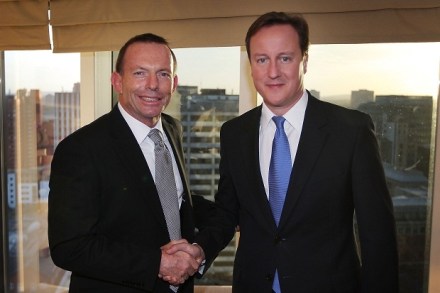
Tony Abbott should lobby David Cameron about the UK’s absurd immigration rules

Sydney - Mr Cameron resisted the calls to boycott the [Commonwealth Heads of Government] summit and will therefore have a chance to meet and have talks with Tony Abbott, who also said this week that he would not ‘trash’ the institution by joining in a boycott, and nor would he give lectures to other countries, especially those that had endured a civil war with atrocities on both sides. This can only be a good thing from Mr Cameron’s point of view, for he seems to go out of his way to avoid meeting genuine conservatives when at home, and he may learn something.

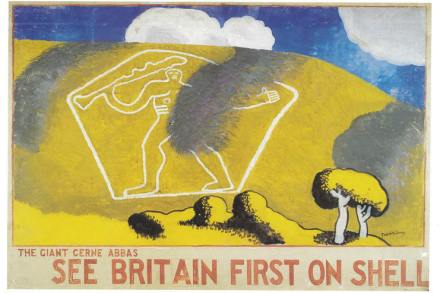
England from above

It is a shame that Sir Roy Strong is subjected to the now-obligatory drivel about his being a ‘national treasure’, because this unthinking cliché diminishes his contribution, over more than 50 years, to our cultural life, whether as a curator or, in later times, as a gardener. Sir Roy has also written a number of books, and in his preface to this one describes his mission to bring the past of our country before a general readership. His last, A Little History of the English Country Church, certainly furthered that aim: it described how our shared past could be discovered by looking in these buildings.

Failing the Test

County cricket ought to be important because it provides the players for Test cricket. You won’t find your budding Strausses, Cooks and Swanns playing on village greens or even in the estimable Lancashire and Yorkshire leagues. If they are really good they will be in a county side. The problem, however, is that when they are spotted by England they go off to become international players, and rarely seem to be anything other than special guest stars on the rare occasions they play for their counties. That is one reason why county cricket is so tedious now, and so little watched: you only ever see the also-rans, the wannabes, the has-beens and the never-weres.

The Tory beauty contest is enough to bring on an attack of terminal revulsion

Meanwhile, back at the Tory party, they are still looking for a new leader. Thanks to the perceived brilliance of the Prime Minister — he has fed Africa, secured the 2012 Olympics and now crossed the Rhine in what the editor of this organ prefers not to call the war on terrorism — many Tory MPs have lost interest in the not unimportant question of who will succeed Michael Howard. Until Mr Blair resigns, it’s game off. One or two leadership candidates privately profess admiration for him. One ex-minister, almost unique in not yet being a candidate himself, told me this was ‘the most f—ing depressing period in the party’s history’.

The biography of a nobody

A biography of Ed Miliband has to try hard not to be the sort of thing one buys as a present for someone one avidly dislikes. This effort, the first in what its authors seem (perhaps optimistically) to imagine may be a long series of accounts of their subject’s life, does not try hard enough. It has detail — Messrs Hasan and Macintyre boast of a million words of interview transcripts — but in the end it is, plainly and simply, stultifyingly boring. I am not sure this is entirely the writers’ faults. Before reading their book, I thought Mr Miliband was simply oversold, a man born to disappoint. Now I realise that he, and therefore an account of his life, is boring too.

Fair is foul

By the time one has waded to page 22 of Them and Us, through what may most politely be described as a stream of consciousness, assailed by random thoughts and plangent expression larded with clichés, one starts to wonder what the point is in going on. By the time one has waded to page 22 of Them and Us, through what may most politely be described as a stream of consciousness, assailed by random thoughts and plangent expression larded with clichés, one starts to wonder what the point is in going on. We have been told that we ‘ache’ for a ‘compelling, moral, national story’. We have been treated to now-compulsory cries of despair about bankers and their high salaries and bonuses.

Capturing the last of England

The book is interesting because it has insights and novelty, not least in taking a period and a culture regarded by many as second best compared with what was happening elsewhere at the time, and shows it to have been enlightened, intelligent and full of beauty. However, it infuriates partly because of the author’s occasionally cloying and highly adjectival style, and partly because, for all her scholarship in the subject, one gets the sense that she has spread herself too broadly and lacks a feel for the real popular currents of the Twenties and Thirties. The book is certainly ambitious.

Unkind hearts and Jews

Israel Rank, by Roy Horniman It was the second or third time that I ever saw Kind Hearts and Coronets that I noticed in the opening credits: ‘Based on the novel Israel Rank, by Roy Horniman’. It prompted a ten-year search for the book in secondhand shops that finished in a dusty corner of a Suffolk village more than a quarter-of-a-century ago. I am not given to hyperventilation, but on that occasion came perilously close to it. I have never seen another copy, and a search on the internet returns only pleas by would-be readers to find them a copy. Mine is the 1948 reprint, with an introduction by Hugh Kingsmill. In its tatty but intact dust-wrapper, and with a scribble telling me I paid 60p for it in 1982, it is apparently now worth hundreds.

A greedy, randy idealist

Rosemary Ashton has rather cornered the market in dissecting the lives of the intellectual movers and shakers of early Victorian England. She has already written well about the Carlyles, and about George Eliot and her lover G. H. Lewes. Now, all these and more have walk-on parts (rather more than that in Miss Eliot’s case) in this new account of life at 142 Strand, where between 1847 and 1854 the radical publisher John Chapman ran his business. Chapman was chaotic, often unscrupulous in both his business and his private dealings, but there is no doubt that he was an important piece of the jigsaw that made up the picture of London’s intellectual life at that time.

The boy done bad

One of Sir Mark Thatcher’s friends once told him he was ‘born guilty’. Many, including the two authors of this book, would contend that he has done his best to live up to his billing. Apparently, in moments of persecution, he has taken to quoting this observation about himself in the most rueful of tones. If he can bring himself to read this book he will feel far more persecuted by the end of it. The authors are unquestionably experienced investigative journalists, with various scalps to their name. They are suited to their subject remarkably well, in that their style and approach are almost as unattractive as they claim their subject to be.

Diary – 16 September 2005

The New Labour assault on John Humphrys was inevitable, not because he is a Tory (I have no reason to suppose he is) but because he defies Labour’s Gestapo, being always scrupulously fair. He interviewed me last week in a debate with the genial Mr Billy Bragg. When Mr Bragg misrepresented something I had said, Mr Humphrys immediately corrected him and set the record straight. Instead of being castigated by a director-general who manifestly lives in fear of his masters in No. 10, Mr Humphrys should be given a huge pay rise and put in charge of improving the training of other BBC journalists. One offence he would never commit is to join in the BBC’s insulting use of the phrase ‘right-wing’.

How the anti-intellectual Tory party has betrayed the legacy of Maurice Cowling

Not long after John Major became prime minister Maurice Cowling, who died last week, asked me to a feast at Peterhouse. In the port-soaked aftermath in a candlelit Senior Combination Room, and between intermittent insults to the then Master, Lord Dacre (‘Come over here, you old bugger, somebody might want to meet you’), we had a conversation about the new prime minister. Precisely because he held the highest power in the land, Mr Major was not deemed worthy of the Cowlingesque sneer; that would come later. But his obvious managerialism and his lack of bottom provided causes for concern.

Gunning for game-shooting

The first fortnight of the shooting season has not been as auspicious as it might have been. This is not just because the grouse themselves are in short supply. It is also because, having put on to the statute book a crass, pointless and probably unenforcable law against the killing of vermin with hounds, the animal rights fascists are now turning their attention to the killing of birds with guns. The RSPCA, which used to do good work in persuading children to be kind to furry and feathered beasts, and still does perform a valuable public service through its inspectorate in tackling the genuine and sickening incidences of cruelty to animals, is also now heavily politicised and partisan in its opposition to field sports. It takes pride in its role in abolishing fox-hunting.

Mr Byers had lied to the Commons and should resign immediately

Amid the ‘tributes’ showered on the late Sir Edward Heath earlier this week, there was, inevitably for a man who upset so many people, the occasional reference to his most catastrophic service to his country: his decision to take us into what is now called the European Union. It was said, fairly, that Heath was not straight with the British people about this. The 1970 Conservative manifesto promised to negotiate about our possible entry; but entry took place without any further reference to the people. In a similarly secret way he effectively abolished our fishing industry and made a commitment — happily unfulfilled — to take us into a single European currency. Yet, as was said in many of the obituaries, Heath was a man of integrity.

A pointless, grotesque and quite repulsive act of grandstanding

The agenda for the G8 is now clear: economic revival through better trading conditions; the elimination of corruption; the humbling of dictators; possibly even regime change. Yes, most of the G8’s member nations are in an almighty mess, and until they show the will to sort themselves out, you can forget their doing anything useful for the rest of humanity. It is difficult, on the occasion of this utterly pointless, grotesquely expensive and quite repulsive act of grandstanding, to know for whom to feel more contempt: the Blairs, the Chiracs, the Schröders and the Berlusconis, or the silly little anti-capitalist plonkers parading themselves through Edinburgh rejoicing that they can chuck bricks through windows again.

The way ahead for the Conservatives

If we political pundits were truly blessed with the gift of accurate prophecy, we would not be writing about one of the most sordid subjects known to man. We would be earning shedloads of money as astrologers, with premium-rate telephone lines conveying our charlatanry to the masses, and conveying the masses’ money back to us. Since by the time you read this we will be having, or will just have had, the most unpredictable election of modern times, it is harder than ever to base any argument on its likely outcome. I had better risk humiliation, therefore, by stating that what follows is based on the unkind assumption that on Friday afternoon Mrs Michael Howard will not be measuring up for curtains in No. 10 Downing Street.

Still in the dark

From the timing of Michael Crick’s book on the Leader of the Opposition we can surmise that the author, like most of the rest of us, has made his mind up already about the result of the imminent election. There will be nothing significant to add after 5 May. The Tory party will not win the coming contest, and Michael Howard will not be prime minister. So best to get this unauthorised biography out on the shelves now, when at least its subject is doing something interesting. Even though the Tories seem placed to do better than in the last two debacles, there is unlikely to be such consistent publicity for this work in a month’s time.

Honi soi qui mal y pense

Ours would be a grim age if we were to deny millions of people cheap and satisfying entertainment, and so, therefore, perhaps we should be especially grateful to the Prince of Wales and Mrs Camilla Parker Bowles as they approach their wedding day. Few people in Britain seem to welcome the happiness the couple clearly feel as they approach the regularisation of their relationship. However, the joy the public finds instead in engaging in acts of spite, hypocrisy, gratuitous vilification and outright republicanism seems to more than make up for that. Among politicians even one so supposedly senior as the oafish Deputy Prime Minister, John Prescott, allowed himself a sneer when the engagement was announced.

Diary – 19 March 2005

A friend of the royal family’s lamented the other day that the Princess Royal, for reasons about which he could only speculate, has declined her mother’s offer of a dukedom and, therefore, a place in the nobility for her son and his heirs. This does seem an extreme act of self-effacement by one who, unlike some of her tribe, works extremely hard and doesn’t insist on using the company helicopter just to nip out to Tesco. Also, thanks to Mr Blair’s brilliant reform of the House of Lords, even if her son became the 2nd Duke he would not inherit the right to sit in the legislature. It was allegedly fears about Sir Mark Thatcher ending up in the Lords that dissuaded his mother from taking the earldom that was her due when she left the Commons in 1992.