Sebastian Payne

Podcast: Julie Burchill vs. Paris Lees, Putin’s plan to rule the world and Cameron’s love for Angela Merkel

From our UK edition

What is intersectionality and why is it ruining feminism? On this week’s View from 22 podcast, Julie Burchill and Paris Lees debate the current state of feminism and whether intersectionality has been damaging to the left. How are the feminists of today different from those in the past? What does the treatment of Julie Bindel show about feminism infighting? And is there any chance of returning to a more traditional strand of socialism? Mary Wakefield and Freddy Gray also discuss Vladimir Putin’s new plan for world domination. What do the Sochi Winter Olympics tell us about Russia’s hard and soft power in the world today? Why are social conservatives looking to Putin as a voice against the tide of social liberalism from the west?

How much does a degree improve your lifetime earnings?

From our UK edition

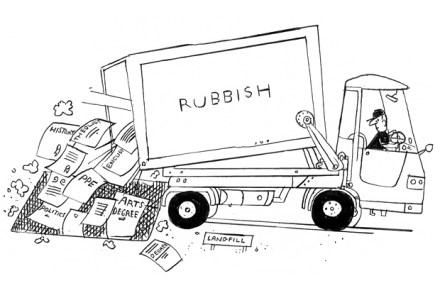
What do you say to an arts graduate? Hamburger and fries, please. It’s an old joke but one that still rings true as students consider the value of a university education. A new survey from the graduate recruitment site Totaljobs.com today suggests that 40 per cent of graduates are still looking for work six months after graduating, whilst a quarter are still unemployed a year later. The news isn’t much for those who manage to bag a job – the latest ONS’ employment figures suggest that nearly half of graduates who have found work are in jobs that don’t require degrees. But even if the student of today takes the jump into higher education, should they consider how much going to university will affect their earnings over a working lifetime?

Cheat sheet: George Osborne’s speech on the pound

From our UK edition

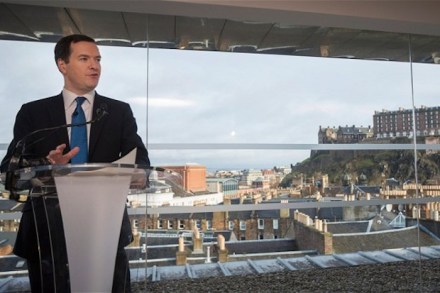
‘If Scotland walks away from the UK, it walks away from the pound’, the Chancellor said this morning. In a speech aiming to blow a hole in the SNP’s campaign, George Osborne has set out why sharing the pound isn’t on the cards for an independent Scotland. Here are the key points from his speech, the reactions and why a currency union with the rest of the UK won’t happen 1. The Tories, Lib Dems and Labour have united on a technical fight It’s very rare that George Osborne, Ed Balls and Danny Alexander can find something to agree on. The fact they’ve publicly united against a currency union with Scotland shows how pressing the matter is.

Podcast: Somerset vs. the Environment Agency, the politics of flooding and being a dirty old man

From our UK edition

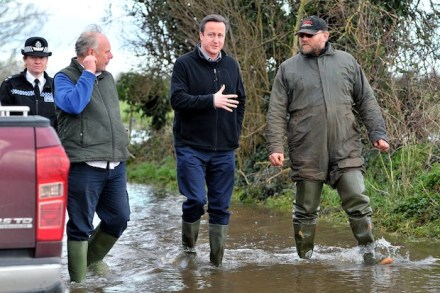
Did the people of Somerset see the floods coming? On this week’s View from 22 podcast, the Sunday Telegraph’s Christopher Booker discusses why the Environment Agency was so ill prepared for the floods and ignorant towards the Somerset Levels. Was European Union regulation at fault? Would more dredging have totally prevented the floods? And has the Agency been as careless with their attitude towards the River Thames? Cosmo Landesman also debates Mary Wakefield on whether he is a dirty old man. What now defines a ‘dirty old man’? Is it creepy for older gentlemen to compliment younger women? Are there more 50+ men who are remaining sexually active? Is it wrong for women reciprocate or should they ignore such advances?

Betting on the future of Scotland — Parris vs. Massie

From our UK edition

How would you bet on the outcome of the Scottish independence referendum? With Ladbrokes offering odds of 1/5 on a ‘No’ vote, its a much better return than any savings account. But should writers put a wager on something they can possibly influence? Matthew Parris discussed how he might bet with Alex Massie on our podcast last week — a conversation that has stuck in his mind. This was what Parris says on the matter in his Times column today (£): ‘Something came over me. Last Wednesday, in the middle of a debate about Scottish independence with Alex Massie, a Scottish columnist who writes for The Spectator and The Times, I was asked how I’d bet on the result of the September referendum. Obviously, I said, I’d bet on a No to independence.

PMQs needs reforming but it shouldn’t be toned down

From our UK edition

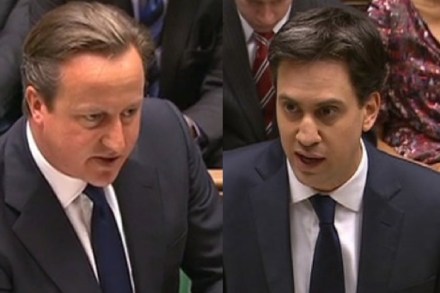
To anyone in Westminster, Prime Minister’s Questions is terrific fun and a good measurement of how the leaders are doing every week. But what does the rest of the country think of this rip roaring event? The Hansard Society has released a new report Tuned in or Turned off? Public attitudes to Prime Minister’s Questions to find out whether the nation enjoys the session as much as the keen political watchers do. The report suggests that PMQs are seen a ‘cue’ for wider perceptions of Parliament, most of which are negative. The public dislikes the pantomime atmosphere, the political point scoring and general behaviour of MPs — which is likened to a school playground.

Tube strike called off, but is either side victorious?

From our UK edition

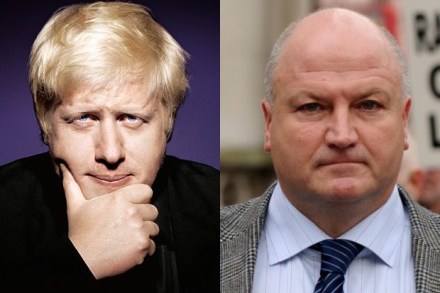
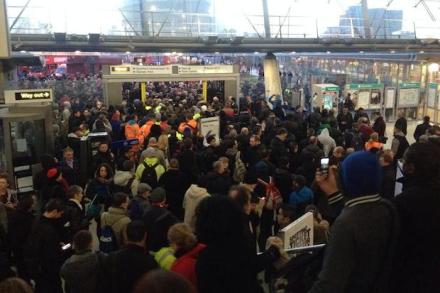
Londoners rejoice — the Tube strike has been called off. Following discussions through the ACAS arbitration service, the RMT and TSSA unions have called off the second 48 hour strike due to begin tomorrow. It seems to be a draw, with neither Transport for London nor the unions being crowned the winner. In return for calling off all industrial action, TfL has agreed to two months of intensive talks ‘to examine LU’s proposals in detail’, combined with a review of every station which significantly ‘could result in some ticket offices remaining open.’ Boris Johnson said: ‘TfL's negotiators have been ready since November to discuss the detail around ticket office closures and wider modernisation of the Tube.

Labour on track to beat Ukip in Wythenshawe & Sale East

From our UK edition

Will Ukip make great gains in the Wythenshawe & Sale East by-election next week? According to the latest polling from Lord Ashcroft, the party has increased its vote share by 12 points since the last general election but are far off from winning. Labour is still very much on track to hold the seat, given a 17-point increase in their vote share: Although Ukip has increased its vote share fivefold since 2010, it looks unlikely at this stage that the party will sweep through and take the seat. Despite rumours of shipping in a team from London to run the short campaign, they don’t appear to have made much of a mark on the ground.

Podcast: Breaking up Britain, can Labour win the election and Cameron’s quango enemies

From our UK edition

Despite the unionists’ polling lead, is the future of the United Kingdom in peril? On this week’s View from 22 podcast, Alex Massie and Matthew Parris discuss why Alex Salmond is still on course to have his way in the upcoming Scottish independence referendum. Why would a no vote in September not be the final answer? Are the unionist parties ready for a ‘nerverendum’ if they win in September? And which side should listeners put a bet on? Marcus Roberts and James Forsyth also discuss whether Labour and Ed Miliband are up to winning the next general election. Although the Labour leader has plans for the country, is he able to tackle his party's internal issues? Are there too many hands trying to create an election strategy?

Sorry RMT, there’s no proof the public support the Tube strikes

From our UK edition

Statistics can be used to prove anything, a wise man (Homer Simpson) once said. It looks like the RMT union are trying to do just that, with a new poll they've published with the claim the public supports the Tube strikes. According to a press release entitled 'Poll shows strike action against cuts justified and continued opposition to ticket office closures': ‘The survey carried out by the respected polling organisation Survation found that almost two thirds (65%) of tube users felt that lawful industrial action as a last resort was justified, with only 29% not sharing that view. A similar number (66%) were concerned at the Mayor's closure plans.’ Half of that may be true, but the polling doesn’t back up the notion that the public approve of the action.

Tube strike shows how Bob Crow is losing his power

From our UK edition

Just over two years ago, London Tube drivers negotiated a package that took their pay to £52,000 – around £10,000 more than the average Londoner. And yet tonight these drivers, along with other Underground staff, will go on strike – over a planned overhaul of how stations operate. But will it be much of a strike? Only 30 per cent of RMT members actually backed Bob Crow’s plan to strike (60 per cent abstained) and Boris Johnson is doing a pretty good job of keeping the show on the road (or in the tunnel). Of London Underground’s 12 underground lines, 10 will be running. The trains will be less frequent, of course, perhaps five to ten minutes apart. But in general, Comrade Crow’s attempt to close the network down have failed.

David Higgins warns politicians of the costs of dithering on HS2

From our UK edition

Sir David Higgins is making the most of the first few weeks in his job as chief of HS2 Ltd to fight the new line's corner. In an interview in today’s Daily Telegraph, Higgins makes a strong case (arguably better than anyone from the government) for the line, explaining why there is no alternative. He warns that the existing rail lines risk becoming similar to the ‘Piccadilly line at rush hour’: ‘There are no new train paths. We’d love to put more trains on the west coast. It performs at 85 per cent. It’s a very tired, old, smartly refurbished railway line that is right at capacity. It’s the busiest mixed use railway line in Europe and it’s showing. We can’t get more trains on it.

Philip Seymour Hoffman found dead in New York

From our UK edition

The Oscar-award winning actor Philip Seymour Hoffman has been found dead,  aged just 46, in his New York apartment this evening. According to reports, he appears to have died from a drug overdose. Hoffman was known to have battled  substance abuse for several years. Hoffman was popular with The Spectator's critics. Last April Clarissa Tan wrote that Hoffman gave a 'stellar turn' as Robert Gelbart in A Late Quarter.

Podcast: Britain’s one child policy, a repentant Tory rebel and the coalition’s open marriage

From our UK edition

Does Britain have a one-child policy? On this week’s View from 22 podcast, Alec Marsh discusses the death of the big middle class family. Is this a distinct policy from the government or simply families making different choices? Why are some rich and poorer families still having lots of children? Is this trend a result of the squeeze on the cost of living? Fraser Nelson also discusses the rebellious nature of Conservatives backbenchers with Douglas Carswell MP. Is now the time for Tories to toe the line and get behind David Cameron? Why has Carswell changed his mind and withdrawn his support to a disruptive amendment to the Immigration Bill? Should his colleagues do the same? Plus James Forsyth and Isabel Hardman discuss how the coalition has become an open marriage.

Audio: Douglas Carswell on why he was wrong to rebel

From our UK edition

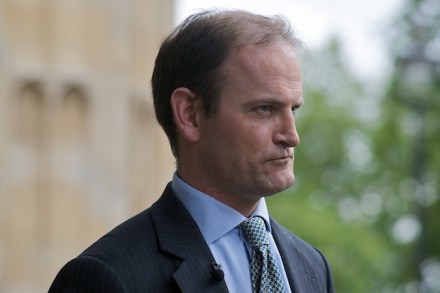
Douglas Carswell is one of the Conservatives' most active Euro rebels. So we invited him to our View From 22 podcast to discuss this week's leading article, which says the rebellion has descended into childish attempts to destabilise the Prime Minister. Given that he has rebelled dozens of times, we thought, he'd disagree. To our surprise, he instead told us  he has had a rather substantial change of heart — and has decided to give up rebelling. Furthermore he says that, on reflection, he regrets not only signing tomorrow's rebel amendment on immigration but Bernard Jenkin's letter to No.10 on EU regulation. Towards the end of the podcast, he poses a striking question to his fellow Eurosceptic rebels: 'What is it we now want, guys?

Mayor’s Question Time: Boris’ budget day

From our UK edition

A tax-cutting budget to support growth — that’s the central, very Conservative message of Boris Johnson’s 2014-15 budget for London. At Mayor’s Question Time today, he bombarded members with all the positive things to have come out of his mayoralty. Unemployment down by 18,000, employment up by 54,000, bus crime down 40 per cent, Crossrail still on time and on budget while the redevelopment of Battersea Power Station and the Northern line expansion are on track. Boris has decided to keep his voters happy with a tax cut. Despite ever decreasing government grants, it’s the second consecutive year he’s cut City Hall’s share of council tax — the Mayor claims means a 24 per cent drop in real turns.

A. C. Grayling interview: being hated, the need for private universities and celebrity academics

From our UK edition

Professor Anthony Clifford Grayling is on top of the world. Well, Bloomsbury. Sitting in his office overlooking Bedford Square, the Master of the New College of Humanities can barely contain his self-satisfaction. ‘We have been more successful than anybody could have guessed,’ he informs me. Two years ago, ‘one of the most hated men in academia’ was the target of eggs, smoke bombs and insults when he announced a new £18,000-a-year private university. His aim was to marry the tutorial teaching model with a challenging liberal arts course — with the help of some celebrity friends. Academics, foes and friends all rounded against Grayling and willed his experiment to fail.

Happy 30th birthday to the Macintosh — one of the most significant developments of the 20th century

From our UK edition

On 24 January 1984, Apple Computer introduced the Macintosh. Thirty years later, it’s hard at first to see what is so special about this computer. It doesn’t look much different to other competing products of the time. Housed in a squat gray box, the original Macintosh has a tiny black and white screen, no built-in storage and limited processing capabilities. It was expensive too – costing $2,495 ($5428 today) — and had very few pieces of software available. Plus it was a flop, selling way below Apple’s original expectations. But the first graphical personal computer changed how we thought about computers, and arguably, set the course for much of the late twentieth century.

Watch and read: Nigel Farage launches Ukip’s 2010 election manifesto

From our UK edition

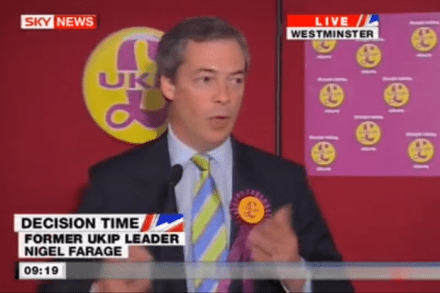
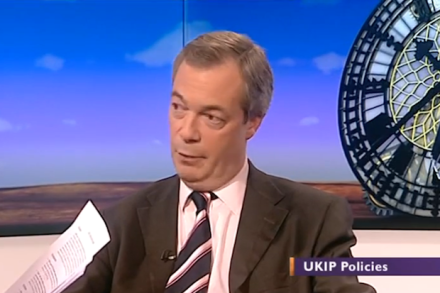
Does Nigel Farage really have no idea what was in Ukip’s 2010 election manifesto? Yesterday, he claimed on the Daily Politics he had never seen or heard of many of the policies the party stood for. But if you take a look at the video above, Farage was one the main speakers when the manifesto was launched in April 2010. The low-grade staging is again a sign of how far Ukip have come in the last three years, but their message hasn’t changed much. Farage claims: ‘The choice the public has is not about a change of government but a change of management’ Always the outsider, and who offers the solution? Ukip of course: ‘It’s time for some straight talk about who governs Britain.

Nigel Farage disowns all of Ukip’s 2010 manifesto policies

From our UK edition

‘We need to have a domestic policy agenda that adds up’ — Nigel Farage said on the Daily Politics today. The Ukip leader aptly summed up, and proved, one of the main challenges for his party as they attempt to become a mature force. Farage did his best to disown anything the party stood for at the last general election. Andrew Neil quizzed him on a variety of official policy positions, many of which are inconsistent and unfortunately remain on their website or available in official documents. On replacing Trident, Farage claimed his position was at odds with what is stated on the party’s website: 'Andrew Neil: Is Ukip now against replacing Trident? Nigel Farage: Yes.