Sebastian Payne

Hypocrisy alert: big tech firms complain of data intrusion

From our UK edition

It’s time to reform government surveillance, so say the internet's tech giants. Following the stream of NSA spying revelations from The Guardian; AOL, Apple, Facebook, Google, LinkedIn, Microsoft, Twitter and Yahoo have joined forces to urge Barack Obama and the US Congress to tighten the laws regarding spying on individuals. In an open letter released today, they state: ‘We understand that governments have a duty to protect their citizens. But this summer’s revelations highlighted the urgent need to reform government surveillance practices worldwide. The balance in many countries has tipped too far in favor of the state and away from the rights of the individual — rights that are enshrined in our Constitution. This undermines the freedoms we all cherish.

Briefing: a pay rise for MPs?

From our UK edition

What’s happening? The rage continues today in advance of Ipsa's expected recommendation that MPs should get a 11 per cent pay rise to take their pay to £74,000 in the next Parliament. This follows a consultation paper Ipsa released in July, with five key recommendations: Increasing MPs' basic pay, and then linking their salaries to average earnings Overhauling the pensions scheme Discontinuing resettlement payments Further restrictions to expenses Improved communication to constituents on what MPs do Why shouldn't they get a raise? Public sector pay has been frozen for several years, and while the economy is in a state of cautious optimism, the public will think MPs are scratching their own backs.

Hugo Rifkind’s My Week reminds me why it’s worth getting up on Saturdays

From our UK edition

‘Nothing’s funny any more’ has become the daily mantra of this magazine’s cartoon editor, Michael Heath. Thanks to Leveson, political correctness, taste and common decency, lampooning public figures in particular has become more difficult than ever. Hugo Rifkind still has the right idea. From the despair of trying to conjure up a column for the Times’s Saturday edition, he came up with ‘My Week’, and these diaries, in which he takes aim at someone — usually in politics — who has dominated the news, are now the first thing many people turn to. This compilation brings together his best sketches in an enticing bible of satire. The merriment gained from the material is dependent on whom Rifkind has to work with.

New constituency polling: who would vote Ukip?

From our UK edition

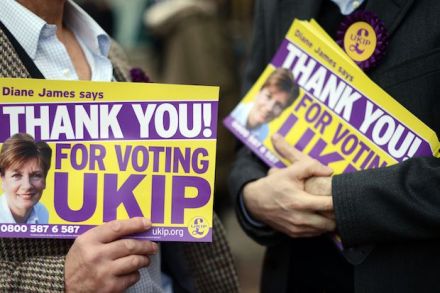
What do the Liberal Democrats and Ukip have in common? According to the second round of Survation’s constituency polling, they are both locally outperforming their national trends. Thanks to the Ukip donor Alan Bown, we can see how the seats of Great Grimsby and Dudley North would vote, were there a general election tomorrow: These seats are important because they are numbers nine and ten on the Conservatives’ target list for the 2015 election (requiring a one per cent swing to win). Both suggest some worrying trends for the Tories. Since 2010, Labour’s voting share has risen by six/seven points, while the Conservatives have dropped 11/12 points. The Lib Dems have dropped nine points in both while Ukip have risen by 16 and 14 points respectively.

South Thanet polling highlights the Ukip threat in 2015

From our UK edition

It appears Laura Sandys has made the right decision to stand down at the next election. A new poll from Survation targeting her South Thanet constituency suggests that if a general election took place tomorrow, the Tories would fail to hold onto the seat. In the constituency once represented by Jonathan Aitken, the Conservatives have dropped 20 points since the last general election, pushing them into third place. Labour would take the seat with 35 per cent of the vote but most worryingly for some, Ukip’s vote has risen hugely, shooting into second place with 30 per cent: Constituency level polling is quite rare, so it’s always interesting to see how national trends filter down to a seat-by-seat basis.

The Spectator podcast: ‘You can’t say that’, Osborne’s challenge and Obama’s struggle

From our UK edition

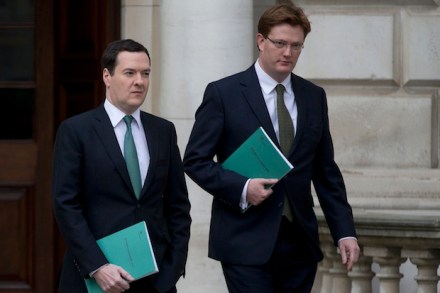
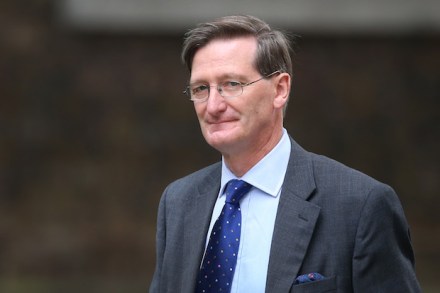
Are there truths in modern Britain we can't speak about? On this week's View from 22 podcast, Spectator columnist Rod Liddle discusses his cover feature on why we  are so reluctant to talk about certain topics. Was Dominic Grieve right to apologise for his comments last week? Is this a case of political correctness getting worse? And is it too late to do anything about it? James Forsyth and Isabel Hardman also look at George Osborne's preparations for the 2013 Autumn Statement. According to James' column, he was recently caught filming Bono and Bob Gedolf at a party  — what does this say about the man? What can we expect to see from the Autumn Statement? How will the Chancellor deal with Ed Balls?

Boris Johnson: greed can be good

From our UK edition

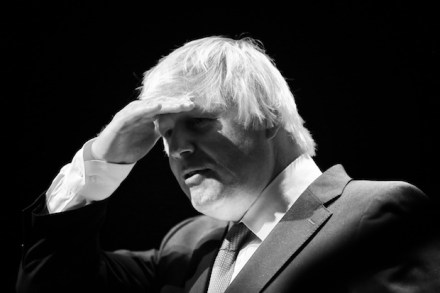
Boris Johnson prides himself on being one of the few politicians who gets away with saying the unsayable. He stuck to that theme tonight with his Margaret Thatcher lecture to the Centre for Policy Studies, in which he argued that greed isn't a bad thing. He said: 'But I also hope that there is no return to that spirit of Loadsamoney heartlessness – figuratively riffling banknotes under the noses of the homeless; and I hope that this time the Gordon Gekkos of London are conspicuous not just for their greed – valid motivator though greed may be for economic progress – as for what they give and do for the rest of the population, many of whom have experienced real falls in their incomes over the last five years.

Can Silicon Valley ever be replicated in London?

From our UK edition

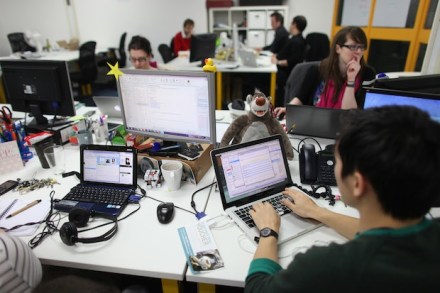
Trying to clone Silicon Valley has been a cornerstone of this coalition’s business policy. Rohan Silva, until recently the PM's policy guru, spent several years in government and opposition creating the ‘Silicon Roundabout', an attempt to provide a new leg for the UK’s economy in East London. Depending on who you believe, the East London Tech City project has either been a roaring success or a waste of time. Despite all the encouragement from the government, the main challenge is recreating the enticement of Silicon Valley in Shoreditch — something that may be impossible.

Operation Safeway: the Met are on the look out for rogue cyclists

From our UK edition

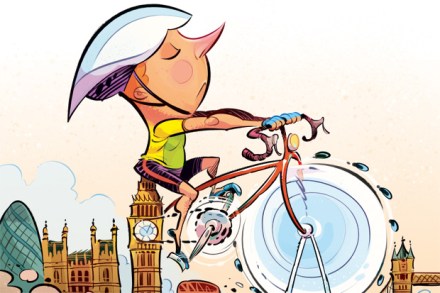
The Met Police took 166 of London’s traffic junctions hostage this morning. After a recent spate of cycling fatalities across the capital, a ‘major road safety operation’ kicked off today, with 2,500 police officers on the streets ‘making busy London junctions safer’. Codenamed Operation Safeway, the Met are watching for anyone committing an offence on the road. In reality, the Bobbies appeared to be targeting cyclists jumping red lights, absorbed in their music and generally misbehaving on the road: Boris Johnson has acknowledged there is much to be done to make London safer for cyclists, especially as more and more people are taking up two-wheeled commuting.

24 hour Tubes are on their way — the impact on London will be huge

From our UK edition

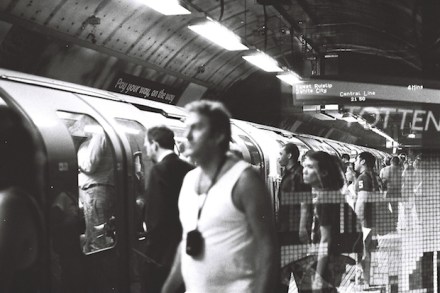
Ravers of London rejoice — 24-hour tubes at the weekend are finally on their way. TfL has announced today that trains on the Victoria, Central, Jubilee, Northern and Piccadilly lines will run constantly from Friday morning till Sunday evening. The all-night drinkers of the capital have long wondered why it wasn’t possible to keep the Underground running all night. Engineering work has been blamed, while the trade unions have remained bolshie with TfL (I can’t wait for Bob Crow to pop up complaining about this). But by 2015, these lines should be all set for the 21st century. If you happen to live on one of these lines, you’re all set for a weekend of non-stop partying: The economic and social impact of 24 hour Tubes will be huge.

The Spectator podcast: The View from 22 on Paul Flowers, Ed vs Ed and how to speak like JFK

From our UK edition

Why did no one realise that Reverend Paul Flowers was a preacher behaving very badly? On this week's View from 22 podcast, the author and publisher Melanie Phillips and the Conservative MP Jesse Norman ask why a man, who didn't know one end of a balance sheet from the other, was given so much power over financial institutions and charities. Was it because he ticked all the right progressive boxes? Was it because the establishment is too willing to look the other way? Did Parliament fail in its duty by not quizzing him properly? And how deep should select committees dig into private lives? Mark Forsyth discusses the importance of the political soundbite with our deputy editor Mary Wakefield.

British households are still overwhelmed by debt

From our UK edition

Despite 'the age of austerity', Britain still has a debt problem. That’s the conclusion of a new report from the Centre for Social Justice. It suggests that personal debt in the UK has reached a record high of £1.4 trillion, or 90 per cent of the UK's economic output last year. That’s not happened overnight; but the debt level has increased steadily over the last decade: Breaking this down, the CSJ says that the average household debt is now £54,000 (nearly double what it was a decade ago). Thanks to the increase in borrowing, 5,000 people were made homeless last year due to mortgage and rent arrears.

Ed Miliband and Balls: still split on HS2

From our UK edition

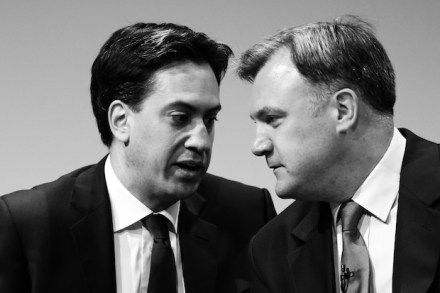
More details of the split Eds have emerged. As Guido reports, Balls has never been to the pub with Miliband, nor knows ‘if he likes the pub or not’. And, in her Times column today (£), Rachel Sylvester reveals that High Speed 2 is another diving line between Labour’s big beasts: ‘There is clear disagreement over HS2 — although Mr Balls’ conference speech, in which he raised concerns about the cost, was approved by Mr Miliband, there was irritation in the leader’s office about the briefing afterwards that emphasised the Shadow Chancellor’s skepticism about the high-speed line.’ After Balls’s conference speech, Brighton was aflutter with rumours that Labour was going to withdraw support for HS2.

Christmas lights are not the answer to expensive energy

From our UK edition

It’s tough in Scotland. Faced with the prospect of a bitingly cold winter, fuel poverty and abandoning the Union, some of its residents have taken extreme measures to survive. ITV News reports that Darrel Piper of Dumfries has decided to heat his home with Christmas decorations instead of paying to run his heating system: ‘The 40-year-old says that he puts £30 in the electricity meter every fortnight and £5 in the gas meter to use for cooking. He says that if he didn't have the lights it would cost £60 a fortnight for the gas and electricity.’ Although Mr Piper apparently doesn’t leave the lights on when he’s out, and argues the trip switch would catch any problems, it can’t be a particularly safe answer to cheaper energy.

Paul Sykes boosts Ukip’s coffers but is he helping to split the right?

From our UK edition

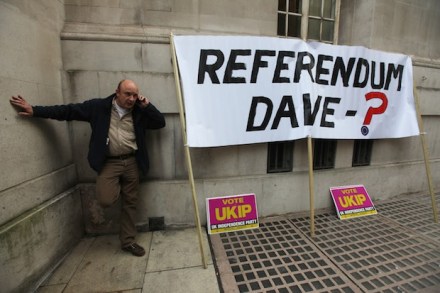
Ukip’s treasurer will be beaming this morning, thanks to Paul Sykes. The Yorkshire millionaire — whose wealth is estimated to be over £600 million — has, according to Philip Johnson in today’s Telegraph, promised to ‘do whatever it takes’ to ensure that the party tops the polls at the 2014 European elections. The Tories won’t be thrilled at the news; but Sykes is not a new problem, more of a recurring headache. He supported the Tories for many years; but left the party following the Maastrict Treaty, and campaigned instead for James Goldsmith. He rejoined the Tories in 2001 under William Hague before being expelled. Sykes donated £1.5 million to Ukip in 2004, and looks set to make another substantial contribution.

Farewell WebCameron, and the legacy of Steve Hilton

From our UK edition

The Tories’ attempts to erase their own online history are wider than first thought. After ‘cleaning up’ their website by hiding pre-2010 speeches and announcements, The Guardian’s Alex Hern reveals that the WebCameron videos have been made private on YouTube: ‘Now it has emerged that every video on the Conservatives' YouTube page that dates from before 2010 has been removed or marked as private. Videos such as Ask David Cameron: Shared ownership, EU referendum, PMQs are now marked as unavailable on YouTube. Others, such as Boris Johnson at the pre-election rally in Swindon, and David Cameron down on the farm, are now unlisted, ensuring that only users with a direct link can see them.

The Tories are still stuffed in the North

From our UK edition

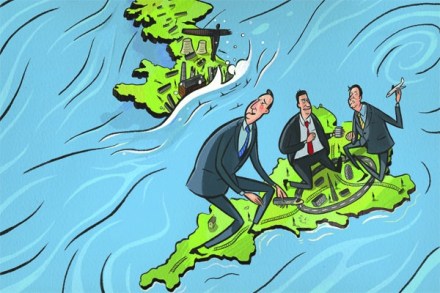
Voters in the North love Tory policies but hate the Tories. That’s the headline from some new YouGov polling on what voters in different parts of the country feel about the political parties and their policies. An overwhelming majority of voters in the North support cutting net immigration, same-sex marriage, the benefits cap, Help to Buy and raising the income tax allowance — all policies enacted by Conservatives in government. But, when asked which party they would consider voting for, 39 per cent of respondents in the North said that they would never consider voting Tory: Why do some many people in the North detest the Tories?

The View from 22 podcast: Blackout Britain, the rudeness of John Bercow and breaking the immigration taboo

From our UK edition

Is Britain on the verge of an energy crisis? On this week's View from 22 podcast, the Mail on Sunday's David Rose discusses how Britain's choice green energy over efficient energy has put us on a path to disaster, and why it is politicians, not the Big Six energy firms, who are blame for the coming crisis. Would repealing the Climate Change Act make any difference? And will a significant policy change only come if the lights go out? Douglas Murray also examines Paul Collier, the man who has made it OK for the left to talk about immigration. After the negative reception of David Goodhart's book on immigration, can Collier expect to receive the same treatment with his new work Exodus?

Why have the Tories purged their website?

From our UK edition

Remember Cameron's hug a husky speech? Or his lecture on 'the need recast politics for the digital age?' Well, good job you do because the Tory party has been trying to purge their online history, according to Computer Weekly. As Mark Ballard explains, someone at CCHQ has used a robots.txt file to block Google (and other search engines) from indexing the files: ‘...the Conservative Party has removed the archive from its public facing website, erasing records of speeches and press releases going back to the year 2000 and up until it was elected in May 2010. 'It also struck the record of their past speeches off internet engines including Google, which had been a role model for Cameron and Osborne's "open source politics".