Sebastian Payne

Podcast: Islam’s 30 year war, Westminster’s wandering hands and the Tories’ NHS legacy

From our UK edition

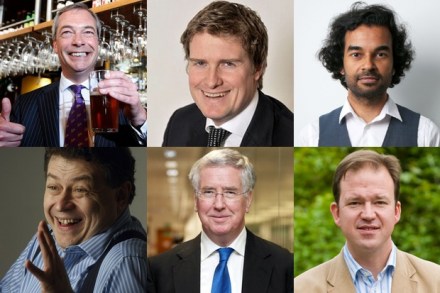
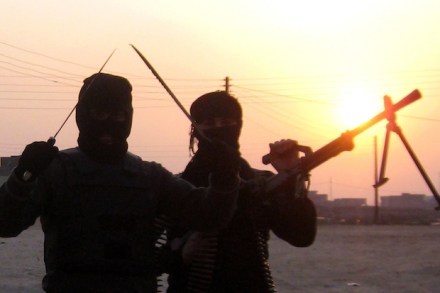
Is the Sunni-Shia conflict in the Middle East making a new great war ever more likely? On this week’s podcast, Douglas Murray discusses the battle involving Iran, Iraq, Syria and Saudi Arbia with Tom Tugendhat, a former solider and advisor to General David Richards. Why has the West failed to control the region? Can anything be done to save the situation? And how likely is it that the Sunni-Shia battle will end in a nuclear standoff? Do the men of Westminster also suffer unwelcome advances? Former Lib Dem advisor Miranda Green and Guido Fawkes’ Alex Wickham discuss the culture of Westminster’s wandering hands. How endemic is the problem for both men and women? Do journalists ever abuse the situation to develop contacts and get stories?
Michael Gove announces a computing curriculum worthy of the 21st century

From our UK edition

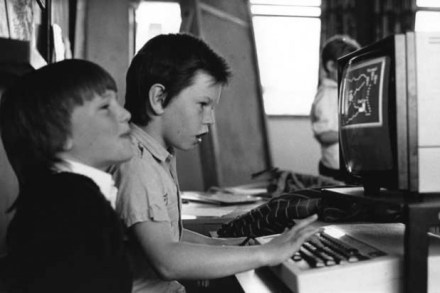
Finally, Britain’s children will be equipped for the Internet age. In a speech to the BETT education conference today, Michael Gove announced the details of the new computing curriculum, which will take effect from this September. As well a new Computer Science GCSE and a beefed-up A-Level (hopefully more schools will offer it), the new computing curriculum will begin for five year olds, and will consist of three strands. These are information technology (how to use computers in the real world), ‘digital literacy’ (confidently and safely using computers) and ‘computer science’ strands. The Computer Science strand is by far the most important.

All you need to know about the Wythenshawe and Sale East by-election

From our UK edition

It’s by-election time once more. In just over three weeks, the voters of Wythenshawe and Sale East in Greater Manchester will head to the polls on the 13 February to decide who will replace Paul Goggins, the Labour MP who died suddenly earlier this month. By-elections are often thought to be a useful barometer of how the country is feeling, but in reality they are mostly fought on hyperlocal issues. This one will no doubt be watched closely given the rapidly approaching Euro elections in May. The Tories and Lib Dems are unlikely to do well in either battles, while Ukip and Labour will be going head-to-head in both instances. Who’s going to win in W&SE? Most likely Labour.

Ukip councillor blames floods on Cameron and gay marriage

From our UK edition

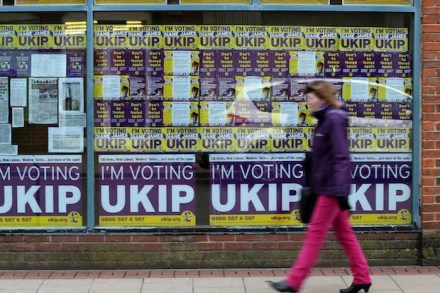
With just 124 days till European election polling day, you’d expect Ukip to be working tirelessly to professionalise the party’s operations and hide away any controversial opinions. They don’t appear to be doing a very good job so far. David Silvester, a Ukip councillor in Henley-on-Thames, has written to his local newspaper explaining how Britain’s recent spates of floods are David Cameron’s fault — because he has angered God with the Same Sex Marriage Bill: ‘The scriptures make it abundantly clear that a Christian nation that abandons its faith and acts contrary to the Gospel (and in naked breach of a coronation oath) will be beset by natural disasters such as storms, disease, pestilence and war.

Podcast: Benefits Street vs the left, Cameron’s Euro mission and our 1964 expose

From our UK edition

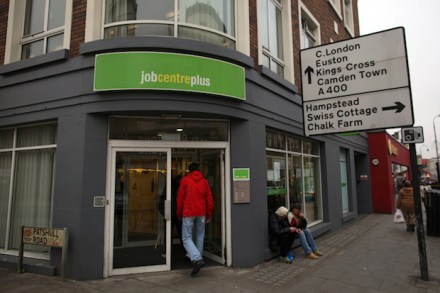
Has Benefits Street exposed Britain's dirty secret? On this week's View from 22 podcast, Fraser Nelson debates the Labour MP Frank Field on the left's reaction to the Channel 4 programme, why successive governments have failed to tackle the problem of welfare dependency and whether Iain Duncan Smith's reforms will finally crack the problem. Professor Vernon Bogdanor also looks at the 50th anniversary of Ian Macleod's infamous 'What Happened' article in The Spectator — apparently blowing the lid on Alec Douglas-Home’s succession to the Tory leadership. Was Ian Macleod a saboteur or truth teller? Was Macleod lying in his article? And why did the Tory party distrust R. A. Butler enough not to make him leader?

Labour’s poll woes as economy grows

From our UK edition

Is the improving economy harming Labour’s standing? According to a new Guardian/ICM survey out today, Labour is still ahead of the Conservatives by three points — but the gap is slowly shrinking. Since the last ICM poll in December, Labour’s lead has dropped to just three points, down from an eight point lead in November: Today’s poll also looks at how assured people are feeling about their own financial position and their ‘ability to keep up with the cost of living’. 52 per cent now feel confident about the state of their personal finances — the highest level since October 2010.

A mini refresh of The Spectator online

From our UK edition

We have been doing some new year tidying at The Spectator, and the result is a refreshed look to our website. We've added a trending bar on the home page and if you cast your eye across the navigation bar, you can see we’ve simplified its structure, to make it more welcoming for those who don’t know their way around. In the new Magazine section, you can find all the articles in that week’s issue in one place. Subscribers have full access to our back issues — recent ones can be chosen by from a drop-down box on the right hand side. We’ve grouped all of your favourite columnists — from the front and back of the magazine — together in one place.

Podcast: the fantasy Pope Francis, Labour’s immigration nightmares and the Profumo affair

From our UK edition

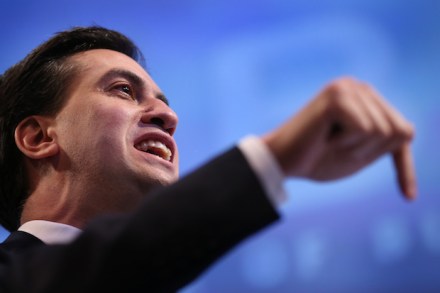
Is our perception of Pope Francis simply an invention of the liberal media? On this week’s View from 22 podcast, The Catholic Herald’s Luke Coppen and Freddy Gray discuss how the world has fallen in love with this ‘Fantasy Francis’, what might happen if the real Francis (whoever he may be') is discovered and why he’s replaced Obama as a leftie pinup. Demos’ David Goodhart, The Spectator's Isabel Hardman and Tim Finch from the IPPR also discuss Labour’s immigration nightmares. Is the party in a more difficult position than the Conservatives? And has Ed Miliband apologised enough for the mistakes they made?

Mark Duggan lawfully killed, says high court jury

From our UK edition

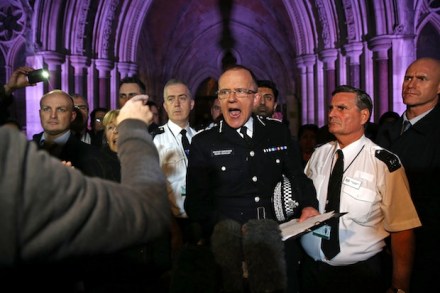
A high court jury has said Mark Duggan, whose death sparked the 2011 London riots, was lawfully killed by police. The 29-year-old was shot dead by police in Tottenham in August 2011, after officers attempted to arrest him on suspicion of planning an attack. Two days later, Duggan’s relatives marched on Tottenham Police Station and events soon spiraled out of control. They have reacted to this afternoon’s decision with fury. His aunt has claimed that ‘the majority of people in this country know that Mark was executed’. His brother has vowed to ‘fight till we have no breath in our body for justice’. Outside the Royal Court of Justice, the crowd is reported to have shouted ‘murderers’ after hearing the verdict.

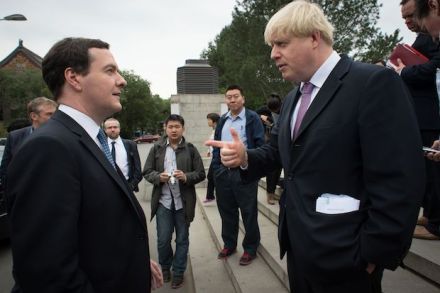
Boris Johnson sides with George Osborne over more cuts…or does he?

From our UK edition

George Osborne's speech on the need for £25 billion more cuts has opened up some strange dividing lines in Westminster. Labour has done exactly what the Chancellor wanted and questioned the need for the cuts. Nick Clegg has also fallen into place as Osborne hoped and moaned about them being unfair. But Clegg has found an unlikely ally in Iain Duncan Smith, who has let it be known that he does not much like the idea that Osborne could cut a further £1 billion from the welfare bill. So who did Boris Johnson cosy up to this morning when he had his say?

The North of England needs its own Boris Johnson

From our UK edition

Could the north of England do with its own Boris Johnson? In a new report out today, the IPPR think tank argues that a ‘northern voice’ is needed to lobby the government on the region’s priorities. The Mayor of London has shown himself proficient at making the case for London’s transport and budgeting needs. Although the IPPR may be right, that there’s plenty of work needed to rebalance the economy, better national representation for the North isn’t a new problem. In fact, the North has previously said no to several possible solutions. A decade ago, John Prescott's plan for regional assemblies was overwhelmingly rejected by a northern referendum.

Six moments that hardened up the Tories in 2013

From our UK edition

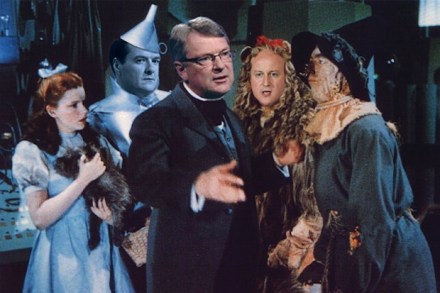
For the Conservative party, 2013 has been the year of Lynton Crosby. Just over a year ago, the Wizard of Oz was appointed David Cameron’s chief election strategist. Now he’s full-time. His brief is to make sure the Tories in government have a clear message – something that eluded them in the 2010 campaign. And to see that the message is articulated in deeds, not words. In April, the Prime Minister described his own strategy by using a quote from the late Keith Joseph: ‘the right thing to do is to address the things people care about; to fix yourself firmly in what Keith Joseph called the “common ground” of politics’. As opposed to the middle ground of Westminster. Here’s the six top incursions into this middle ground. 1.

Podcast special: Spectator writers, friends and foes make predictions for 2014

From our UK edition

We're almost at the end of 2013, so here's our extended special of  The View from 22 podcast. We're delighted to bring together the best of The Spectator's family and friends to discuss their highlights of this year and predictions for 2014. This is what they had to say: Nigel Farage on what Ukip will do next year: 'I haven't entered this as part of a popularity contest. I'm in this to shake the whole thing up. Ukip now has the ability to realign British politics' Rory Sutherland on the evolution of technology : 'The next great advances will be in psychology. All the technology in the world is no use at all unless it is along the grain of human nature. I think we've made a lot of mistakes there so far.

Good news for the government: Unemployment falls again

From our UK edition

More positive economic news this morning — the unemployment rate has fallen. In the last three months, unemployment has taken a surprising drop to 7.4 per cent, compared to 7.6 per cent for the three months before. As the chart below shows, the unemployment rate is now lower than at any time since the general election, and the lowest since April 2009: The number of people claiming Jobseeekers’ Allowance is also down by 36,700 while average pay also rose by a slender 0.8 per cent compared to the previous year (still below the rate of inflation). Despite this, the figures are good news for the government.

CofE takes aim at payday lenders. But what about the banks?

From our UK edition

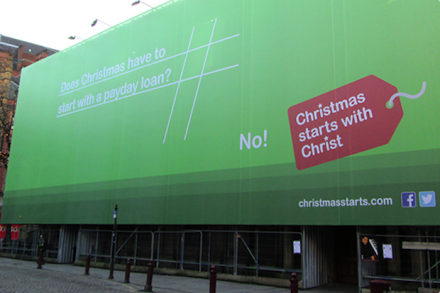
Does Christmas have to start with a payday loan? No, according to the Church of England. The Church has unveiled its annual advertising campaign this morning, posing this very question to the residents of Manchester. As usual, the CofE is worried Britons are becoming ignorant about the origins of Christmas. As one of the adverts (pictured above) from Christmas starts with Christ shows, the aim is to remind Britain of the religious nature of the festive season as well as urging people not to go into debt to finance Christmas. But are the payday loan companies the only companies the Church should be worried about? In a recent Barometer column, we compared the cost of borrowing of £200 from Wonga to the high street banks.

Briefing: The Davies Airport Commission

From our UK edition

What’s happening? Tomorrow, former CBI economist Howard Davies will release an interim report on the options for expanding Britain’s airport capacity. Some of the possibilities Davies has been considering include developing the regional airports (possibly with a High Speed rail element), building a new giant hub airport in the Thames Estuary, expanding capacity at Gatwick or Stansted Airports, or building a new runway at Heathrow. What will Davies say tomorrow?

Despite the improving economy, George Osborne is still unpopular

From our UK edition

Now that the economy is recovering and George Osborne has overtaken Ed Balls in the polls for having the best economic policies, he may be forgiven for wondering if wider rehabilitation is next. The Chancellor's allies have long seen him as the man who will succeed David Cameron, perhaps in 2018, and imagine that his problem — looking too young — will remedy itself and that his personal popularity will recover along with the economy. Today's polls suggest this isn't happening - at least, not yet. While the Chancellor's professional reputation is recovering from the omnishambolic 2012 budget his personal reputation is still pretty low.

Five things you need to know about Ipsa’s final report on MPs’ pay

From our UK edition

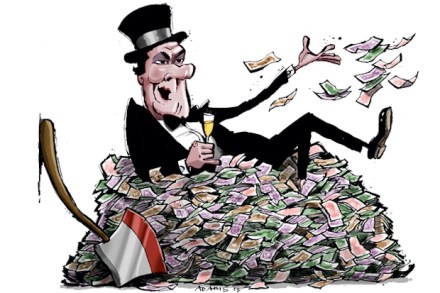
The Independent Parliamentary Standards Authority has released its final report on MPs' pay today. It's pretty much what was expected — a big salary bump, paid for by cutting back expenses and pensions, to start in the next Parliament. This is what you need to know: MPs' pay will a take one-off hike to £74,000. Ipsa says this is to 'address the historic shortfall’. This is a 11 per cent rise based on what they’re paid today, or 9.26 per cent on top of a previously announced inflation-linked pay rise. After this, MPs’ pay will track average earnings — going up or down based on what's going on rest of the country. Less generous pension scheme.

War gaming a better EU deal for Britain

From our UK edition

What will happen when Britain sits down to negotiate a new relationship with the European Union? The Open Europe think tank decided to find out with ‘war games’ in Westminster this morning. Expert negotiators representing the UK, EU Commission, Germany and France among others tried to figure out how a new Europe could be built that works for everyone. Tory MP and member of the No.10 Policy Unit Andrea Leadsom ably batted for the UK, based on the principles in her Fresh Start manifesto. Not surprisingly, she clashed with France, Germany and the EU Commission representative John Brunton.

Universal Credit is turning into an IT project disaster

From our UK edition

Universal Credit has replaced Labour's NHS supercomputer as the ABC of how not to manage an IT project. Just six months after the hip Government Data Service outpost was brought in to take over enhance the project, they’ve been pushed aside. According to the Cabinet Office,'a team within DWP will now take the digital solution forward’— again. According to some sources, the tensions between the GDS and the Whitehall mandarins arose when Francis Maude sided with the GDS by wanting to bin all the existing work and start from scratch. Writing off three years of work is not to be taken lightly.