Sebastian Payne

#ToryBingo: why politicians can’t ignore twitterstorms

From our UK edition

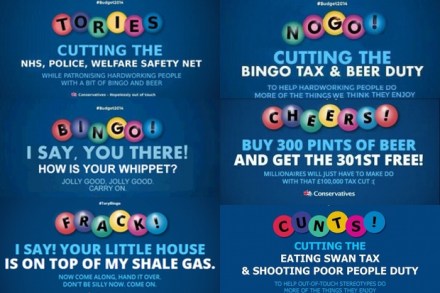
The row over Grant Shapps’ bingo poster is an example of what happens when politicians assume that what goes in the Westminster bubble stays there. David Cameron and Paul Dacre may be right that ’too many tweets make a twat’ and Twitter can be a ‘phoney world’. But occasionally, one tweet can move into the real world too. As Isabel reported yesterday, Conservative HQ’s ineffectual response to the misjudged Bingo poster suggests that they hoped the anger could be contained amongst the anti-Conservative brigade, many of whom spend their days tweeting abuse to George Osborne. But the number of spoofs (a selection can be seen above) and the fury within the Conservative party made this irresistible for the print media.
Technology is reshaping childhood — should we be worried?

From our UK edition

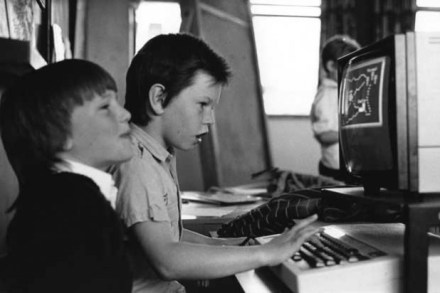
Are children utterly obsessed with technology? Yes, is the obvious answer to that question, but debate about whether is it a good or bad thing rages around forums such as Mumsnet. Many believe the innocence of childhood has been ruined by unfettered access to the Internet, videos, games and goodness knows what else. Others instead think that every generation of children is different and parents have to move with the times instead of yearning for their own past. I have to admit I’m a little biased. I built my first computer when I was six and spent most of my teenage years faffing around with websites and attempting to code. No doubt I missed out on the joyful pursuits of kicking a football but I loved every minute of it.

Podcast: Buying your way into the establishment and Osborne’s 2014 budget

From our UK edition

How easy is it to buy your way into the British establishment? On this week’s View from 22 podcast, Harry Mount and journalist Ben Judah discuss whether Britain has become a bankrupt country. Why are so many Russians throwing hordes to cash to buy their way into new Britain? How are Prince Charles and Tony Blair involved? And is it a good thing that the establishment is regenerating itself? Fraser Nelson, James Forsyth and Isabel Hardman also analyse George Osborne’s fourth budget — what the announcements mean, the winners and losers, how the Chancellor has carefully targeted Ukip, the significant changes for pensioners and Ed Miliband’s meek response.

Podcast: Fraser Nelson, James Forsyth and Isabel Hardman on Budget 2014

From our UK edition

Following George Osborne’s fourth budget, The Spectator’s Fraser Nelson, James Forsyth and Isabel Hardman discuss what the announcements mean, the significant changes for pensioners, how the Chancellor has carefully targeted Ukip, Ed Miliband’s reaction in the Commons, the winners and losers as well as what to expect on tomorrow’s Sun front page.

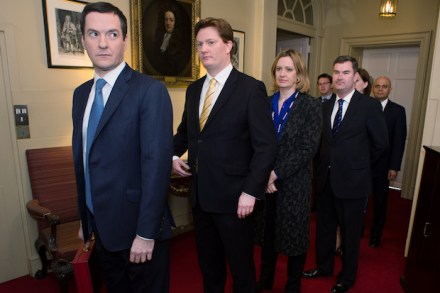
How much do voters care about Old Etonians and the political class?

From our UK edition

Are voters really concerned about how many Old Etonians David Cameron surrounds himself with? Judging by the cutting remarks from Michael Gove and Sayeeda Warsi it matters a lot, but opinion polling tells a slightly different, more troubling tale about how people feel about the ‘political class’. On the Eton question, YouGov recently carried out a poll asking which characteristics they found most unsuitable for a ‘leading politician’.

Five things you need to know about David Higgins’s HS2 report

From our UK edition

HS2 needs to happen, and faster. That’s the conclusion of David Higgins’s report on High Speed 2 out today. As well as backing up the government’s key arguments for the project on capacity grounds — not speed, which he says is a ‘by-product’ — the chairman of HS2 Ltd has made some recommendations for improving the project. Here are the key things you need to know about the Higgins report: 1. Extension to Crewe should happen in Phase One Higgins suggests that the first phase of HS2 should include another 43 miles of track from Birmingham to Crewe. This would be brought forward from Phase Two and built by 2027, providing better connections to Stoke, Shrewsbury and Chester among others.

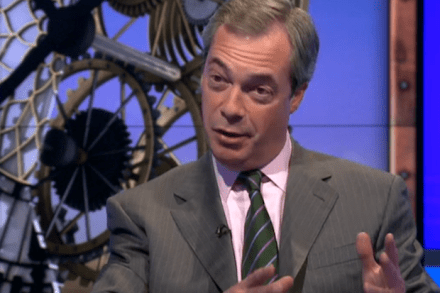
Nigel Farage and ‘new Ukip’ are running away from disaffected Tories. Why?

From our UK edition

Who votes Ukip? It’s a question psephologists have been trying to answer for years but Nigel Farage had a clear response on the Sunday Politics today: not just disaffected Conservatives. Based on research by Lord Ashcroft, Farage boasted that ’new Ukip’ — a party which is 'a lot of more professional, a lot more smiley, a lot less angry’ — now has such a great influence on the Labour party, they will be forced into changing their stance on an EU referendum following May’s Euro elections: 'There's a long way to go between now and the next election. As we've seen with Conservative policy, it chops and changes...

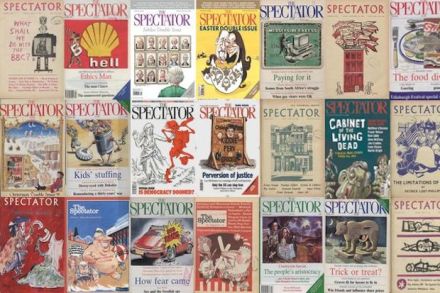
The Spectator website through the ages

From our UK edition

How has The Spectator weathered the first 25 years of the web? In Simon Courtauld's excellent history of this magazine To Convey Intelligence 1928-1998, he explains how the magazine's website was born under the direction of Kimberly Fortier: 'Under Fortier's influence, The Spectator's Doughty Street house adopted a new look in 1998, with its 18th-century front door and fanlight painted bright red and, at its summer party to celebrate its 170th anniversary, a huge red bow festooned the facade. On the same evening lights were beamed on to the draped bookshelves of the literary editor's office, announcing that The Spectator now had its own website on the Internet.

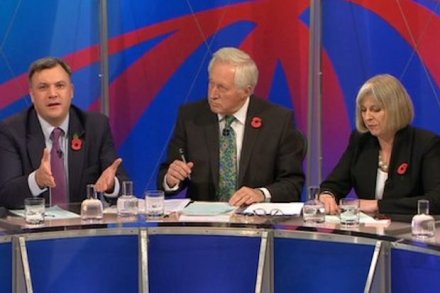
Is Ed Balls scared of Question Time?

From our UK edition

Like it or not, Question Time is Britain’s most popular forum for political debate. Two million viewers regularly tune in, and Thursday evenings on BBC1 is when and where ordinary people are most likely to encounter a secretary of state or shadow cabinet minister. For politicians, it’s a golden opportunity — a huge audience to which they can sell both themselves and their party’s policies. The choice of guests usually causes an uproar on Twitter — mostly along the lines of 'why is X appearing again? ' and ' I’m sick of seeing Y party getting so much airtime' — but who actually appears most frequently?

Podcast: Gove’s last stand, the march of the dog police and the future of conservatism in America

From our UK edition

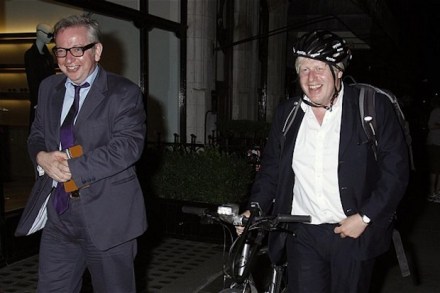
Why is Michael Gove under attack from his coalition partners, his own party and numerous enemies? On this week’s View from 22 podcast, Toby Young, James Forsyth and Fraser Nelson ask whether the Education Secretary’s attitude and policies are his own undoing. Is he, as Anthony Horowitz describes in this week's magazine, an unsettling character who is too abrasive in his approach to reforming education? Which of Gove’s friends are out to get him? Should he be worried about the threat from Boris Johnson? Are we witnessing a return of the Tory wars? And is Rupert Murdoch involved? James Delingpole and Freddy Gray ask if conservatism is in a better or worse state in America than it is in Britain? Can anyone in the GOP stop Hillary Clinton?

Happy 25th birthday to the World Wide Web. What comes next?

From our UK edition

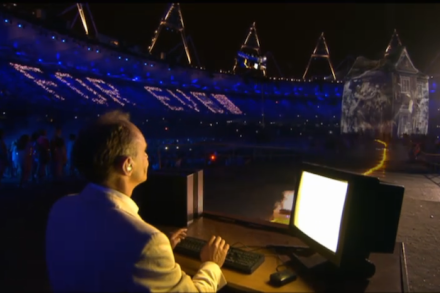
On this day in 1989, the World Wide Web was born. Tim Berners-Lee, a contractor at CERN, published a paper called 'Information Management: A Proposal'. Although it's tricky to pin down exactly how and when the Internet was formed, Berners-Lee's concept of a global system of interlinked pages was key. It wasn't until a year later when Berners-Lee published a more formal paper, along with the necessary tools to create and host web pages, that the project took the name and form — WorldWideWeb. Since then, the WWW has changed the world in a way that Berners-Lee never predicted. Instead of listing platitudes about all the wonderful things the web has done, it's easier to think about what would be missing without that paper.

Renewal offers a vision for a Tory workers’ budget

From our UK edition

How can the Tory party broaden its appeal? Renewal, a group founded to do just that offered its answer at a packed Westminster pub yesterday evening. With just eight days to George Osborne’s 2014 budget, Robert Halfon MP and Renewal’s David Skelton offered their vision of a ‘workers' budget for the Workers’ Party.' Arguing that ‘what happened in Scotland [to the Conservative party] is slowly happening in the North’, Halfon outlined why he believes the Conservative Party needs to change its narrative, mission and structures to go beyond its traditional reach, particularly with working class and ethnic minority voters.

Iain Duncan Smith ties himself into universal knots over welfare reform

From our UK edition

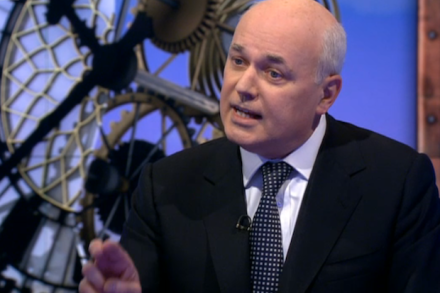
Will Universal Credit ever become universal and will the lowest paid still face an effective tax rate of a sometimes outrageous 76 per cent? Iain Duncan Smith took a grilling over his plans for welfare reform on the Sunday Politics today, but didn’t give a clear answer to either of these questions regarding his reforms. Firstly, on the progress of implementing Universal Credit, the Work and Pensions Secretary claimed that ‘Universal Credit is already rolling out and the IT is working’, despite just 6,000 people currently on the ‘Pathfinder’ stage. In his initial plans, a million people claiming six existing working-age benefits were due to be on the Pathfinder stage by April 2014.

The end of High Speed 2?

From our UK edition

Haters of HS2 rejoice: the project has an even better chance of failing now. Following James’ revelation that the Transport Secretary doesn’t believe the Hybrid Bill will pass through Parliament before the next election, there are several scenarios on how the parties may change their stance on the project. If a cross-party consensus falls apart, HS2 will run into severe difficulties. Nearly all of the possibilities pose a threat to the line actually being built: 1. David Cameron remains Prime Minister James played out this scenario in his blog yesterday, explaining why it matters that HS2 will be a big issue at the next general election.

Five things you need to know about the ‘suppressed’ immigration report

From our UK edition

With a mere whimper, the government has released its controversial report (pdf) on the effects of immigration on ‘native UK employment’. Following Newsnight’s revelations that the report was being ‘held back’, Labour demanded its release. 24 hours later, it was put online while Theresa May was informing MPs of an inquiry into undercover policing after revelations about the treatment of Stephen Lawrence's family. Here are the top five things you need to know from the paper: 1. There’s minimal evidence of migrants taking British jobs The Home Office report titled ‘Impacts of migration on UK native employment' reveals there is ‘relatively little evidence’ of British workers being displaced — i.e.

Podcast: Ukraine special, with Matthew Parris, Anne Applebaum and John O’Sullivan

From our UK edition

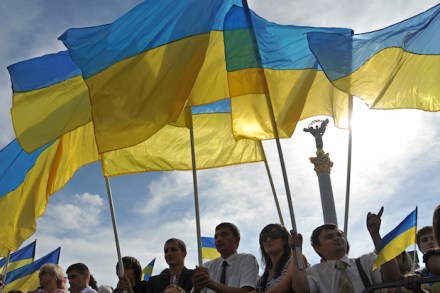
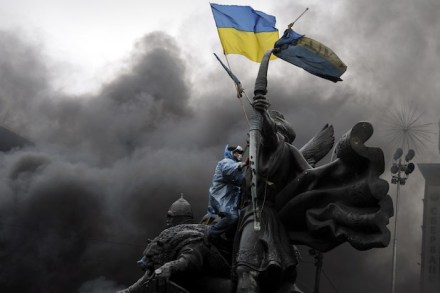
Should we leave Ukraine to the Russians? On this week’s View from 22 podcast, Matthew Parris debates Anne Applebaum on whether the crisis should concern Britain and whether Vladimir Putin has valid reasons to intervening in Crimea. Would Putin have acted differently if Ukraine had NATO membership? What should America do now? And will the West’s behaviour so far embolden other dictators? John O’Sullivan also discusses his Spectator cover feature this week on why we shouldn’t be afraid of Putin. With a lack of actions from the West, is it game, set and match to Putin? Why is he perceived to be so strong? Is John Kerry a dying breed of Americans who really care about Europe?

Ukraine polling: EU vs Russian integration and who is the weakest leader?

From our UK edition

It’s difficult to figure out exactly what’s going on in Ukraine and what it all means — as Freddy has pointed out there’s a lot of hyperbole at the moment— but where is public opinion on the current situation? There’s some interesting historic polling on where Ukrainians stand on more integration with Europe vs Russia. Ukraine’s ambassador to the European Union Kostyantyn Yeliseyev suggested in 2011 that business tycoons and politicians from the Russian-speaking Eastern regions are just as on board with more EU integration as those from western regions. Yeliseyev noted at the time ‘if any politician today in Ukraine declared himself to be against European integration, he would be politically dead’. The situation is no longer as clear.

Boris Johnson: I’d tax expensive properties and lower business rates

From our UK edition

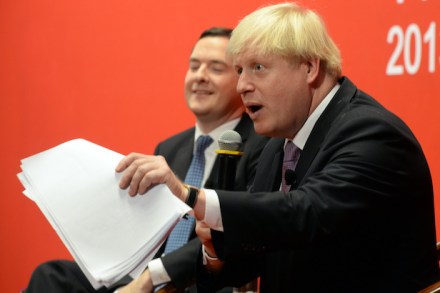
Today we glimpsed what Boris Johnson might do if he had more power, in London at least: jack up council taxes for some and lower business rates. In a Communities and Local Government select committee hearing on fiscal devolution, the Mayor of London outlined why, if the power was handed down from central government, he’d  increase council tax for the richest Londoners: ‘If you compared with a Russian oligarch is paying on his stuccoed schloss in Kensington in annual council tax compared to what such a gentleman might be asked to pay in Paris or New York or anywhere else, it is quite stunning the difference. No one has yet grasped that. ‘I’m by no means an advocate of a mansion tax. In fact, I vehemently oppose such an idea.

Does Tristram Hunt think that choice in education should be only for the rich?

From our UK edition

At last - Labour has made its intentions over education clear. Throughout his interview on the Sunday Politics today, Tristram Hunt showed that Labour has switched allegiances to adults, not the pupils. On the side of institutions, not those who use them. Although the shadow education secretary stated he ‘doesn’t want to waste political energy on undoing reforms that, in certain situations, build rather successfully on Labour party policy’, he confirmed his party would not sanction any more free schools: 'I was in Stroud on Thursday and plans there for a big new style of school in an area where you’ve got surplus places threatened to destroy the viability of small local rural schools.

The shelfie: the ultimate antidote to the selfie

From our UK edition

Shelfie [n.]: a bookshelf selfie Has the shelfie replaced the selfie as the most fashionable use of a camera phone? I’ll admit it; I’m a fan of the odd selfie. What better way to record a social occasion — so everyone knows you were there — than to take a squashed photograph at arms length with your nearest and dearest? It’s become so popular even our politicians are partaking in a cheeky selfie. The Prime Minister is known to have taken at least three selfies, including a disastrous one at Nelson Mandela’s funeral, while Ed Miliband has been seen huddling beside Joey Essex. But the new trend of the shelfie is the perfect antidote for the chattering classes who find a selfie simply too gauche.