Sebastian Payne

Listen: Ed Miliband’s two car crash interviews in one day

From our UK edition

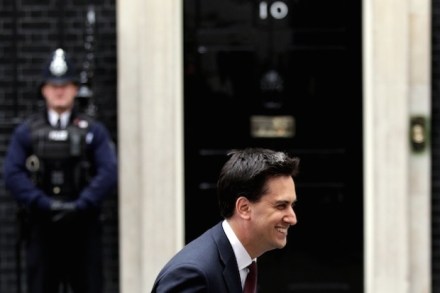
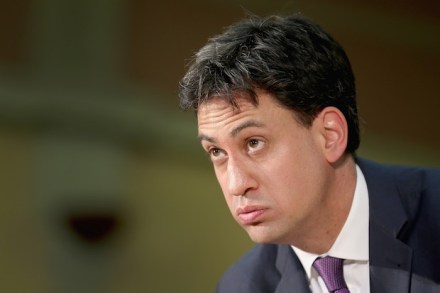
Ed Miliband seems to have clambered out of the wrong side of bed this morning. The Labour leader has been touring the TV and radio studios, where his answers have become progressively worse as the day went on. First up, Miliband spoke to Good Morning Britain about the 'cost-of-living crisis'. When asked whether he knew how much the average weekly household grocery bill was, he said ‘it depends on how much you are spending and how big your family is’. Then when questioned on how much the Miliband household spends, he said: ‘We probably spend £70-80 on groceries at least, probably more than that.
Ukip vs Tories vs Labour — how alike are the voters?

From our UK edition

How similar are Ukip and Tory voters? Although the party hierarchies are keen to distance themselves from each other, there's plenty of overlap in the opinions of their supporters. Firstly, both groups are enthusiastic about heading to the polls this Thursday. A few weeks ago, Ukip was slightly ahead of the other parties in the likeliness to vote ratings. Now the polling says they're far more likely to vote than the Tories. According to the latest poll, almost three quarters of 'kippers say they will definitely vote on Thursday compared to a little over half for the Tories: [datawrapper chart="http://static.spectator.co.uk/4YxMN/index.html"] The Tories and Ukippers have similar views on Faragiste warnings about Bulgarian and Romanian immigrants coming to the UK: they believe them.

Watch: Nigel Farage’s car crash interview on LBC

From our UK edition

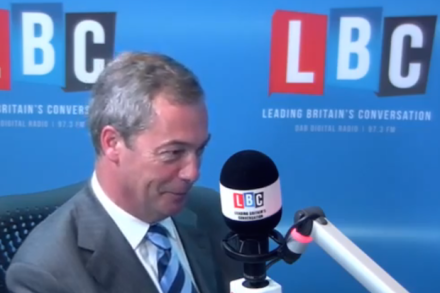
So much for Nigel Farage's image as a straight-talking politician. On LBC this morning, the Ukip leader went head-to-head with James O’Brien, covering a range of topics including some of the 'idiots' in his party, living next door to Romanians as well as the party's recent poster campaign. The interview became particularly heated at around 15 minutes in, when O’Brien quizzed him on immigration and his wife, who apparently does not speak German on trains. But when it came to discussing his EU expenses/allowances, and why he hasn't signed up to a transparency agreement like Labour MEPs, the party’s head of communications Patrick O’Flynn interrupted the interview to halt the car crash.

Party donations: Labour receives £3 million from unions this year

From our UK edition

It’s time to find out which parties are in the money, thanks to the latest Electoral Commission information on party donations. According to the figures for Q1 2014, the Tories have received £6.7 million in donations (up from £3.7 million in Q1 2013) and Labour £4.4 million (compared with £3.7 million last year). It’s not surprising that donations are up because we've entered an important election season. Most of the donors are not new, so here are the top five donations to the Conservative party in 2014 so far, compared with last year: [datawrapper chart="http://static.spectator.co.uk/ETr2q/index.html"] Michael Hintze: £1.

Podcast: Race, genes and history, Nick Clegg’s war and the curious case of Mo Ansar

From our UK edition

Is there a link between race, genes and history? On this week’s View from 22 podcast, author Nicholas Wade discusses his Spectator cover feature on what the last 11 years of human genome decoding tells us about human evolution. Is it racist to combine the politics of race and genes? Is there a link between historical events, such as the invasions of Iraq and Afghanistan, and genetics? And does Nicholas expect to be ostracised for writing on this controversial topic? Douglas Murray and Haras Rafiq also discuss who exactly is Mo Ansar. How did a former bank employee become the preeminent voice of British Islam? Why did this ‘Twitter personality’ become such a fixture on our TV screens? Does Mo operate 'sock puppet' Twitter accounts to reinforce his opinions?

Lord Howell offends the North of England again — but does he have a point?

From our UK edition

Oh Lord Howell, you’ve done it again. Offending the North of England once wasn’t enough, so he’s had a second go — warning today that the Conservative party will lose votes in their heartlands if fracking goes ahead. In an online article for the Institute for the Analysis of Global Security, George Osborne’s father-in-law lambasts the government’s fracking plans: ‘Trying to start in southern England, and in the home counties, or in rural and countryside areas anywhere, north or south, is a guarantee of longer delays, higher costs and increased hostility from both green left and countryside right.

Airport wars: Heathrow and Gatwick argue about who offers the most benefits

From our UK edition

Gatwick or Heathrow, who will triumph in the battle of the airports? Both sides have submitted more detailed proposals to the Airports Commission today, setting out why they are the right choice for expanding the UK's airport capacity. While Boris Island appears to be mostly sidelined, the battle is looking to be between a second runway at Gatwick and a third (or possibly extending the second) runway at Heathrow. In the revised proposals, Heathrow has increased its compensation fund for the effected 750 homeowners to £550 million, while Gatwick argues its expansion would be cheaper, more beneficial and have a lesser environmental impact — 14,000 people vs 250,000 for Heathrow.

Labour falling behind as Ukip leads latest Euro poll

From our UK edition

Labour is failing to make up any ground on Ukip ahead of next week’s European elections. A new poll from Sky News and YouGov today says that Labour’s support has dropped to 25 per cent, while Ukip remain comfortably in first place with 31 per cent of the vote: [datawrapper chart="http://static.spectator.co.uk/LbUDH/index.html"] Interestingly, Ukip has not pushed further ahead since the last YouGov poll I wrote up, but they are now clear of the margin of error — two/three per cent depending on the sample size. It appears that, combined with Ukip's higher likeliness to vote, Labour is ever more certain to come second on 22 May. The Tories, who have long accepted they will come third, will be pleased they are slowly eroding Labour’s vote share.

Nigel Farage ties himself in knots over Ukip manifesto — again

From our UK edition

Ukip may be sailing towards first place in the European elections, but Nigel Farage unwittingly revealed today how the party is still a long way from becoming a mature political movement. During his interview on the Sunday Politics, Farage didn't seem to know what was in Ukip's local election manifesto — in particular whether the party was promising to make any spending cuts. This is a transcript of what he said: Andrew Neil: You have promised these tax cuts, how much will they cost? Nigel Farage: No idea. I’m not here to talk about, I’ve read the local election manifesto and it doesn't make those promises. AN: It does NF: We do talk about local services, we do talk about the need to keep council tax down but we don't talk about income tax. Absolutely not.

Podcast: the gilded generation, one year countdown to the election and rise of the bores

From our UK edition

Is it fair to describe today’s youth as the ‘gilded generation’? On this week’s View from 22 podcast, James Delingpole discusses this week’s Spectator cover feature with The Economist’s Daniel Knowles. With rising house prices, increasing levels of debts and a highly competitive jobs market, is the notion that the young have never had it so good a myth? Were things better for young people in the 1970s? And will today’s young generation witness a fall in living standards, compared to their elders? James Forsyth and Isabel Hardman also look forward to the general election, which is exactly one year today.

Five things you need to know about the Myners Co-op report

From our UK edition

The Myners Report into the Co-operative Group (pdf) has been published today, and it doesn’t make for pleasant reading. Following the discovery of a £1.5 billion black hole in their finances, followed by the Paul Flowers ‘crystal Methodist’ scandal, the Co-op commissioned the former City Minister Paul Myners to look into the group’s problems and put together a restructuring plan to make it sustainable and properly governed. Here are the key things you need to know from the 180-page report: 1. The Co-op group is still ‘manifestly dysfunctional’ Lord Myners is not impressed with the current state of the Co-op Group and warns it needs to radically change ‘soon’ or face breaking up.

Ukip selects Roger Helmer as candidate for Newark by-election

From our UK edition

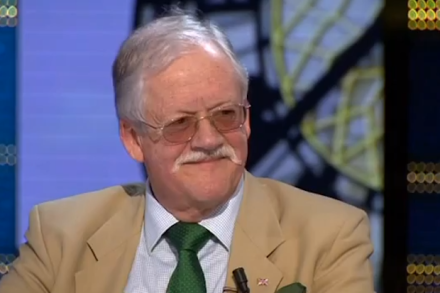
As expected, Ukip has announced that Roger Helmer will be the party's candidate for the upcoming Newark by-election on 5 June. The 70-year-old MEP is a former Conservative who defected to Ukip two years ago, citing an ‘increasing disillusion with the attitudes of the Conservative Party’. Farage said of Helmer’s selection this afternoon: ‘He is a massively experienced and respected figure on the national political stage and on the local political stage as well. I know that the UKIP membership will rally to the cause of making Roger our first directly elected MP.' Helmer is a colourful character, whose past remarks will be undoubtedly dug up by his opponents in Newark.

Revealed: Nigel Farage’s path to Parliament

From our UK edition

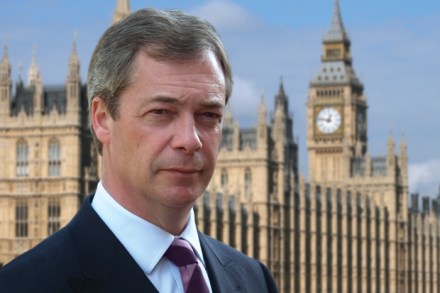
Now that Newark is a no-go, Nigel Farage will be turning his thoughts to where he will stand as an MP. He said this week that returning its first MP will be a huge breakthrough for Ukip, so choosing a seat that he can win is vital. After declining to stand in the 15 by-elections that Ukip have contested since 2010, it looks as if Farage will wait until 2015 to run for Parliament. Coffee House understands that, ideally, Farage would like the seat to fit three criteria. Firstly, it needs to be a marginal seat. Secondly, he wants to have some local connection — he feels his lack of any roots in Buckingham caused him problems when he stood there in 2010. And thirdly, there would be no incumbent MP, lessening the challenge among the local community.

Podcast: Britain’s masculinity crisis and Osborne’s Foreign Secretary aspirations

From our UK edition

Is the British male in serious trouble? On this week’s View from 22 podcast, the Labour MP for Hackney North and Stoke Newington Diane Abbott discusses the topic of this week’s Spectator cover feature with Isabel Hardman. Why are boys written off more frequently than girls? Are males in trouble because females are doing better? And is it now more difficult to grow up as a young boy or girl? James Forsyth and Isabel Hardman also discuss why George Osborne wants to take William Hague’s job and be the next Foreign Secretary. Does he risk lowering his profile and getting entangled in the sticky business of renegotiating our relationship with Europe? Or does the Chancellor simply love being where the action is?

Who could win the Newark by-election?

From our UK edition

Who stands the best chance of winning the Newark by-election after Patrick Mercer's resignation? It is a safe Conservative seat, which Mercer has held since 2001. At the last general election, Mercer was reelected to Newark with a 32 per cent majority: [datawrapper chart="http://static.spectator.co.uk/xnER5/index.html"] The Tories announced when Mercer resigned the party whip that Robert Jenrick, a lawyer who currently works at Christie’s auction house, would be standing for Newark at the next election. Will Jenrick hold the seat? According to Electoral Calculus, there is an 87 per cent chance that the Conservatives will win Newark based on the current polls — but by-elections are more unpredictable.

Briefing: the Tory HS2 rebels

From our UK edition

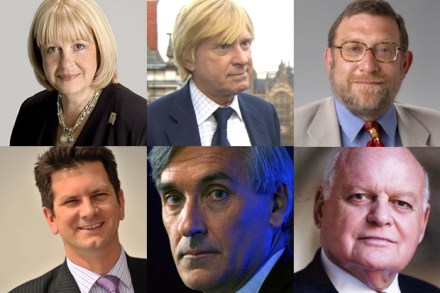
High Speed 2 moved another step closer to actually happening last night, as the Hybrid Bill passed its second reading and vote in the Commons. 41 MPs voted against the bill, including 26 Conservatives who rebelled against the party’s three-line whip. The rebellious MPs fall into three categories: those whose constituencies will be affected by HS2, those unconvinced by the project and the usual contingent of troublemakers. Then there are the MPs who stayed away from the Commons yesterday, mysteriously or otherwise. Here is a breakdown of the rebels and abstainers: HS2 runs through their constituency Cheryl Gillan (Chesham and Amersham) – The former Wales Secretary has been one of the most vocal critics of HS2.

Brothers in arms — Ukip and the SNP are singing the same song

From our UK edition

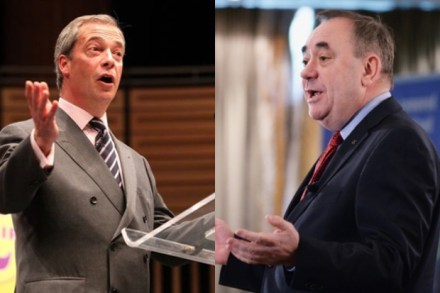
You don't mean a thing if your seat ain't a swing. As this saying goes, political campaigning in safe seats is usually a thankless task — unless you are Nigel Farage. Last week, he managed to pack out The Sage concert hall in ultra-safe Labour Gateshead for Ukip’s biggest ever-public meeting. By going back to the simple idea of touring the country (even the sceptical parts) and giving speeches, Farage is appealing directly to the voters left behind by the other parties. He told the 1,200-odd assembled crowd of my fellow Geordies: ‘We are here to say that Labour used to stand up for the people in this region, but they have turned their backs on you in favour of the European project. Well, UKIP will stand up for you now.

Ukip on course to come first in the Euro elections

From our UK edition

Despite a week of rather bruising media coverage, Ukip has moved into first place for next month’s European elections. For the second time this year, Nigel Farage’s party has overtaken Labour. According to poll by YouGov for the Sunday Times, just three points currently separate Labour and Ukip — still touching the margin of error: [datawrapper chart="http://static.spectator.co.uk/aVjwf/index.html"] Although Labour and Ukip may continue to swap places over the next few weeks, today’s poll also suggests Ukip voters are more likely to turn out on polling day.

The 2015 battleground: the UK’s top 10 most marginal seats

From our UK edition

With the Tories trailing just behind Labour in the opinion polls, predictions are rife that the 2015 general election will be a bloody tough campaign. With a drop in the Lib Dem vote, the rise of Ukip and a potential swing towards Labour, it’s difficult to predict who will win. But like all general elections, a handful of marginal seats will decide who walks into No.10. Here are UK’s most marginal seats which will play a vital role next year. 1. Fermanagh & South Tyrone Held by: Michelle Gildernew — Sinn Fein Majority: 4 [datawrapper chart="http://static.spectator.co.uk/b2hPv/index.html"] Easily the UK’s most marginal seat, Michelle Gildernew has held Fermanagh & South Tyrone since 2001.

Podcast: Ed Miliband’s radical Old Labour agenda and Clinton vs Bush round two

From our UK edition

Where has Ed Miliband found the policies to form the basis of his potential government? On this week’s View from 22 podcast, The Telegraph’s Dan Hodges and Marcus Roberts from the Fabian Society debate the current state of Milibandism and whether the Labour leader is successfully crafting an intellectually coherent set of policies for government. Will Miliband limp over the finish line into No.10 with a strategy to win 35 per cent of the vote, or go for a broader One Nation approach? And does he still have any chance of becoming Prime Minister? Harpers’ Magazine John Rick MacArthur also joins to discuss Clinton vs Bush, again, with Freddy Gray. Why is the American political establishment looking increasingly like an oligarchy?