Sebastian Payne

Nigel Farage kicks off Ukip election campaign with slogan ‘Believe in Britain’

From our UK edition

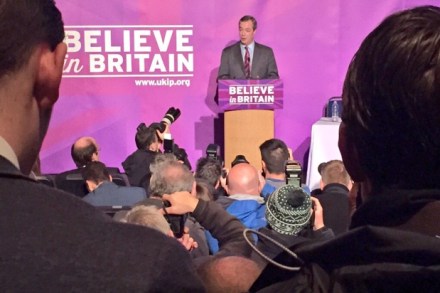
Voting Ukip is a state of mind, according to Nigel Farage. At his first major speech of 2015, and the campaign, in Canvey Island, Essex, Farage set out his stall for the election with the slogan ‘Believe in Britain’ — following on from his article in today's Telegraph. He hit out at the ‘endlessly negative’ and ‘boring’ campaigns from the other political parties and promised to do things differently — especially now that he believes Labour and the Conservatives live in ‘fear’ of Ukip.
Podcast: why modern love is rubbish and is Ed Miliband an honourable opposition leader?

From our UK edition

In the age of Tinder and online dating, is modern love rubbish? On this week’s View from 22 podcast, Melissa Kite, Cosmo Landesman and Camilla Swift discuss this week’s Spectator cover feature on why romance is being killed off by digital dating. Is it more brutal or reflective of real life to ruthlessly chase someone on their looks alone through apps and websites? Is it a tragedy that young romantics are missing out on the art of courtship? James Forsyth and David Skelton also discuss the Tories’ gamble to woo working class voters ahead of the election.

Conservatives have a three-point lead in latest Ashcroft poll

From our UK edition

Have the Tories benefited from Labour’s week of misery? In Lord Ashcroft’s latest national poll, the Conservatives are now three points ahead of Labour — up from 30 per cent in last week’s poll. The Green Party are down to six per cent, the Lib Dems are up slightly to nine per cent and Ukip are down one point to 14 per cent. See the chart above for how the voting preferences have changed in Ashcroft’s polls this year. David Cameron personally continues to do well: nearly 60 per cent would prefer him as Prime Minister to Ed Miliband.

Mandelson and Campbell reportedly tapped up Alan Johnson to replace Miliband

From our UK edition

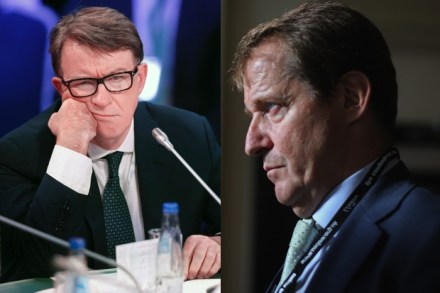
Is Ed Miliband ready to be Prime Minister? His personal poll ratings suggest not and many in his party remain sceptical. But Labour remains toe-to-toe with the Conservatives in the polls, making a Miliband premiership a real possibility after 7 May. The FT’s George Parker and Jim Pickard have interviewed the Labour leader (£) today to find out why Miliband is still confident he can lead the country, despite the negativity surrounding his leadership. One of the fascinating nuggets in the piece is the claim that two of the most influential figures in New Labour plotted to remove him as leader: ‘Miliband’s Labour critics do not share his confidence.

Podcast: The new political correctness and how Labour lost Scotland

From our UK edition

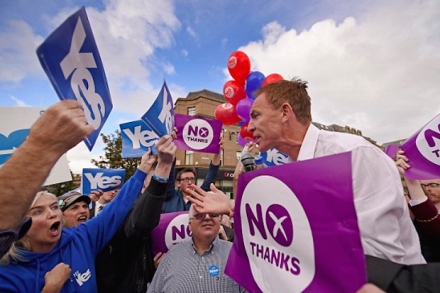
Is there something menacing about the march of the new political correctness? On the latest View from 22 podcast, Brendan O’Neill and Tim Squirrell debate this week’s cover feature on the new PC and the implications for freedom of speech. How easy is it to navigate this lexicon? Have we lost our British sense of being ridiculous? And how much does political correctness really help progressive causes? Alex Massie and James Forsyth also discuss Labour’s troubles north of the border and how its problems might also spell trouble for the union. Is Jim Murphy doing a good job as Scottish Labour leader? Will the return of Gordon Brown improve or worsen the situation?

Ashcroft poll: Labour faces wipeout in Scotland

From our UK edition

How much is the SNP going to harm Labour in the general election? Labour is already braced for a battering but a new set of polling from Lord Ashcroft shows just how great the SNP threat is. The Tory peer has polled 16,000 Scots in 14 Labour-SNP target seats and two Lib Dem seats — all areas that Ashcroft said voted yes for independence or the result was close. His snapshot reveals that the SNP is ahead in 13 of the 14 Labour targets and ahead in both of the Lib Dem targets. This represents a 25 per cent swing in the Labour targets. If you want to see the results for each seat, use the dropdown box on this interactive chart (above for Labour, below for the Lib Dems) to look at how the vote has changed since the 2010 election.

Labour is still not trusted to run the country

From our UK edition

Labour may be level with the Conservatives in the polls but it is still not trusted by the public. Lord Ashcroft’s latest national poll has the two main parties on 31 per cent of the vote — both down one point from last week. 59 per cent say they have already made up their minds about they'll vote on 7 May. There aren’t many positive views in this poll about the Labour Party. Although roughly half think the policies of the last few years have failed, a majority don’t think Labour has the answers. According to Ashcroft’s poll, 58 per cent think Labour has ‘not yet learned the right lessons from what went wrong during their time in government, and cannot yet be trusted to run the country again.

Mini Election: Nicola Blackwood on fighting to hold one of the most marginal seats

From our UK edition

If the Liberal Democrats stand any chance of making gains at the Conservatives expense, then Nicola Blackwood is precisely the sort of MP they need to depose. She won her seat, Oxford West and Abingdon, with a gossamer majority of 176 and its in the top three Lib Dem targets. Perhaps for that reason she has been in campaigning mode ever since she was elected. Vital statistics Seat Oxford West and Abingdon Party Conservative MP Nicola Blackwood Main opponent Liberal Democrats Majority 176 Latest Ashcroft poll 4% Lib Dem-Con swing Given Blackwood's majority, few in 2010 would have expected her to hold onto the seat this time around. But since then, the vote of her main opposition has collapsed.

Grant Shapps defends ‘successful’ defection of Ukip MEP Amjad Bashir

From our UK edition

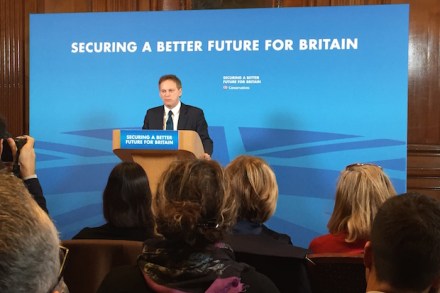
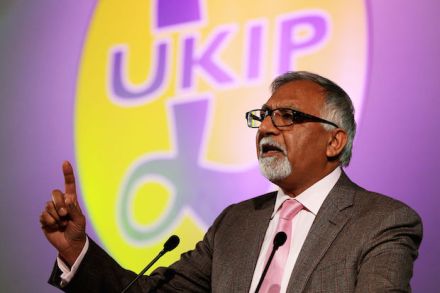
January has been 30 days of chaos for Labour, according to Grant Shapps — but what about the Tories' bad headlines? In a press conference this morning, Shapps outlined all of the negative press Labour has received in 2015 so far (pdf of the document here). But he ended up having to defend his party over the defection of Ukip MEP Amjad Bashir. ‘I welcome anybody, regardless of where they’ve been in the past —with the exception of extreme parties,’ Shapps said in response to a question about Bashir's alleged membership of the Respect party. He contended that he's more concerned about people’s ‘ideas’ and ‘how they see this country developing’ instead of their past lives.

Podcast: the great European revolt and the dangers of the Green Party

From our UK edition

Who will benefit from Syriza's victory in Greece? On this week’s View from 22 podcast, James Forsyth and Sebastian Borger discuss this week’s Spectator cover feature on the impending European revolt. How will David Cameron make political capital from the rise of the anti-austerity party? What are the challenges facing Angela Merkel? Will similar parties be as successful in other parts of Europe? Denis Sewell and Greg Hurst also look at the government’s faltering schools revolution. Why does the coalition talk down one of its most successful policies? How important was the reshuffling of Michael Gove in changing the tone of discussing schools reform? And would a Labour government kill off or continue pushing free schools and academies?

Andy Burnham’s car crash interview shows why Labour can’t be trusted with the NHS

From our UK edition

If Labour is weaponising the NHS, maybe it needs to sharpen its tools. Shadow Health Secretary Andy Burnham had a difficult and ill-tempered interview on Newsnight yesterday about what he actually thinks about private sector involvement in the NHS. When asked about the role he sees for the private sector under his reshaped health service, Burnham said private companies would not be entirely excluded: 'There is still a role for private and voluntary providers but I also did say very clearly that the market is not the answer.' Presented with a graph (below) showing how private sector outsourcing grew to four per cent under Labour — but rose two per cent under the coalition — Burnham was unable to say what he thinks is the right level: 'There isn't a right percentage.

Majority of voters want Cameron as PM — but would prefer a Labour government

From our UK edition

What do the British public want from their government after 2015? Well, unless things are really going to shift in British politics in the next few weeks, they still want the impossible: a Labour majority government led by David Cameron. According to a poll from ComRes/ITV News out this evening, 55 per cent said their favoured scenario is for David Cameron to remain Prime Minister, compared to 45 per cent for Ed Miliband. But 51 per cent would prefer Labour winning a majority of MPs — two points ahead of those who'd like to see a Tory majority. This contradiction is not new. Cameron has always polled ahead of his party — one of the reasons rumoured leadership coups never amounted to anything — while the Labour brand remains more popular than Miliband.

100 days till polling day: the Tories are just ahead but anything could happen

From our UK edition

Today marks 100 days till the election — so how is the race looking? Still very close, according to the most recent opinion polls. In three polls released over the last 24 hours, the Tories are ahead by one point — according to YouGov, Survation and ComRes (notably, the first time they’ve put the Tories ahead since 2011). Only Lord Ashcroft has the Tories level pegging with Labour. As the chart above shows, the two main parties are neck and neck. The Tories will be hoping these small leads will grow over the next few weeks while Labour will be pleased their opponents have yet to gain much traction.

Watch: Natalie Bennett demonstrates how Green policies don’t add up

From our UK edition

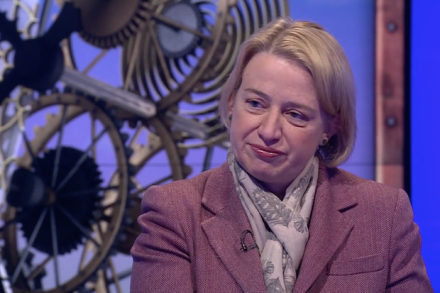
Do the Green Party's policies stack up? Although its membership and prominence have rocketed in recent weeks, little focus has been put on what the party campaigns for. Green leader Natalie Bennett was subjected to a dissection of her party’s principles on the Sunday Politics today (watch above) and demonstrated why most of its proposals are pipe dreams. Bennett said her party wants to ensure ‘nobody is living in fear’ but exactly how they would pay for that remains unanswered. One of its policies would be a ‘Citizens’ Income’, ensuring everyone has a minimum weekly income of £72.

Five points from Nigel Farage’s interview on Marr

From our UK edition

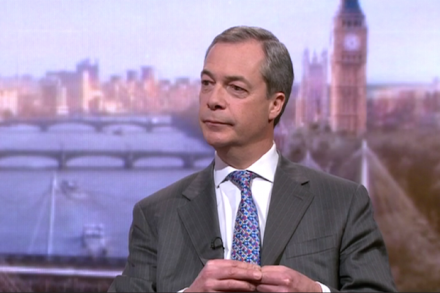
First Cameron, then Miliband - now it was Nigel Farage's turn to be granted the status of a January interview on the Marr sofa. And there was plenty to discuss: the Sunday Times’ splashes on the story  that a party official joked that Ukip represents ‘hundreds of thousands of bigots all over Britain’, the Sunday Mirror’s splash on the same official saying the NHS is a waste of money — plus the Sunday Telegraph’s news of MEP Amjad Bashir’s defection to the Tories, and carries an interview with him saying the Tories (with their referendum pledge) are the true flag bearers of Euroscepticism.

Do these allegations explain why Ukip’s Amjad Bashir defected to the Tories?

From our UK edition

Ukip MEP Amjad Bashir has defected to the Conservative Party this evening, following an internal party investigation. Tomorrow’s Sunday Telegraph reports that Bashir, who was the party’s communities spokesman, says Ukip are a ‘party of ruthless self-interest’ as well as ‘pretty amateur’. He also says Ukip has a ‘ridiculous’ lack of policies. David Cameron has declared himself 'absolutely delighted'. Just before news of his defection broke, Ukip released a statement announcing Bashir had been suspended pending an investigation into ‘extremely serious’ issues: ‘The UK Independence Party has a zero-tolerance policy and takes the matters at hand extremely seriously.

Leon Brittan has died, aged 75

From our UK edition

Leon Brittan, a former home secretary under Margaret Thatcher, has died aged 75 following a long battle with cancer. He first entered Parliament in 1974 as the MP for Cleveland and Whitby before representing Richmond until 1988. After serving as home secretary from 1983-1985, Brittan had a brief spell as the secretary for trade and industry before resigning over the Westland affair. He also served as vice president of the European Commission, where he discovered a young Nick Clegg. After returning from Brussels, he entered the House of Lords in 2000 and was most recently appointed a trade adviser to the coalition government. In a statement today, his family said: 'It is with great regret that we announce the death of Leon Brittan.

SNP still on track to wipeout Labour and Conservatives in May

From our UK edition

David Cameron is visiting Scotland today to set out his blueprint for Scottish home rule. Might he expect to see a lapse in the nationalist sentiment during his first visit since the referendum? No, according to a new poll from STV. The SNP remain on 52 per cent of the vote — exactly the same as in October. According to STV, this would give the SNP 55 seats in Westminster, while the Conservatives and Liberal Democrats would be left without any MPs north of the border. The Scots also appear pleased with the new SNP leadership: nearly 70 per cent stated they are satisfied with Nicola Sturgeon’s performance as First Minister. It’s clear that Jim Murphy has got one heck of a job on his hands.

Podcast: Comedy meets politics and Osborne’s 13 tests for No.10

From our UK edition

Why has politics turned into stand-up comedy? On this week’s View from 22 podcast, Andrew Watts and Jesse Norman MP discuss this week’s Spectator cover feature on how these two worlds are colliding. What does the increased influence of comedy mean for our faith in politics? Aside from notably humorous politicians like Boris Johnson, how funny are MPs generally? And which member of the Labour shadow cabinet is deemed so funny he could be a professional stand-up? James Forsyth and Isabel Hardman also look at 13 tests to make it into Downing Street set by George Osborne — in 2004. Based on a Spectator piece he wrote earlier in his Parliamentary career, how many of these tests does his government pass? And by his own measures, will the Conservatives end up back in No.

Labour’s new political broadcast uses a veteran to promote NHS scare stories

From our UK edition

Now we know what ‘weaponising’ the NHS looks like: a World War II veteran. Labour has released an emotive party political broadcast via Mirror Online starring Harry Leslie Smith. The 91-year old received two standing ovations at the Labour conference last year for his strident defence of the NHS — a theme continued in this video. The purpose of the PPB can be summed up in two words: emotional blackmail. Labour appear to have used Leslie Smith, telling a very moving story about his family and how much the NHS has done to improve our quality of life, to point to the notion that the health service is somehow in danger: ‘The NHS is not just important; it is essential in a healthy society. A healthy society means a healthy country.