Sebastian Payne

Ukip’s Roger Bird suspended over sexual misconduct allegations

From our UK edition

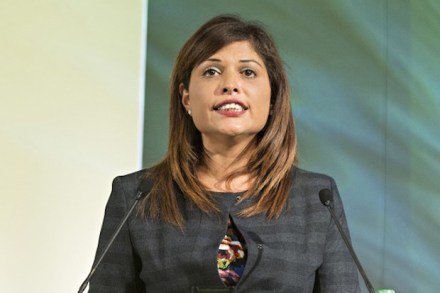
The reason behind Roger Bird's mysterious suspension as Ukip general secretary has been revealed. The splash of today's Times makes several allegations (£) about Bird and Natasha Bolter, a Labour defector to Ukip and potential PPC in South Basildon: 'Natasha Bolter, a headline speaker at Ukip’s party conference, has pulled out of hustings today in South Basildon, where she was widely expected to be elected as parliamentary candidate in the winnable seat. 'Ms Bolter, 35, claims that Roger Bird, Ukip’s general secretary and the man in charge of vetting parliamentary candidates, propositioned her over dinner at his London club on the day that he interviewed her as a prospective candidate.
Ukip general secretary Roger Bird suspended over ‘impropriety’ allegations

From our UK edition

To the delight of its enemies, Ukip has just announced its general secretary has been suspended over 'impropriety allegations'. According to a statement released by the party, claims have come to light 'about the conduct of Mr [Roger] Bird with regard to candidate selection'. A Ukip spokesman said on Monday evening: 'Unfortunately, Ukip has had to suspend Mr Bird pending a full investigation into allegations made against him. The party has acted swiftly and decisively and will not tolerate impropriety of any kind amongst its staff.' Of course, the news will be grist to the mill for those who claim that Ukip is nothing more than a bunch of charlatans, and that it cannot cope with the pressures of being a national movement.

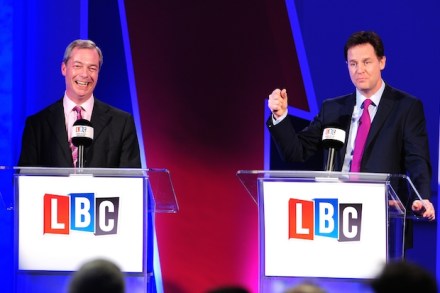
Nick Clegg and Nigel Farage are pursuing the same electoral strategy

From our UK edition

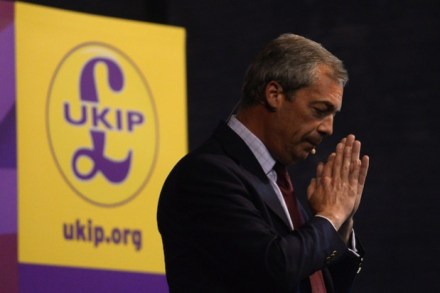
What is the reasoning behind Nigel Farage’s recent spate of apparent gaffes? Following his breastfeeding comments last week, the Ukip leader blamed his lateness to an event in Wales on open-door immigration, as well as problems navigating the motorway: ‘It took me six hours and 15 minutes to get here - it should have taken three-and-a-half to four. That is nothing to do with professionalism, what it does have to do with is a country in which the population that is going through the roof chiefly because of open-door immigration and the fact that the M4 is not as navigable as it used to be.

Ukip hires BBC’s Paul ‘Gobby’ Lambert as new Director of Communications

From our UK edition

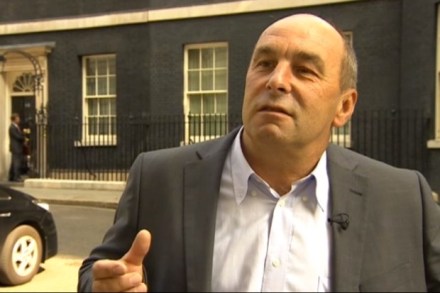
Ukip has announced that BBC political producer Paul Lambert will be the party's new Director of Communications. Ukip has offered the job to various prominent figures but it has not been filled full-time since Patrick O'Flynn, another media defector, was elected as an MEP in May. Lambert is one of the most well-known journalists in Westminster, usually found outside Downing Street heckling ministers with awkward questions, hence his nickname of Gobby. Bringing in an experienced Westminster journalist like Lambert is another sign that Ukip are attempting to beef up and professionalise their media operation. It's unlikely Lambert would allow ill-conveived events like the Ukip Carnival to take place.

Tories attack Nigel Farage over breastfeeding remarks

From our UK edition

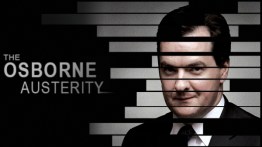
Ukip's crisis is the Conservatives' gain. Following Nigel Farage's comments about 'ostentatious' breastfeeding, Conservative HQ have been promoting this graphic online, with a title noting that Farage is 'making it up as he goes along': This kind of graphic is just another example of how the Tories have become more proactive in promoting their point of view on social media over last year, using Twitter as an opportunity to attack others while protecting their position. This Farage one is an example of both: it hits out at Ukip for their perceived flakiness — expect to see much more of this in the coming months — while reminding voters that Ukip also has a problem with female voters.

The Ukip juggernaut continues: Tim Aker wins Thurrock council by-election

From our UK edition

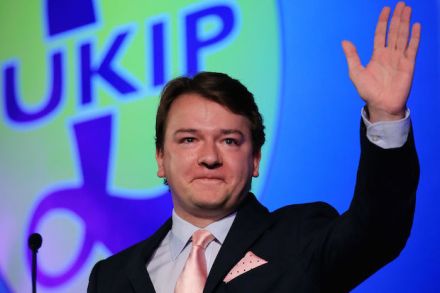
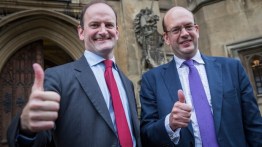
Ukip's Tim Aker is now juggling three jobs. Last night, the 29-year-old won a by-election in the Aveley & Uplands ward in Thurrock, adding councillor to his existing titles of MEP for the East of England and Ukip's Head of Policy. Although their vote share dropped, Aker won the by-election with 40 percent of the vote, a strong result that keeps the Ukip momentum going as the year draws to a close. He had a dirty battle with the Tories, who disturbed leaflets referring to him as 'Timür Aker', in what appeared to be a reminder of his Turkish roots. As James wrote in the Mail on Sunday last week, this was a cheap tactic that has backfired: 'This appears to be a cheap tactic, seeing as Aker is known by all – and refers to himself – as Tim.

Audio: ‘I’m called Sajid, I’m fiercely patriotic about our country’

From our UK edition

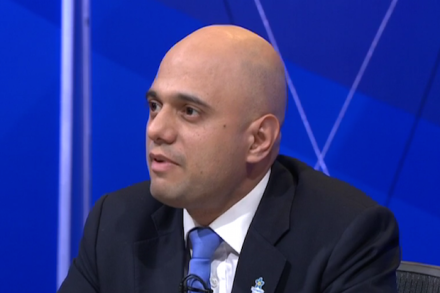
Sajid Javid was on Question Time yesterday and gave easily one of the most confident and assured defences of the government’s immigration policy to date. In response to a question about British identity and the increasing popularity of the name ‘Mohammad’, Javid rebutted the notion that a name has anything to do with patriotism: ‘I think it's pretty silly to suggest that someone’s name has some kind of bearing on their love for our country. I’m called Sajid. I'm fiercely patriotic about our country, I think it’s the greatest country on earth. And so name has nothing to do it.

Former Liberal leader Jeremy Thorpe dies, aged 85

From our UK edition

Jeremy Thorpe, the former leader of the Liberal Party, has passed away aged 85, after suffering from Parkinson's disease for many years. Thorpe will unfortunately be best remembered for the affair that ended his career, involving a former male model and a shot dog. The Spectator's Guide to Political Scandals explained what happened: 'Thorpe was a dashing young Liberal MP, elected in 1959 aged 30. A former president of the Oxford Union, everything was falling into place for him. But in 1961 he met Norman Scott, a troubled individual who would plague Thorpe for the rest of his life. Scott claimed that Thorpe had sex with him, an act that would have been illegal at the time. 'In 1962 Thorpe helped Scott avoid a charge of theft.

Eight different ways Ukip would spend Britain’s international aid budget

From our UK edition

The Autumn Statement was Ukip's first economic test as a Westminster party, so how did they fare? In their initial response, economic spokesman Patrick O'Flynn lambasted George Osborne for 'smoke and mirror politics' over the deficit. 'The brutal truth is that the Government has comprehensively failed in its central mission to wipe out the deficit', said O'Flynn. But where would Ukip cut back spending? 'So huge and unaffordable expenditures are continuing in the areas of foreign aid, alternative energy, an excessive per capita spending settlement for Scotland and of course our massive net EU contribution.' Ah, international aid.

Revealed: where George Osborne’s axe will fall hardest

From our UK edition

If you think George Osborne has been a mad axe man, just wait to see the cuts he has planned for the next Parliament. To return a budget surplus by the end of the decade, government spending will have to be slashed — but which departments will bear the brunt of his axe? The answer (shown in the above chart) is buried in the OBR's report on the Autumn Statement. Assuming ring fences on health, education and overseas aid spending, 'other' departmental government spending stands to be slashed by 42 per cent, or £61.3 billion over the next five years. The Home Office, Ministry of Defence and Business Department would all be vulnerable.

Podcast: Autumn Statement, Russia’s information wars and life inside Tatler

From our UK edition

George Osborne appears to have delivered a successful Autumn Statement, but are there some dark secrets in the details? In this week’s View from 22 podcast, Fraser Nelson and James Forsyth discuss the Chancellor’s last major economic speech of this Parliament, the political consequences of the new measures announced and what it means for the outcome of the next election. Anne Applebaum also discusses this week's Spectator cover features on the quandary of Russia. Will the country put up with economic hardship in return for this experiment in rebelling against the West? How much chance is there for Russia to come back 'on-side' with the rest of the international community?

Podcast special: a good Autumn Statement for George Osborne?

From our UK edition

George Osborne appears to have delivered a successful Autumn Statement, but are there some dark secrets in the details? In this week's View from 22 podcast, Fraser Nelson, James Forsyth and I discuss the Chancellor's last major economic speech of this Parliament, the political consequences of the new measures announced and what it means for the next election.

David Cameron and George Osborne still the most trusted on the economy

From our UK edition

Good news for the Tories: a new ComRes poll confirms that David Cameron and George Osborne are the most trusted pair to 'see the country through the current economic situation'. As the chart above shows, Labour's two Eds are lagging significantly behind the present Tory leadership in the trust stakes, even coming in below Ukip's Nigel Farage. These numbers reinforce the Conservatives' strategy of talking up the economy (instead of say immigration) as the key to winning the next election.

One of Gordon Brown’s undeniable achievements: breaking the Oxford mould

From our UK edition

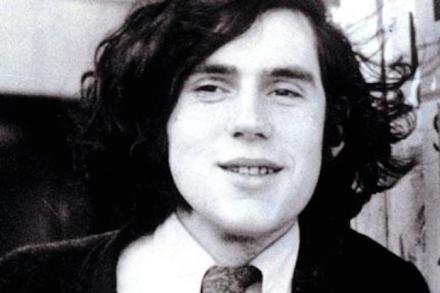
Say what you will about Gordon Brown — and plenty have over the last 24 hours — but there is one achievement even his harshest detractors can not critique: he broke the Oxford mould among modern Prime Ministers. Since the Second World War, Oxford University has produced the majority of Prime Ministers, outstripping the rest of the country's institutions and even their arch rivals Cambridge. Aside from those who didn't go to university (John Major, Jim Callaghan and Winston Churchill), Brown has so far been the only non-Oxford PM since 1945 — instead he went to Edinburgh: [datawrapper chart="http://static.spectator.co.uk/CSz9t/index.html"] Despite Oxford's long history of churning out Prime Ministers, it was not always so slanted in favour of one institution.

The MPs who will benefit from George’s marvellous marginals medicine

From our UK edition

'The biggest, boldest and most far-reaching roads programme for decades' — or the biggest, boldest marginal constituency programme? George Osborne has magicked up £15 billion for 84 new roads, some 100 overall improvements, totalling 1,300 miles of new lanes across the country. Unsurprisingly for an overtly political chancellor like Osborne, a majority of these roads will benefit marginal constituencies. The Telegraph has figured out all of the MPs who will benefit from the road spending and has calculated as many of 2/3 of the proposed improvements will help marginal constituencies. These are the most marginal Tory seats who will benefit  from George's marvellous marginal medicine: A34: Nicola Blackwood [datawrapper chart="http://static.

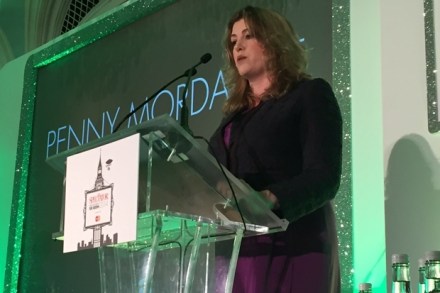
Oo-err! Top five gags from Penny Mordaunt, minister for innuendo

From our UK edition

Tory MP Penny Mourdant has caused a stir in Sunday's papers over her confession at our Parliamentarian of the Year awards that she said 'cock' in Parliament as a bet with her colleagues in the Royal Navy, where she serves as a reservist. As winner of our Speech of the Year award, Mourdant clearly has a way with words. Here are her top five gags (so far): 1. Caring for your kit in the field One of the highlights of her award-winning Loyal Speech earlier this year was a gag about her Royal Navy training: 'I have benefited from some excellent training by the Royal Navy but on one occasion I felt it was not as bespoke as it might have been.

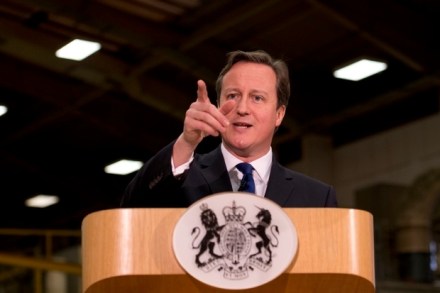
Podcast special: David Cameron’s ‘game changing’ immigration speech

From our UK edition

Was David Cameron's appeal to the voters of Britain and EU leaders on immigration successful? James Forsyth, Isabel Hardman and myself discuss his 'game changing' speech on immigration this morning in a View from 22 podcast special. Has the Prime Minister placated his backbenchers or Conservative voters? Will this be seen as a Tory shift towards Ukip-lite?

Podcast: Geeks vs spooks, a three-way Tory split and Theresa May’s manoeuvrings

From our UK edition

Are the nerds of Silicon Valley responsible for harbouring terrorists? On this week's View from 22 podcast, Hugo Rifkind and James Forsyth debate their articles on the battle between the geeks and spooks. Has the government forgotten that online media should have the same rights as print outlets? Or are the technology companies acting irresponsibly over battling terrorism? Damian Green MP and Isabel Hardman also discuss the Tory battles already being fought over the EU. If the Conservatives are victorious at the next election, is the party on track to split three ways: the inners, outers and reformers? Does this growing split show that the Cameroon modernisation project has failed? And what is Theresa May up to this week?

Facebook insists it does tackle terrorism as finger points at site for Rigby messages

From our UK edition

Facebook is responsible for hosting a conversation Rigby murderer Michael Adebowale had about killing a solider, according to the Telegraph. Both the ISC's report and the committee's chairman Malcolm Rifkind have been critical of an 'internet company' for not alerting the security services to the conversation. 'Had MI5 known about the conversation,' says the report, 'there is a significant possibility that MI5 would then have been able to prevent the attack'. Facebook are on the defensive and have refused to comment on the speculation Adebowale discussed killing a solider on their site.

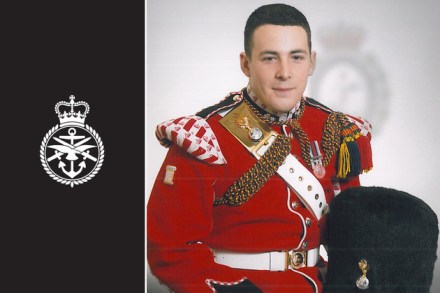
Five things you need to know about the Lee Rigby report

From our UK edition

Could the intelligence services have prevented the murder of Lee Rigby last year? Probably not, but there was more they could have known and possibly done, according to a report from the Intelligence and Security Committee (pdf) out today. While the committee has praised the intelligence services for the work they do, there are criticisms levelled at people both in and out of government. Here's what you need to know: 1. Although errors were made, Rigby's murder was unlikely to have been prevented The report credits the intelligence agencies for protecting Britain from a 'number of terrorist plots in recent years' — one or two serious plots each year.