Sebastian Payne

Nigel Farage now polling first place in South Thanet

From our UK edition

Is Nigel Farage having any more luck in South Thanet? According to a new poll from Survation on the eve of Ukip’s spring conference, Farage has pulled ahead of the Tories and Labour in his target constituency. The poll has Ukip on 39 per cent, Labour on 28 per cent and the Conservatives on 27, giving Farage a clear 11-point lead over the other parties. As the chart above shows, it’s a significant rise from the party’s 2010 vote share and up significantly from Lord Ashcroft's most recent constituency poll in November. If Farage managed to achieve a similar result on May 7, it would be a significant boost for the party in a seat that is far from the most Ukip friendly.
Nigel Farage tells Republicans to ‘reach out to the grassroots’. But should have stayed at home?

From our UK edition

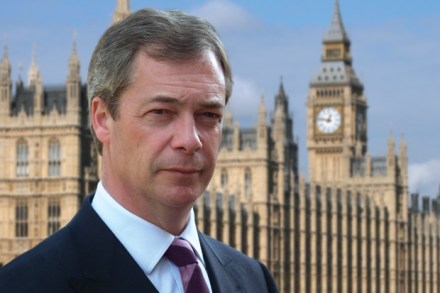
Nigel Farage is becoming a jet setter. Yesterday evening, he addressed the annual Conservative Political Action Conference (CPAC) of Republicans in Maryland. Later today, he is delivering the final speech at Ukip's spring conference in Margate. It's a tough life, but why did he bother going 3,000 miles for a 20 minute speech? His friendly style appeared to go down well with the Americans, far more customised to his style of politics, but it he did not draw a huge crowd: I'd estimate 250 people listening to Farage in a vast room that can seat 5,500. But those here are loving him. pic.twitter.com/0TRkieUGxo — Raf Sanchez (@rafsanchez) February 27, 2015 The topics were mostly the same stuff we've heard before.

Ukip is the most trusted party on controlling immigration

From our UK edition

Which party does the public trust the most to control immigration? ComRes/ITV News have released a new poll revealing it's not the Conservatives — unsurprisingly given today's figures. 36 per cent trust Ukip the most to tackle immigration, compared to 19 per cent for the Tories: [datawrapper chart="http://static.spectator.co.uk/isCLx/index.html"] The poll also reveals that over half of the public think the impact of immigration on the NHS has been bad. As the chart below shows, perceptions on immigration are mixed.

Podcast: the SNP threat to Westminster and the myth of a house building crisis

From our UK edition

Are the SNP poised to become Westminster’s kingmakers? On this week’s View from 22 podcast, Alex Massie discusses this week’s cover feature on the role the Scottish nationalists could play after the next general election. If the SNP wipe out Labour north of the border, will questions about the future of the union be back on the table? How is propping up a Labour government second prize for the SNP? And are the Scottish elections in 2016 more important to Scottish labour than this year’s battle? James Forsyth and Isabel Hardman also discuss why the upcoming election will not be very general. Are any of the parties planning to fight a national campaign? Do the opinion polls say anything relevant about the state of the campaign?

The Tories need to put Boris front and centre of the campaign — the numbers prove it

From our UK edition

Have you seen Boris Johnson? The Mayor of London has been surprisingly absent from the Conservatives’ floundering campaign so far. He was not chosen to be member of the core team fronting the campaign — Sajid Javid, Nicky Morgan, Theresa May, William Hague and George Osborne in case you’d forgotten. His most prominent appearance was standing alongside the Chancellor at an event focused on London. Today’s Times splashes with the story that some Tories are beginning to worry, and wonder, why the Mayor isn't being used more often. The numbers alone suggest Boris should be on TV screens every night to promote the Conservatives’ cause.

Douglas Carswell vs Nigel Farage (again) — but are these real disagreements?

From our UK edition

Is Douglas Carswell happily at home in Ukip? The Clacton MP’s latest policy intervention, this time on immigration, adds to the sense that his beliefs differ somewhat from his party and its leader. His op-ed in the Times today for example stated that Enoch Powell was wrong about the dangers of immigration: ‘Immigration has not been without its challenges. Yet it has been, overwhelmingly, a story of success. Britain today is more at ease with the multi-ethnic society that we have become than once seemed imaginable — and not just to Enoch Powell. Like many before and since, Powell underestimated the ability of a free society to adapt.

Listen: two disastrous interviews by Natalie Bennett

From our UK edition

It's been an inauspicious start to the Green Party’s election campaign. Natalie Bennett has given two radio interviews this morning where she produced rather poor answers regarding her party’s policies. On the Today programme, Bennett said Britain's foreign policy should be centred around appeasing Russia: ‘What we need to do is put diplomatic pressure on Russia, put economic pressure on Russia, but we also have to understand that if we’re negotiating with Russia, it’s really important not to take what you might call the Versailles approach, to understand that President Putin has to walk away with something – things that we might not necessarily like.

Malcolm Rifkind quits as ISC chair and will stand down at next election

From our UK edition

Sir Malcolm Rifkind's political career is over. Following the Dispatches/Telegraph lobbying expose, the former Conservative defence and foreign secretary and MP for Kensington has announced he is standing down at the next election. This has created a vacancy in one of the most sought-after Tory seats in the country, represented in a previous incarnation by Alan Clark and Michael Portillo. It's hard to see how Sir Malcolm could have stayed on. His unforgiven attitude to the cash for access accusations — and remarks suggesting his £67,000 salary as an MP wouldn't allow him to 'have the standard of living my professional background would normally entitle me to have' — were toxic for the Tories.

A bad week for Ukip in the polls — and a good one for Labour

From our UK edition

Ukip’s spate of bad publicity appears to be hitting it in the polls. The racism row over the Meet the Ukippers documentary comes as the party has dropped several points in two new polls. According to Lord Ashcroft’s latest national survey, the party is now on 11 per cent, while Labour is up five points to 36 per cent. This puts them four points ahead of the Conservatives, who are on 32 per cent. Another poll from ComRes/Daily Mail has Ukip down four points to 13 per cent, the Conservatives up three points to 34 per cent and Labour up two points to 32 per cent. YouGov has also reported that most voters believe Ukip isn't a substantial political force and will fade away within a decade.

Mini Election: Tim Montgomerie on his plan to fix British conservatism

From our UK edition

Is conservatism in Britain broken beyond repair? Tim Montgomerie thinks it’s time for a reformation on the right. In the latest Mini Election video, I speak to the Times columnist and founder of ConservateHome about his new project The Good Right, which sets out his proposals for reuniting and reinvigorating the conservative movement. Given that the Conservative Party hasn’t won a majority since 1992, Montgomerie says the party needs to delve into its history pre-1979 and remember that the state can sometimes deliver the best answers — house building for example.

Five things you need to know about the latest political donations report

From our UK edition

£20 million — that’s how much money was donated to the political parties in the last quarter of 2014. The Electoral Commission has released their latest report on political donations and unsurprisingly given the election campaign, more money is being thrown about. Over £5 million more was donated in Q4 last year compared to Q3. Above you can see the top ten donors to all parties during that period. Here are five things you need to know about the report. 1. Labour is still bankrolled by the unions…and PWC [datawrapper chart="http://static.spectator.co.uk/19oCf/index.html"] Labour’s reliance on donations from the big trade unions continues. Unison, Unite and GMB all donated over £1 million to Labour while USDAW put £417k into their coffers.

Ashcroft poll: Ukip second in four top target seats

From our UK edition

How close is Ukip to taking away seats from the Conservatives in May? Lord Ashcroft has surveyed the Ukip-Tory battleground in his latest round of constituency polling. He has surveyed four likely Ukip targets to find out how the Conservative vote is holding up: Boston & Skegness, Castle Point, North East Cambridgeshire and South Basildon & East Thurrock. In all these cases, Ukip have jumped into second place but the Tories are still leading. The closest race is Castle Point, where Nigel Farage launched Ukip’s election campaign last week. Ashcroft’s poll says the Tories are currently on 37 per cent, compared to 36 per cent for Ukip.

Podcast: Putin’s war on the West and the disappearing Lib Dems

From our UK edition

Is Vladimir Putin drawing a new Iron Curtain over Europe? On this week’s View from 22 podcast, Anne Applebaum and Ben Judah discuss the new Spectator cover feature on whether Putin’s is winning his war on the West. Is Putin worried about the strength Western liberal democracies or the power of the European Union? How does his influence extend into Britain, France and Poland? And how much important is Ukraine as a battle line between the Putin and the West? James Forysth and Isabel Hardman discuss whether the Liberal Democrats are scared of the upcoming election As the election campaign ramps up, the minor party of this government is nowhere to be seen. Are they being pushed out of the political debate?

Record employment figures create more problems for Labour

From our UK edition

Britain has reached its highest ever level of employment. According to new figures from the ONS, the employment rate has risen to 73.2 per cent — or close to 31 million people in work. This stands as the joint highest rate since records began in 1971. Unemployment is down to 1.86 million. The short-term jobless rate is also at its lowest rate since 1992. Pay is also increasing, with private sector earnings (excluding bonuses) up 2.1 per cent year-on-year at the end of 2014. Youth unemployment has increased slightly, something Esther McVey has described as a 'tiny blip.' But never in British history have there been so many job vacancies. Never have there been so many workers. These are just two facts from today's job figures, loaded with good news for David Cameron.

Former NEC chair dumps Labour for Ukip

From our UK edition

Labour’s decision to shy away from an EU referendum has cost it a senior figure. The Telegraph reveals that Harriet Yeo, the former chairman of Labour’s National Executive Committee between 2012 and 2013, has quit the party over Ed Miliband’s refusal to offer a referendum. Although she hasn’t joined Ukip, she will be lending her support to the party at the next election. Nigel Farage is naturally pleased with the news. In a statement this afternoon, he said: ‘A life long Trade Unionist and Labour Party member who served as Chair of Ed Miliband's NEC she is yet another voice calling for Britain to have a choice about its future. We are welcoming support from across the board and Harriet's support is evidence of this.

Inflation sinks to a record low — and is set to fall even further

From our UK edition

Inflation fell to 0.3 per cent in January, the lowest level since records began in 1989. As the above chart shows, the government’s target of two per cent CPI inflation is now a long way off. The ONS has attributed the slow down to falling fuel and food prices — the latter is thanks to the on-going supermarket price wars. As Citibank’s Michael Saunders explains in his invaluable economics briefing (pdf), the weakness is concentrated in food, fuel and energy. Excluding energy, tobacco and alcohol, the year-on-year inflation level was 1.4 per cent, up from 1.

‘Ukip: The First 100 Days’ shows the media prefers to laugh at than understand the party

From our UK edition

What would happen if Britain left the EU later this year? According to Channel 4, the country would descend into riots and anarchy. Last night’s one-off drama Ukip: The First 100 Days offered a dystopian vision (complete with Beethoven's 7th symphony) of the implausible situation where Ukip is victorious in May’s election. A landslide victory makes Nigel Farage the new Prime Minister and Neil Hamilton deputy, never mind the fact that Hamilton hasn't even been selected as a Ukip candidate yet. The programme was labelled a satire on Ukip and the rise of right-wing populist politics. Priyanga Burford plays Deepa Kaur, a rising star and the party's only Asian MP who struggles with the government's hardline immigration stance.

Conservatives are four points ahead in latest ICM poll

From our UK edition

Are the Tories beginning to edge ahead of Labour in the polls? ICM have released their latest monthly poll, which suggests a surge in support for the Conservatives. Since their last poll in January, the Tories have gained six points according to ICM, putting them four points ahead. Labour are on 32 per cent, down one point from last month. As the chart above shows, there's a trend towards the Tories in the last three ICM polls. The bounce appears to be at the expense of the smaller parties. The Liberal Democrats have dropped one point — although they are still on a solid ten per cent — while Ukip are down two points, back into single digits. The Greens are also down two points to seven per cent.

Seven times Labour has previously launched a plan for the economy

From our UK edition

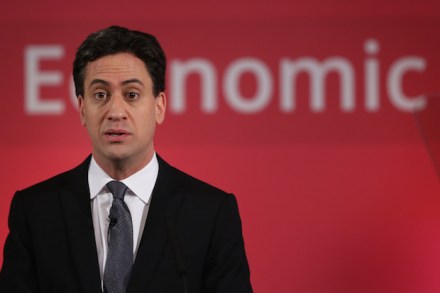
The Labour vs. Conservative battle of economic plans is heating up. Ed Miliband is launching a 79-page Better Plan for Britain’s Prosperity today, which appears to be his latest alternative on the Conservatives’ robotic chants of a ‘long-term economic plan’ for ‘hardworking families’. But this isn’t the first time they have launched their plan for the economy. Here are seven previous occasions where Labour has made a fuss about some new plans, pledges or promises about the economy: 1. December 2014 – five election pledges. At the end of last year, Miliband announced that Labour would go into the election with five election pledges that constituted ‘a long-term plan to make the country work for working people again’.

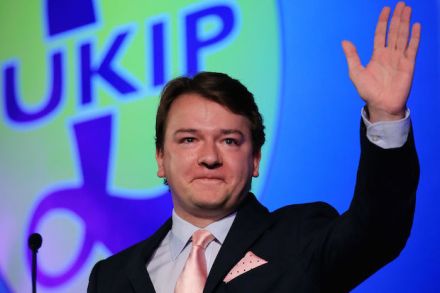
Mini Election: Tim Aker on Ukip’s election strategy and winning in Thurrock

From our UK edition

Tim Aker is one of Ukip’s most recognisable figures. At just 29, he is already an MEP for the East of England, a local councillor in Aveley and, until recently, head of the party’s policy unit. He left the latter role earlier this year to focus on his battle to become the MP for Thurrock. I chatted with Aker in Canvey Island, Essex, where Ukip kicked off its general election campaign last week. He revealed the thinking behind the party’s ‘Believe in Britain’ campaign slogan, the ‘positive’ message Ukip hopes to put across over the next few months, his chances of beating Labour and the Conservatives in Thurrock and whether he was sacked or pushed out from writing the Ukip manifesto.