Sean Rayment

Sean Rayment is the editor of National Security News and the co-host of The Security Podcast. He served as a Captain in the Parachute Regiment in the late 1980s. As a defence correspondent, he has reported on wars in the Balkans, Iraq, Afghanistan, the Gulf and Africa.

For Israel, the real battle is only just beginning

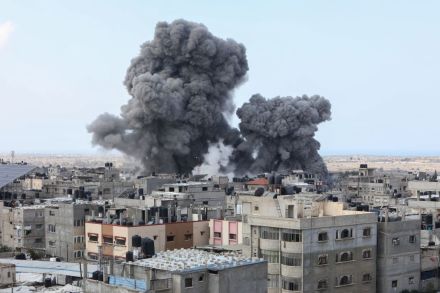
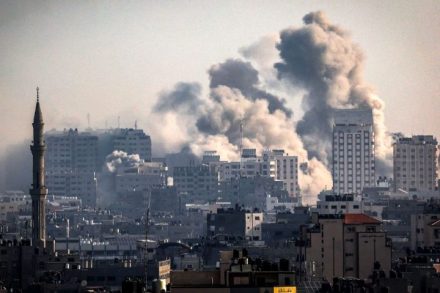
Israel must steel itself over the coming weeks for more national trauma as the fighting against Hamas in Gaza intensifies and troops losses begin to mount. The country’s armed forces have already paid a high price, with 348 deaths since October 7th. To give some context, this is almost twice as high as the number of British soldiers killed in eight years of fighting in Iraq. In a country with just a tenth of the population of the UK, the losses will be even more difficult to bear. The break-in battle was always going to be the easiest part for the Israeli Defence Forces. The aerial bombardment, like a first world war artillery barrage, sent Hamas terrorists retreating into command bunkers buried many feet below ground.
To destroy Hamas, Israel must continue bombing Gaza

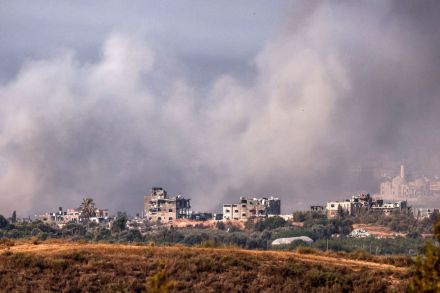
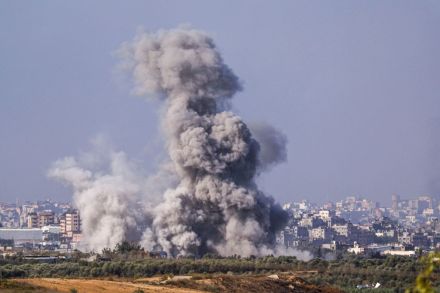
Israel has no other choice but to carry on bombing Gaza if it wants to destroy Hamas. Its campaign of relentless air strikes and long range artillery barrages has so far been effective at eroding Hamas’ military capability and limiting the Islamist group’s capacity to kill more Israelis. Hamas has been unable to respond in any meaningful way since Israel’s offensive began. It has been limited to hit and run attacks, inflicting only relatively light casualties. Israel's unrelenting bombardments, combined with the internet and mobile phone outages, will have caused chaos within Hamas’ command structure. Palestinians are dying because Hamas attacked Israel and killed without mercy But the bombing campaign has come at a huge and terrible cost.

The danger of Hamas drone attacks

The rise of the combat drone is changing the nature of the battlefield, as Israel has already found to its cost. The 7 October atrocity began when dozens of cheap commercial drones equipped with explosives paralysed the Israeli army's communications and camera systems surrounding the Gaza border.  It was the first crucial phase in an intricately planned terrorist attack which would end hours later with more than 1,500 Israeli deaths and a nation traumatised.  Imagery released later by Hamas on social media showed small drones exploding on communications towers and on army lookout posts. The Israeli Defence Forces – one of the world’s most battle-ready armies, which prides itself on its ability to defend the country against all enemies – was caught cold.

An Israeli ceasefire would be a major strategic error

It would be a major strategic error for Israel to agree to a ceasefire in Gaza, as some are calling for now. Any let up in air and ground attacks would simply allow Hamas to regroup, rearm and replenish its depleted ranks with new recruits ready and willing to kill women, children and babies the next time the opportunity arises. Israel’s approach should not just be viewed through the prism of rage or revenge for the atrocity which left 1,500 Israelis dead three weeks ago. The military operation in Gaza is designed to degrade Hamas’s military capability to such an extent that it will take years to recover.

Will Israel’s military strategy work against Hamas?

Israeli soldiers are the masters of street fighting. It is unlikely that there has been a single month in the 75-year history of the Israeli state in which members of its security forces have not been involved in some form of urban warfare. The Israeli Defence Force (IDF) have fought on the streets of Gaza and the West Bank during the first and second intifadas, as well as in towns and villages in southern Lebanon. They have developed tactics, now adopted by armies the world over, for moving through occupied urban areas by blasting holes through buildings. And through endless urban battles – known as FIBUA, fighting in a built-up area – the IDF have become experts in maximising enemy casualties while minimising their own.

What is Israel’s army capable of?

17 min listen

James Heale speaks to foreign policy expert Sophia Gaston and defence correspondent Sean Rayment about what could be Israel's next steps, the strength of their military and how much political backing they have worldwide.

Is Israel ready for a full-scale invasion of Gaza? 

Israel is likely to need every one of the 300,000 soldiers it is amassing on the border with Gaza if, as now seems likely, Prime Minister Benjamin Netanyahu orders a full-scale invasion of the Palestinian enclave. The first signs of an imminent attack are so-called shaping operations – punitive strikes in a bid to test the water and see how the enemy responds. These are already happening in the form of airstrikes against Hamas’s headquarters, strong points and ammunition dumps.

The death of tanks is greatly exaggerated

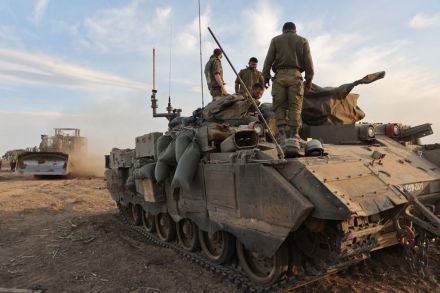
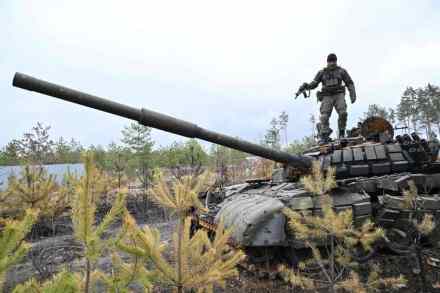
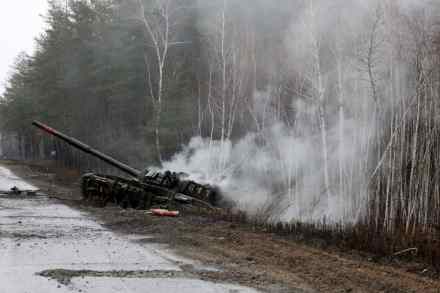
Is the tank still the ‘king of the battlefield’? The sight of burnt out Russian vehicles littering the highways outside of Kyiv has led some to question their effectiveness in modern-day warfare. But don't be deceived: the death of the tank has been greatly exaggerated. There is a reason, after all, why Ukrainian president Volodymyr Zelensky is pleading with Nato to send him as many as possible. The tank’s detractors claim they are now too heavy, too slow and too easily picked off by anti-tank missiles fired by drones, helicopters and infantry troops.

Putin’s depleted army is running out of time

There is a useful military adage often used by generals in times of war: no plan survives contact with the enemy. Vladimir Putin’s plan, it now appears, didn’t even survive contact with his own troops. Russia’s leader has combined a major strategic miscalculation with tactical stupidity on a scale unprecedented in recent times. Four weeks after the launch of his special military operation, his generals have failed to achieve any of their planned objectives. Advances on all fronts have stalled and no decisive battles have been won. There have even been reports (currently unverified) of Russian units being encircled by Ukrainian forces near Kyiv. Russia has still not acquired air superiority and has failed to take a single major city.