Sean Rayment

Sean Rayment is the editor of National Security News and the co-host of The Security Podcast. He served as a Captain in the Parachute Regiment in the late 1980s. As a defence correspondent, he has reported on wars in the Balkans, Iraq, Afghanistan, the Gulf and Africa.

The drone delusion

From our US edition

In March, Russia suffered 35,000 casualties in the war in Ukraine. It’s estimated  33,600 of those, an extraordinary 96 percent, were caused by drones. Attacks by drones equipped with bombs, machine guns and even flamethrowers are now responsible for most of the casualties on both sides of the conflict. Therein lies a potential trap for militaries across the globe. It would be a catastrophic mistake to believe that victory can be bought cheaply and quickly with a single technology.  The great lesson of Ukraine is that armies are punished for relying too heavily on one strategy. President Putin made precisely that mistake. He believed Russian vast tank regiments and precision artillery would bring Ukraine to its knees.
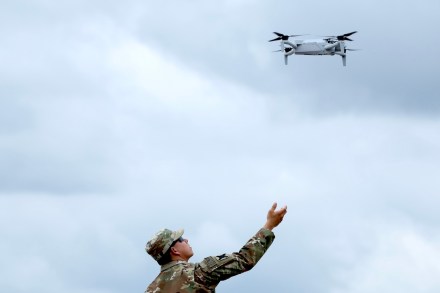
ARLINGTON, VA - JUNE 14: A soldier prepares to catch a drone in the Pentagon parking lot on June 14, 2025 in Arlington, Virginia. The U.S. Army is marking its 250th anniversary with a military parade along Constitution Avenue that includes roughly 6,600 troops, 150 vehicles, and over 50 aircraft. The parade, which coincides with President Donald Trump's 79th birthday, is designed to tell the history of the Army. (Photo by Samuel Corum/Getty Images)

Gaza’s fragile peace

The signs are not good. The much-anticipated Gaza ceasefire and hostage release deal is a horribly complicated construct which seems almost designed to fail. The three-phase plan, which is due to start today, will stop the fighting for 42 days. During that time, Israel will withdraw from the Gaza Strip’s most populated regions and allow much needed aid convoys at the Rafah border to enter the devastated area. In return, Hamas will release 33 Israeli hostages, and Israel will release hundreds of Palestinian prisoners. The two sides will continue talking in the hope of securing the deal’s next two phases, which would free the remaining hostages and make the ceasefire permanent.

Anti-personnel mines will be very useful for Ukraine

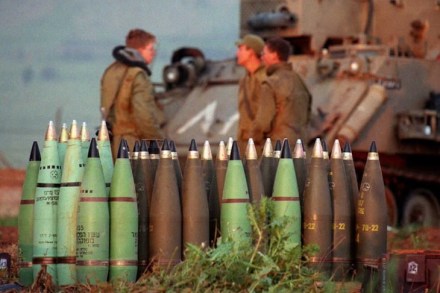
The decision by the Biden administration to supply Ukraine with thousands of anti-personnel mines will, I imagine, be greeted with unalloyed joy within Kyiv’s corridors of military power. The US has provided Ukraine with anti-tank mines throughout its war with Russia, but the addition of anti-personnel mines is aimed at blunting the advance of Russian ground troops in the east, and in the Russian region of Kursk where Ukrainian forces are fighting to cling onto the ground they captured earlier this year.  Anti-personnel mines are weapons of the utmost cynicism – they work on the premise that wounded soldiers cause more problems for an enemy than dead ones Anti-personnel mines are designed to maim and not kill. Their sole purpose is to slow down the advance of enemy troops.

Can Israel go on like this?

All generals plan military operations based on the ten principles of war – rules if you like, which, if adhered to, will provide the best chance of success. The most important of these principles is the selection and maintenance of an aim. Even if every Hamas terrorist in Gaza is killed or captured, it is questionable whether that would mean that the group has been truly destroyed The aim should always be a single, unambiguous and easily understood objective – such as destroying the enemy located on Hill X. It then follows that everyone, from the most senior officer to the lowest ranked soldier, knows what needs to be done and can build their tactical plans around that single, achievable goal.

These won’t be the last casualties Israel sustains in Lebanon

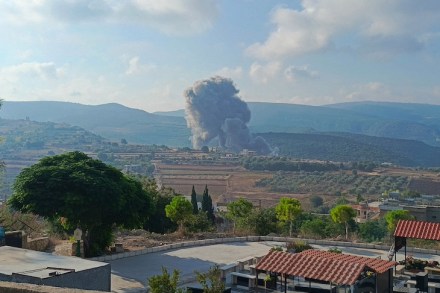
Israel has sustained its first casualties since the launch of its cross-border incursion into southern Lebanon. Eight soldiers have been killed in battles with Hezbollah and, tragically, they are unlikely to be the last casualties of this conflict.  Captain Eitan Itzhak Oster, 22, a squad commander in the ‘Egoz’, an elite commando unit specialising in guerrilla warfare, was killed in what was reported to be an ambush by Hezbollah fighters in a village in southern Lebanon. Other Israeli Defence Forces (IDF) personnel killed in clashes with Hezbollah on Wednesday include four members of a commando unit, two soldiers serving with a reconnaissance squad, and another who was part of the engineering corps.

The danger of a ground campaign against Hezbollah

There has never been a better time in recent years for Israel to launch a cross-border ground attack against Hezbollah. The Iran-backed terrorist group’s senior leadership, both political and military, has almost been wiped out – with up to 19 senior officials, including its political leader Hassan Nasrallah, killed in recent weeks. After almost a year of bitter fighting in Gaza, much of Israel’s reservist-based army is said to be exhausted Morale amongst Hezbollah fighters must be desperately low after the group’s command and control network – the ability to coordinate its fighters dotted along the border with Israel – was severely undermined by the astonishing Mossad-led pager and walkie-talkie attack, which killed dozens of fighters and injured many more.

Raisi’s successor is unlikely to end Iran’s western shadow war

Even before Tehran had formally announced the death of President Ebrahim Raisi, conspiracy theories as to whether foul play was to blame began coming in rapidly. Was Israel’s Mossad, the go-to organisation Iran likes to blame for almost any catastrophe that befalls the Islamic Republic, behind the helicopter crash? Was it the CIA, the same organisation which swept the Shah to power in a coup d’état in 1953? Or was it one of many internal enemies Raisi had managed to accumulate after his years in power? Raisi, after all, had no shortage of enemies both within and outside the regime. He was responsible for the mass executions of  an estimated 30,000 thousands of political prisoners – or terrorists as Iran likes to call them – in 1988.

Israel’s warning to Iran

Symbolism is important. Israel’s overnight missile attack against Iran was a warning to the ayatollahs residing in Tehran that it can hit any target, wherever and whenever it wants. The missile is believed to have struck a military airfield near Isfahan, a city in central Iran, which is also the location of a major missile production complex and several nuclear facilities. The messaging here was simple: in the future nothing will be off the table – including Iran’s nuclear facilities.

Despite their failed attack, Iran should not be underestimated

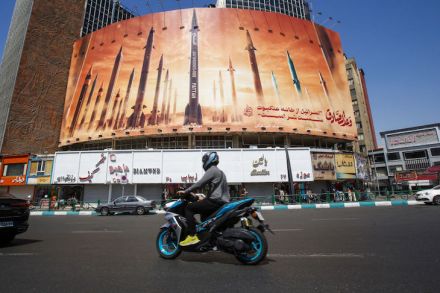
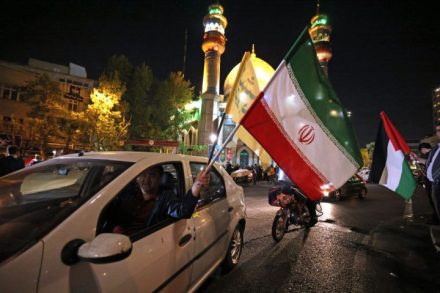
Iran’s overnight mass drone attack on Israel was supposed to be payback for the assassination of Iranian Republican Guard Corps commander General Mohammad Reza Zahedi. In truth, though, it was a tepid, face-saving response which the ayatollahs in Tehran knew would fail. In the early hours of this morning, the Iranian army described what it called 'Operation Honest Promise' – the drone and missile attack on Israel – as a complete success. But in reality, the attack had minimal tactical impact, despite the highly orchestrated flag waving jubilation in Tehran's Palestine Square.

Will Israel still attack Rafah?

From our US edition

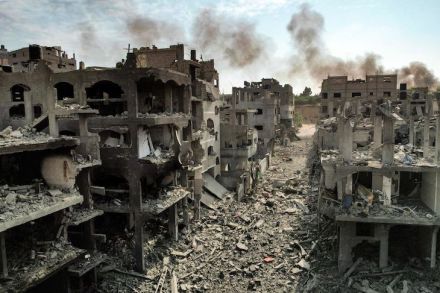
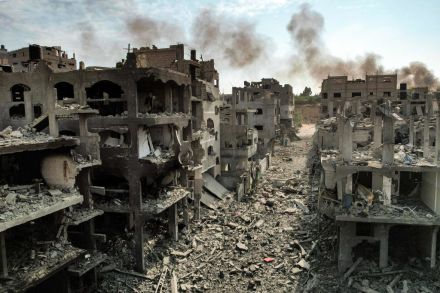
The decision by Israel to withdraw its forces from the devastated city of Khan Younis could portend a battle for the control of Gaza. For Prime Minister Benjamin Netanyahu and the Israeli Defense Forces, the prize in the war against Hamas is the capture of the southern city of Rafah, a sprawling, tented enclave bulging with up to 1.4 million displaced and desperate Palestinians. Given that much of Gaza is now in ruins, there is almost nowhere left for the Palestinians trapped inside the city to flee. It is almost universally accepted that any assault would end in a bloodbath.

benjamin netanyahu rafah

Will Netanyahu still attack Rafah?

The decision by Israel to withdraw its forces from the devastated city of Khan Younis could portend a battle for the control of Gaza. For Prime Minister Benjamin Netanyahu and the Israeli Defence Forces, the prize in the war against Hamas is the capture of the southern city of Rafah, a sprawling, tented enclave bulging with up to 1.4 million displaced and desperate Palestinians. Given that much of Gaza is now in ruins, there is almost nowhere left for the Palestinians trapped inside the city to flee. It is almost universally accepted that any assault would end in a bloodbath.

The battle for Rafah could turn into a bloodbath

Prime Minister Benjamin Netanyahu views the conflict in Gaza as a zero-sum game – with Israel either destroying Hamas or losing the war. Given that is his strategy, the assault on the city of Rafah in the southernmost part of Gaza, where the Israeli Defence Forces (IDF) believe up to four battalions of Hamas terrorists are holed-up, makes perfect sense, at least to him. On Saturday, in the face of growing international concern about the forthcoming operation, Netanyahu announced: ‘Those who say that under no circumstances should we enter Rafah are basically saying lose the war, keep Hamas there.’ During the night, Israel began a missile bombardment of the city.

Israel can’t win in Gaza anymore

The first and most important principle of war for any military campaign is the selection and maintenance of ‘the aim’. The aim must be clear and unambiguous, so that everyone, from the most senior general to the private soldier, understands what is trying to be achieved. Unfortunately for the Israeli Defence Forces (IDF) the aim of the war in Gaza – the annihilation of Hamas – is neither clear, unambiguous nor achievable. Now the IDF – or more accurately, Prime Minister Benjamin Netanyahu – is facing the very real risk of snatching defeat from the jaws of victory. When Joe Biden, the US president, spoke to Israelis during a brief visit 12 days after the October attacks, he said he and ‘many Americans’ understood Israel’s ‘shock, pain and rage’.

Who will rebuild Gaza?

When the last shot is fired in the current Israeli-Palestinian conflict and the fog of war eventually lifts, the challenge of who will rebuild Gaza will need to be addressed. While such a thought may be difficult for some Israelis to stomach, especially those who lost loved ones in the October 7th Hamas atrocity, the ‘what happens next?’ question demands both an answer and a plan. In his masterful work World Order, the late US statesman and diplomat Henry Kissinger noted that when President Harry S Truman was asked in 1961 what part of his presidency made him most proud, he said: ‘That we totally defeated our enemies and then brought them back into the community of nations.

Could killing Yahya Sinwar end the Gaza war?

Somewhere beneath the rambling town of Khan Yunis, Yahya Sinwar, the murderous leader of Hamas in Gaza, is awaiting his fate. The terrorist leader, who orchestrated the October 7th atrocity and the deaths of 1,200 innocent Israelis, knows that his days are numbered. Either the 61-year-old Palestinian will die from the impact of a 500 lb satellite guided Joint Direct Attack Munition bomb exploding above the fetid hole in which he is hiding or his life will end in a hail of bullets fired by Israeli commandos, with orders to kill and not capture the Hamas leader.

The war in Gaza is at a tipping point

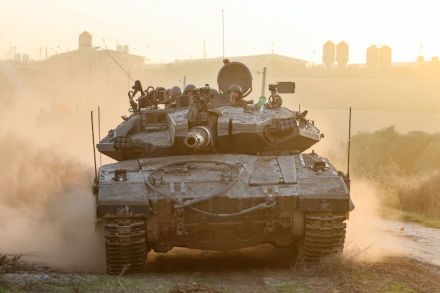
The conflict in Gaza could be about to reach a defining moment. After weeks of air strikes, artillery bombardments and drone attacks, the Israeli Defence Forces (IDF) appear to have the Hamas leadership and those remaining fighters still loyal to the group's murderous ideals trapped in ever-shrinking pockets of land. Intense street fighting is now taking place between Israeli troops and Hamas gunmen in the southern city of Khan Yunis, believed to be the last stronghold of the terrorist group. In the north, Hamas’s general headquarters, located within the Jabaliya refugee camp, has been occupied after a three day operation involving a naval commando unit and elements of the Israeli army’s 551st brigade.

Why Israel is changing tactics in its war on Hamas

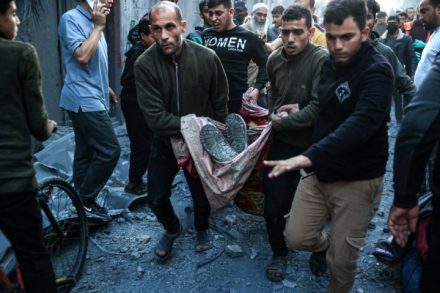
The conflict in Gaza is about to enter a crucial phase as Israel continues its military campaign to destroy Hamas. After a seven-day pause in hostilities saw Hamas release 110 hostages in return for 240 Palestinians, the Israeli Defence Forces (IDF) are now locked into a more complex and politically tricky battle as they venture into southern Gaza. If the IDF adopts the same tactics in the south as they did in the north of the Gaza Strip, then thousands more Palestinian civilians will die. There are signs, however, that Israel is changing tactics after bowing to pressure from allies. Over 15,000 civilians have been killed, according to the Hamas-controlled health authority in Gaza.

Does a political solution to the Israel-Gaza conflict exist?

Is there a political solution to the Gaza conflict? Earlier this morning, the seven-day ceasefire between Israel and Hamas broke down, with the IDF reporting that it had intercepted rocket fire from the Gaza strip. Israel then resumed hostilities, with air strikes in northern and southern Gaza against Hamas. Almost from the moment of its inception, 73-years ago, Israel has been in a state of perpetual war. This is not something of Israel’s own choosing. No other country in the modern era has fought so many wars of national survival against adversaries whose sole ambition was the complete annihilation of  a people.

The next stage of Israel’s war will be even deadlier

On Friday a four-day ceasefire between Israel and Hamas began, as the first hostages taken by Hamas were released by the terrorist group. Under the deal struck, 50 Israeli women and children will be released in exchange for 150 Palestinian prisoners, who will be freed over the four-day period. Additionally, the Israeli government said the lull in hostilities will be extended for an additional day for every ten more hostages Hamas releases. In theory, the cessation of hostilities between Israel and Hamas could last until all 240 hostages are released. And some may hope that the complex ceasefire arrangements might lead to an extended truce.

It’s time Israel stopped playing by Hamas’s rules in Gaza

For Israel, the war in Gaza is a zero sum game. Israel must win and Hamas must lose. Nothing but total victory over Hamas after the appalling terrorist attacks which left over 1,400 Israelis dead, hundreds injured and over 200 civilians taken hostage, will suffice. But how is victory going to be defined and what is Israel’s end game? When the dust of war finally settles what does Israel want Gaza to look like? An empty, lifeless, bomb-cratered ruin or a self-governing entity, secure within its own borders and no longer a threat to Israel? Unless Israel has a clear strategic aim, its troops risk becoming trapped inside Gaza, possibly fighting a war lasting months or years end which loses all legitimacy.