Sam Leith

Sam Leith

Sam Leith is literary editor of The Spectator.

Prince Andrew: from playboy to PlayStation

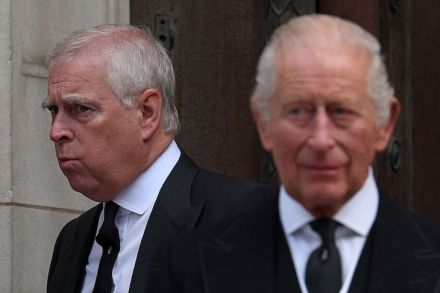
Oh God, not that. That’s all we need, I thought, reading in a long account of Prince Andrew’s current travails that ‘according to visitors to Royal Lodge’, he now ‘spends much of his time playing video games’. Even before all the unpleasantness with Jeffrey Epstein’s child-rape allegations, one of the Prince’s more embarrassing qualities was his appearing as an ‘ambassador’ for this or that – usually accompanied by a helicopter trip to a golf course. Now he’s reduced – no chopper, no putting green; woe is him – to being an ambassador for adults who play video games. As an adult who plays video games, and even writes about them from time to time, I generally welcome news of figures in public life who do the same. Not on this occasion.

Peter James: Jack Higgins’s The Eagle Has Landed

40 min listen

Sam Leith's guest on this week's Book Club podcast is the crime writer Peter James. Peter has contributed the introduction to a new edition of the classic thriller The Eagle Has Landed, which is 50 years old this month. He tells Sam what it was that made Jack Higgins's novel so groundbreaking, about what it takes to make you root for the bad guys, how thrillers and detective stories differ – and about his own history with Jack Higgins. Plus, he tells me about his own new novel The Hawk Is Dead — which comes, more or less, by Royal Appointment...

In defence of the rules-based order

The last time I saw my cousin, the former Tory MP Danny Kruger, I found myself trying to ginger him up a bit. I said, which I thought then and thought now – and which I can’t think it is betraying a confidence to say publicly – that the low state of the Conservative party was a bummer for those who sat on its benches, but also an opportunity for the likes of him.   After years of drift, venality, lurching ideological changes and idea-free opportunism, they had the chance to rebuild. Danny looked well placed to take a leading part in that project. Tory intellectuals are thin on the ground these days, and he is one.

Luke Kemp: The History and Future of Societal Collapse

48 min listen

My guest in this week’s Book Club podcast is Luke Kemp. In his new book Goliath’s Curse: The History and Future of Societal Collapse, Luke seeks lessons from prehistory to understand how societies grow and flourish, what kills them, and where we are now. He tells me what Hobbes got wrong, why ‘civilisation’ isn’t always the boon we have been taught to think it is, and why societal collapse might have been a good thing in the past but could be a very bad thing in the future.

The joy of university

I log in so infrequently these days that Facebook has, I'm pleased to say, nearly given up on me. Like a half-hearted stalker whose head has been turned by a fresh victim, it sends me alerts and updates with ever-diminishing regularity, and few of them remotely tempt me to click. So it was quite unusual to see one, a few days ago, that did make me click. It was the link to a photograph of my brilliant god-daughter arriving for her first term at university. Are we not ignoring the likelihood that most students are getting on with doing what students have always done? The first thing that this picture – full as it was of sunshine and hope and promise – made me feel was very, very old. The second thing it made me feel was very, very proud.

Ben Schott: An Unexpectedly Essential Guide to Language

38 min listen

This week’s Book Club podcast is Ben Schott. The author of the world- (or downstairs-loo-) conquering Schott’s Original Miscellany returns with Schott’s Significa, a deeply reported and constantly surprising book in which he uses the private languages of various communities – from gondoliers to graffiti writers and from Swifties to sommeliers – as a way of understanding their worlds. Ben tells me about how the project came together, how he was inspired by the folklorists Iona and Peter Opie pinning the butterfly of playground games – and why doing the shoe-leather reporting yields results that you could never get from Google or ChatGPT.

We’re all doomed if English literature students can’t read books

The question has changed, as one Oxford don noted wanly on social media, from 'What are you reading at university?' to 'Are you reading at university?' Such is the state of undergraduates entering English literature courses these days, brains addled by scrolling on their mobile phones, that universities are now offering 'reading resilience' courses to help them tackle the unfamiliar task of reading long, old, sometimes difficult books.

Philippa Gregory: Boleyn Traitor

40 min listen

Sam Leith's guest on this week's Book Club podcast is the historical novelist Philippa Gregory. In her gripping new book Boleyn Traitor, Philippa seeks to rescue Jane Boleyn from the vast condescension of history. She tells Sam how fiction allows her to make plausible speculations about the gaps in the record, how she works to make the Tudors speak to us in language we can recognise, where Henry VIII went wrong — and what the Tudor court's descent into tyranny has to say to us about our own age. Produced by James Lewis.

America, where did it go wrong?

Say what you like about Donald Trump's former adviser, Steve Bannon, but his 'flooding the zone' thing really works, doesn’t it? Bannon’s thesis about political communication – which is, really, a thesis about political communication as political warfare – is that you need to pump out such a torrent of outrageous and chaotic actions and pronouncements that the press and your opponents are overloaded, flummoxed, thrown into confusion. Nobody can see the big picture. Nobody can focus on anything for any length of time because there’ll immediately be something else still more bizarre or disconcerting to digest. America isn’t just a place. It’s an idea.

Tony Blair can’t save Gaza

There’s a very short list of important questions, these days, to which the right answer is 'Tony Blair'. I mean, a really short list. In a round of the US gameshow Jeopardy, when the host says 'Tony Blair', nobody is going to win a doublewide trailer by piping up: 'Who would be the best person to be king of the Gaza Strip once all the bodies have been cleared away?' The scheme circulating for Blair the Viceroy involve GITA entering Gaza as its 'supreme political and legal authority' And yet. Our former prime minister – now, though the way he carries on it’s easy to forget, a private citizen – is reported to be putting himself forward as the king, or interim leader, or chairman of the board, of whatever is supposed to pick up the pieces after the bombing and smiting stops.

Sudhir Hazareesingh: Daring to be Free

43 min listen

Sam's guest in this week’s Book Club podcast is the historian Sudhir Hazareesingh, whose new book Daring to Be Free: Rebellion and Resistance of the Enslaved in the Atlantic World reframes the story of Atlantic slavery. He explains why the familiar tale of enlightened Europeans bringing about abolition leaves out the most important voices of all – the enslaved themselves – and how from Africa to Haiti and beyond, traditions of rebellion, resistance and spiritual resilience shaped the struggle for freedom long before Wilberforce or Clarkson entered the picture.

Roger Lewis: The Life and Death of Peter Sellers

38 min listen

Sam Leith's guest in this week's Book Club podcast is Roger Lewis, whose book The Life and Death of Peter Sellers has been republished to mark 100 years since the comedian's birth. Roger tells Sam about the difference between Sellers's public persona and private life, plus his influence on comedy today. They also discuss how Roger reinvented the way biographies were written, and whether the view he had of Sellers as a teenager changed through writing the book. Produced by James Lewis.

Was Charlie Kirk’s murder the senseless act of an internet troll?

We are in the grip of old habits. We assume, most of us, that when a prominent political figure is assassinated, the motive for the killing is political. So it was with Charlie Kirk’s assassin. Before anything was known about the killer, President Trump’s allies and outliers decided that it was a symptom of the murderous violence of soi-disant antifascists on the left. When it emerged, subsequently, that our man was from a republican family and that he potentially may have been part of the white supremacist 'groyper' movement, anti-Trump types chalked it up to the violence of the Right.  There may have been more justification for the latter position than the former.

What a joy to welcome back the Metal Gear series

Grade: A As gamers of my generation who grew up on the Metal Gear series will know, its creator Hideo Kojima is a got-dang genius. The attention to detail and love and inventiveness he gave to 1998’s Metal Gear Solid and its sequels was second to none. There were quirks (smoking was good for you); there was devilment (to beat the Mantis fight you had to use the other controller); and there were silly names (Revolver Ocelot, anyone?). So it’s with great joy that – amid a rash of rereleases and remasters and reboots aimed squarely at nostalgic middle-aged gamers – we see this, a new-generation redo of the third game in the series.

Andrew Bayliss: Sparta – The Rise and Fall of An Ancient Superpower

43 min listen

Sam Leith’s guest in this week's Book Club podcast is Andrew Bayliss, author of Sparta: The Rise and Fall of an Ancient Superpower. Andrew tells Sam what we know — and don't know – about these much-mythologised figures from the Ancient world and tells the story of how a tiny city-state punched above its weight, until it didn't. This is Sparta. Produced by Patrick Gibbons.

Who cares if there’s a blunder in Ian McEwan’s latest book?

Ian McEwan’s new novel What We Can Know isn’t even out yet, and already someone has spotted a goof. In response to an early review in a Sunday paper – which reports that McEwan’s novel is set in a world where a Russian hydrogen bomb has missed its target in the United States, exploded in the Atlantic and “flooded three continents” – the science fiction writer Charles Stross pointed out drily on social media that “if you can flood three continents with a single H-bomb in the Atlantic, that bomb is rather more powerful than all the nuclear weapons we, as a species, ever manufactured, multiplied by some factor with too many zeroes appended”.

Lea Ypi: Indignity

48 min listen

My guest in this week's Book Club podcast is the Albanian-born political philosopher Lea Ypi, whose new book Indignity: A Life Reimagined reconstructs the story of her grandmother's early life amid the turbulence of the early and mid twentieth century. She talks to me about using the techniques of fiction to supply the gaps in the archive, about Albania's troubling position as a tiny power among great ones, why the fight between Kant and Nietzsche remains a live one — and how online trolls sparked her quest for a restorative account of her beloved grandmother's life.

Why shouldn’t adults play with toys like Lego?

“When I was a child, I spake as a child, I understood as a child, I thought as a child: but when I became a man, I put away childish things.” That perennial funeral favourite, 1 Corinthians 13, has a lot to answer for. Generations of so-called grown-ups have, whether through the fear of God or the fear of embarrassment, done all they can to distance themselves from anything that they fear the neighbours or the man upstairs will think is childish. If you don’t like painting Warhammer figurines or building Lego or collecting Funko models, nobody’s making you Now, only two thousand years later, the tide seems to be turning. No less grown-up an outlet that the Financial Times reports that a great boom is underway in the so-called “kidult market”.

Brideshead Revisited, 80 years on: from the archives

43 min listen

This week's Book Club podcast marks the 80th anniversary this year of the publication of Brideshead Revisited. This conversation is from the archives, originally recorded in 2020 to mark its 75th anniversary. To discuss Evelyn Waugh's great novel, Sam Leith is joined by literary critic and author Philip Hensher, and by the novelist's grandson (and general editor of Oxford University Press's complete Evelyn Waugh) Alexander Waugh. What made the novel so pivotal in Waugh's career, what did it mean to the author and how did he revise it? And why have generations of readers, effectively, misread it?

Angela Rayner’s not-so-scandalous ‘third home’

Angela Rayner, it’s reported, has bought a ‘third home’. The three-bedroom seaside flat on the south coast that she has just acquired for a sum slightly more than £700,000 adds, the Mail on Sunday reports excitedly, to her ‘burgeoning property empire’. Pre-burgeoning, be it noted, her property empire consisted of a single house in her constituency of Ashton-under-Lyne. The Candy Brothers, even post-burgeoning, she is not. Papers get to call it a ‘third home’ because she has the use of a ministerial apartment – ‘grace and favour’, obviously, to make it sound extra posh – in Westminster, but she’s not exactly going to be flipping the place in Admiralty House for a profit when she leaves office.