Sam Leith

Sam Leith

Sam Leith is literary editor of The Spectator.

Leon Craig: The Decadence

From our UK edition

29 min listen

On this week’s Book Club podcast I’m joined by debut author Leon Craig to talk about her novel The Decadence – a story of millennial debauchery in a haunted house which uses a knowing patchwork of literary influences from Boccaccio and Shirley Jackson to Martin Amis and Mark Z. Danielewski to make an old form fresh. She discusses how and why it took her so long to write, how she first acquired a taste for the gothic, and why she thinks the horror novel, that seeming relic of the 1970s, is making such a dramatic comeback.

Benjamin Myers: Jesus Christ Kinski

From our UK edition

36 min listen

Ben Myers joins Sam Leith to discuss his book Jesus Christ Kinski, which he describes as a ‘novel about a film about a performance about Jesus’. Klaus Kinski was one of Germany’s biggest actors of the 20th Century – but he was also one of the most controversial, and Ben questions if he was one of the worst people to have ever lived. In this novel, Kinski returns for a one-man performance about Jesus Christ, and it nearly becomes his last as the audience turn on him and violence is threatened.  Ben tells Sam about how he came to be fixated on Kinski, why the worst people can be some of the most compelling and why there are no great movies about writers. Plus, how exposed are artists to cancel culture when making art about evil characters? Produced by Patrick Gibbons.

Wikipedia founder on his ‘friend’ Elon Musk & finding truth online

From our UK edition

35 min listen

Sam Leith’s guest this week is Jimmy Wales, the founder of Wikipedia and author of The Seven Rules of Trust. They discuss why trust is such an important value for public debate, and how it can address polarisation in society. Jimmy addresses the challenge Elon Musk has posed to Wikipedia after the entrepreneur branded the site as ‘woke’, despite the pair having a personal relationship. Sam also asks whether the internet is getting worse – and if it can be fixed.

I’m a fan of the BBC – but even I’m struggling to defend it

From our UK edition

Another Director-General bites the dust. And the number two with him. What a facepalm. What a honking, stupid, first-day-in-the office sort of error to make. What cost Tim Davie his job, and presents the BBC with its latest existential crisis, was not just an error: it was an unforced error of the most wince-making kind. Defenders of the BBC regard this as a confected row, a political hit job, and affect outrage that it cost the top man his job. I’m afraid I don’t think it is Those of us who, in general, think of the BBC as a good thing – and certainly a much better thing than the various privately-owned alternatives – would like to defend it.

Graham Robb: The Discovery of Britain

From our UK edition

40 min listen

Sam Leith's guest this week is Graham Robb. In his new book The Discovery of Britain: An Accidental History, Graham takes us on a time-travelling bicycle tour of the island's history. They discuss how Graham weaves together personal memories with geography and history, his 'major cartographic scoop' which unlocks Iron Age Britain and contemporary debates about national identity. Graham also has a discovery of interest for those who hold out hope that King Arthur really existed. Produced by Patrick Gibbons and James Lewis.

Welcome to the age of the troll

From our UK edition

We’re accustomed, by now, to Catholic priests having eccentric hobbies. Even so, 57-year-old Father Mark Rowles turned out to have a humdinger. At the end of last week, he admitted in court that while, by day, he was a sad sack of a man in late middle age with thinning hair and specs who ministered to a congregation in Cardiff, by night he took on the persona of 'skinheadlad1488' in a series of neo-Nazi chatrooms, claiming to be a 16-year-old race warrior who fantasised about bombing mosques and shooting black people in the head. Father Mark Rowles admitted to taking on the persona of 'skinheadlad1488' in neo-Nazi chatrooms What are we to make of this?

Nat Jansz: Comet in Moominland turns 80

From our UK edition

36 min listen

Nat Jansz joins Sam Leith to celebrate the 80th anniversary of the Moomin novels. The first of these, Comet in Moominland, was revised by author Tove Jansson a decade after the original publication date. To celebrate the anniversary Sort of Books, co-run by Jansz, is publishing this revised edition for the first time in English. Jansz discusses why she finds the books so compelling, the influence of the war on author Jansson and why she feels Jansson’s ‘quest for the truth’ was written in a way that was easy for children to understand. For Jansz, the Moomin novels had a mix of light and dark which broke the mould of previous children’s literature which was often prefaced with something traumatic.

Max Jeffery, Sam Leith, Michael Henderson, Madeline Grant & Julie Bindel

From our UK edition

37 min listen

On this week’s Spectator Out Loud: Max Jeffery examines Britain’s new hard left alliance; Sam Leith wonders what Prince Andrew is playing; Michael Henderson reads his letter from Berlin; Madeline Grant analyses the demise of the American ‘wasp’ – or White, Anglo-Saxon Protestant; and, Julie Bindel ponders the disturbing allure of sex robots. Produced and presented by Patrick Gibbons.

In praise of the Children’s Booker Prize

From our UK edition

The Booker Foundation announced on Friday what it called its most ambitious project in twenty years: the launch of a Children’s Booker Prize. Well, heavens: what am I to do with that? As a columnist, most of my business is moaning and carping. Happiness, as it is said, writes white, and the default position of the comment hack in search of a subject is to find something that annoys him. Aerodynamically speaking, if you’re throwing something from the cheap seats towards the stage, you get a whole lot more range and accuracy when you’re throwing a beer-bottle full of piss than when you’re throwing a bouquet. And yet, here is something that, walk around it as I will, prodding and muttering, I can find nothing to complain about.

Why I love blowing up worms

From our UK edition

Grade: B+ War, as we all know, is hell. But if it involves small squeaky annelids blowing each-other up with bazookas, it is also hella fun. And so to the newest installment in the long-running turn-based strategy series Worms. Can it be a coincidence that Worms Across Worlds arrives on Apple Arcade just in time for the release of Philip Pullman’s final His Dark Materials book? Yes, it absolutely can. Nevertheless the latest Worms, like Pullman’s work, is set in a multiverse in which intrepid heroes travel through portals between worlds. The world of Worms, like the world of His Dark Materials, mingles science and experimental theology: you can see off rival worms with a nuclear strike or a holy hand grenade.

Prince Andrew: from playboy to PlayStation

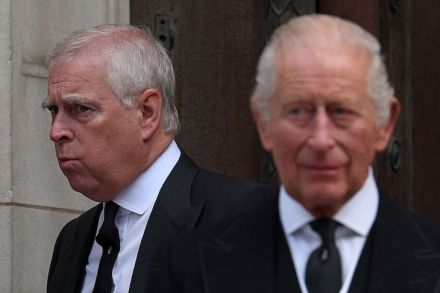
Oh God, not that. That’s all we need, I thought, reading in a long account of Prince Andrew’s current travails that ‘according to visitors to Royal Lodge’, he now ‘spends much of his time playing video games’. Even before all the unpleasantness with Jeffrey Epstein’s child-rape allegations, one of the Prince’s more embarrassing qualities was his appearing as an ‘ambassador’ for this or that – usually accompanied by a helicopter trip to a golf course. Now he’s reduced – no chopper, no putting green; woe is him – to being an ambassador for adults who play video games. As an adult who plays video games, and even writes about them from time to time, I generally welcome news of figures in public life who do the same. Not on this occasion.

Peter James: Jack Higgins’s The Eagle Has Landed

From our UK edition

40 min listen

Sam Leith's guest on this week's Book Club podcast is the crime writer Peter James. Peter has contributed the introduction to a new edition of the classic thriller The Eagle Has Landed, which is 50 years old this month. He tells Sam what it was that made Jack Higgins's novel so groundbreaking, about what it takes to make you root for the bad guys, how thrillers and detective stories differ – and about his own history with Jack Higgins. Plus, he tells me about his own new novel The Hawk Is Dead — which comes, more or less, by Royal Appointment...

In defence of the rules-based order

From our UK edition

The last time I saw my cousin, the former Tory MP Danny Kruger, I found myself trying to ginger him up a bit. I said, which I thought then and thought now – and which I can’t think it is betraying a confidence to say publicly – that the low state of the Conservative party was a bummer for those who sat on its benches, but also an opportunity for the likes of him.   After years of drift, venality, lurching ideological changes and idea-free opportunism, they had the chance to rebuild. Danny looked well placed to take a leading part in that project. Tory intellectuals are thin on the ground these days, and he is one.

Luke Kemp: The History and Future of Societal Collapse

From our UK edition

48 min listen

My guest in this week’s Book Club podcast is Luke Kemp. In his new book Goliath’s Curse: The History and Future of Societal Collapse, Luke seeks lessons from prehistory to understand how societies grow and flourish, what kills them, and where we are now. He tells me what Hobbes got wrong, why ‘civilisation’ isn’t always the boon we have been taught to think it is, and why societal collapse might have been a good thing in the past but could be a very bad thing in the future.

The joy of university

From our UK edition

I log in so infrequently these days that Facebook has, I'm pleased to say, nearly given up on me. Like a half-hearted stalker whose head has been turned by a fresh victim, it sends me alerts and updates with ever-diminishing regularity, and few of them remotely tempt me to click. So it was quite unusual to see one, a few days ago, that did make me click. It was the link to a photograph of my brilliant god-daughter arriving for her first term at university. Are we not ignoring the likelihood that most students are getting on with doing what students have always done? The first thing that this picture – full as it was of sunshine and hope and promise – made me feel was very, very old. The second thing it made me feel was very, very proud.

Ben Schott: An Unexpectedly Essential Guide to Language

From our UK edition

38 min listen

This week’s Book Club podcast is Ben Schott. The author of the world- (or downstairs-loo-) conquering Schott’s Original Miscellany returns with Schott’s Significa, a deeply reported and constantly surprising book in which he uses the private languages of various communities – from gondoliers to graffiti writers and from Swifties to sommeliers – as a way of understanding their worlds. Ben tells me about how the project came together, how he was inspired by the folklorists Iona and Peter Opie pinning the butterfly of playground games – and why doing the shoe-leather reporting yields results that you could never get from Google or ChatGPT.

We’re all doomed if English literature students can’t read books

From our UK edition

The question has changed, as one Oxford don noted wanly on social media, from 'What are you reading at university?' to 'Are you reading at university?' Such is the state of undergraduates entering English literature courses these days, brains addled by scrolling on their mobile phones, that universities are now offering 'reading resilience' courses to help them tackle the unfamiliar task of reading long, old, sometimes difficult books.

Philippa Gregory: Boleyn Traitor

From our UK edition

40 min listen

Sam Leith's guest on this week's Book Club podcast is the historical novelist Philippa Gregory. In her gripping new book Boleyn Traitor, Philippa seeks to rescue Jane Boleyn from the vast condescension of history. She tells Sam how fiction allows her to make plausible speculations about the gaps in the record, how she works to make the Tudors speak to us in language we can recognise, where Henry VIII went wrong — and what the Tudor court's descent into tyranny has to say to us about our own age. Produced by James Lewis.

America, where did it go wrong?

From our UK edition

Say what you like about Donald Trump's former adviser, Steve Bannon, but his 'flooding the zone' thing really works, doesn’t it? Bannon’s thesis about political communication – which is, really, a thesis about political communication as political warfare – is that you need to pump out such a torrent of outrageous and chaotic actions and pronouncements that the press and your opponents are overloaded, flummoxed, thrown into confusion. Nobody can see the big picture. Nobody can focus on anything for any length of time because there’ll immediately be something else still more bizarre or disconcerting to digest. America isn’t just a place. It’s an idea.

Tony Blair can’t save Gaza

From our UK edition

There’s a very short list of important questions, these days, to which the right answer is 'Tony Blair'. I mean, a really short list. In a round of the US gameshow Jeopardy, when the host says 'Tony Blair', nobody is going to win a doublewide trailer by piping up: 'Who would be the best person to be king of the Gaza Strip once all the bodies have been cleared away?' The scheme circulating for Blair the Viceroy involve GITA entering Gaza as its 'supreme political and legal authority' And yet. Our former prime minister – now, though the way he carries on it’s easy to forget, a private citizen – is reported to be putting himself forward as the king, or interim leader, or chairman of the board, of whatever is supposed to pick up the pieces after the bombing and smiting stops.