Sam Leith

Sam Leith

Sam Leith is literary editor of The Spectator.

Books Podcast: Naomi Klein

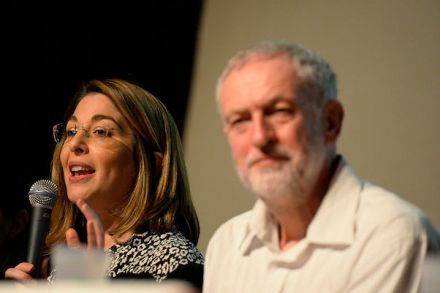
In this week’s Spectator Books podcast I’m joined by Naomi Klein, the activist journalist who gave articulate voice to the anti-globalisation movement in books such as No Logo and The Shock Doctrine. In her latest work, No Is Not Enough: Defeating The New Shock Politics, she gives an urgent account of how — as she sees it — Trumpism came to be and what moderates and progressives need to do about it. We talk about why talking about Trump only makes it worse, how WWE (World Wrestling Entertainment) is the key to understanding the modern White House, why nobody knows what’s going on in British politics any more; and I ask her — cheerily — whether it really is too late to ensure the survival of life on planet earth.

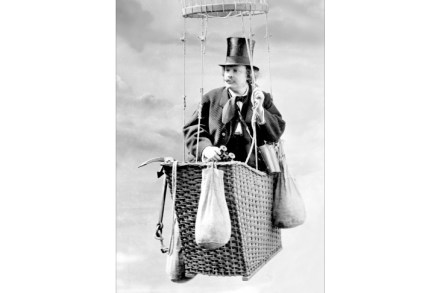
The first celebrity

It’s quite a scene to imagine. A maniacal self-publicist with absurd facial hair takes off in what’s thought to be the biggest hot-air balloon the world has ever seen. Adoring crowds gather to watch the launch. He rises rapidly and sails off towards the clouds — but in due course the whole thing goes arse-up and he comes clattering to earth, narrowly escaping with his and his crew’s life. Never mind: the catastrophe is reported around the world and has made him even more famous than he was before. It was a ‘semi-unsuccess’. And within weeks he’s back planning another ascent in another giant balloon.

Books Podcast: The wisdom of the zombie apocalypse

In this week’s books podcast, we’re talking about the lumbering hordes of the living dead. Yup: it’s Zombie Apocalypse time, as I sit down with Greg Garrett, author of the erudite and absorbing Living With The Living Dead: The Wisdom of the Zombie Apocalypse. More than just a survival guide, this book considers the literary, cinematic and theological history of the zombie — the vast popularity of the genre, and the extraordinary range of meanings and anxieties that zombies have incarnated over the years. From the undead Spider Man in Marvel Zombie comics, through the White Walkers in Game of Thrones… by way of T S Eliot and the Book of Revelations.

Diary – 29 June 2017

To Fortnum & Mason last week on the hottest evening of the year to present the Desmond Elliott Prize for this year’s best first novel, which I helped judge. I had to acknowledge the weather in my speech: I was perspiring, ahem, liberally. Sweating like a… what? The traditional comparator is now definitely verboten. Like Keith Vaz before a select committee? Like Boris in an Eddie Mair interview? Too niche. I went for ‘like a British Brexit negotiator’ and got a gratifying laugh. They won’t be laughing two years from now. We had two superb runners-up in Rowan Hisayo Buchanan’s Harmless Like You and Kit de Waal’s My Name Is Leon.

Books Podcast: Jonathan Meades

In this week's Books Podcast I'm joined by the great Jonathan Meades. A man of many hats -- food critic, architectural critic, memoirist, polemicist, cultural historian, novelist etc -- and one distinctive pair of sunglasses, Meades is this week talking about stealing food. His The Plagiarist In The Kitchen, new in paperback, is a sort of anti-recipe book; a collection of cookable recipes (well, except the one), an erudite disquisition on the history and theory of cookery, and a slant discussion of the whole idea of plagiarism. Also, it's packed with good jokes.

Books Podcast: The secret lives of Julian Assange, Craig Wright and Ronald Pinn

In this week's podcast I'm talking to the novelist and journalist Andrew O'Hagan about lies, paranoia, and the way that nothing, online, is quite as it seems. His new book The Secret Life (Faber) tells, in the words of its subtitle, "three true stories": one about Andrew's utterly bizarre time as the prospective ghostwriter for Julian Assange; another about his association with the man who claimed to have invented the digital currency Bitcoin; and the third -- still darker and stranger -- about Andrew's own experiment in stealing a dead man's identity to become someone else online. They add up  to a funny, alarming and disturbing picture of what happens when digital fantasy meets analogue reality.

Books Podcast: The art of the first novel

In this week’s Books Podcast, we’re turning our eye on an area of literary endeavour that is too often neglected: the first novel. Dozens are published every month; few are ever noticed. The late literary agent Desmond Elliott founded a prize to ensure that more of them were — and that the best would be publicly celebrated.

In praise of neigh-sayers

Wallace Stevens gave us ‘Thirteen Ways of Looking at a Blackbird’. The German scholar Ulrich Raulff, in this meaty book about the history of man’s partnership with horses, gives us many more than 13 ways of looking at a horse. Horses have had ‘more meanings than bones’, he writes. And those meanings have been central to the human experience since pre-history. Evidence from the abraded teeth of horse skeletons indicates that man first slipped a rope into a horse’s mouth as long ago as 3,700 BCE. Horses are what Raulff calls ‘converters’: they can unlock the energy in plants and make it available for man’s use.

Books Podcast: William Empson’s legacy

In this week’s Books Podcast, we’re talking about William Empson, one of the most brilliant and captivatingly eccentric literary critics and poets of the twentieth century. Michael Wood, Emeritus Professor at Princeton and author of the new On Empson, joins me to discuss the strange life and mercurial thought of the man who first discerned Seven Types of Ambiguity.

Books Podcast: Will Self

In this week’s Books Podcast, I’m joined by the novelist, broadcaster and serial user of arcane words Will Self. He has just published Phone, the third and final volume of the difficult but brilliant trilogy he began five years ago with the Man Booker shortlisted Umbrella. He talks to me about recurring characters, modernism, hating Tony Blair before it was fashionable, and how there’s more psychosis about than you think… You can listen to our conversation here: And if you enjoyed that, please do subscribe on iTunes for a new podcast every Thursday.

Books Podcast: Martin Luther, Catholic dissident

In this week's Books Podcast, we honour the five hundredth anniversary of the nailing of that business with the 95 Theses, the church door and the mad monk by discussing Martin Luther and his legacy. Was he a Protestant? Was he a monk? Was there even a church door? And what did the Reformation mean for Henry VIII and the generations of English monarchs to come? Is it, come to that, over? Answering all my dumb and ignorant questions on these subjects are two superbly intelligent and knowledgeable scholars of this vital period in European history.

Books Podcast: The art of losing control

Is Enlightenment rationalism overrated? Do we spend too much time thinking and not enough time letting our conscious thoughts scatter to the winds? My guest in this week's Books Podcast is the philosopher Jules Evans, who argues that we human beings have a deep need to get out of our heads. We talk about his new book The Art of Losing Control: A Philosopher's Search for Ecstatic Experience - in which he explores everything from extreme meditation to tantric swinging parties, from the sublime in Romantic art to the latest findings in psychedelic drug use. Learn what a near-death experience feels like (Jules has had one) - and wonder, with me, why so many people on DMT report visions of mechanical elves...

Books Podcast: The lost stories of F. Scott Fitzgerald

Following the publication of a new collection of the lost short stories of F Scott Fitzgerald (I’d Die For You and Other Lost Stories, Scribner UK, £16.99), I’m joined by two eminent Fitzgerald scholars to talk about the life, legacy and lasting greatness of the laureate of the Jazz Age.

Books Podcast: Taking Hamlet around the world

This week's Books Podcast turns to perhaps the greatest work of the greatest writer in English history. Yup: it's Hamlet time. Specifically, I'm talking to the former artistic director of the Globe, Dominic Dromgoole, about his scheme to perform Hamlet in every country on the face of the earth - a two-year scheme whose rackety history and ultimate success he recounts in his fascinating new book Hamlet: Globe to Globe. A touring company taking Hamlet from Botswana to North Korea and all points in between? It sounds like the sort of thing you'd come up with after a few too many beers. Well, now that you mention it... You can listen to our conversation here: And if you enjoyed that, please subscribe on iTunes for a new episode every Thursday.

Books Podcast: How freakin’ zeitgeist are you?

In this week’s Books Podcast, I meet the poet Murray Lachlan Young. In the 1990s, Murray became notorious: the first and only poet in history to get a million-pound contract with a record label. Naturally, those living in the standard-issue garrets developed some envy issues. As he promotes his collected work, How Freakin’ Zeitgeist Are You?, Murray talks in detail for the first time about the wild and eventually traumatising ride that took him from obscurity, via the main stage on Glastonbury, to obscurity again — before he picked up the pieces and returned to the stage. He also shares a somewhat disrespectful poem about a former editor of this magazine… You can listen to our conversation here: And do subscribe on iTunes for a new episode every Thursday.

Books podcast: The British boarding school

“The happiest days of your life?” This week in the Books Podcast I ask the authors of two recent books about boarding schools whether the system that has formed the characters of the British ruling classes for several centuries is a blissful idyll or the Stanford Prison Experiment in cricket-whites. I’m joined by Ysenda Maxtone-Graham, whose Terms and Conditions: Life in Girls’ Boarding Schools, 1939-1979, is a shrewd history of the fluctuating jollity of hockey sticks, and by Alex Renton, who in Stiff Upper Lip: Secrets, Crimes and the Schooling of a Ruling Class argues that British boarding schools have for many years been incubators and enablers of sexual and psychological abuse, and have psychologically damaged whole generations of their alumni.

Books Podcast: Rob Newman’s Neuropolis

My guest in this week's Spectator Books Podcast is Rob Newman. Listeners of a certain age (ie mine) will remember him as a tweedy professor on the spoof History Today upbraiding David Baddiel with the line: "That's you, that is." But here he arrives as a real scholar: the author of a provoking (and also funny) new book called Neuropolis: A Brain Science Survival Guide. With wild claims being made for the ability of brain science and magnetic imaging to locate the "language organ" or the "seat of wisdom", and with human consciousness being reduced to a collection of chemical accidents, Rob discusses the way in which old myths have crept back in in the guise of hard science.

Listen: Pulitzer Prize winner Hisham Matar discusses The Return

Back in October, I spoke to Hisham Matar — who has just won the Pulitzer Prize for Biography/Autobiography — about his book The Return: Fathers, Sons and the Land In Between. When Hisham was 19, his Libyan dissident father was abducted from exile by the Gadaffi regime and disappeared into Tripoli’s most notorious jail. The writer spent 20 years not knowing what had really happened. He talks here about his long struggle to find out, and his first trip back after the regime had fallen…. You can listen to our conversation here: And please subscribe on iTunes to get a new episode every Thursday.

Books Podcast: The joy of indexes

On this week's Books Podcast, I'm joined by the scholar Dennis Duncan to talk about a subject that's very dear to both of our hearts: that neglected few pages at the back of any book -- the Index. In the wake of last week's National Indexing Day, we talk about the ancient history of indexes and indexing, their vital importance to scholars, the surprising role they have had in the intellectual dogfighting of the Enlightenment... and where you might find an entry for "Peterhouse: shocking goings-on there, 85, 87-9, 107-8; four revolting fellows of, 109; main source of perverts, 103"... It's a fascinating if obscure part of the book-world, and one well worth your attention.

Books Podcast: Charlotte Rampling

A few years ago, Charlotte Rampling signed a contract to write her autobiography - and then, the project not long underway, called the whole thing off. But this month she publishes something quite out of the usual run of celebrity memoirs. Who I Am, co-written with the French man of letters Christophe Bataille, is a slender, riddling approach to the actor's inner life - not a catalogue of film anecdotes but rather a hesitant return to the child she was. She joins me to talk about why she's done things this way, about the legacy of her Olympic medalist father, and about the terrible tragedy that defined her young womanhood. You can listen to our conversation here: And if you enjoyed that, please subscribe on iTunes for a new podcast every Thursday.