Sam Leith

Sam Leith

Sam Leith is literary editor of The Spectator.

Books Podcast: Jay Heinrichs’ How To Argue With A Cat

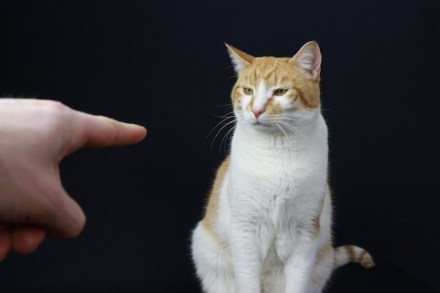
In this week’s books podcast, I’m talking to Jay Heinrichs about his new book How To Argue With A Cat: A Human’s Guide to the Art of Persuasion. Jay is one of the US’s foremost advocates of the ancient art of rhetoric — and in this book he turns it on Mr Tiddles. But he also tells me how John Quincy Adams set him on the rhetorical road, how he helped Nasa rebrand outer space, why lefties should shut up about gun control, and about how Donald Trump has the best oratorical trick — period.

Books Podcast: Steven Pinker

This week’s books podcast was recorded live at a special Spectator subscriber event in London, where I was talking to the Harvard scientist and leading public intellectual Steven Pinker about his new book Enlightenment Now. Steven argues that - despite what the news tells us by every measure human well-being now is greater than at any previous point in history. And he attributes this to the values of the Enlightenment. I asked him: which Enlightenment? Can morality really be based on reason alone? And what’s a professor of cognitive science and linguistics doing in this subject area anyway? You can hear his answers below. And if you enjoyed that, please do subscribe on iTunes.

Books Podcast: Mick Herron

My guest in this week’s podcast is the incomparable spy writer Mick Herron - these days, happily, a less and less well kept secret. He’s the author of the Slough House stories - funny and gripping novels about an awkward squad of failed James Bonds under the aegis of the wonderfully unspeakable Jackson Lamb. The latest is London Rules, and Mick joins me to talk about crap spies, finding a voice, the necessity of killing off the odd main character, and the real life Slough House. You can listen to our conversation here: And if you enjoyed that, do subscribe on iTunes for a new episode every Thursday.

Books Podcast: The Minister and the Murderer

My guest on this week’s books podcast is the author and critic Stuart Kelly. His new book, The Minister and the Murderer: A Book of Aftermaths, tells the story of the only convicted murderer ever to become a minister of the Church of Scotland. We talk about the Ten Commandments, faith and doubt, Stuart’s experiences of being stalked by evil and nearly struck by lightning — and quite how you combine the multiple universe hypothesis in quantum physics, Jorge Luis Borges and a back issue of the DC comic The Flash. You can listen to our conversation here: And if you enjoyed that, do subscribe on iTunes for a fresh discussion every Thursday.

Three concepts of freedom

There’s a tiny mistake in Zadie Smith’s new collection of essays. She describes Geoff Dyer’s unimprovably funny ‘trick while introducing an unsmiling J.M. Coetzee at a literary festival’. And it’s a suggestive mistake. The moment she refers to is Dyer, bashful, blurting that he wondered how his younger self would have reacted if he’d one day known he’d be sharing the stage with ‘a Booker prize-winning, South African, Nobel prize-winning novelist’… and then deciding that his younger self would have said: ‘That’s incredible, because Nadine Gordimer is my favourite writer.’ The joke is all the funnier because the camera pans to Coetzee, utterly stony of face as Geoff giggles.

Books Podcast: Mohsin Hamid

In this week’s books podcast I’m talking to the award-festooned writer Mohsin Hamid about his latest novel Exit West — touching on the effects of technology, the migrant crisis, political writing and why his eight-year-old daughter is shaping up to be an emo kid. You can listen to our conversation here: And do subscribe on iTunes for more like this, every week.

Books Podcast: The life and work of Muriel Spark

This week’s books podcast celebrates the centenary of Muriel Spark. I’m joined by Alan Taylor (author of a new memoir of his friendship with Spark, Appointment in Arezzo) and the critic Philip Hensher to talk about Spark’s life, legacy, special strengths as a novelist — and the mystique that continues to surround the Scottish-born, Tuscan-dwelling author of The Prime of Miss Jean Brodie. You can listen to our conversation below: And do subscribe on iTunes for more like that every week.

Books Podcast: 200 years of Frankenstein

It LIVES! This week’s books podcast honours the bicentenary of the publication of Frankenstein. To cut through all those high camp, bolt-through-the-neck film versions clouding our collective memory, I’m joined by the poet and critic Fiona Sampson, whose fine new book In Search of Mary Shelley: The Girl Who Wrote Frankenstein (reviewed in this week’s magazine by Elaine Showalter) tries to bring the monster, and his creator, and his creator’s creator, back to life as they originally were. Mary Shelley’s fascinating, brave and unconventional life — and the literary excellence of her most famous novel — are our subjects today.

Books Podcast: What really causes depression?

In this week’s Spectator Books podcast — arranged in partnership with the male suicide prevention charity CALM — I talk to Johann Hari about his controversial new book Lost Connections: Uncovering the Real Causes of Depression — and the Unexpected Solutions. In it, Hari argues that the psychiatric establishment overprescribes chemical antidepressants, and that the orthodoxy that depression is caused by a chemical imbalance in the brain is wrong. The book has already caused fierce debate — with not only Hari’s arguments but (in light of the 2011 scandal that came close to ending his journalistic career) his integrity coming in for criticism.

John Murray announces new prize for non-fiction in association with The Spectator

John Murray – the publisher of Byron, Goethe, Jane Austen and Charles Darwin, inter alia – turns 250 this year. This week, they’re launching – in association with The Spectator (a stripling at 190-odd) – a new international prize for non-fiction. Entrants, who must be previously unpublished in book form, are invited to submit an essay of up to 4,000 words on the theme of 'Origin' (to be interpreted as each writer chooses), together with a proposal for how it might be turned into a book. The winning entry will be published in The Spectator (in print and online), and its author awarded a £20,000 publishing contract with John Murray to produce a book based on their proposal.

Books Podcast: The year in strange facts

This week’s Books Podcast — the last before the Christmas break — sees the Spectator’s office flooded with elves. The QI Elves, to be precise. Four of these adorable, trivia-mining creatures — hosts of the No Such Thing As A Fish podcast — join me to look back over some of the more arcane details to emerge from 2017, and to discuss their boldly titled new production The Book of the Year. From tropical weevils to the difficulty of performing mouth-to-mouth on an aardvark, via the number of floors to be found on a Trump tower, their findings will offer essential resources to the Christmas conversationalist. You can listen to our conversation here: And do subscribe on iTunes for more discussions after Christmas.

Books Podcast: How totalitarianism reclaimed Russia

In this week’s Spectator Books Podcast, I’m talking to Russia’s most prominent dissident journalist, Masha Gessen, about her National Book Award-winning new book The Future Is History: How Totalitarianism Reclaimed Russia. In the book, which she calls a “non-fiction novel”, Masha attempts to give a properly rounded sense — from high politics to the everyday lives of Russian citizens — of why post-Soviet Russia, rather than embracing Western liberal democracy, took a darker turn. We talk about how she put the book together, what went wrong, whether there’s any hope for the future — and what it was like to meet one on one with Vladimir Putin.

Books Podcast: Richard Flanagan

This week in the books podcast I’m talking to Richard Flanagan, the Man Booker prize winning author of Gould’s Book of Fish and The Narrow Road to the Deep North, about his new novel First Person.Drawing on Richard’s own experience of working as the ghostwriter for a celebrated con-man, First Person tells the story of a struggling young literary writer brought in to help write the memoir of a man who scammed Australia’s banks and public institutions out of millions. I talk to Richard about fiction and lies, what it means to be an Aussie writer now, post-Booker madness, Flaubert’s despair… and why North American writing really isn’t all it’s cracked up to be.

Books Podcast: Can Anna Karenina save your life?

My guest this week is the comedienne and writer Viv Groskop, and our subject is the greats of 19th- and 20th-century Russian literature. In her new book The Anna Karenina Fix: Life Lessons from Russian Literature, Viv tells us (among other things) how Dostoyevsky can calm you down, how Anna Akhmatova can cheer you up and how Alexander Solzhenitsyn can keep you going when things look grim. Can Russia's gallery of madmen, drunks, suicides and exiles — with their canon of work about madmen, drunks, suicides and exiles — really be corralled into the self-help genre? If anyone can make the case, it’s Viv — who offers an enlightening, funny and quietly erudite tour of Russian literary history.

Read what The Spectator thought of the winner of the Baillie Gifford Prize for non-fiction

Last night saw the award of this year’s £30,000 Baillie Gifford Prize – the country’s most respected prize for non-fiction – to David France’s How To Survive A Plague (Picador). You can read Peter Tatchell’s Spectator review of this account of the 'plague years' of the Aids crisis, and the extraordinary work that activists did to change the medical establishment’s treatment of the disease, here. Mr France’s book headed a strong shortlist. The Spectator’s reviews are all linked below.

A h(a)ppy ending for Nicola Barker – a true experimentalist

Nicola Barker has just won the Goldsmiths Prize for experimental fiction with her new novel H(a)ppy. She earned it. If anyone is writing fiction that deserves to be called experimental at the moment (the rubric for the prize is 'fiction at its most novel'), it’s Nicola Barker. Everything she does, as far as I can tell, is completely original – her work has included medieval jesters, dyspeptic golf pros, Indian mystics, Paraguayan guitarists and David Blaine – and each novel finds its own completely new form.

Books Podcast: Melvyn Bragg on William Tyndale

In this week’s Books Podcast I’m talking to Melvyn Bragg about his fascinating book on William Tyndale — which makes a case for the greatness of this dissenting British preacher who lived his life in exile and met his end on a bonfire, but whose translation of the Bible into English laid the foundations for the King James Version and seeped everywhere into the language of Shakespeare. Melvyn talks about why Tyndale never quite got his due — and why Thomas More wasn’t nearly as nice a chap as posterity tends to think. You can listen to our conversation here: And do subscribe on iTunes for more like this every Thursday.

Books Podcast: Anthony Powell

In this week’s Books Podcast I’m talking to Anthony Powell’s biographer Hilary Spurling about why A Dance to the Music of Time, far from being a museum piece, is a subtly avant-garde work. We talk about the rise and fall of literary reputations, why Powell wasn’t a snob, his rivalry with Evelyn Waugh, and — unexpectedly — how her biography of Matisse bears on her work on Powell. You can listen to our conversation here: And if you enjoyed that, do subscribe on iTunes for a new episode every Thursday.

Books Podcast: Philip Pullman

In this week’s Books podcast I talk to Philip Pullman about his captivating new novel La Belle Sauvage — in which he returns to the world of His Dark Materials — and Daemon Voices, his new collection of essays on storytelling. He talks here about his magpie habits, why he thinks realism is better than fantasy, the uses of Spenser, why he isn’t a literary outrider of New Atheism, and why first-person narrators — everywhere now — really turn him off. You can listen to our conversation here: And if you enjoyed that, do subscribe on iTunes for a new episode every Thursday.

Books Podcast: The art of the political speech

In this week’s Books Podcast I’m talking to the Times columnist and former speechwriter for Tony Blair, Philip Collins, about one of my favourite subjects: rhetoric. His new book When They Go Low, We Go High is a fascinating look at political oratory from Pericles to (Michelle) Obama, and a vigorous argument for politics itself as a bulwark against the false promises of populism. We talk about what it was like writing for Blair, the greatest speech he wrote that was never delivered, how a speechwriter can trick a Prime Minister into announcing a policy he didn’t expect to announce - and why he’s proud to be a “Centrist Dad”. You can listen to our discussion here: And do subscribe on iTunes for more like this, every Thursday.