Sam Leith

Sam Leith

Sam Leith is literary editor of The Spectator.

In defence of ‘virtue signalling’

Of all the stupid things the BBC has done lately, their latest diktat must be the stupidest: a global warning to staff that they are subject to disciplinary action if they’re caught ‘virtue signalling’. Here is poor old Aunty, wetting her bloomers at the prospect of another roughing up from the mean girls in Downing Street – and in the process adopting a fatuous culture-wars catchphrase as if it were some gold standard of political neutrality. As I’ve argued here recently about ‘woke’, the term ‘virtue signalling’ is not an argument but a sneer. When you say somebody is ‘virtue signalling’, you’re not bothering to commit yourself to an argument about whether the position they are taking is right or wrong.
Natalie Haynes: Women in the Greek Myths

44 min listen

In this week's Book Club podcast, my guest is the writer and broadcaster Natalie Haynes, whose new book Pandora's Jar: Women In The Greek Myths investigates how the myths portrayed women from Pandora to Medea, and how those images have been repurposed in the retellings of subsequent generations. She tells me why Theseus isn't quite the hero we imagine him, how Erasmus's mistranslation of a single word crocked Pandora's reputation for good, why Euripides was a feminist avant la lettre, and how the Gorgon got her body. Tell us your thoughts on our podcasts and be in for a chance to win a bottle of Pol Roger champagne by filling out our podcast survey. Visit spectator.co.uk/podcastsurvey.

The Hay has become the Starbucks of literary festivals

The Hay Festival, memorably described by Bill Clinton as ‘the Woodstock of the mind’, has, over the past couple of decades, transformed into something more like the Starbucks of literary festivals. Like a bookish spider plant, it has sent out runners from its home in the rain-sodden Welsh marches to grow festivals all over the world. This spring it went to Abu Dhabi — where its chief point of contact was 69-year-old Sheikh Nahyan bin Mubarak Al Nahyan, a scion of the wealthy ruling dynasty who enjoys the title of ‘minister for tolerance’ in that illiberal regime. Should it have been there? This is a perennial ethical problem. Remember that species of diplomacy that in the Blair years was called ‘constructive engagement’?

Gyles Brandreth: Theatrical anecdotes

28 min listen

In this week's books podcast, I'm joined by the irrepressible Gyles Brandreth - whose latest book is the fruit of a lifelong love of the theatre. The Oxford Book of Theatrical Anecdotes is a doorstopping compendium of missed cues, bitchy put-downs and drunken mishaps involving everyone from Donald Wolfit to Donald Sinden. Gyles explains how he always wanted to be Danny Kaye but also the Home Secretary, why live theatre is magical in a way cinema never can be, and how he got round the dismaying insistence of his publishers that all these anecdotes needed to verifiably true.

Rowland White and Tim Gedge: Harrier 809

49 min listen

In this week’s edition of the Book Club podcast I’m joined by two guests. One is Rowland White, whose new book, Harrier 809: Britain’s Legendary Jump Jet and the Untold Story of the Falklands War, tells the story of the air war in the Falklands from the frantic logistical scrambling when 'the balloon went up', via spy shenanigans in South America, to the decisive action in theatre. The other is Tim Gedge, the commanding officer of 809 Squadron who flew in that war.

Hugh Aldersey-Williams: The Making of Science in Europe

34 min listen

If you know the name of Christiaan Huygens at all, it'll probably be as the man who gave his name to a space probe. But Hugh Aldersey-Williams, author of Dutch Light: Christaan Huygens and the Making of Science in Europe, joins this week's Book Club podcast to argues that this half-forgotten figure was the most important scientist between Galileo and Newton. He tells a remarkable story of advances in optics, geometry, probability, mathematics, astronomy - as well as the invention of the pendulum clock and the discovery of the rings of Saturn - against the backdrop of a turbulent post-Reformation Europe and the beginnings of an international scientific community. Plus, we identify an early-modern prototype for Dominic Cummings in the court of Louis XIV.

American meltdown: November’s democratic disaster

40 min listen

Is this week's presidential debate a taste of the chaos to come? (00:55) In defence of 'wokeness' (15:10) and are male-only spaces immoral? (30:25)With Matt Purple, Senior Editor at the American Conservative; Karin Robinson, host of the Primarily: 2020 podcast; Sam Leith, The Spectator's Literary Editor; Andrew Doyle, the writer behind Titania McGrath; and Emily Bendell, the entrepreneur who is bring a lawsuit against the Garrick Club.Presented by Cindy Yu.Produced by Cindy Yu and Max Jeffery.

A cat’s-eye view of 18th-century social history

Jeoffry is, by now, one of the best-known cats in literary history. And unlike the Cheshire Cat, Mr Mistoffelees, Orlando, The Cat That Walked By Himself, Gobbolino or Behemoth in The Master and Margarita, he really existed. Protagonist of the most anthologised section of the mad poet Christopher Smart’s Jubilate Agno, the eccentrically spelled ginger tom now takes a fresh lease of fictionalised life in this jeu d’esprit. Oliver Soden’s ‘biography’ of Jeoffry takes its most obvious bearings from another novelised animal biography, Virginia Woolf’s life of Elizabeth Barrett-Browning’s cocker spaniel, Flush. It is, if you’ll forgive me, a pretty feline performance.

In defence of wokeness

We have been reading an awful lot about ‘wokeness’ recently. Nobody, I notice, seems to be much in favour of it. In fact, the sharpest pens of the right seem to stab at more or less nothing else these days. Stab, stab, stab, they go. Many incisions are made and much ink and sawdust is spilled. So, being a believer in giving peace a chance, I’d like to sit for a moment on the bar stool still pleasantly warm from my colleague Rod’s momentarily departed bottom to offer a word or two in wokeness’s defence. I worry, you see, that it might be a bit of an Aunt Sally. Thing is, ‘woke’ is a term that you now only ever see used as a sneer.

Roy Foster: On Seamus Heaney

35 min listen

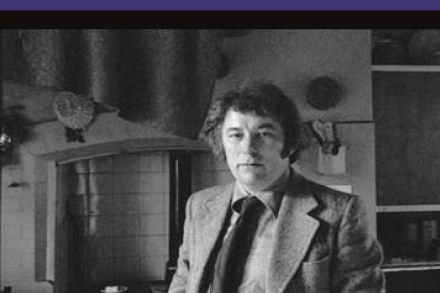
My guest in this week’s Book Club podcast is the distinguished Irish historian Roy Foster, talking about his new book On Seamus Heaney. He tells me how 'Famous Seamus'’s darkness has been under-recognised, how he negotiated with the shade of Yeats and the explosive politics of Ireland to find an independent space to write from, and just how 'certus' the man who signed himself 'Incertus' really was.

Kate Summerscale: The Haunting of Alma Fielding

32 min listen

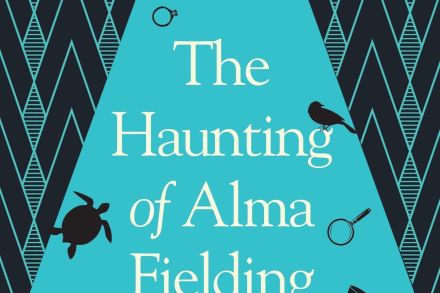
In this week's Book Club podcast, my guest is Kate Summerscale, here to talk about her latest book The Haunting of Alma Fielding: A True Ghost Story. Kate uses the true story of an eruption of poltergeist activity in 1930s Croydon to give what turns into a thoughtful and poignant look at the mental weather of interwar Britain, and the shifting meanings of the occult in light of new ideas about physics and the psychology of trauma. She tells me about the story's enduring mysteries and ambiguities, how spookily it chimed with its historical background - and about flying Bovril and a talking mongoose called Gef.

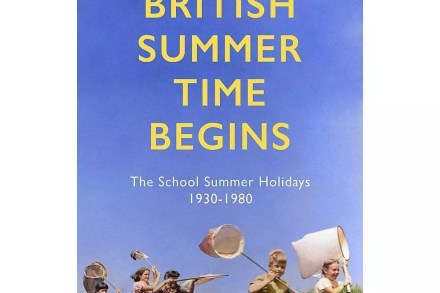
Ysenda Maxtone Graham: British Summer Time Begins

30 min listen

In this week's books podcast my guest is the writer Ysenda Maxtone Graham, whose new book casts a rosy look back at the way children used to spend their summer holidays. British Summer Time Begins: The School Summer Holidays 1930-1980 is a work of oral history that covers everything from damp sandwiches and cruelty to animals to tree-climbing, messing about in boats or endless games of Monopoly; intimidating fathers, frustrated mothers and grandparents who, if you weren't careful, would eat your pet rabbit. The good old days, in other words.

Former Australian PM Julia Gillard on sexism in politics

38 min listen

My guest in this week's books podcast is the former Australian Prime Minister Julia Gillard. Along with the economist and former Nigerian finance minister Ngozi Okonjo-Iweala, Julia has written a new book called Women and Leadership: Real Lives, Real Lessons, which includes interviews with women who've reached the top roles in global institutions, from Christine Lagarde and Joyce Banda to Michelle Bachelet and Theresa May. I asked her about her own time in politics, what she'd have done differently, whether Australia is more sexist than the UK, and her notorious 'misogyny' speech - plus, what she thinks her old sparring partner Tony Abbott has to offer the UK as a trade adviser.

Annie Nightingale: Five decades of pop culture

33 min listen

In this week’s Book Club podcast my guest is Annie Nightingale - Britain’s first female DJ, occasional Spectator contributor, and longest serving presenter of Radio One. Ahead of the publication of her new book Hey Hi Hello, Annie tells me about the Beatles’ secrets, BBC sexism, getting into rave culture, the John Peel she knew - and how when most people never get past the music they love in their teens, she’s never lost her drive to hear tunes she’s never heard before.

Paul Edmondson and Stanley Wells: All the Sonnets of Shakespeare

41 min listen

In this week's Book Club podcast I talk to Paul Edmondson and Stanley Wells about their new book All The Sonnets of Shakespeare - which by collecting the sonnets that appear in the plays with the 154 poems usually known as 'Shakespeare's Sonnets', and placing them in chronological order, gives a totally fresh sense of what the form meant to our greatest poet-dramatist. They tell me what sonnets meant to Elizabethans, why so much of what has been said about 'the sonnets' has been wrong - they're not a sequence, and it's vain to look for a Dark Lady or Fair Youth in these candidly bisexual poems - and how they provide perhaps the most intensely inward view of the poet we have.

Today’s undergraduates are customers – and the customer is always right

If you’re looking for a sign of the academic times, you could do worse than consider the image, published in newspapers recently, of Mr Chan King Wai at a solemn ceremony in China last year. There is Mr Chan, grinning stiffly but with real pride, dressed in a scholar’s cap with a gold tassel, and a red and shiny purple gown. Around his neck, a little incongruously, is a stripy Brideshead-type scarf. He looks like he has presented himself for Oxbridge theme week on RuPaul’s Drag Race. He is showing a certificate to the camera. Holding the other end of the certificate, and mustering more of a grimace than a grin, is Alan Hudson — recently retired director of programmes in leadership and public policy at Oxford’s China Centre.

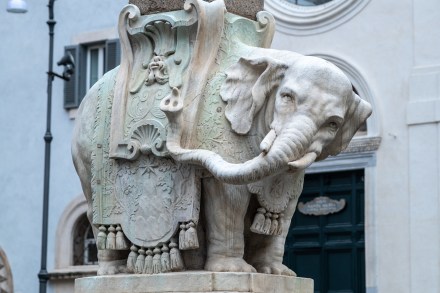
Loyd Grossman: An Elephant in Rome

37 min listen

In this week's books podcast, my guest is that man of parts Loyd Grossman. Loyd's new book is An Elephant in Rome: Bernini, the Pope, and the Making of the Eternal City, which explores the titanic influence of Bernini on the Rome we see today, and his partnership with Pope Alexander VII. Loyd tells me why you couldn't bring Italian Baroque home to meet your parents, about Bernini's far from congenial character -- and why you'd stick an obelisk on top of an elephant anyway.

Sam Harris on the value of conversation

66 min listen

In this week's Book Club podcast I'm joined by the philosopher, scientist and broadcaster Sam Harris - host of the hugely popular Making Sense podcast. Sam's new book is a selection of edited transcripts of the very best of his conversations from that podcast with intellectual eminences from Daniel Kahneman to David Deutsch, and explores some of the issues that preoccupy him most: to do with consciousness, human cognition, artificial intelligence and the political spaces in which these subjects come to bear. He tells me why civilised conversation is what the world needs now more than ever, why 'cancel culture' is real and J.K.

Adam Rutherford and Thomas Chatterton Williams: talking about race

44 min listen

In this week’s podcast, we're replaying an episode that first aired earlier this year, but now seems more relevant than ever. Sam is joined by two writers to talk about the perennially fraught issue of race. There’s a wide consensus that discrimination on the basis of race is wrong; but what actually *is* race? Does it map onto a meaningful genetic or scientific taxonomy? Does it map onto a lived reality - is it possible to generalise, say, about 'black' experience? And can we or should we opt out of or ignore it?