Sam Leith

Sam Leith

Sam Leith is literary editor of The Spectator.

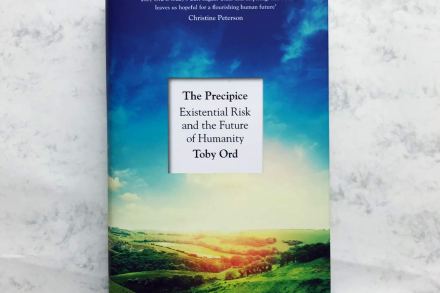
Toby Ord: Existential Risk and the Future of Humanity

45 min listen

In this week’s books podcast, I’m joined by the philosopher Toby Ord to talk about the cheering subject of planetary catastrophe. In his book The Precipice, new in paperback, Toby argues that we’re at a crucial point in human history - and that if we don’t start thinking seriously about extinction risks our species may not make it through the next few centuries. Asteroids, supervolcanoes, nuclear immolation, killer AI, engineered pandemics... Toby weighs up the risks of each, and tells us why we should care.

Shalom Auslander on tragedy, Anne Frank and cannibalism

41 min listen

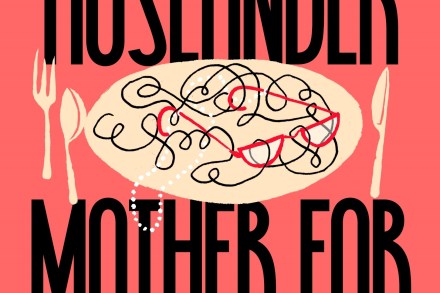
In this week’s Book Club podcast I am joined by one of the funniest writers working today. Shalom Auslander’s new novel is Mother For Dinner, which is set in perhaps the most oppressed minority community in the world. He talks to me about cannibalism, identity politics, his beef with tragedy... and an extremely high-risk prayer at the Wailing Wall.

Why Doc Martens are the only footwear you need

Doc Martens are one of those quintessentially British things that, like the royal family and lorries queuing on the M20, turn out actually to be Germany’s doing. The ancestor of what became the ‘Air Wair’ sole was designed in 1945 by a German army doctor with a sore foot. Amid the postwar hurly-burly, he ‘salvaged’ a cobbler’s last from a shop in Munich and knocked himself up an air-cushioned shoe to relieve his discomfort. Pleased with the success of his invention, he and a pal went into business producing bouncing soles.

Simon Winchester: Land

43 min listen

My guest on this week's Book Club podcast is the writer Simon Winchester, whose new book takes on one of the biggest subjects on earth: earth. Land: How The Hunger For Ownership Made The Modern World starts from the author's own little corner of New England - what he proudly calculates at a bit more than three billionths of the earth's surface that he can call his own - and roams worldwide and through time and from the first prehistoric boundary lines to the modern age. He asks whether capitalism is possible without land rights, whether climate change will alter our relationship to property, why the pioneering map makers of the nineteenth century are now barely heard of - and just what the Dutch are up to.

Catherine Mayer and Anne Mayer Bird: Good Grief

43 min listen

My guests on this week's Book Club podcast are the writer and Women's Equality Party co-founder Catherine Mayer, and her mother, the arts publicist Anne Mayer Bird. They are mother and daughter — but a year ago they became 'sister widows', as both lost their husbands within a few weeks of one another. Their new book is called Good Grief: Embracing life at a time of death, and they join me to talk about grief in the time of Covid, how social perceptions of widowhood put pressure on the bereaved, and what they think needs to change at a societal and personal level with regards to how we treat death and bereavement.

Will Camilla’s book club sink or swim?

If nothing else, the nation's latest online book club will be its poshest. The Duchess of Cornwall has thrown her feathered fascinator into the ring with Oprah Winfrey, Reese Witherspoon and Richard and Judy to found — as she announced on her Instagram feed — an online book club called The Reading Room, in which she’ll be sharing personal recommendations, author interviews and kits of suggested questions for exploring the texts.  There’s every reason to welcome this as a serious project. Camilla has been closely involved with the Booker Prize for many years, is a patron of seven literacy charities, and is known to read widely and intelligently.

What would Orwell be without Nineteen Eighty-Four?

43 min listen

In the first Book Club podcast of the year, we’re marking the moment that George Orwell comes out of copyright. I’m joined by two distinguished Orwellians — D. J. Taylor and Dorian Lynskey — to talk about how the left’s favourite Old Etonian speaks to us now, and how his reputation has weathered. Was he secretly a conservative? Was he a McCarthyite snitch? How would he be remembered had he died before writing Nineteen Eighty-Four? And does 'Orwellian' mean anything much at all?

Laura Thompson: Life in a Cold Climate

39 min listen

This week's Book Club podcast celebrates the 75th anniversary of the publication of Nancy Mitford's breakthrough novel The Pursuit of Love. Laura Thompson, author of the biography Life In A Cold Climate, joins me to talk about the way the book was written, how it helped create the Mitford myth - and how it shaped an enduringly ambivalent story of familial happiness and 'true love' from the sometimes heartrending materials of the author's own life.

The Christmas Special

49 min listen

How will the UK's economy recover from Covid-19, and what has the pandemic revealed about the West? (01:20) Was 2020 the year we dealt a mortal blow to future viruses? (15:05) And finally, what makes Mary Gaitskill a brilliant writer, and why does Elif Shafak work to heavy metal music? (29:25)With The Spectator's political editor James Forsyth, deputy political editor Katy Balls, writer and biologist Matt Ridley, behavioural psychologist Dr Stuart Ritchie, The Spectator's literary editor Sam Leith and writer Elif Shafak.Presented by Lara Prendergast. Produced by Max Jeffery and Sam Russell.

‘People confuse sadness with darkness’: the complicated world of Mary Gaitskill

In the early 1990s, the American novelist Mary Gaitskill suffered an abrupt awakening. ‘I lived in New York, I didn’t have a television, I didn’t listen to the radio. I didn’t even read magazines or newspapers very often. I was really too preoccupied with my own existence, which was hand to mouth a lot of the time,’ she says. ‘But when I was a little better off, I began to pay attention. I did get a TV. I did listen to the news a lot. And I was just like, holy shit. What a weird fucking world.’ What particularly astonished her, she says, is how central the fashion industry had become: ‘Models had always been glamorous figures, but it was suddenly they were the most important thing any woman could possibly aspire to be.

Nicholas Shakespeare: remembering John Le Carre

36 min listen

In this week's Book Club podcast, we remember the great John Le Carre. I'm joined by one of the late writer's longest standing friends, the novelist Nicholas Shakespeare. He tells me about Le Carre's disdain for - and debt to - Ian Fleming, his intensely secretive and controlling personality, his magnetic charm, his thwarted hopes of the Nobel Prize... and why at the end of his life he acquired an Irish passport.

The best video games to buy for Christmas

From our US edition

If there is one thing this cursed year of lockdown has been good for, it’s been video games. The right game — in a way that a box set cannot — will give you a sense of steady progress and achievement, a series of goals; and a world more forgiving and expansive than the four walls of your living room. My kids, for instance, have become very good indeed at Mario Kart Wii and have built vast empires in Minecraft; and I don’t dare look at my own total playing time on World of Warcraft.  With the prospect of the tier system continuing well into the new year, now is a good time to stock up on the best new goodies. The big news in gaming this autumn has been the release of the latest generation of consoles.

video games

The serious business of graphic novels

One of the running jokes about ‘serious’ graphic novels is that so many seem to consist, one way and another, of comics about how lonely, miserable and socially inept comic book creators are. Adrian Tomine leans into the trend, but with great charm, in The Loneliness of the Long-Distance Cartoonist (Faber, £16.99). Here is an autobiographical anthology of humiliation in chronological order — a series of wan vignettes taking the artist from inadequate-feeling schoolboy comics nerd to... inadequate-feeling New Yorker-published middle-aged comics superstar.

One man’s failed attempt to climb Everest

36 min listen

In this week's Book Club podcast, my guest is the journalist Ed Caesar, whose new book The Moth and the Mountain tells the story of a now forgotten solo assault on Everest that ended in disaster. But as Ed argues, the heroic failure can be a richer and more resonant story than any triumph -- and as he painstakingly excavated the story of Maurice Wilson, it was just such a rich and resonant story he discovered: of a character who became fixated on the mountain as a means of redeeming wartime trauma and a chequered and at times disgraceful romantic history, of getting his own back on hated authority figures, and -- just possibly -- of finding a safe space for his darkest secret of all.

The texture of our country is changing before our eyes

On Saturday night we sat around the kitchen table, my family and I, and had a takeaway from the Turkish restaurant on our high street. We opened box after box: chunky tzatziki; calamari in crisp batter; salty ovals of sucuk; flatbread studded with black and yellow sesame seeds; hot homemade falafels, crunchy outside and yielding within, smeared with cool hummus. And, which I’d been missing since lockdown began, lamb ribs: skin salty and crisp from the grill, the meat underneath sweet and chewy, tarring their bed of rice. God it was bliss. But it made me feel melancholy, too. Meze & Shish only opened in the past couple of years — a well-appointed, tableclothy sort of local restaurant, well priced and serving first-rate grub.

Douglas Stuart: Shuggie Bain

35 min listen

My guest on this week's Book Club podcast is the winner of the 2020 Booker Prize, Douglas Stuart. His first novel, Shuggie Bain, tells the story of a boy growing up in poverty in 1980s Glasgow with an alcoholic single mother. It's a story close to the author's own. He joins me from the States to tell me about the ten years he spent writing the book and the dozens of rejections he had from publishers, how moving to the States made him see Glasgow more clearly - and how he went from growing up in a house without books to winning the Booker prize for his first novel.

Barack Obama was decidedly a man of action as well as words

Well, it’s quite the title, isn’t it? It tends to invite comparisons. The first one that occurred to me, though, was that the original Promised Land guy managed to get all the important stuff down on two stone tablets. His would-be successor doesn’t have quite that gift for compression. As he semi-apologises in the opening pages (he feels bad about it, but not bad enough to do a ruthless edit), this memoir was originally envisioned as a 500-pager. A Promised Land is just north of 700 pages, and there’s another volume to come. That speaks of a certain self-regard. Then again, Barack Obama has a good bit to be self-regarding about.

Patrick Barwise and Peter York: The War Against the BBC

51 min listen

On this week's Book Club podcast, we're talking about a subject that never ceases to arouse strong feelings: Auntie Beeb. My guests, Patrick Barwise and Peter York, say - in their new book The War Against The BBC: How an unprecedented combination of hostile forces is destroying Britain's greatest cultural institution... And why you should care - that if we lose the BBC we will miss it. But isn't it a soft-left Establishment mouthpiece, riddled with groupthink and funded by an anachronistic and unjustifiable tax? Isn't it a market-distorting, bureaucratic, top-heavy behemoth that we're better off without? They make the case, here, for why not.

Boris in a spin: can the PM find his way again?

36 min listen

After two of Boris Johnson's most influential advisers left Downing Street last week, can the PM reset his relationship with the Tory party and find his way again? (00:58) Lara is joined by the Spectator's deputy political editor, Katy Balls, and former director of communications for David Cameron, Craig Oliver.A coronavirus vaccine seems to be the only way out of continued lockdowns, so should everyone be forced to have the jab? (13:49) The Spectator's literary editor, Sam Leith, joins the podcast with Professor Mona Siddiqui, who sits on the Nuffield Council on Bioethics.And finally, should we start referring to people by their surnames again? (25:30) Historian Guy Walters thinks so, and he's joined by the Spectator's etiquette expert, Mary Killen.Presented by Lara Prendergast.