Sam Leith

Sam Leith

Sam Leith is literary editor of The Spectator.

Why didn’t the British Library pay a ransom to cyber attackers?

'They’ve turned one of our most important pieces of national infrastructure into an internet café,' was how my friend Marcus, a scholar of early modern literature, put it to me, talking about the cyberattack that crashed the British Library at the end of last year. He’s not wrong. Since October, when a ransomware attack by the Rhysida criminal gang knocked all the library’s digital services offline, there really hasn’t been much more to the library’s Euston headquarters than a large airy building with a couple of expensive coffee shops. The Integrated Catalogue, which is the means by which readers search the library’s vast collection and call books up from the stacks or down from its offsite storage in Boston Spa, has been offline for weeks.

From The Archives: Hadley Freeman

34 min listen

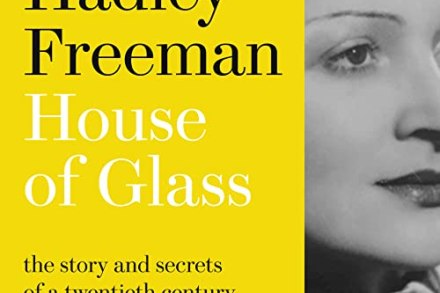
The Book Club will return next week! In the meantime we are revisiting Sam’s conversation from 2020 with Hadley Freeman whose book House of Glass tells the story of 20th century jewry through the hidden history of her own family. The four Glahs siblings — one of them the writer’s grandmother — grew up in a Polish shtetl just a few miles from what was to become Auschwitz. They fled the postwar pogroms to Paris; and then had to contend with the rise of a new and still more dangerous antisemitism under the Vichy regime. Hadley traced their story through two wars and across continents, and tells Sam how the story reflects both on Jewish history and urgent concerns of the present day.

How am I supposed to remember what happened in The Tourist?

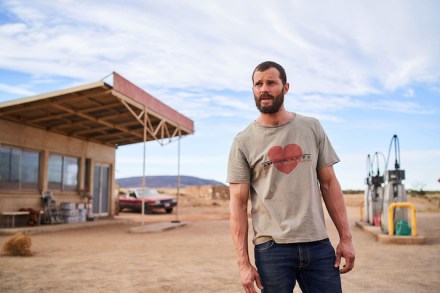
Hooray, I thought. There’s a new season of The Tourist. I remember liking that, I thought. It was that thing with the bloke in Australia, wasn’t it? And I was all set to settle down for a good binge, when I realised that I had almost literally no idea what had happened in the first season. This is a personal grumble, but I’d bet dollars to donuts I’m not the only one in this position.  One thing I knew is, it was confusing. There was a bloke in, yes, Australia, who had had a bump on the head and didn’t know who he was, except he was Jamie Dornan. I remember there was a bit with some LSD, and recalling the plot was quite like that too. Someone was trying to blow him up (or maybe he was trying to blow someone else up).

Putin’s ‘peace’ is a partitioned Ukraine

52 min listen

On the podcast: In his new year’s address this year Vladimir Putin made no mention of the war in Ukraine – despite missile strikes over the Christmas period – and now Owen Matthews reports in The Spectator this week rumours that Putin could be looking to broker a land-for-peace deal. Unfortunately – Owen says – this deal would mean freezing the conflict along its current lines and the de facto partition of Ukraine. Owen joins the podcast alongside The Spectator’s Svitlana Morenets who gives her own take on Putin’s 'peace' deal in the magazine this week. (01:21) Next: Former Sky News and GB News broadcaster Colin Brazier writes a farmer’s notebook in The Spectator this week about his new life as a farming student.

From The Archives: Anne Applebaum

25 min listen

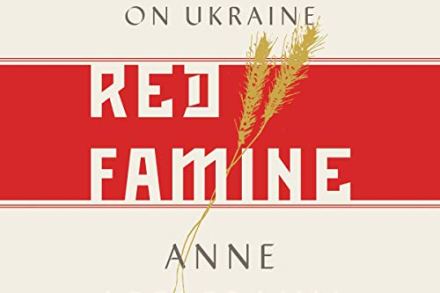
The Book Club is taking a brief Christmas break, so we have gone back through the archives to spotlight some of our favourite episodes. This week we are revisiting Sam's conversation from 2017 with the Pulitzer Prize winning historian (and former Spectator deputy editor) Anne Applebaum about her devastating new book Red Famine. The early 1930s in Ukraine saw a famine that killed around five million people. But fierce arguments continue to this day over whether the 'Holodomor' was a natural disaster or a genocide perpetrated by Stalin against the people and culture of Ukraine. Sam asks Anne about what we now know of what actually happened — and what it means for our understanding of the present day situation in the former Soviet Union.

Video games aren’t a total waste of time

My wife argues with the children about video games. I argue with the children about video games. The children argue with each other about video games. Consequently, I argue with my wife about video games. It is a total nightmare – and it’s one that in various versions will be replicated in houses with young children up and down the country. The problem, in part, is a cultural divide. It frustrates me, too, when the children refuse to come off Rocket League or Fifa when they’re told to (‘I’m in the middle of a game!’). I’m also wary of the addictive nature of these things. But at the same time I can absolutely see the point of them; as my outgoing, intelligent, football-loving, film-making wife cannot.

From The Archives: Robert Webb

26 min listen

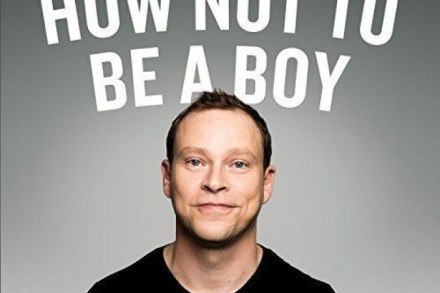
The Book Club is taking a brief Christmas break, so we have gone back through the archives to spotlight some of our favourite episodes. This week we are revisiting Sam's conversation from 2017 with Robert Webb. His moving and funny book How Not To Be A Boy turns the material of a memoir into a heartfelt polemic about what he calls 'The Trick': the gender expectations that he identifies as causing many of the agonies of his adolescence and young manhood. What is it to be a man? Are we doomed to lives of inarticulacy, shagging, fighting and drinking — giving pain and fear their only outlet in anger?

From The Archives: Speeches that shape the world

28 min listen

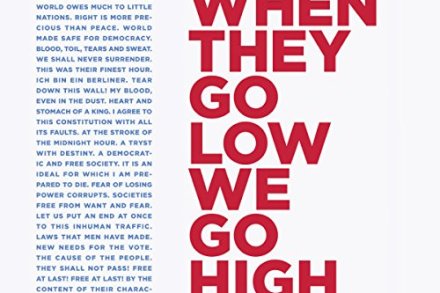
The Book Club is taking a brief Christmas break, so we have gone back through the archives to spotlight some of our favourite episodes. This week we are revisiting Sam's conversation from 2017 with Philip Collins, former speech writer to Tony Blair, about his book When They Go Low, We Go High: Speeches That Shape The World and Why We Need Them. He takes Sam through the history of rhetoric, how Camus is the original centrist Dad, and why David Miliband’s victory speech is perhaps one of the best speeches never delivered.

Michelle Mone and the rise of the ‘fight back’ documentary

You can’t turn on the telly or fire up the internet these days without stumbling across some celebrity or other baring their soul in a glossily produced documentary. Three hours, was it, of David Beckham – taking us from talented nipper playing keepy-uppy to grizzled paterfamilias wiping down his barbecue in wistful retirement? Or Renaissance: A Film, which showed Beyonce as flawed and human in the same way and with much the same aim as the Bible shows Jesus Christ as flawed and human. Or there was that interminable Robbie Williams doc, in which – for no reason that was completely obvious – he spent about four hours sitting glumly in his underpants in front of his MacBook, watching footage of his own earlier career.

Pen Vogler: Stuffed

45 min listen

My guest in this week's Book Club podcast is the food historian Pen Vogler, author of the new Stuffed: A History of Good Food and Hard Times in Britain. Pen tells me how crises have affected British food culture from the age of enclosures onwards, how rows over free school meals are nothing new, and why the Christmas pudding tells the story of Empire.

Stop sending Christmas cards! 

Christmas cards are the pits, aren’t they? A positive engine of seasonal ill-will. They take hours to do, if you do them properly, and wing across the country (and have you checked the price of a stamp lately?) to be received by people you like but don’t see, or people you see but don’t like – and to find themselves consigned to the recycling bin, in many cases, within thirty seconds of being opened. You feel guilty when you get a card from people you failed to send one to; and resentful when you don’t get a card from people you remembered to send one to. It strikes me, though, that we civilians have it positively easy on the Christmas card front. Imagine what it must be like being a member of the royal family.

Andrew Lycett: The Worlds of Sherlock Holmes

38 min listen

My guest on this week's Book Club podcast is Arthur Conan Doyle's biographer (and historical consultant to the new BBC TV programme Killing Sherlock) Andrew Lycett. Introducing his new book The Worlds of Sherlock Holmes: The Inspiration Behind the World's Greatest Detective, Andrew tells me about the vexed relation between the great consulting detective and his creator, and the extraordinary afterlife of this apparently ephemeral creation.

Newsnight’s fate is a bad omen for the BBC

Newsnight, we learned last week, is losing ten minutes off its running time, more than half its staff including its entire reporting team and is dropping its investigative films in favour of cheap ‘n’ easy studio-based debates.    The BBC’s news supremo Deborah Turness calls it 'an important BBC brand', but said 'we've made the decision to reformat Newsnight as a 30-minute late-night news-making debate, discussion and interview programme'. She hasn’t quite taken the old captive bolt gun to it yet, then, but this sacred cow is definitely mooing anxiously as it makes its way down the slaughterhouse gangplank.

Guy Kennaway: Good Scammer

46 min listen

On this week's Book Club podcast, my guest is Guy Kennaway, whose new novel Good Scammer sprinkles a protective dusting of fiction over the true story of the real-life king of Jamaica's phone scammers. Guy tells me why telephone fraud might be considered ad-hoc reparations for slavery, why James Bond is a Jamaican, and why the island on which he has lived for 35 years is in no danger of turning into Switzerland-in-the-Caribbean.

The evolving phenomenon of ‘Brexit regret’

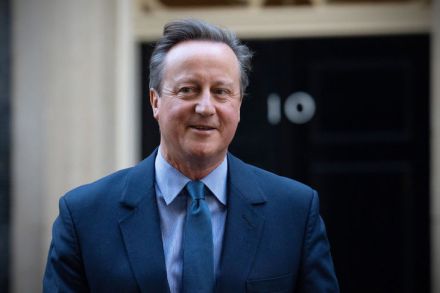
It was reported this weekend that the great trans-Pacific trade deal (CPTPP), the one that Lord Cameron just boasted would 'put the UK at the heart of a group of some of the world’s most dynamic economies', will boost our economy by practically nothing at all. The OBR reckons CPTPP will put 0.04 per cent on our GDP over fifteen years. The bilateral deals with Australia and New Zealand, meanwhile, are predicted to give a 0.1 per cent uplift. This is better, but still, hardly the piratical free trade bonanza we were encouraged to expect. A gold-plated special-friends deal with the USA shows no signs of materialising. To what extent has pro-Brexit feeling shifted from being a political phenomenon to being a psychological one?

Jonathan Jones: Earthly Delights

56 min listen

My guest in this week's Book Club podcast is the art critic Jonathan Jones. The term 'renaissance' is out of fashion among scholars these days, but in his new book Earthly Delights: A History of the Renaissance Jonathan argues that it points to something momentous in human history. On the podcast, Jonathan makes the case for what that something is – which is perhaps more heretical, and less Italian, than we might have remembered.

Can the government be trusted with free speech? 

This summer, horrified by the rising numbers of students no-platforming and harassing visiting speakers whose views they don’t like, the government anointed the Cambridge philosopher Arif Ahmed ‘free speech tsar’. Prof Ahmed said at the time that his new role, at least as he saw it, wasn’t a culture wars stunt: he was interested in protecting free expression across the political spectrum.   There is a culture of systematic no-platforming and double-cucked snowflakery, it turns out, in the supposedly pro-free-speech government We have every reason to think he’s been beavering away since then to ensure our campuses continue to zing with the free and frank exchange of ideas, and good on him.

Terry Hayes: The Year of the Locust

34 min listen

In this week's Book Club podcast my guest is Terry Hayes, author of the squillion-selling thriller I Am Pilgrim. He tells me about invisible submarines, taking advice on crucifixion from Mel Gibson, and why it took him ten years to follow up that first novel with his new book The Year of the Locust.

The dying days of Rishi Sunak’s black hole government

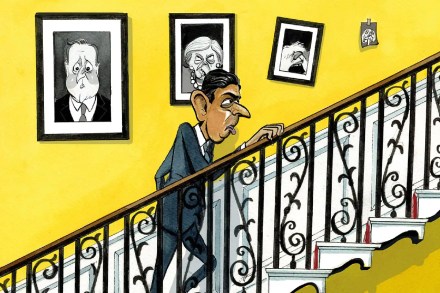
In my admittedly sketchy understanding of it, black holes are formed when something becomes so massive that it collapses in on itself (am I getting this right, Carlo?) ... and then keeps collapsing, over and over again, until it becomes infinitely tiny and inside-out and even the rules of physics cease to apply. This applies to supermassive celestial bodies, but also to supermassive shambles, such as we are to observe through our telescopes when we point them in the direction of the Conservative Party. Every zeptosecond brings a further wrinkle in political spacetime, and every zeptosecond sees the governing party, like a black hole, sucking harder than Newtonian physics ever thought possible. Take this latest reshuffle.

Keeping the peace: the politics of policing protest

41 min listen

On the podcast: In his cover piece for The Spectator Ian Acheson discusses the potential disruption to Armistice Day proceedings in London this weekend. He says that Metropolitan Police Chief Mark Rowley is right to let the pro-Palestine protests go ahead, if his officers can assertively enforce the law. He joins the podcast alongside Baroness Claire Fox to discuss the problems of policing protest.  Next: are smartphones making us care less about humanity?  This is the question that Mary Wakefield grapples with in her column in The Spectator. She says it’s no wonder that Gen Z lack empathy when they spend most of their lives on social media. She is joined by Gaia Bernstein, author of Unwired: Gaining Control over Addictive Technologies.