Sam Leith

Sam Leith

Sam Leith is literary editor of The Spectator.

What did David Cameron expect when he lectured the Americans?

From our UK edition

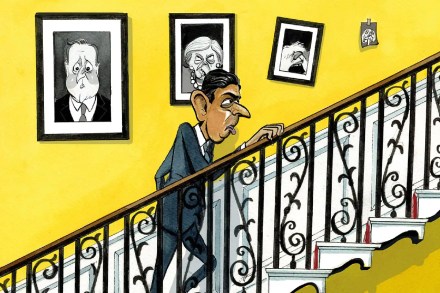
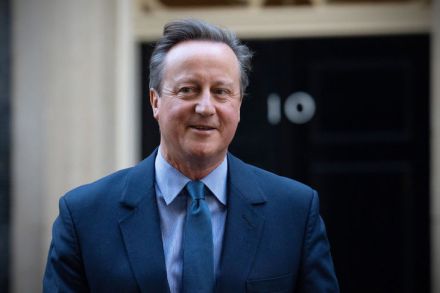
Lord Cameron, bless him, is back striding the world stage. He wrote an article last week in Washington’s inside-beltway website the Hill, urging Congress to vote for more aid for Ukraine. The Foreign Secretary's tone in that article was forthright in a way that, I expect, he imagined to be the tough talk of a respected international elder statesman getting down to brass tacks. Rather, than, say, the stamping of a butterfly in Kipling.   'As Congress debates and votes on this funding package for Ukraine,' he wrote, 'I am going to drop all diplomatic niceties [...] 'I do not want us to show the weakness displayed against Hitler in the 1930s. He came back for more, costing us far more lives to stop his aggression.' Was that really going to have the effect he imagined?

The feud tearing apart the Royal Society of Literature

From our UK edition

You’d think, wouldn’t you, that the Royal Society of Literature (founded 1820) might be one of those institutions that chugs on benignly year in year out with nothing to disturb the peace of its members. But on Thursday morning, a letter in the Times Literary Supplement, got up as I understand it by Jeremy Treglown and signed by 14 more distinguished writers (among them Ian McEwan, Alan Hollinghurst, Yasmin Alibhai-Brown and Fleur Adcock), calls on the leadership of the RSL to refer itself to the Charity Commission. That is, as charitable foundations go, something like demanding that they turn themselves in to the cops.

Chris Bryant: A True Story of Prejudice and Murder

From our UK edition

33 min listen

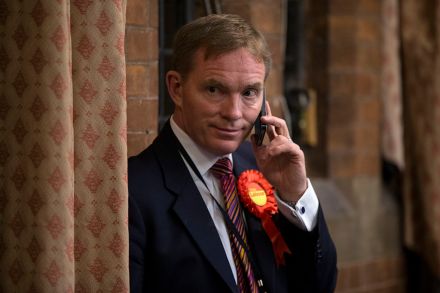
My guest on this week's Book Club podcast is Chris Bryant, who tells me about his new book James and John: A True Story of Prejudice and Murder. In it, he seeks to tell what can be known of the lives, world and fatal luck of the last two men executed for homosexuality in Britain.

Why the Tory party is breaking apart

From our UK edition

I don’t, I freely admit, remember all that much about my chemistry lessons at school. Covalent bonding delighted me not, no, nor moles neither. But I do recall being absolutely thrilled the first time I saw paper chromatography. The idea was – I expect I’m getting this slightly wrong, but don’t write in – that you’d take some murky liquid that was a solution of all sorts of this that and the other, and you’d dab it on a bit of blotting paper, which would then be stood in a basin of some solvent...

Paula Byrne: Hardy Women

From our UK edition

43 min listen

My guest on this week's Book Club podcast is Paula Byrne. In her new book Hardy Women: Mothers, Sisters, Wives, Muses, she investigates the women in the life and work of the great poet and novelist Thomas Hardy. She talks to me about Hardy's romantic life, the torture he inflicted on the women he fell for, and how – in the bitter words of his first wife Emma – 'he understands only the women he invents'.

How do we draw the line between gambling and gaming?

From our UK edition

'Skins gambling,' anyone? No, until yesterday, me neither. It’s nothing to do with strip poker or 70s bovver boys. It’s the name given to a completely unregulated gambling industry, aggressively promoted to teenagers and estimated to be worth multiple billions of pounds a year – yes, billions with a b. One reason this isn’t a major scandal, I think, is that it will sound too far-fetched and too obscure and confusing to the sorts of people who we might hope would be scandalised into doing something about it. But so it was, too, with credit default swaps. So let’s try to explain. (I’m largely indebted for my own understanding to reading the investigative reporter Rob Davies, whose work on gambling is first rate.

Sathnam Sanghera: Empireworld

From our UK edition

44 min listen

In this week's Book Club podcast my guest is Sathnam Sanghera, author of the new book Empireworld about the effect of British imperialism around the globe. He tells me why he's trying to get beyond the 'balance-sheet' view of imperial history, why we should all read W E B Dubois, and why he's not good at going on holiday.  Produced by Patrick Gibbons.

The shame of Britain’s ‘cash for courses’ universities

From our UK edition

'If you can take the lift, why go through the hardest route?' a recruitment officer representing four Russell Group universities asked an undercover reporter for the Sunday Times. He boasted that 'foundation' course pathways onto undergraduate courses at Russell Group universities are much easier than the entry requirements for British applicants: overseas applicants 'pay more money [...] so they give leeway for international students [...] It’s not something they want to tell you, but it’s the truth.'  And how. The paper reports that 'overseas students wishing to study an economics degree using one of the pathways needed grades of CCC at Bristol; CCD at Durham; DDE at Exeter; DDE at Newcastle; and just a single D at Leeds.

Original and absorbing: A Highland Song reviewed

From our UK edition

Grade: A- Why don’t you go outside and get some fresh air instead of playing that stupid game? A) I’ve been outside, and I didn’t like it. And B) there’s a game for that. A Highland Song excellently simulates the experience of going outside for a walk and regretting it. Moira sets off to meet her Uncle Hamish at the lighthouse – but like Virginia Woolf’s lot, takes her sweet time getting there. Once you’re 100 yards from her front door, she has no idea where she is. Despite her och-aye-hoots brogue, she turns out to be no less clueless than the tourists who head up Ben Nevis in flip-flops and have to be helicoptered back to civilisation by mountain rescue three days later. Think of this as a getting-lost-in-the-glens simulation.

Adam Phillips: On Giving Up

From our UK edition

37 min listen

On this week’s Book Club my guest is the writer and psychoanalyst Adam Phillips, whose new book is On Giving Up. He tells me how literature relates to psychoanalysis, why censorship makes life possible, and what Freud got wrong.

What Katharine Birbalsingh gets wrong about secularism

From our UK edition

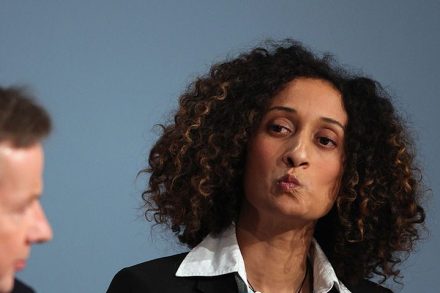
Katharine Birbalsingh is back in the papers again. The head teacher at Michaela, a free school whose outstanding academic record and ultra-strict behaviour policy have made it a culture-wars lightning rod, tells the Sunday Times that she and her staff have been getting death threats ever since her board of governors imposed a policy banning any form of prayer on school grounds.  Until not all that long ago, the story runs, pupils were permitted to pray in the playground at break. This policy of tolerance worked fine for a bit, but only because none of the kids wanted to. It was a purely theoretical rule. But last March, a girl knelt on her blazer to pray during break time, and 30 other pupils joined her. Miss Birbalsingh says that at once, 'the culture' of the school changed.

Rebecca Boyle: Our Moon

From our UK edition

35 min listen

In this week’s Book Club podcast, I’m joined by Rebecca Boyle to talk about her new book Our Moon: A Human History. She tells me how we know that the moon is more than just an inert lump of rock in the sky and how the whole of human life  – and civilisation – may depend on it.

Why didn’t the British Library pay a ransom to cyber attackers?

From our UK edition

'They’ve turned one of our most important pieces of national infrastructure into an internet café,' was how my friend Marcus, a scholar of early modern literature, put it to me, talking about the cyberattack that crashed the British Library at the end of last year. He’s not wrong. Since October, when a ransomware attack by the Rhysida criminal gang knocked all the library’s digital services offline, there really hasn’t been much more to the library’s Euston headquarters than a large airy building with a couple of expensive coffee shops. The Integrated Catalogue, which is the means by which readers search the library’s vast collection and call books up from the stacks or down from its offsite storage in Boston Spa, has been offline for weeks.

From The Archives: Hadley Freeman

From our UK edition

34 min listen

The Book Club will return next week! In the meantime we are revisiting Sam’s conversation from 2020 with Hadley Freeman whose book House of Glass tells the story of 20th century jewry through the hidden history of her own family. The four Glahs siblings — one of them the writer’s grandmother — grew up in a Polish shtetl just a few miles from what was to become Auschwitz. They fled the postwar pogroms to Paris; and then had to contend with the rise of a new and still more dangerous antisemitism under the Vichy regime. Hadley traced their story through two wars and across continents, and tells Sam how the story reflects both on Jewish history and urgent concerns of the present day.

How am I supposed to remember what happened in The Tourist?

From our UK edition

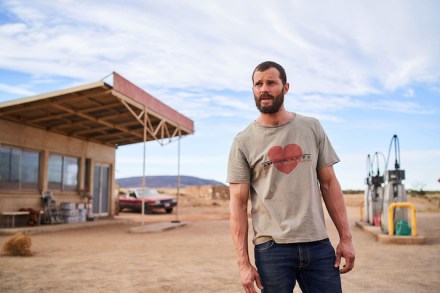
Hooray, I thought. There’s a new season of The Tourist. I remember liking that, I thought. It was that thing with the bloke in Australia, wasn’t it? And I was all set to settle down for a good binge, when I realised that I had almost literally no idea what had happened in the first season. This is a personal grumble, but I’d bet dollars to donuts I’m not the only one in this position.  One thing I knew is, it was confusing. There was a bloke in, yes, Australia, who had had a bump on the head and didn’t know who he was, except he was Jamie Dornan. I remember there was a bit with some LSD, and recalling the plot was quite like that too. Someone was trying to blow him up (or maybe he was trying to blow someone else up).

Putin’s ‘peace’ is a partitioned Ukraine

From our UK edition

52 min listen

On the podcast: In his new year’s address this year Vladimir Putin made no mention of the war in Ukraine – despite missile strikes over the Christmas period – and now Owen Matthews reports in The Spectator this week rumours that Putin could be looking to broker a land-for-peace deal. Unfortunately – Owen says – this deal would mean freezing the conflict along its current lines and the de facto partition of Ukraine. Owen joins the podcast alongside The Spectator’s Svitlana Morenets who gives her own take on Putin’s 'peace' deal in the magazine this week. (01:21) Next: Former Sky News and GB News broadcaster Colin Brazier writes a farmer’s notebook in The Spectator this week about his new life as a farming student.

From The Archives: Anne Applebaum

From our UK edition

25 min listen

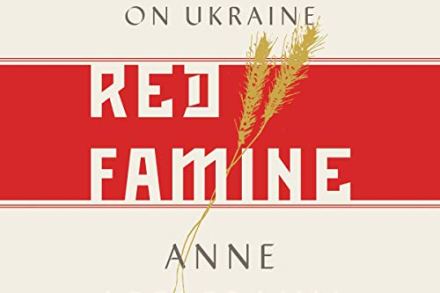
The Book Club is taking a brief Christmas break, so we have gone back through the archives to spotlight some of our favourite episodes. This week we are revisiting Sam's conversation from 2017 with the Pulitzer Prize winning historian (and former Spectator deputy editor) Anne Applebaum about her devastating new book Red Famine. The early 1930s in Ukraine saw a famine that killed around five million people. But fierce arguments continue to this day over whether the 'Holodomor' was a natural disaster or a genocide perpetrated by Stalin against the people and culture of Ukraine. Sam asks Anne about what we now know of what actually happened — and what it means for our understanding of the present day situation in the former Soviet Union.

Video games aren’t a total waste of time

From our UK edition

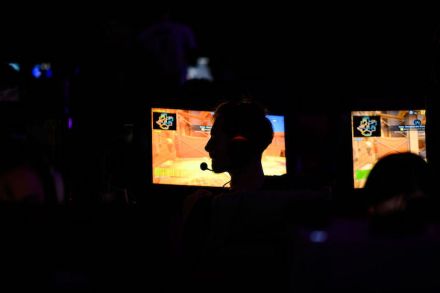
My wife argues with the children about video games. I argue with the children about video games. The children argue with each other about video games. Consequently, I argue with my wife about video games. It is a total nightmare – and it’s one that in various versions will be replicated in houses with young children up and down the country. The problem, in part, is a cultural divide. It frustrates me, too, when the children refuse to come off Rocket League or Fifa when they’re told to (‘I’m in the middle of a game!’). I’m also wary of the addictive nature of these things. But at the same time I can absolutely see the point of them; as my outgoing, intelligent, football-loving, film-making wife cannot.

From The Archives: Robert Webb

From our UK edition

26 min listen

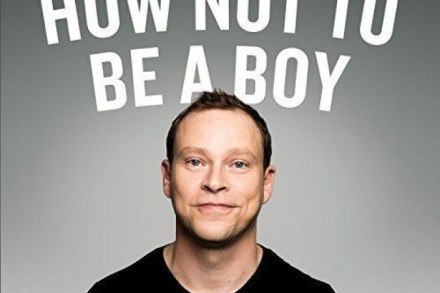
The Book Club is taking a brief Christmas break, so we have gone back through the archives to spotlight some of our favourite episodes. This week we are revisiting Sam's conversation from 2017 with Robert Webb. His moving and funny book How Not To Be A Boy turns the material of a memoir into a heartfelt polemic about what he calls 'The Trick': the gender expectations that he identifies as causing many of the agonies of his adolescence and young manhood. What is it to be a man? Are we doomed to lives of inarticulacy, shagging, fighting and drinking — giving pain and fear their only outlet in anger?

From The Archives: Speeches that shape the world

From our UK edition

28 min listen

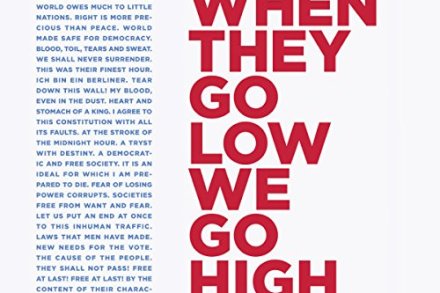
The Book Club is taking a brief Christmas break, so we have gone back through the archives to spotlight some of our favourite episodes. This week we are revisiting Sam's conversation from 2017 with Philip Collins, former speech writer to Tony Blair, about his book When They Go Low, We Go High: Speeches That Shape The World and Why We Need Them. He takes Sam through the history of rhetoric, how Camus is the original centrist Dad, and why David Miliband’s victory speech is perhaps one of the best speeches never delivered.