You’re never too old to dance we are told nowadays. This encouraging injunction has been taken up by everyone from the likes of Mikhail Baryshnikov and Alessandra Ferri, who have found wondrously creative ways to compensate for their declining virtuosity and stamina, to septuagenarians who insist on bopping to Abba at their grandchildren’s wedding parties. I confess that in the interests of research I took to ballet classes when I was well into middle age: it was not a pretty or edifying sight. There is a lot to be said for oldies sticking to the military two-step.
The Australian choreographer Meryl Tankard has a different view of the matter. Kontakthof is the work of the sainted Pina Bausch, dating from 1978. In German the title indicates the anteroom in a brothel where hook-ups are made, but Rolf Borzik’s set looks like a seedy provincial ballroom, empty except for chairs. In the 1978 version, of which a grainy black-and-white film was made, lonely, dreary people in their best clothes vainly search for mates to the sound of German schmaltz of the 1930s – Zarah Leander and so forth.

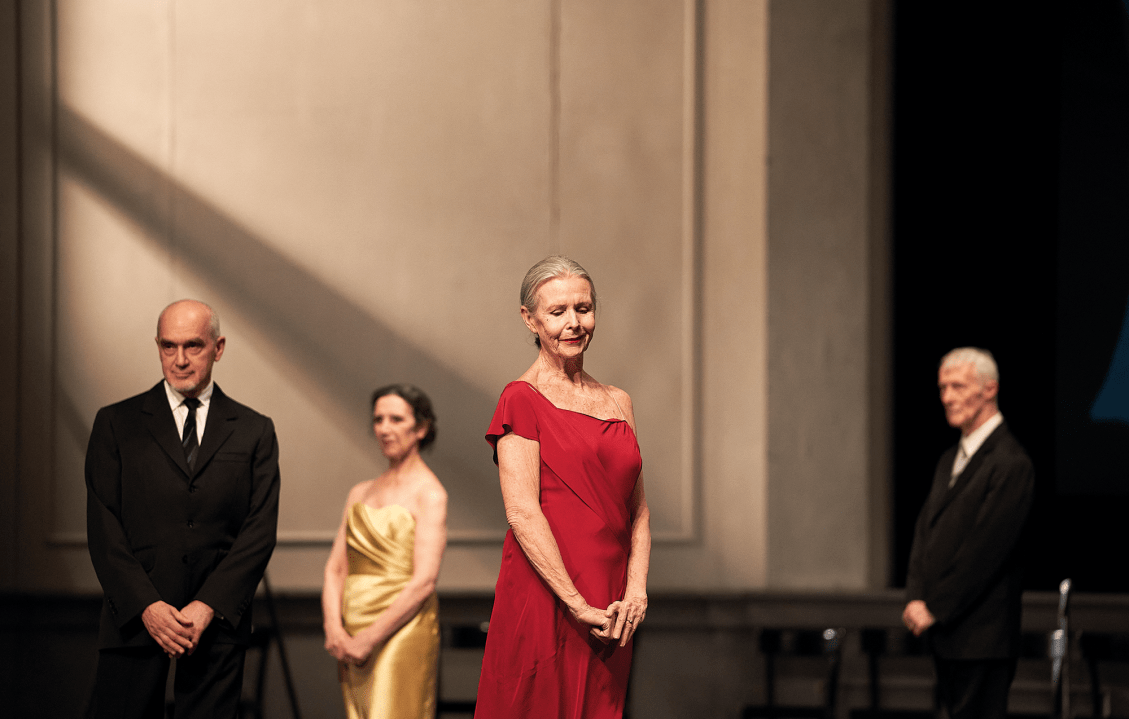
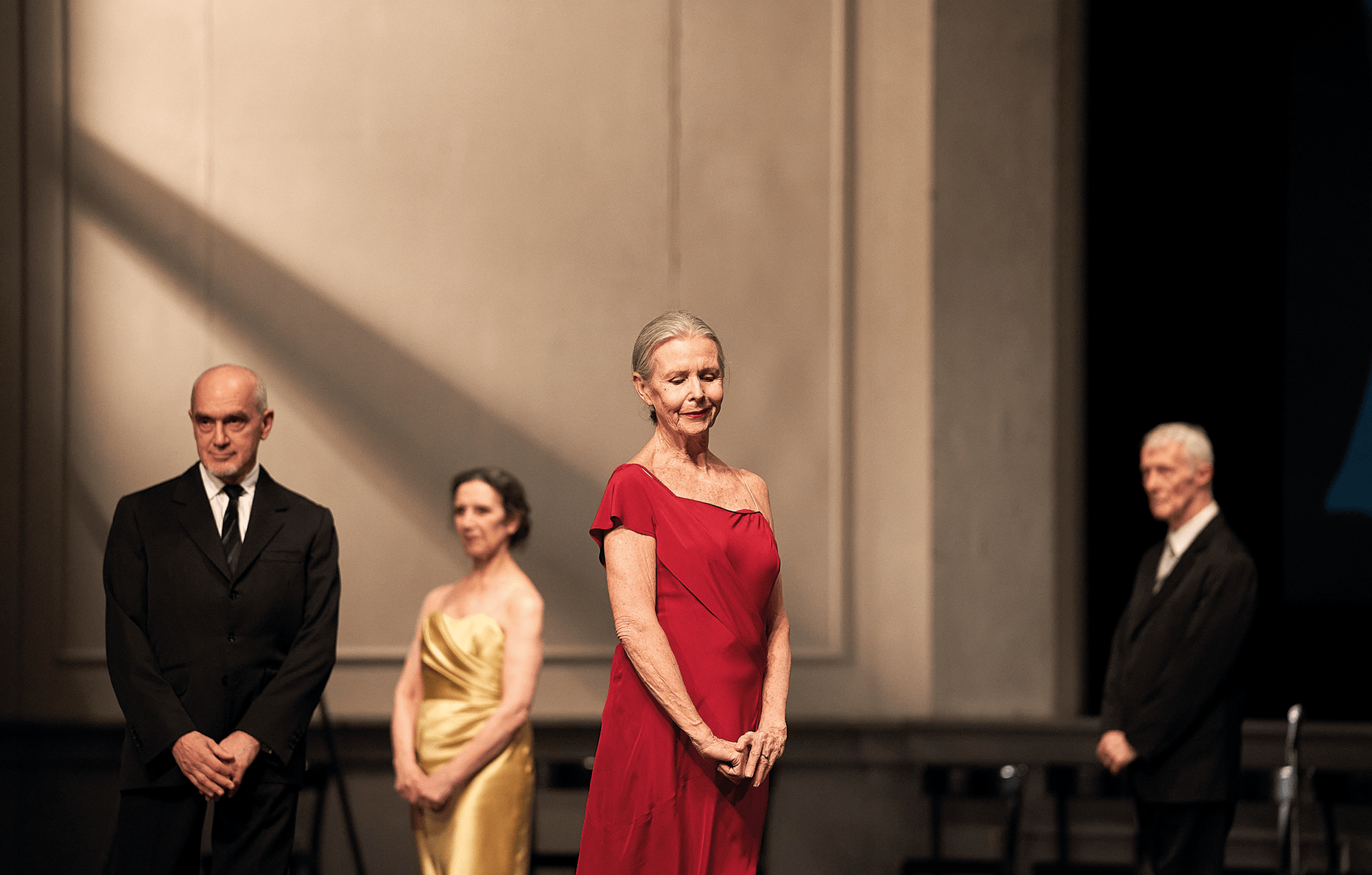
Half a century on, Tankard has assembled nine of Kontakthof’s first cast (including herself) and persuaded them to re-enact what they can in counterpoint to the 1978 film, projected on to either a translucent scrim in front of them or a screen behind them.
The result is the melancholy spectacle of the grey-haired and wrinkled reliving their youth as they rehearse the desultory rituals with which Bausch was so obsessed – sudden isolated outbursts of gibbering hysteria; sashaying down diagonal lines making portentous gestures; robotic ballroom manoeuvres, all coloured over with a wash of surrealistic absurdism.
For a few minutes, the exercise has a forlorn charm but the idea has nowhere to go dramatically and after an hour, it becomes quite excruciatingly tedious. Even the Sadler’s Wells audience, prone to scream approval of any old rubbish at the curtain calls, was hard pushed to show its usual enthusiasm.
Please, please, please, no more ballets based on Carmen. Or Frankenstein, or climate change, come to that. Their time has long past, the themes have been exhausted, so tell us something we don’t know already.
Carlos Acosta had a first stab at choreographing Carmen shortly before he left the Royal Ballet in 2015. It was not remotely successful, but he’s returned to it in expanded form a decade later with his own Cuban troupe Acosta Danza, and it’s still not up to much.
The music is a horrible recorded mishmash of Bizet’s tunes with some filler, and the narrative familiar from the opera has been clumsily flayed down to bare bones. This wouldn’t matter so much if Acosta had more imagination as a dance maker, but he relies heavily on showbiz flamenco cliché for the corps, while his duets for the leads derive, to put it politely, from Kenneth MacMillan’s romantic dramas. Oh for some Bad Bunny moves, so fresh and subtle and funny.
Characterisation is weak here: Adria Diaz plays Carmen as nothing more than a little street-corner tart, without any gipsy fatalism or mysterious allure, and Alexander Arias communicates no sense of Jose’s decline into psychotic obsession. A symbolic bull-headed figure ineffectually represents Destiny or something portentous. By far the most stylish performance is that of the delectable Alejandro Silva, witty and nimble as the strutting Escamillo. The ensemble dances with an enthusiasm that gives the second half of the evening some of the energy entirely lacking in the limp and muddled first half, but these fine Cuban dancers deserve better than an empty commercial exercise of no artistic merit.





Comments