Rupert Christiansen

Rupert Christiansen is the chief dance critic of The Spectator

Expressive and eloquent: Northern Ballet’s Three Short Ballets reviewed

From our UK edition

Ballet companies have become dismally timid about exploring their 20th-century heritage: everything nowadays must be either box-fresh new or a fairy-tale classic, which seems to me a recipe for an unbalanced diet. So I’m pleased that under the directorship of Federico Bonelli, Northern Ballet is pluckily dusting off neglected treasures of the recent past. Last year brought Hans van Manen’s exquisite Adagio Hammerklavier (1973) back to life; this year, it’s the turn of Rudi van Dantzig’s setting of Strauss’s Four Last Songs (1977), danced to the recording made by Gundula Janowitz and Herbert von Karajan.

Alt reich: Is Germany’s far right about to go mainstream?

From our UK edition

46 min listen

This week: Alt reich. The Spectator’s Lisa Haseldine asks if Germany’s far right is about to go mainstream, ahead of regional elections this weekend. Lisa joined the podcast, alongside the historian Katja Hoyer, to discuss why the AfD are polling so well in parts of Germany, and how comparable this is to other trends across Europe (1:13). Then: why are traditional hobbies being threatened in Britain? Writer Richard Bratby joins the podcast, alongside Chris Bradbury, the drone support officer at the BMFA, to discuss his article in the magazine this week about the challenge red-tape poses to model steam engine and aeroplane enthusiasts (18:47). And finally: how has sound design changed the world of theatre?

The unstoppable rise of stage amplification

From our UK edition

Recent acquisition of some insanely expensive hearing aids aimed at helping me out in cacophonous restaurants has set me thinking about the extent that modern life allows us to filter our intake of noise. This is big business. As sirens wail and Marvel blockbusters and rock concerts crash through legal decibel levels, controlling sound levels has become an increasingly sophisticated operation, abetted by everything from silicone pastilles and the volume-control knob to the wireless earbud.

Welcome back to London City Ballet – but can they please change their name?

From our UK edition

There’s sound thinking behind this summer’s resuscitation of London City Ballet – a medium-scale touring company popular in the 1980s that went bust in 1996. Given that larger institutions operating outside London such as Northern Ballet and Birmingham Royal Ballet are hamstrung by ever-tightening budgets that leave them increasingly risk-averse, there’s a crying need for something lighter on its feet and more adventurous in its repertory. This is what the new-form LCB under the direction of Christopher Marney sets out to provide, presenting new work alongside forays into the back catalogue.

James Heale, Svitlana Morenets, Philip Hensher, Francis Beckett and Rupert Christiansen

From our UK edition

38 min listen

On this week’s Spectator Out Loud: James Heale analyses the state of the Conservative leadership race (1:09); Svitlana Morenets reports from the site of the Kyiv children’s hospital bombed this week (5:56); Philip Hensher examines the ‘Cool Queer Life’ of Thom Gunn (12:13); Francis Beckett reviews ‘The Assault on the State’ arguing in favour of bureaucracy (21:20); and, Rupert Christiansen reveals why he has fallen out of love with Wagner (27:05).  Presented by Patrick Gibbons.

Why I fell out of love with Wagner

From our UK edition

It’s four years since I gave up opera criticism. The pandemic had struck, I had hit a significant birthday, and notched up three decades at the coal face – a quarter of a century at the Telegraph, and an earlier stint at this address. There were other things I wanted to do and after reviewing something like 2,500 performances, I had said everything I wanted to say, several times over, and knew that it was time for other voices to be heard. Truth be told, I was becoming a little jaded. My blind spots – opera seria, the final eight mediocrities of Richard Strauss, Rossini’s irritating comedies – were turning cancerous, and I was even tiring of masterpieces like Tosca and Die Zauberflöte: no reflection on them, simply the effect of over-familiarity. ‘Don’t you miss it?

Are the best young ballerinas being lured away from dance by sport?

From our UK edition

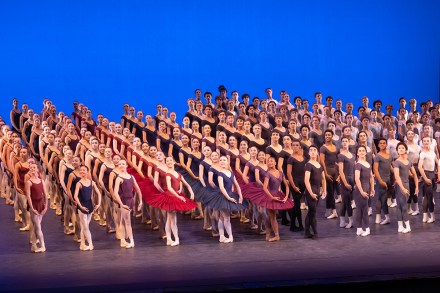
As graduation ceremonies go, the Royal Ballet School’s annual matinée ranks among the most spectacular. It takes place at the Royal Opera House in front of an adoring parental audience, and although it serves primarily as a showcase for those passing out into the profession, it also contains spots for all 250 or so pupils, ranging in age from 11 to 19 and globally recruited, culminating in a glorious parade (called the défilé) of the entire establishment, drilled with a precision that reminds one of ballet’s miliary roots. This year Christopher Powney, the school’s artistic director for the past decade, hands over to Iain Mackay, formerly a principal at Birmingham Royal Ballet.

The genius of Frederick Ashton

From our UK edition

To defend my case that Frederick Ashton ought to be acknowledged as one of the major artistic geniuses of the last century, I would adduce three crucial pieces of evidence, garnered from the Royal Ballet’s ‘Ashton Celebrated’ festival at Covent Garden this month. Oberon and Titania’s love is an open contest between two unyielding wills: it can’t be danced gently The first is ‘Les Rendezvous’, dating from 1933 and one of his earliest enduring creations. Set in a Victorian park in which some harmless young people meet to flirt and circulate, it provides an object lesson in how to make something supremely but unaffectedly stylish out of a wafer-thin premise.

The problem with Swan Lake

From our UK edition

Over this summer you can see Swan Lake performed at the Royal Opera House by the Royal Ballet; at the Coliseum by a company from Georgia; at Sadler’s Wells by Chinese acrobats; and at the Royal Albert Hall by English National Ballet. It is expected therefore to attract audiences of Taylor Swiftian magnitude – well in excess of 100,000, by my very rough reckoning. And should you dread autumnal withdrawal symptoms, then fear not: a film of Matthew Bourne’s version will be shown in cinemas in September, prior to a national live tour starting in November and continuing until May, including a two-month season at Sadler’s Wells over Christmas.

A fitting – and lovable – tribute to Frederick Ashton

From our UK edition

I encountered Frederick Ashton at a dinner party shortly before he died in 1988. Frail and anxious, he clutched my arm and demanded to know which of his creations I thought would survive him. I duly reeled off some titles, but felt that any opinion I expressed would have disappointed him. In public, he professed to care not a fig for posterity, but he evidently did, and his will set out thoughtful arrangements parcelling ownership of his works out to various trusted colleagues, with the bulk passing to his nephew, the Royal Ballet’s administrative director Anthony Russell-Roberts. How exhilarating to be reminded of Ashton’s remarkable range, and of choreography so inventive This may have seemed like a sound investment, but it turned out badly.

Arresting and memorable: Compagnie Maguy Marin’s May B reviewed

From our UK edition

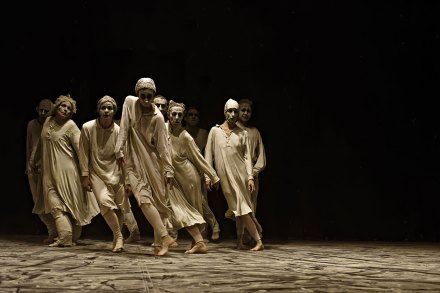
Samuel Beckett was notoriously reluctant to let people muck about with his work, so it’s somewhat surprising to learn that he licensed and approved Maguy Marin’s May B. This 90-minute ‘dance theatre’ fantasia may play on vaguely Beckettian themes but in no way is it faithful to his texts or instructions – in some respects it even subverts them. Yet it has enjoyed huge success all over Europe since its première in 1982, and finally reached Britain last week. A long wait, for something that turns out to be very odd indeed. Ten dancers of all shapes and sizes in grotesque make-up and dressed in chalky, tatty underclothes stand immobile as light slowly grows out of the darkness to the sound of Fischer-Dieskau singing the doom-laden final song from Winterreise.

There are passages of considerable eloquence in Royal Ballet’s The Winter’s Tale

From our UK edition

There’s no escaping Christopher Wheeldon – a modest, amiable fellow from Yeovil of whom anyone’s mum would be proud. Reaching outside the ballet bubble, his stagings of An American in Paris and the Michael Jackson musical have wowed the West End, Broadway and beyond. My guess is that his take on Oscar Wilde, to be premiered in Australia later this year, will soon travel north, too. Next season the Royal Ballet will revive his box-office smash Alice’s Adventures in Wonderland as well as a programme drawn from his plentiful short pieces. Two summers ago, he presented us with an adaptation of the novel Like Water for Chocolate (not so tasty). And if that wasn’t enough, here is a revival of his version of The Winter’s Tale, first seen a decade ago.

Don’t write off Hofesh Shechter – his new work is uniquely haunting

From our UK edition

In 2010, when his thrillingly edgy and angry Political Mother delivered modern dance a winding punch right where it hurt, I had high hopes for Hofesh Shechter. Here was an outsider with the courage to make his own rules and engage dance with real-world issues (he had served a traumatising period in the Israeli army) rather than blindly following the fashionable goddess Pina Bausch down the rabbit hole of postmodern irony. He wasn’t interested in playing games. But success has taken his edge off and what has followed has largely been disappointing. Trapped by a limited choreographic vocabulary, Shechter has repeated himself, relying too hard on the brute effect of mere chaos and failing to find sharper images in which to express his rage and anxieties.

Choreographers! Enough with the reworkings of Carmen and Frankenstein!

From our UK edition

Carmen and Frankenstein are without a doubt two of the most over-worked tropes in our culture, the myths of the evasively seductive gypsy and the human monster machine being lazily recycled and plundered and vulgarised in various forms to the point at which their authentic primal power has been altogether deflated. So it was with a heavy sigh that I anticipated their two latest danced iterations. No surprises were likely, and none were delivered.

From the sublime to the ridiculous: Royal Ballet’s MacMillan triple bill reviewed

From our UK edition

My feelings about the genius of Kenneth MacMillan have always been volatile, but in the course of the Royal Ballet’s current triple bill, they veered even more wildly than usual between uncomplicated delight, awed reverence and embarrassment. A revival of his early Danses Concertantes, firing off Stravinsky at his most effervescent and designed with exuberantly colourful Festival-of-Britain jazziness by Nicholas Georgiadis, provided half an hour of pure joy. Stylistically an exercise in the neoclassicism that dominated the postwar era, it’s witty, chic and upbeat, exploring sharp angles rather than smooth curves and lyrical lines. MacMillan’s choreographic invention is profligate, with little twists and unexpected turns, all infused with an infectious spirit of playfulness.

What would Balanchine say? New York City Ballet, at Sadler’s Wells, reviewed

From our UK edition

It’s been 16 years since New York City Ballet appeared in London, and its too-brief visit to Sadler’s Wells offered a welcome chance to encounter a previously unseen range of repertory and personnel. Perhaps the company can never be what it was when I first saw it as a youngster – its founder George Balanchine still in charge, the likes of Suzanne Farrell and Edward Villella in their prime – but one cannot live off misty memories and what has emerged now certainly has living, evolving force. Yet the evening’s highlight for me had to be its ‘heritage’ element – the exquisite performance by Megan Fairchild and Anthony Huxley of Balanchine’s mysteriously beautiful miniature Duo Concertant from 1972.

Precious nonsense: Pina Bausch’s Nelken, at Sadler’s Wells, reviewed

From our UK edition

Fifteen years after her death and the shrine to Pina Bausch is still thick with incense and adulation. Whether one acknowledges her as a genius or not, there’s no doubt that her influence has been baneful – a cult that has spawned a thousand imitators, all following her absurdist idiom, all mesmerised by subversions of everyday logic, all ultimately trapped in a vacuous dead-end aesthetic in which anything goes, the weirder the better. ‘Nonsense, yes,’ cries the aesthetic Lady Saphir in Gilbert and Sullivan’s Patience. ‘But oh! What precious nonsense!

Lucid and lean: Metamorphoses, at the Theatre Royal Bath, reviewed

From our UK edition

Literate, thoughtful and serious, Kim Brandstrup ranks as one of the most honest and honourable of contemporary choreographers. A proper grown-up, scorning bad-boy sensationalism or visual gimmickry, he compensates in solid consistent craft for whatever he may lack in striking originality, and the double bill he presented earlier this month as part of Deborah Warner’s season in the chapel-like Ustinov Studio behind Bath’s Theatre Royal is quietly and characteristically satisfying. Can we have a moratorium on the title of Metamorphoses? It’s become a tired cliché Its subject matter draws on that bottomless source, classical myth.

Why do choreographers keep adapting films they can’t possibly improve upon?

From our UK edition

Ballet has always suffered from a shortage of stories that can communicate without the medium of the spoken word or a lengthy synopsis in the programme. Recourse has often been made to familiar fairy tale and legend, but recently popular films and novels have also become a favoured source – Matthew Bourne, for instance, has fed off both The Red Shoes and Edward Scissorhands, while Christopher Wheeldon turned to Like Water for Chocolate and Cathy Marston to Lady Chatterley’s Lover. The question that seldom seems to be asked in such cases is a basic one: can dance bring anything to the table, and can its language enlarge the source or create a new dimension? If the answer is pretty much no, then why bother?

Giselle is lovingly revived at the London Coliseum

From our UK edition

Two archetypal ballet heroines have been facing each other across WC2: at the Coliseum, Giselle the blameless virgin, wronged in the first act, disembodied in the second; at Covent Garden, Manon the seductive, manipulative courtesan who can’t choose between love and money. Both in different ways are victims of a cruel world, and both must die. The men responsible for their downfall – of course – survive. Mary Skeaping’s staging of Giselle for the English National Ballet, first seen in 1971, divides opinion among the cognoscenti.