Ross Clark

Ross Clark

Ross Clark is a leader writer and columnist who has written for The Spectator for three decades. He writes on Substack, at Ross on Why?

Donald Trump is right: Western food markets are protectionist

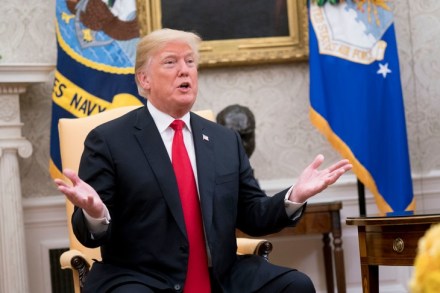
In Donald Trump’s dealings with Kim Jong-un it is possible to decipher a strategy of creative destruction: stir things up, so that relations cannot seem to get any worse – and then get down to doing business. Might the same process also be in operation in Trump’s trade war with his G7 allies? The President’s tweet about Justin Trudeau being ‘dishonest and weak’ was undoubtedly rude and, as some like to put it, ‘against the norms’ of international diplomacy. Yet the beauty of it was in the last line: “ Our Tariffs are in response to his of 270% on dairy!”.

Argentina, why not boycott the entire World Cup?

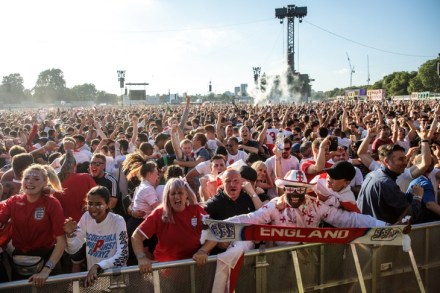
I am all for taking ethical stands, but if you are going to do so it does help to show a little bit of consistency. Today, Argentina cancelled its World Cup warm-up game against Israel in protest, it seems, at Israel’s occupation of the West Bank. According to striker Gonzalo Higuain, the players ‘have done the right thing’ in refusing to play – and have been warmly applauded by the Palestinian Football Association. So, the Argentinians will miss out their proposed stop in Israel and proceed directly to the World Cup in, er, Russia.

The battle for Heathrow was over long ago

Whatever happened to the political squall that was Heathrow’s third runway? For several years it looked as if the issue could deeply harm the Conservatives. After all, hadn’t David Cameron ruled out a third runway – “no ifs, no buts” – in 2010. It was deeply embarrassing for him to do an about turn two years later and say well, maybe – even if he did attempt to wriggle out of the charge of hypocrisy by trying to outsource the decision to Sir Howard Davies. West London Tory MPs threatened to rebel, splitting his party. Like John Major on Maastricht, Cameron thought that by endlessly putting off the day of decision everything would come out alright in the end. And in a sense he was right.

Argentina, why not boycott the entire World Cup? | 6 June 2018

I am all for taking ethical stands, but if you are going to do so it does help to show a little bit of consistency.    Today, Argentina cancelled its World Cup warm-up game against Israel in protest, it seems, at Israel’s occupation of the West Bank.   According to striker Gonzalo Higuain, the players ‘have done the right thing’ in refusing to play – and have been warmly applauded by the Palestinian Football Association. So, the Argentinians will miss out their proposed stop in Israel and proceed directly to the World Cup in, er, Russia.

The battle for Heathrow was over long ago | 5 June 2018

Whatever happened to the political squall that was Heathrow’s third runway? For several years it looked as if the issue could deeply harm the Conservatives. After all, hadn’t David Cameron ruled out a third runway – “no ifs, no buts” – in 2010. It was deeply embarrassing for him to do an about turn two years later and say well, maybe – even if he did attempt to wriggle out of the charge of hypocrisy by trying to outsource the decision to Sir Howard Davies. West London Tory MPs threatened to rebel, splitting his party. Like John Major on Maastricht, Cameron thought that by endlessly putting off the day of decision everything would come out alright in the end.   And in a sense he was right.

Why is Ucas pigeonholing students into ethnic groups?

David Lammy is upset again, as he is every week. This time it is thanks to data released by Ucas, which reveals that while black applicants make up nine per cent of the total, they account for 52 per cent of those whose applications have been flagged up for possible cheating – either because they may have falsified qualifications, used fake identities, sent false documents or because an algorithm has picked out their personal statement. According to Lammy, it is not good enough Ucas simply publishing this data – he says that the organisation 'needs to be able to explain this huge disproportionality and satisfy students from ethnic minorities that their applications will be looked upon fairly'.

Chris Grayling’s railway fantasy is costing the Tories

Yippee! Now I can finally take a train to Scotland without putting money into Richard Branson’s pockets. This afternoon’s announcement by Transport Secretary Chris Grayling that the franchise on the East Coast mainline is to be taken back into the government’s hands returns the railway to the position it was in between 2011 and 2015. As the unions have been only too quick to point out today, this is the third time that a private operator has come to grief on the East Coast mainline in 10 years – and there is little to suggest that things will be any different when, as Grayling says he wants to do, the line is returned to the private sector. I am no fan of nationalised industry.

Has Britain reached ‘Peak Wealth’?

So the year-long squeeze on real earnings is now officially over. Figures released by the ONS this morning show that average earnings in the first three months of this year were 2.9 per cent ahead of what they were in the same period of 2018, while CPI inflation was 2.7 per cent ahead. In other words, we are all, on average, 0.2 per cent better-off than we were last year. That is no great deal, it has to be said, and continues the poor run of growth in real incomes ever since the global economic crisis of a decade ago. It is unprecedented in the industrial era to have had such a long peacetime period in which the population does not really grow any richer.

Fact check: the UN Special Rapporteur’s report on British racism

The first instinct of many people towards Tendayi Achiume, the UN’s Special Rapporteur on Human Rights who finished her 11 day visit to Britain yesterday by claiming that Britain is in the grip of a Brexit-related upsurge in racial intolerance and discrimination, will be to tell her to keep her nose out of our affairs. I am not going to fall into the trap of offering material which could be used to try to prove her point.

Is it really harder for young people to buy a home than it was 30 years ago?

The Resolution Foundation has called for 25-year-olds to be paid £10,000 to help them afford homes, saying the ‘generational contract’ between young and old has broken down. But is it really harder for young people to buy a home now than it was 30 years ago? House prices were booming in the first half of 1988, when a typical first-time buyer home could cost £50,000. That same property now, according to the Halifax UK House Price Index, would cost £234,850. Since 1988, the Retail Prices Index has increased 2.7 times, according to the ONS, so, in real terms, £50,000 in 1988 is now worth £135,000 – making it harder to afford a deposit.

The truth about London knife crime – and the prejudice with which the world listens to Trump

From our US edition

I would love to undertake a behavioural experiment in which a cohort of the public were asked to watch Donald Trump reading out the Gettysburg Address and asked to make comments. I can guess what would happen. There would be an overwhelming negative response. Those who listened would use words like ‘outrageous’, ‘disgraceful’. They would accuse him of ‘slurs’, describe him as ‘demented, as well as throwing in the charge of ‘racist’ for good measure. How can I be so sure? Because of the British reaction to Trump’s speech to the National Rifle Association last week in which he described a London hospital being like in a ‘war zone’, so high are the number of stabbing victims being treated there.

Jacob Rees-Mogg’s critics are missing the point

Surprisingly though it may be to some of my readers I have never been that bothered about Brexit. I even voted Remain – not on the strength of the economic arguments, which I thought fairly evenly balanced – but because I could see the danger in precipitating the break-up of the European Union: that it might lead to the drift back eastwards of former Soviet bloc countries. But once the decision was made I was very happy that it be executed, so long as it be in an economically liberal way and done properly; not leaving us stuck in some halfway house where we are bound to EU rules, bound to its trade policy, paying into its coffers and yet without a hand on the tiller.

Is Brexit a human rights emergency? The UN seems to think so

How easy it would be to be goaded by the visit of Tendayi Achiume, the UN’s “Special Rapporteur on Racism” to Britain. “My mission...will focus on explicit incidents of racism and related intolerance as well as attention to structural forms of discrimination and exclusion that have been exacerbated by Brexit,” she says, as well as “xenophobic discrimination and intolerance aimed at refugees, migrants and even British racial, religious and ethnic minorities”. How tempting it will be for some to tell her to bug off and deal with some real human rights abuses.

Brexit isn’t to blame for dismal GDP growth – and nor is the weather

The government’s opponents were not slow, as usual, to blame today’s disappointing data on economic growth on Brexit (the IOD) or ‘austerity’ (John McDonnell) – while the Chancellor, Philip Hammond, chose to fall back on that old chestnut used by corporate spokesmen when announcing dismal results: the weather. None of these will really do as an explanation as to why GDP growth, according to the ONS, plunged from a healthy 0.4 per cent in the final quarter of last year to a miserable 0.1 per cent in the first quarter of 2018. As for Brexit, GDP figures have been shrugging it off for nearly two years – the economy even accelerated for the first two quarters.

Save the Scouts

A couple of years ago, Simon Barnes wrote a moving piece in this magazine about how his son Eddie, who has Down’s syndrome, had changed his mind about political correctness. Political correctness might be met with derision, he wrote, but it was also what made his son’s life bearable. In the not-so-distant past, Eddie would have been shut away and people like him made fun of in everyday conversation; now he is received everywhere with kindness and consideration. Simon was right. I am in the same position as him: I have a daughter, Eliza, who has grown up in a world of kindness that is a world away from that in which I grew up. I hate to think of the bullying and abuse she would have to endure if she were transported back in time to the 1970s classrooms I knew.

Finland’s Universal Basic Income experiment falls flat

Should governments abolish their welfare states and replace them with a Universal Basic Income (UBI), paid to everyone, even billionaires, regardless of means? Such payments would be designed to cover essential living costs, leaving individuals free to make the choice of whether they wished to work in order to gain themselves a better lifestyle. It is an idea which until yesterday seemed to be in the ascendant. Bernie Sanders has advocated it. John McDonnell has launched a study to determine whether it should become Labour policy. It hasn’t just attracted the Left – Elon Musk and Mark Zuckerberg have declared themselves in favour, seeing a UBI as a means of softening the mass job losses they expect as a result of technological advance.

The Brexit bounce making a mockery of George Osborne’s Project Fear

We are now just two months away from the second anniversary of the Brexit vote and therefore in a position to judge the apocalyptic forecast made by the Treasury in May 2016 in the run-up to the vote. In a paper signed off by George Osborne, which neither the former chancellor nor anyone else who has made a grim prognosis for Britain’s departure from the EU should be allowed to forget, the finest minds in the Treasury came up with two scenarios for the aftermath of a vote to leave the EU. In the ‘shock’ scenario, GDP would be 3.6 per cent lower after two years (compared with if the country had voted to remain), the pound would fall by 12 per cent and unemployment would rise by 520,000.

The disturbing reaction to the Hither Green ‘burglar’ stabbing

A black youth living in London might be forgiven for a bit of confusion this morning. All week we have been hearing about the dreadful spate in knife killings on London streets, most of them, it is painfully obvious from the victims’ photographs and the locations, have taken place in black communities. We have heard calls for more stop and search, a clampdown on anyone caught carrying a knife, for youths to be educated in how to channel their anger in order to prevent their emotions erupting into murderous intent. Then an elderly white man stabs an intruder to death and we wake up to headlines such as “give him a medal” and “‘Murder’ fury – petition launched to clear ‘hero’ OAP arrested over ‘burglar murder’”.

Gender pay gap hysteria could make things worse for women

Next time I hear a government minister on radio or television bemoaning Britain’s poor record on productivity I request that the interviewer puts to them a simple question: can you tell us how many man-hours have been spent by large British firms in fulfilling their legal duty to provide data on their gender pay gap – something which they must do by midnight tonight? Whatever happened to that grand talk about taking advantage of Brexit in order to deregulate, to attract investment by giving businesses the freedom to run their own affairs and by getting the government off their backs? In January last year Philip Hammond made a speech in Germany saying how Britain was prepared to ditch its European-style social democratic model.

Are you a winner or a loser from Trump’s trade war?

China’s imposition today of tariffs on 128 imports from the US was inevitable – and is no doubt exactly the reaction that Donald Trump wants, giving him the excuse to announce yet more tariffs in addition to those on steel and aluminium imports which he has already imposed.  After all he did say, even before China announced any form of retaliation:  “trade wars are good.  It should easy for the US to win one”.  A trade war is what he wanted, and what he has got. But does he have any more of a strategy for his trade war than George W Bush had a plan for winning the peace in Iraq? There is an argument for saying that China will come off worse – on the basis that it exports far more to the US than travels in the other direction.