Ross Clark

Ross Clark

Ross Clark is a leader writer and columnist who has written for The Spectator for three decades. He writes on Substack, at Ross on Why?

Philip Hammond must not use rising wages as an excuse for hiking taxes

In two weeks’ time, Philip Hammond is expected to declare an ‘end to austerity’. Today’s figures on wage growth are a reminder of why he needs to tread extremely carefully on this. What he will mean is that austerity is over for the public finances – he is confident enough to start increasing government spending again. Many individuals and families, on the other hand, remain deep in personal austerity. There is very little room for tax rises without making people feel poorer. News that wages are growing at their highest rate – 3.1 per cent – since the economic crash of 2008/09 is, on the face of it, a cause for celebration.

The return of fracking is a victory for common sense

Now that fracking has resumed in Lancashire after a seven year hiatus, the green lobby which sought to frustrate it and delay it at every turn can reflect on what they have achieved: keeping the UK's carbon emissions rather higher than they would have been, had our native fracking industry been allowed to develop more quickly. In the short term at least, the alternative to burning UK-produced shale gas is not, as the green lobby says, using more energy from wind and solar farms. We do not currently have anything close to the electricity storage capacity to cope with a supply which comes exclusively from intermittent sources, and is it not clear at present how this will be resolved. For now, the real alternative to shale gas is either coal or imported gas.

Shrinking pizzas and pies isn’t the way to tackle obesity

From 30 March next year, of course, we will no longer be subject to all those silly EU laws on bent bananas (which was genuine, not a myth), toasters, balloons and all the rest. Instead we will be able to concentrate on passing our own good old British silly laws. Even the European Commission never came up with the idea of limiting pies to 695 calories. So bravo, then, to Public Health England for having the imagination to out-Brussels Brussels. Today, the quango unveils its latest strategy in fighting obesity: regulating portion sizes. As well as regulating pies, the proposed rules include a maximum calorie count for pizzas of 928 calories. I struggle often to figure out what goes on inside a regulator’s head. How do you come up with such a precise figure. Why not 927 calories?

The gay cake row verdict is a victory for common sense – finally

I imagine that Daniel and Amy McArthur, owners of Ashers bakery in Northern Ireland, may well want to celebrate their victory in the Supreme Court with a spot of baking today. If so, I suggest this slogan should be written in icing: the equality industry stinks. It has taken Ashers four years and a sequence of court hearings, costing them £200,000 in legal fees, to establish what should have been obvious from the beginning: that no, they didn’t discriminate against a gay couple when they refused to bake a cake bearing the words ‘Support Gay Marriage’ in 2014. Why on Earth did it take so long, and why did the Belfast County Court and Court of Appeal come up with perverse rulings along the way that Ashers bakery had discriminated against the couple?

Good news: we now have until 2030 to save the earth

Phew! The dangers of global warming are receding. Admittedly that is not how most news sources are reporting the publication of the latest IPCC report this morning. But it is the logical conclusion of reading coverage of the issue over the past decade. According to today’s IPCC report we now have 12 years to avert climate catastrophe. That might not sound long, but it means we are a good deal further away from doom that we were in 2007, when the WWF said we had five years to save the world. The doomsday clock hadn’t moved in 2011 when the International Energy Agency warned us that we had five years to start slashing carbon emissions or lose the chance forever.

Unilever’s U-turn is another blow to Project Fear

How funny. Remember how, when Unilever announced back in March that it had decided to move its headquarters from London to Rotterdam, it was all to do with Brexit? According to the Guardian’s subheadline on 14 March: 'Brexit and favourable business conditions in Netherlands said to be behind decision'. The following day an FT leader asserted: 'Unilever’s protestations that [the move] has nothing to do with Brexit do not convince'. It went on to add: 'The decision is clearly coloured by the approach Theresa May has taken on Brexit, and by the way she has handled relations with business.

Why is the BBC blaming falling car sales on Brexit?

Congratulations once again to the BBC’s anti-Brexit propaganda unit, for its news website headline this morning: “Car sales plunge as Nissan warns on Brexit”. It takes talent to pin something on Brexit which even the Guardian admits is caused by something quite different – indeed, something which might more naturally be seen as constituting a case against the EU.     It is true that there was a sharp fall in car sales in September – which at 338,834 were 20.5 per cent lower than the same month in 2017.

What the rise of the middle class reveals about the global poverty myth

According to a Vienna-based think tank, the World Data Lab, a remarkable milestone was reached this week – for the first time, half the world’s population can be classified as middle class. Obviously, there is wide room for interpretation as to what constitutes membership of the middle classes – the World Data Lab defines it as the ability to afford a washing machine and to be able to go on holiday. But it is nevertheless an indicator which deserves far more attention than it gets paid. After all, it is not so very long ago that economists would have described the middle classes as constituting a small proportion of the population even in the developed world.

Why didn’t the Tories back down over civil partnerships earlier?

Much as I deplore the integration of the European Convention on Human Rights into domestic law there are some battles which really aren’t worth fighting. Today, Theresa May announced that civil partnerships are to be made available to heterosexual couples for the first time. This follows a ruling by the Supreme Court in June that the current arrangements – whereby gay couples can enter into a civil partnership but not heterosexual ones – are in conflict with the convention. Why on Earth did the Government resist this change in the first place when it was so plainly obvious that it was discriminatory? David Cameron made a huge fuss about enabling gay marriage – presenting it as if it were the greatest breakthrough in individual freedom since the Magna Carta.

Why Trump’s new trade deal shouldn’t be a surprise

The news that the US, Canada and Mexico have agreed a new trade deal, USMCA, may have caused a little surprise this morning among Trump critics. Isn’t the US President supposed to be leading the world into a new dark age of protectionism, sparking a 1930s-style depression as he puts the interests of a few blue collar workers in rustbelt industries above the health of the US and global economies as a whole? Yet for anyone who has been following Trump’s methodology the news shouldn’t really have caught them unawares. Trump, it is true, was elected thanks in part to promises to protect US workers from unfair foreign competition.

The problem with the Brexit migration report

Farming out the development of post-Brexit UK migration policy to a professor from the LSE was a political masterstroke by the former Home Secretary Amber Rudd. How much harder it will be for Remainers to condemn the government’s position on migration as some kind of racist, xenophobic exercise knowing that it has been formed in one of the liberal establishment’s favourite seats of learning. Yet there is nothing in Sir Alan Manning’s report which could not have come from the pen of a ‘populist’ politician trying to satisfy public grievance on migration.

Naz Shah needs to make up her mind about abortion

There are a couple of things I just don’t get. Maybe someone of liberal mind can explain them. Didn’t equalities minister Penny Mordaunt back in July throw her weight behind Theresa May’s promise to make it much easier to reassign your own gender? Of the current process (which requires you, for example, to provide medical evidence before being allowed to redefine yourself as a woman) she said: 'It is overly bureaucratic and it's highly medicalised with people making decisions about you who have never met you.' In other words, it’s your life and your decision as to which gender you wish to identify with – the state should keep its nose out and leave you alone.

Why should we listen to the IMF’s Brexit warning?

Why are we so addicted to economic forecasts? We'll know they are going to turn out to be wrong because they always do. And yet still we can’t seem to stop ourselves hanging on their every word. This morning it is the IMF’s turn, once more, to have its forecasts for the UK economy treated with undue seriousness. The Guardian reports that the IMF ‘backs Theresa May’s warnings over no-deal Brexit’ – by saying a ‘no deal’ scenario would lead to ‘substantial costs’ for the UK. But even May’s Chequers deal will condemn Britain to economic mediocrity, according to the IMF. The FT reports that, in the case of a smooth Brexit, the IMF sees Britain struggling to exceed growth of 1.5 per cent in the years ahead.

Why GDP growth has nothing to do with the World Cup or the warm weather

We don’t hear much of the phrase 'despite Brexit' any more – it is just a little too obvious. Instead, pro-remain news sources have decided to apportion good economic news on the weather and the World Cup. This morning, the ONS announced that GDP growth in the three months to the end of July had risen to 0.6 per cent, the fastest for a year and doing much to make up for a sluggish first quarter. The Guardian was quick to identify what it saw as the reason, giving the news the headline: 'UK Growth Picks up to 0.6 per cent after World Cup and heatwave boost.' The BBC followed suit, saying: 'UK growth helped by World Cup and warm weather', and the FT: 'The UK’s scorching summer fuelled a recovery in retail and construction.' That is, of course, a consensus.

Donald Trump’s WTO threat shows he is becoming predictable

The obvious reaction to Donald Trump’s threat to withdraw the US from the World Trade Organisation (WTO) is that it isn’t exactly going to help the Brexiteers’ cause. For months they have been arguing that everything will be okay in the event of a ‘no deal’ Brexit – we will simply trade under WTO rules. And then comes along the leader of the world’s largest economy and says he wants out of that organisation, threatening its existence, or at least its position as the undisputed arbiter of global trade. But then another thought springs to mind, with even more severe repercussions for the world: Donald Trump is becoming predictable.

Hugo Chavez is as much to blame for Venezuela’s woes as Nicolas Maduro

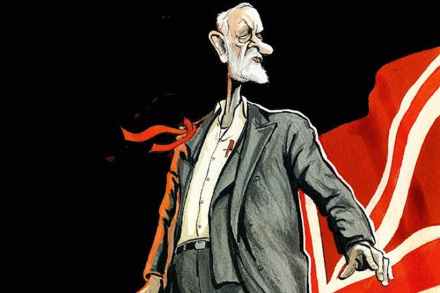
Hugo Chavez’s apologists are at it again. Venezuela’s little local economic difficulties are nothing to do with him, you’ll understand. It’s his successor, Nicolas Maduro who’s to blame. Chavez was a good guy, who lifted people out of poverty and made a more equal country. Jeremy Corbyn is right to hold him up as a hero. Nowhere was this narrative spun more strongly than on yesterday’s Today programme. In an item which sounded as if it might have been edited by Corbyn central command, we were told that Hugo Chavez used his country’s oil wealth to 'reduce inequality and improve the lives of the poorest citizens'. Chavez’s former oil minister was then interviewed, and claimed that Maduro was a 'traitor of the Chavez legacy'.

The government’s no-deal Brexit plans aren’t scary enough to satisfy Remainers

The government was always onto a loser whether or not it published the 24 technical notices laying out what would happen in the event of a no-deal Brexit. If it didn’t publish them it would be accused of a cover up. If it did and they were terrifying it would provide ammunition for the Remain brigade. And if it published them and they weren’t terribly frightening? Then Remainers would accuse ministers of having their heads in the sand. The latter scenario is pretty much where we are today. There are few stand-out headlines from the 24 documents for anti-Brexit commentators to get their teeth into.

The incest trap

It is hard to think of a code of behaviour which is common to all societies on earth, let alone to most other species too — except, that is, for the avoidance of incest. Even cockroaches have developed a breeding strategy that prevents them mating with their own siblings. And yet as we understand more about the genetic dangers of inbreeding, so the social infrastructure that guards against it is being dismantled. In the 40 years since the birth of Louise Brown, the world’s first test tube baby, births by IVF have become routine — almost 2,500 a year using donated eggs, sperm or both. And yet there is virtually no guard against the children growing up and accidentally breeding with half-brothers and sisters of whose existence they are unaware.

The England team is no place for Ben Stokes

I had never heard of Sam Curran when I took my seat at Edgbaston a couple of weeks ago. Four hours later I was joining in a standing ovation. Single-handedly, he had made my trip to Birmingham worthwhile. Without him, I would have been on my way home soon after lunch. Yet with England facing almost certain defeat, and with one batsman after another falling to feeble or misguided shots, he dug in, then stroked his way to 63 runs off 65 balls to give England a chance of victory which they seized the following day.   Curran’s reward for that innings (as well as his five wickets in the match) is to be dropped for the third test at Trent Bridge, starting tomorrow.

Falling unemployment marks another black day for Project Fear

It is another black day for Project Fear. The latest employment figures from the Office of National Statistics (ONS) show yet another fall in unemployment, to 1.36 million or 4 per cent of the adult population. There have never been more people employed in the UK economy, and the unemployment rate is at its lowest since early 1975. It wasn’t supposed to be this way, according to George Osborne’s crystal ball. In May 2016, a month before the referendum, he warned us all that should we vote to leave the EU we could expect unemployment to rise by up to 500,000 within two years. Admittedly, George himself has bagged a few jobs since then, but I don’t think his work ethic is wholly responsible for the rise in employment.