Ross Clark

Ross Clark

Ross Clark is a leader writer and columnist who has written for The Spectator for three decades. He writes on Substack, at Ross on Why?

Why Matt Hancock is likely to be the next prime minister

As MP for the constituency which covers Newmarket, health secretary Matt Hancock will have met a few bookmakers in his time. He has even won a horse race himself, of amateur jockeys in a charity event. He will know the Conservative leadership is the sort of open race with appetising prices – not least the 10-1 which William Hill is today offering on him. I have never met Mr Hancock, and can’t say I even particularly like him, but I am sorely tempted to have a flutter. Why? Because Conservative leadership contests, for all their drama, are pretty easy to read. The winner is almost invariably the credible candidate who, at the time of the election, has succeeded in offending the fewest number of Conservatives.

The shame of Jacob Rees-Mogg

Until this morning Jacob Rees-Mogg had had a remarkable Brexit. From being an obscure backbencher he had risen, without any formal position, to being just about the most powerful figure in the Conservative party after the Prime Minister. He controlled a party within a party, influencing the votes of seventy or so MPs. He became the most lucid of all MPs on Brexit, speaking with a logic and clarity which disarmed his opponents. He introduced a term to the debate – vassalage – which identified perfectly the weakness of Theresa May’s deal, and emphasised how the EU had successfully driven the Prime Minister into a corner. But this morning, all that has gone.

The shame of Jacob Rees-Mogg | 27 March 2019

Until this morning Jacob Rees-Mogg had had a remarkable Brexit. From being an obscure backbencher he had risen, without any formal position, to being just about the most powerful figure in the Conservative party after the Prime Minister. He controlled a party within a party, influencing the votes of seventy or so MPs. He became the most lucid of all MPs on Brexit, speaking with a logic and clarity which disarmed his opponents. He introduced a term to the debate – vassalage – which identified perfectly the weakness of Theresa May’s deal, and emphasised how the EU had successfully driven the Prime Minister into a corner. But this morning, all that has gone.

Has Leo Varadkar finally come clean on the Irish border?

Without the issue of the Irish backstop, it is reasonably safe to assume the UK would be leaving the EU on Friday with a withdrawal agreement. The government would not be falling apart and businesses and investors would know where they were. But of course, as we have been told constantly by the EU, the backstop is essential. It is absolutely the only way of ensuring, post-Brexit, that the Irish border remains open. What, then, if the whole thing was a hoax – if Britain and Ireland are capable of agreeing between themselves on a customs arrangement which eliminate the need for customs formalities? That is exactly what it appears may be about to happen, if we are to believe Irish PM Leo Varadkar.

John Bercow is right to block a third vote on May’s deal

I don’t know how religiously John Bercow reads Coffee House, but I am pleased that he has taken the advice I gave here on Saturday to use his powers to block a third ‘meaningful vote’ on Theresa May’s deal. This afternoon, the Speaker has made a statement to MPs that he intends to use his powers to do just this – on the grounds of a long-standing convention that a motion cannot be brought before the Commons if it is substantially the same as a motion that has already been defeated during the current session of Parliament. In one fell swoop Bercow has undermined what had seemed to be Theresa May’s last, desperate throw of the dice – a third vote on her deal.

John Bercow should block a third vote on Theresa May’s Brexit deal 

Not for the first time the Speaker of the House of Commons appears to hold the Brexit process in his hands. There has been speculation this week that John Bercow has the power to prevent a third vote on Theresa May’s deal by resorting to a parliamentary convention which prevents a motion being debated in the Commons if it is substantially unchanged from a motion already brought before the House during the same session of parliament. Given that a third vote on May’s deal – likely to be called on Tuesday – would be essentially the same motion as was defeated by 149 votes last Tuesday (and not all that much different from the one defeated by 230 votes in January) there would appear to be a good case for Bercow to act.

Unconditionally yours

I know what it is like to receive an unconditional offer for university. In 1984, when I took the Cambridge entrance exam, if you passed, you then only had to meet the matriculation requirements of the university, which were two Es at A-level. For someone predicted straight As (virtually all Oxbridge candidates), that wasn’t asking a lot. It was hard not to slacken off a little, to take a mental gap year, or six months at any rate, for the last two terms of the sixth form. I slipped to a B in further maths, which seemed an embarrassment at the time, though I know others who took a bigger plunge. What with a real gap year, too, I never really did get back into numbers.

The no-deal Brexit tariffs are nothing to be afraid of

What strange knots some tie themselves in over Brexit. The attitude of some of those opposed to Britain leaving the EU is this when it comes to free trade: when conducted with the EU, it is essential for our prosperity. But when conducted with any other country it is a dark threat to our very being. How else to explain the reaction of CBI director-general Carolyn Fairbairn to the publication of the Government’s proposed tariff rates, which would apply in the even of a no-deal Brexit. The new regime would see some tariffs imposed on EU goods which currently enter the country tariff-free – 18 per cent of EU imports by value would fall into this category. But overall it would mean a sharp drop in tariffs on goods from all around the world.

The choice voters must be given if there is a second referendum

Of all the possible outcomes on Brexit one stands out as more unpleasant, more outrageous, more guaranteed to provoke mass anger in the country than any other. No, not Britain leaving the EU on 29 March with no deal – however much that would send some into their imaginary bunkers for fear of the sky falling in. It is Britain being made to vote in a second referendum – without the option of no deal on the ballot paper. Worryingly, this is exactly the outcome which a large part of the Labour party – including, crucially, the leadership – seem intent on achieving. Two weeks ago, the leadership produced a briefing for its MPs which raised the possibility of Labour backing a version of May’s deal – on condition that it was affirmed in a referendum.

It would be a mistake for Tory rebels to back May’s Brexit deal

How unsophisticated can Theresa May get in her efforts to persuade MPs to back her crumbling Brexit deal? Earlier this week we had her £1.6 billion bribe for “left behind” constituencies of Labour MPs who might just be tempted to back her deal. Yesterday, in Grimsby, she turned to her own backbenchers, telling them: "Reject [the deal] and no-one knows what will happen. We may not leave the EU for many months. We may leave without the protections a deal provides, we may never leave at all." She is of course right: no-one knows what will happen on Tuesday nor in the coming three weeks before 29 March. It does her no credit that she has allowed it to get to such a late stage with businesses still having no idea how to prepare for Brexit, or no Brexit.

It’s time for Mark Carney to come clean about Brexit

What wonderful powers that Mark Carney, governor of the Bank of England, possesses. At a stroke, he has just succeeded in increasing the size of the economy by three per cent. Well, sort of. Only last November, the Bank of England claimed that a no-deal Brexit could cost the UK economy between 4.75 and 7.75 per cent of growth over a three year period, relative to what would happen under May’s deal. Yesterday, he changed his tune a little, telling the House of Lords economic affairs committee the effect of a no-deal Brexit on the UK economy in three years’ time would be between two and 3.5 per cent smaller than he had previously stated. Why the improvement? It is all, apparently, down to Carney’s clever contingency plans, as well as a few other positive developments.

Whatever happened to the great Brexit property crash?

Whatever happened to the great Brexit property crash? The stock market has been pummelled on occasion since the referendum in 2016 but none so much as housebuilders’ shares. They suffered one downward loop immediately after the Brexit vote. Then again, as the chances of a no-deal Brexit increased towards the end of 2018, it was housing shares which suffered the most, with Taylor Wimpey, Barratt and several others plunging by 30 per cent, as rumours of sliding house prices took hold. And then? One by one, as housebuilders’ results came through, they turned out to be actually rather good. When Barratt reported on 6 February, for example, revenue was up 7 per cent, profits up 15 per cent, margins 2 per cent and sales volumes 4 per cent. The main housing indices have held steady.

Child climate change protestors aren’t truants, they’re traumatised

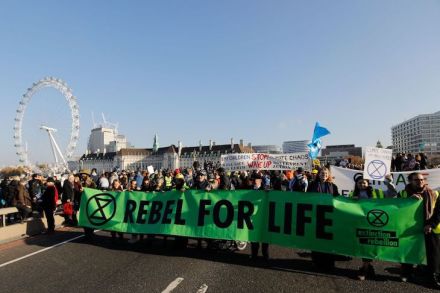
Earlier this week I wrote a blog here accusing children who were planning to take part in today’s Youth4Climate march of wanting to play truant. I realise now that I may have been a little harsh on them. Having read and heard what they have been saying and posting this morning, I fear that some of them at least may be suffering from trauma. They are victims of the hyperbole they have been fed constantly ever since they were born. Here, for example, is 10 year old Zane: 'The reason I climate strike is because the Earth is burning before our very eyes'. According to Hannah, from Birmingham, 'there is no point in going to school if we have no future'.

David Cameron has helped Theresa May – even if he didn’t mean to

David Cameron has been widely blamed for the Conservatives’ current predicament, but in one sense he has saved the party – if inadvertently. It is thanks to his drive for younger candidates that Theresa May’s government has avoided succumbing to a no-confidence vote. May does not have a majority, and relied on DUP votes to help her survive a no-confidence vote last month. Yet even DUP votes would not be enough to save her were she losing her own MPs at the rate John Major did in the mid 1990s. In 1992, Major was elected with a seemingly healthy majority of 21. Yet over the course of the following five years he lost that majority entirely. Why?

What is the student ‘strike’ against climate change trying to achieve?

Forty years ago, I occasionally succeeded in skipping school for climate-related reasons – namely because my village was under deep snow and the school bus couldn’t get through. But too often the snowploughs proved surprisingly effective. It never occurred to me, though, to skip school on a point of principle. That is, however, what pupils are threatening to do – or are being implored to do – on Friday. A “Youth for Climate” movement circulating on Twitter has declared a ‘strike’ for the day – the idea being that children will walk out of lessons in order to protest at the lack of progress on tackling climate change.

Is there any point listening to the Bank of England’s growth forecasts?

The Bank of England today downgraded its forecast for UK GDP growth in 2019 from 1.7 per cent (a forecast it made in November) to 1.2 per cent. That is a chunky fall, but really, does anyone really care? As I have pointed out here many times before, the Bank’s record for forecasting is pretty lousy. The past year has been no exception. What has caught my eye is just how over-optimistic it was about Euro area growth a year ago. In its inflation forecast in February 2018 the Bank foresaw GDP growth in the Eurozone over 2018 running at 0.75 per cent per quarter. In the event, growth slowed dramatically to 0.4 per cent in the first two quarters and to 0.2 per cent in the second two quarters. The truth is, if we do end up with growth this year of 1.

Carmageddon

When Nissan announced it would not, after all, produce its new X-Trail in Sunderland, this was reported as proof of an impending Brexit disaster. A Labour councillor in South Wales even suggested that ‘all those who voted to leave should be laid off first’. But Nissan’s decision has little to do with Brexit, and everything to do with the turmoil of the global car industry. It is not that overall car sales are plunging — they grew by a modest 0.5 per cent across Europe last year. The problem is that established carmakers have failed to keep up, and their future now looks far more uncertain than it did even just a few years ago. BMW, Mercedes, Volkswagen, Nissan: for decades, the same names ruled. It was a complacent industry, and progress was incremental.

The Asda equal pay ruling that could wreck the UK’s labour market

I don’t know what it is like to work as a checkout assistant in Asda, still less in an Asda warehouse. But if I did work in a company’s shops and I learned that there were better-paid jobs available in its warehouses I am pretty sure I know what I would do: apply for a job in the latter. It wouldn’t occur to me to pick up the phone to a lawyer and claim I was a victim of discrimination. But then perhaps I am not suited to life in the age of grievance politics. Today, the Court of Appeal has ruled that Asda may be guilty of sexual discrimination in that it is paying shop staff less than warehouse staff.

Does the Left want us to return to the pre-industrial age?

However misguided their ideas, until recently it was safe to assume that those on the Left did at least want to improve the lot of humanity – they wanted the global population to enjoy better health, a better diet and longer lives. They just disagreed with capitalists and free marketeers over how best to achieve those things. Now I am not so sure. An extraordinary piece appears in the Guardian today by Jason Hickel, an anthropologist at Goldsmiths College, which savages Bill Gates for tweeting, from Davos last week, an infographic showing several ways in which global poverty is declining. I can think of many reasons to savage Bill Gates, not least over the nightmare that is Windows 8, Microsoft OneDrive and other things.

Does the Left want us to return to the pre-industrial age? | 29 January 2019

However misguided their ideas, until recently it was safe to assume that those on the Left did at least want to improve the lot of humanity – they wanted the global population to enjoy better health, a better diet and longer lives. They just disagreed with capitalists and free marketeers over how best to achieve those things. Now I am not so sure. An extraordinary piece appears in the Guardian today by Jason Hickel, an anthropologist at Goldsmiths College, which savages Bill Gates for tweeting, from Davos last week, an infographic showing several ways in which global poverty is declining. I can think of many reasons to savage Bill Gates, not least over the nightmare that is Windows 8, Microsoft OneDrive and other things.