Ross Clark

Ross Clark

Ross Clark is a leader writer and columnist who has written for The Spectator for three decades. He writes on Substack, at Ross on Why?

Don’t fall for Rishi Sunak’s ‘Britcoin’

Do we need an officially-sanctioned, government-backed crypto-currency underwritten by sterling — a ‘Britcoin’ — as Rishi Sunak is said to be advocating? At first sight it is hard to see the attraction. Surely, there are two principle reasons why people feel attracted to Bitcoin and other cryptocurrencies. Firstly, if you are a drug dealer, you might hope that it is a way of keeping your stash of wealth beyond the reach of law enforcers. This hasn’t quite proved true, but you can understand why cryptocurrencies have their fans in the criminal world. Secondly, there is the hope of making a quick, speculative profit.

We need to act now to block Britain’s social credit system

I have to admit that I didn’t quite get it right when, 12 days ago, I wrote: ‘There is a model for what will be coming our way if we do not resist vaccination passports and electronic ID cards: China’s social credit system, which blacklists people for numerous antisocial offences, from crossing the street on a red light to failing to sort their recycling, and uses the information to deny them the right, for example, to buy rail and airline tickets.’ I had in mind that it would take two to five years for a vaccination passport scheme to morph into a Chinese-style social credit system. In fact, it took two weeks.

It’s time to cut back on the Olympics

Today, the world witnessed one of the most absurd spectacles in sporting history: a pricey, overblown ceremony exuding the usual platitudes about togetherness and international co-operation — delivered to an almost entirely empty stadium, just the use of light to give the illusion of an audience. The Tokyo Olympics has been seriously compromised by the pandemic. But why not seize the opportunity to change the games for good — and build back smaller? No country’s football fans ever said: well, we didn’t win the World Cup but never mind, we’re on course for the Olympics The Olympics is a popular spectacle, to be sure. In the end, a majority of the British public even came to agree that the £8.

Boris could easily curb the ‘pingdemic’, so why won’t he act?

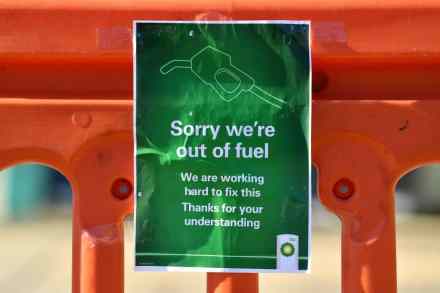
Was there ever a national crisis which was so easy to solve? There are reports of supermarket shelves emptying, petrol stations running out of fuel and panic-buying. This in not unprecedented. Yet on this occasion the government doesn’t have to deal with a bolshie trade union, enter difficult negotiations with an EU which is determined to punish us for Brexit or even handle the early, unknown stages of a pandemic. All the Prime Minister has to do is to announce that the changes to the Test and Trace system already earmarked for 16 August – when fully-vaccinated people will no longer be forced to self-isolate for ten days but could be advised to get tested instead – be enacted immediately. The panic would immediately be over.

When will Boris get serious about balancing the budget?

Should we be pleased that net government borrowing for June came in below expectations, at £22.8 billion – £5.5 billion less than June 2020? Should we see it as a sign that the economy is recovering a little faster than had been hoped? That is the spin being put on the public borrowing figures released this morning. An alternative, and less rosy, view might come from examining two figures in particular. Firstly, while borrowing is down compared with June 2020, public spending is actually up. Over the month the government spent £84.1 billion of our money, £2.5 billion more than in the same month a year earlier. Balancing the budget seems to have become a deeply unfashionable debate in UK politics That is extraordinary.

Could the third wave be running out of steam?

Will we get to 100,000 new Covid infections a day, as Sajid Javid has suggested, or even to 200,000 a day as Professor Neil Ferguson has floated? Until Saturday, new cases were galloping upwards at such a rate that such an outcome seemed assured. But in the last couple of days there has been a dramatic falling off in new cases: from 54,674 reported on Saturday, to 48,161 on Sunday and 39,950 on Monday. Those are for the UK – for England the corresponding figures are 50,955, 44,777 and 34,657. Each of these figures were higher than the same day the week before. And of course, we also have to be wary of the weekend effect – although that tends to affect reported deaths more than infection numbers.

The depressing spectacle of ‘freedom day’

It was billed as ‘freedom day’. Yet few people, it seems, either want to enjoy their new-found freedom or are able to enjoy it. The Prime Minister won’t be going clubbing; he is one of several hundred thousand people – it was 336,000 in the week to 7 July – who have been ordered to self-isolate by NHS Test and Trace in the past few days. These are in addition to the half a million people ‘pinged’ by the NHS contract tracing app who have been asked to self-isolate, although in their case it is not a legal requirement. For these people, it is no freedom day – it is a return to the darkest hour of lockdown. In fact, it is worse than that. At least during full lockdown we were all allowed to go out to the shops, or for exercise.

Is climate change to blame for Germany’s flooding?

Greta Thunberg has declared the floods in Germany, Belgium and the Netherlands to be the product of man-made climate change, adding ‘We’re at the very beginning of a climate and ecological emergency, and extreme weather events will only become more and more frequent.’ Well, that’s sorted out that one, then. We hardly need Angela Merkel or the Prime Minister of the Netherlands, Mark Rutte, to confirm it for us. Nor, indeed, do we need to hear from Michael Mann – aka Mr Hockey Stick – to tell us that the floods are the living embodiment of what climate scientists have been warning us about for decades.

Who really needs a third Pfizer shot?

From our US edition

Do Americans need a third booster shot of the Pfizer vaccine? The question is the subject of a remarkable row between the drugs company and the government — the former of which is putting together an application for emergency use authorization for a third dose and the latter of which has so far proved unwilling to sanction it. The Department of Health and Human Services issued a statement after a meeting on Monday saying: ‘At this time fully-vaccinated Americans do not need a booster shot.’ For its own part, Pfizer cites evidence from Israel which, thanks to a deal with Pfizer, was able to get ahead in its vaccination program in return for the country effectively being used as a giant human laboratory.

third shot pfizer

A minimum corporation tax is nothing to celebrate

So is this what the new era of global co-operation looks like? The EU has agreed to delay the introduction of its proposed digital levy until the autumn to allow negotiations for a global minimum corporation tax. Biden had demanded that the digital tax be dropped, seeing it as a direct attack on US tech giants. In other words, the EU appears keen to compromise in the face of US pressure — something that it would have been less likely to do under Donald Trump. The move makes it more likely that a global minimum corporation tax of 15 per cent will now become reality. Is that a cause to cheer? Not if you are Ireland, which has grown wealthy in recent decades by setting a corporation tax rate of 12.

Isn’t it time social media cracked down on racism?

No sooner had Bukayo Saka’s penalty kick thudded into the gloves of the Italian goalkeeper than you could see it coming. Racists were not going to miss the opportunity to attack the England team. And sure enough, within hours the sewer that is Twitter (even at the best of times) had become a torrent of effluent. I don’t know a great deal about coding, but I can’t think it is really all that difficult to pick up certain words and remove them Yes, it does show there is still an underbelly of racism in English society — even if the charge that we are a country of ‘systemic racism’ left over from our days as a colonial power is wrong-headed and unfair.

How much longer can the Treasury rig the housing market?

The past 15 months have produced a bizarre economic paradox. In 2020, the economy shrank at the fastest rate recorded in modern times: 9.9 per cent. Yet house prices have not merely weathered the storm, they have risen at the fastest rate since the height of the property boom in the 2000s. According to Nationwide, the average value of a UK home has risen by 13.9 percent in the past 12 months. Halifax puts it a little more modestly at a 9.5 percent annual rise. Yet there is a pretty clear picture of a rising market driven by a lack of stock and a desperation from many people to move home before the stamp duty holiday finishes — as it does tomorrow. How come? On the one hand we are witnessing the inevitable results of financial stimulus.

Should we be mixing AstraZeneca and Pfizer shots?

To date, the Covid vaccination programme in Britain has involved two doses of one of three vaccines – AstraZeneca, Pfizer or Moderna. But it has stuck rigidly to giving people two doses of the same vaccine. The NHS has not allowed patients to mix vaccines except in a few strict scenarios, such as allowing a second dose of Pfizer when someone developed a blood clot from a first dose of AstraZeneca. But could we actually improve vaccine efficacy by mixing doses? An Oxford study suggests that we could. The study recruited 830 volunteers who were given one vaccine shot. Some – on a blind, randomised basis – were, four weeks later, given a second shot of the same vaccine and others were given a different vaccine for their second shot.

Will Hancock resign?

'Speechless,' was Matt Hancock’s reaction when told about Professor Neil Ferguson’s lockdown breaching liaisons on 6 May last year. The Health Secretary added that he thought Ferguson was right to resign from Sage — and that it was a matter for the police whether or not to prosecute the professor.  Will Hancock now be following Ferguson’s example and resigning? It is perhaps just as well that Hancock didn’t come up with any more quotable remarks as they would now certainly be quoted back at him following the publication of photographs of him embracing aide Gina Coladangelo — apparently on 6 May this year.

Is the green list enough to save tourism?

Will there be any new countries on the ‘green list’ when the latest revisions are announced tomorrow? Last time around there was expected to be some kind of relaxation – yet no countries were added to the green list. Instead, Portugal was removed and several countries were added to the red list. However, media minister John Whittingdale certainly seemed to hold hope when interviewed on the Today programme this morning, saying “hopefully it will be possible to increase that number [of countries]”. It is hard to escape the conclusion that the government will face serious difficulties if it does not allow some relaxation. The travel industry is getting restive and some bodies are holding a day of action in London today.

It’s time to take back control of the public finances

It is called managing expectations: priming the public for really bad news so that when modestly bad news arrives it comes across as good news. Today’s public finance figures is a case in point. We have become so used to ever-grimmer predictions of the size of the government’s deficit that the latest figures released this morning ended up being reported in the form 'borrowing is much lower than expected'.  In May the government borrowed £24.3 billion which, we are told in a government press release, is a whacking £19.4 billion less than last May. Furthermore, total borrowing for the financial year 2020/21, came in at £299.2 billion — which, we are told by the Office for National Statistics, is £28.

Is Covid really to blame for HS2’s runaway costs?

Covid has doomed the public finances — not just because the cost of mitigating it has been high in itself but because it has normalised high public spending. When you have just allocated £37 billion to Test and Trace and spend £54 billion on the furlough scheme, a £106 billion high-speed railway to Manchester and Leeds looks relatively good value — at least taxpayers will have something lasting for their money. And who would even notice if the budget for that railway quietly crept up by a further £1.7 billion? That is exactly what has happened today. The construction costs of the first phase of the railway, from London to Birmingham, have apparently been increased by social distancing.

Are PCR tests the best way to track Covid?

Throughout the pandemic doubts have been expressed about the reliability of the polymerase chain reaction (PCR) tests which have been used as the ‘gold standard’ of testing for Covid-19 in Britain and elsewhere. Some of this criticism has centred around alleged quotes from Kary Mullis, the Nobel Prize-winner chemist who invented the PCR test in 1985 and who died in 2019. Mullis has been said by some to have dismissed the use of the tests for detecting viruses – or more specifically said they cannot be used to detect the presence of ‘free infectious viruses’, although others have said the quote did not come from him.

Why Warwick’s Covid modelling doesn’t add up

This week began with more frightening graphs from SPI-M, the government’s scientific modelling committee. A team at Warwick University calculated that, had the 21 June reopening gone ahead, hospitalisations could have peaked at over 3,000 a day in August. By contrast, the first peak in April 2020 saw 3,149 admissions in one day and the second peak in January reached 4,160 on a single day. Yet, like the infamous ‘4,000 deaths a day’ graph presented at the Downing Street press conference last October to justify a second lockdown, it took only a couple of days for questions to be asked about the assumptions behind the scenario.

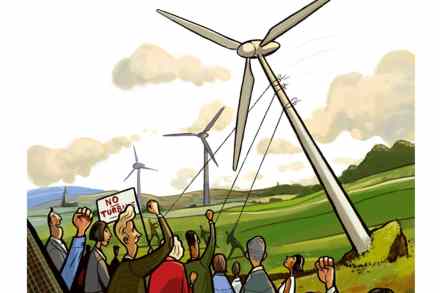
Rishi Sunak and the coming Tory battle over climate change

The Chancellor, Rishi Sunak, isn’t normally given to waffle, which makes his maiden appearance on GB News all the more remarkable. Asked by Andrew Neil who – government or homeowner – would have to pay the estimated £10,000 per household cost of replacing domestic gas boilers with heat pumps to help reach the target of net zero emissions by 2050 Sunak replied:  'So when you say the alternative is the household or the government, the government’s money is the people’s money. And that’s my point when I say ultimately we all pay. The government does have any separate money of its own' As a general point of political philosophy, it was a fair enough statement.