Ross Clark

Ross Clark

Ross Clark is a leader writer and columnist who has written for The Spectator for three decades. He writes on Substack, at Ross on Why?

Boris’s real failure wasn’t breaking lockdown

Boris Johnson made a big error, alright. But it wasn’t walking into a room where his wife had prepared him a surprise birthday cake. It was in overriding his liberal instincts and imposing highly prescriptive lockdown rules in the first place. If, in March 2020, he had stood up to advisers and said that no, it was not the business of the state to micromanage people’s lives – had he banned large gatherings, closed crowded pubs but left private meetings to our sense of personal responsibility – then he would not be in the position he is today.  Moreover, many Britons would not have died alone or succumbed to crippling loneliness. As he has admitted, rather too late, many lockdown rules were simply inhumane.

What Rishi should do next

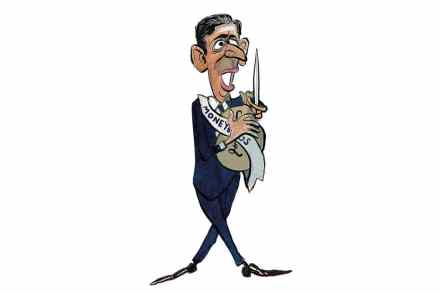
How tempting it must be for Rishi Sunak to chuck in his job as Chancellor. ‘My chances of ever becoming PM have plummeted to next to nothing,’ he must be thinking, ‘so why not go off and earn some serious money instead, away from the spotlight?’  I have no insight into the state of the Sunak marriage but I wouldn't be surprised if he was also tempted to resign for his wife's sake. ‘Let's get out of the public eye,’ he might well be tempted to say, ‘and enjoy being rich again.’ But if Rishi had hired me for some advice on reputation management I would give him a better idea. You have obviously wanted to be PM for a long time, so why give up now? Your political reputation is not beyond repair.

Could we be heading for a second Covid recession?

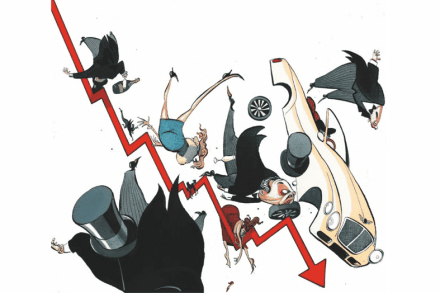
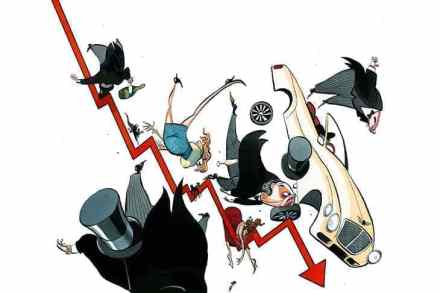
The political story for the moment is the cost of living crisis. But by the end of the year could we be talking about a recession instead? We shouldn’t read too much into one year’s economic growth figures, especially given how often they are revised upwards or downwards. But February’s figures, published this morning, have caught many people unawares. They show that the economy just about ratcheted upwards in February, growing by 0.1 per cent. That’s compared with healthy growth of 0.8 per cent in January, as the country emerged from the Omicron scare. Notably, in two areas the economy contracted: construction fell by 0.1 per cent and production by 0.6 per cent. It was only the services sector, where growth was 0.

Will Britain’s new energy strategy keep the lights on?

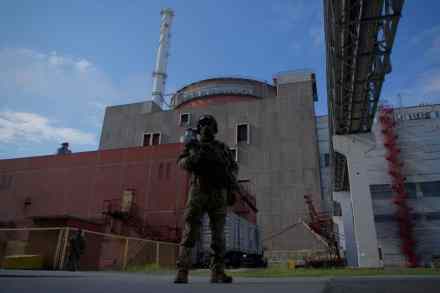
Today’s Energy Security Strategy puts energy security at the heart of the debate over energy and environmental policy, where it always should have been. There is little question that the Russian invasion of Ukraine has brought about a big change to the tone of energy policy, but will today’s announcements really wean us off Russian oil and gas, and when? Moreover, will they ensure that we can keep the lights on as the government continues to commit itself to a policy of net zero carbon emissions by 2050?

Ed Sheeran is right about British courts

As they say in the music business, where there’s a hit, there’s a writ. It is something that no one knows better than Ed Sheeran, who yesterday won a legal battle over claims that his song Shape of You plagiarised an earlier song, Oh Why by Sami Chokri and Ross O’Donoghue. The judge ruled that Sheeran had neither copied the song deliberately nor subconsciously. After his victory, Sheeran said: Claims like this are way too common now and have become a culture where a claim is made with the idea that a settlement will be cheaper than taking it to court, even if there is no basis for the claim, and it’s really damaging to the songwriting industry.

Will the NHS ever give up the national insurance levy?

This week’s rise in National Insurance has caused the government enough trouble, but it faces potentially an even bigger problem next year – when it tries to prise the extra £12 billion raised in NI away from the NHS and use it to fund social care instead. The extra revenue from NI has been earmarked for the next 12 months for the NHS, to help it catch up with a backlog in routine treatments following the Covid-19 pandemic. But from April 2023 the intention is to rebrand the NI rise as the ‘Health and Social Care Levy’ – and to spend it instead on funding social care. Just how does a government take money away from the voracious financial beast that is the NHS?

The war on workers

It is been a familiar story in recent years: a Budget that sounded reasonably good when delivered, but that unravels in subsequent days. Rishi Sunak’s spring statement was no exception. When he delivered it a fortnight ago, he said he was going to compensate low-earners by raising the primary threshold for National Insurance, bringing it into line with income tax and relieving people who earn less than £12,500 from having to pay NI at all. But as the 1.25 percentage point rise in National Insurance kicks in today, it turns out that the rise in the threshold for NI will not take effect for another three months, on 6 July. In the meantime, any employee who earns more than £9,880 a year will be paying 13.25 per cent of their earnings on NI.

Are sanctions working?

When allied military operations go well or badly, we very quickly hear about them. But what about sanctions? It is about time that we started to ask: are they hitting their target, or are some of them slewing off, out of control, straight into civilian targets? Notionally, sanctions have been a success – or at least they seemed to be initially. The rouble and Russian stock market collapsed. But then the rouble recovered strongly, and the stock market, too, has staged some sort of recovery since it reopened. What seemed like a pretty comprehensive boycott by western companies turns out to be rather less complete than many might imagine.

Did P&O use an EU loophole?

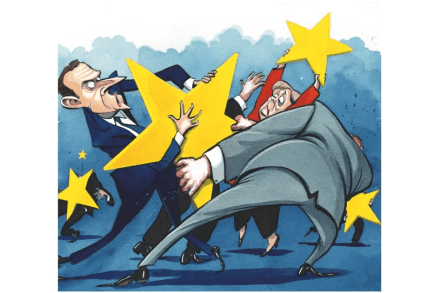
Brexit, as Boris reminded us many times during the referendum campaign, would give Britain the power to make its own laws, unencumbered by constant directives from the European Commission. But it will take a long while to disentangle UK laws from the influence of the EU, as the government may be about to discover in its attempt to punish P&O ferries for sacking 800 workers and replacing them with agency staff. It will take a long while to disentangle UK laws from the influence of the EU At last week’s Prime Minister’s Questions, Johnson declared that P&O had contravened section 194 of the Trade Union and Labour Relations Act 1992, which required employers to give the government 45 days’ notice of any intention to make more than 100 workers redundant.

Zelensky has saved Boris

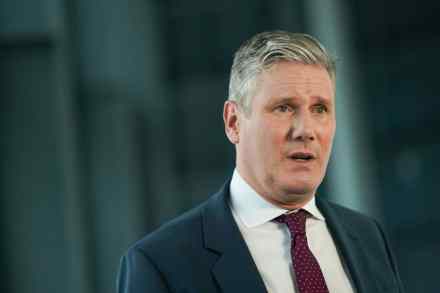
Labour will try all it can to bring up the subject at every opportunity; as will a few backbench MPs. But partygate just doesn’t feel likely to prove fatal to Boris Johnson anymore. War in Ukraine has changed the dynamic: fussing over lockdown parties seems trivial and out of date. Keir Starmer’s continued plugging away on the matter makes him look even duller than normal. Rishi Sunak’s stock has plummeted after what many saw as a bungled spring statement. But if Boris Johnson does stage a revival, the figure he will have most to thank is Volodymyr Zelensky. The Ukrainian President has made it quite clear on more than one occasion that he regards the British PM as a more helpful, more reliable ally than other European leaders.

Scrapping free car parking for NHS staff is long overdue

The private motor car is, of course, an environmental vandal which needs to be driven out of our towns and cities for the good of the planet and for the benefit of residents who are being killed by traffic fumes. We know this because we keep being told by some of those on the left that parking charges, congestion charges and fines must all be ramped up and the proceeds used to improve public transport and encourage cycling and walking. But there seems to be an exception. When the motorists in question are NHS staff, their fondness for their cars ceases to be an outrage. On the contrary, it is a human right for them to be able to drive to work and park their cars for free when they get there.

The rouble’s astonishing recovery

The tank columns are stalled; one or two towns captured from the Ukrainians have been retaken. Russia’s war effort has been going nowhere fast for the past fortnight – unless you count the constant pounding and destruction of apartment blocks a form of progress. But then is the economic war being waged against Russia making any greater progress? True, Muscovites can no longer get a Big Mac, and western-made luxury goods have disappeared from the shelves. Yet look at the dollar’s march against the rouble and it is starting to look like a convoy of Russian armoured vehicles. For the first few days, the rouble sank inexorably as sanctions kicked in. On the day before Putin marched in on Ukraine, a rouble was worth $0.012.

Was Biden’s chemical weapons threat a gaffe?

Did Joe Biden mean to threaten Russia with a chemical weapons attack? That seemed to be what he implied at yesterday’s Nato summit when he said Russia using chemical weapons in Ukraine ‘would trigger a response in kind’ from the US. To respond ‘in kind’ means to respond in the same way – i.e. by firing chemical weapons back at Russia. Given that the US committed to destroying its remaining stockpiles of those munitions when it signed the Chemical Weapons Convention in 1993, it would seem very unlikely that this is what Biden meant. Or indeed, that he would have any chemical weapons to unleash in the first place. There is something to be said for ambiguity.

Can we trust economic models?

Rishi Sunak shared a delightful moment of honesty on the Today programme on Thursday. Mishal Husain asked him how households will cope if, as the Office for Budget Responsibility has forecast, energy bills rise by a further £830 a year – on top of the rises already due to take effect in April. No, no, no, said the Chancellor, you can’t believe the OBR forecast on energy prices: ‘They just take what the market expectation is at a given time, and since they closed their forecast actually the forecast for energy bills in the autumn has come down by £400.’ It was a fair point.

Fact check: What’s the truth about Sunak’s Brexit tax cut claim?

Labour’s Chris Bryant was quick to try to scotch Rishi Sunak’s claim that it was only thanks to Brexit that he was able to remove VAT on a number of home energy improvements, such as the installation of solar panels. Within a few minutes of Sunak making the claim, Bryant had tweeted:  'Contrary to what Sunak said, there is already a VAT exemption on solar panels and heat pumps already happens in the EU, so this is not a benefit of Brexit.' After we have left the EU, Brussels wants to copy our example So who is right? Is it Brexit wot gave us our VAT-free solar panels or is it just another Brexit myth, to be dismissed like the £350 million a week claim on the side of the Vote Leave campaign bus?

Welcome to the new era of high inflation

There was a time when a chancellor would have bitten off the hand of a national statistician who offered him an inflation rate of 6.2 per cent. But that takes us back to the days of Denis Healey and the early months of Geoffrey Howe’s time in Number 11. There is little disguising this morning’s grim news, however. The last time the Consumer Prices Index (CPI) was at 6.2 per cent was in March 1992 – although at that time the index was little used as the government’s preferred measure of inflation was then the Retail Prices Index (RPI).

What the P&O debacle really tells us about Brexit

It goes without saying that sacking your entire staff via a ten-minute video call while their cheaper, foreign replacements sit outside in buses is a pretty disgusting way to treat people. True, P&O’s cross-Channel operation has been rendered unprofitable as a result of Covid, but this wasn’t a case of a headcount reduction or management urging pay restraint until the company can get back on its feet again. It was a wholesale dismissal of workers, plenty of whom will have had decades of service. No wonder some refused to leave their ships. How ironic, however, that so many of the biggest critics of P&O this week are ardent Remainers.

Britain’s ‘NEETs’ aren’t what they used to be

Remember Neets, the mainly-young people who are ‘not in employment, education or training’? A decade ago they were seen as a group which had grown at alarming speed during the economic crisis on 2008/09. Many older people, by contrast, were continuing to work for longer, possibly as a result of their pensions having diminished in value. Following Covid, however, the profile of the working population has changed sharply again. Your typical Neet now is not a school-leaver who has failed to find anything useful to do with their lives – it is a professional aged 50-70 who has decided to throw in the towel prematurely.

Should we prepare for an oil price crash?

I almost felt a sense of perverse celebration as the meter clocked round to £100 – the first time I have ever spent so large a sum filling my car with diesel. Not so long ago it was costing me closer to £60. After gas and electricity prices, it is suddenly oil prices which are making the news. Some garages have been shown selling the fuel for over £2 a litre. If you live in a rural area and rely on oil to heat your home, you may have experienced an even bigger shock in the past fortnight: the price of domestic heating oil has doubled to around 120 pence a litre – the percentage change is greater than for road fuel because a much lower proportion of the price of a litre of heating oil is tax.

Will the Russian Stock Exchange ever reopen?

It is one thing for western companies, funds, investment trusts and others to promise to divest from Russian assets. But what if the Russian authorities won’t let you? The Moscow stock market has failed to open for a fifth day running. Prior to its closure, it had already plummeted by a third after the invasion of Ukraine. Russian investments traded on external markets have continued to plummet during the closure: JP Morgan Russian Securities, an investment trust traded on the London Stock Exchange, plunged by another 15 per cent this morning to 101 pence – just one-eighth of what it was trading at last autumn. Is that a bargain? 'Buy on the sound of gunfire', goes the old stock market adage.