Ross Clark

Ross Clark

Ross Clark is a leader writer and columnist who has written for The Spectator for three decades. He writes on Substack, at Ross on Why?

Reform will regret its commitment to the pensions triple lock

From our UK edition

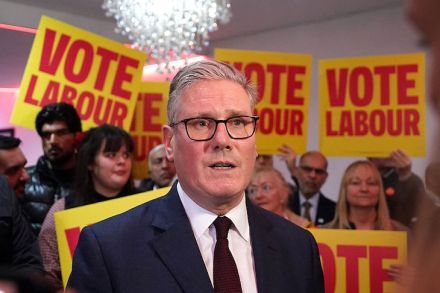
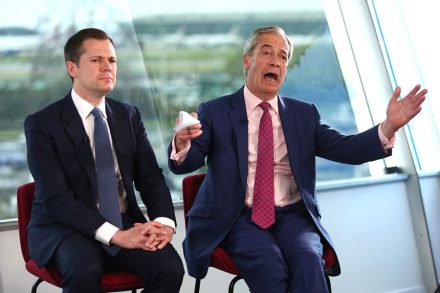
Reform UK has just made what could turn out to be an enormous error. Its Treasury spokesman, Robert Jenrick, has committed the party to retaining the ‘triple lock’ on pensions, whereby the state pension rises each year by either inflation, average earnings or 2.5 per cent, whichever is greater. This follows a period in which Nigel Farage had suggested that the policy was ‘up for discussion’. It is easy to see the attraction of committing yourself to the triple lock. A recent poll by Lord Ashcroft suggested that six in 10 voters support the policy. What’s more, pensioners tend to be enthusiastic voters.

How Ed Miliband could actually profit from the energy crisis

From our UK edition

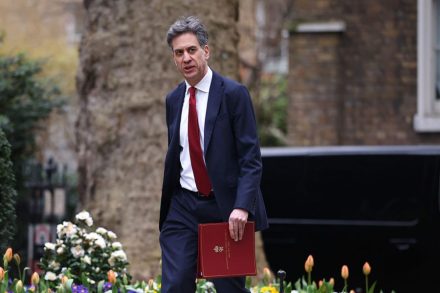
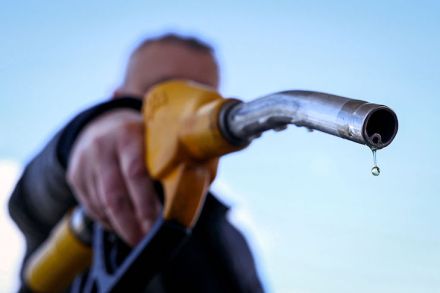
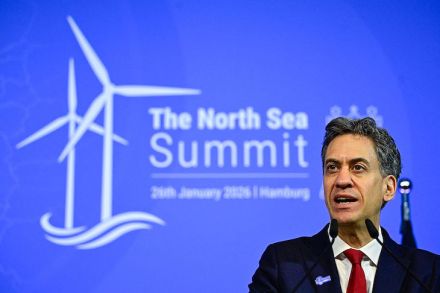
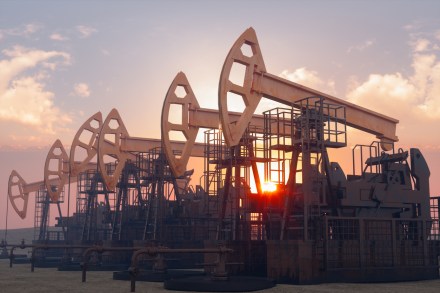
According to Ed Miliband and Bridget Phillipson, motorists are paying more than they need to at the pumps because of ‘price gouging’ by petrol retailers. No mention there about tax gouging. How much more revenue could the government raise if Miliband rescinded his ban on new drilling for oil and gas in the North Sea? As if we weren’t paying enough in tax at the pumps already – half of the cost of a litre of petrol – the Treasury is drawing in an extra £20 million a day since the Iran crisis, thanks to VAT on fuel and extra taxes on profits of oil companies, according to consultants Stifel. While fuel duty itself is fixed, VAT is proportional to price.

Ed Miliband can’t keep blaming Iran for high energy costs

From our UK edition

Sooner or later it is going to dawn on Ed Miliband and the rest of the government that anger over Britain’s sky-high energy prices is not going to go away. They are no longer going to be able to conceal the obvious evidence that UK consumers and businesses are paying significantly more for their energy than their counterparts in comparable countries. They are also not going to get away with blaming the war in Iran, nor with maintaining the pretence that the government’s green policies are helping to bring down bills. Yesterday it was the turn of Marks & Spencer chief executive Stuart Machin to highlight the issue. Green levies and other policy costs, he revealed, now make up more than half of his company’s energy bills.

Has Trump averted an energy crisis?

Have markets and governments horribly underestimated the fallout from the Iran war, or is it the doomsters who have got it horribly wrong? President Trump’s announcement has rather caught the world off guard. This morning, he posted on Truth social saying that he is seeking a negotiated settlement with Iran and has postponed his planned attacks on energy infrastructure. Many expected a huge escalation in hostilities this week. Could this be yet another example of TACO (Trump Always Chickens Out), or was his threat to bomb energy infrastructure another crafted bluff – and that order to the global economy will be swiftly restored?

Why the Iran oil crisis might not be as bad as we feared

Have markets and governments around the world horribly under-estimated the fallout from the war in Iran? That is the claim made by the president of the International Energy Agency (IEA), Fatih Birol, who says the effect of the closure of the Straits of Hormuz is the equivalent of the 1973 oil crisis and the 2022 gas crisis, provoked by the invasion of Ukraine, combined. Industrialised nations are not going to stand around shivering. Capitalism, where it is allowed to, will ride to the rescue The 1973 crisis, he said, removed five million barrels of oil per day from global markets and the Ukraine crisis removed 75 billion cubic metres of natural gas. The current crisis, he says, has removed 11 billion barrels of oil and 140 billion cubic metres of gas.

This is how Brexit dies

From our UK edition

This is the way that Brexit ends: not with a bang but with a whimpering submission to EU standards on everything, billions in contributions to the EU purse – but with the pretence that we are not really rejoining the single market or customs union, honest. That was the position laid out by the Chancellor in her Mais lecture on Tuesday. She said the government would pursue a bespoke deal with the EU where divergence would be the ‘exception, not the rule’. What does that mean in practice? The EU has made it perfectly clear that it is not going to accept an à la carte menu on the single market; if you want to be in the club you are going to have to accept all its rules and pay all its dues.

Does Rachel Reeves know anything about AI?

From our UK edition

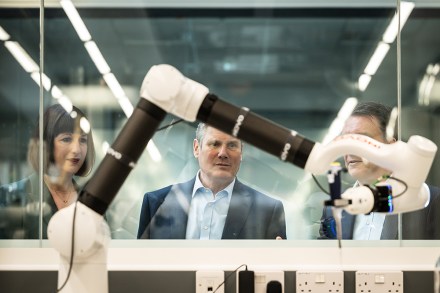
Like Harold Wilson and his 'white heat of technology', Rachel Reeves is presumably hoping that blathering on about AI and quantum computing in her Mais lecture today is going to make her sound modern and positive. Yes, of course artificial intelligence is the 'defining technology of our era' – we don't need the Chancellor of the Exchequer to tell us that. I am sure that £2.5 billion of public money will be useful, but then there isn't exactly a shortage of private capital being hosed on AI at the moment, so the need for public money isn't clear; lower taxes and less onerous employment legislation might be more favourable.

Paul Ehrlich’s bad ideas won’t go away

I am sorry to hear of the death of Stanford University Professor of Biology Paul R. Ehrlich at the age of 93, but to read his writings you wonder whether it is an event he might actually want us to celebrate. It does, after all, mean one less mouth to feed. Just another 6.5 billion people to go and we will be down to what in 2018 he stated was the world’s optimum population of between 1.5 to 2 billion. Ehrlich’s 1968 book, The Population Bomb – written with his wife Anne whose name his publisher famously kept off the front cover – established Ehrlich as the world’s latter-day Malthusian-in-chief.

Net zero is destroying Britain’s car industry

From our UK edition

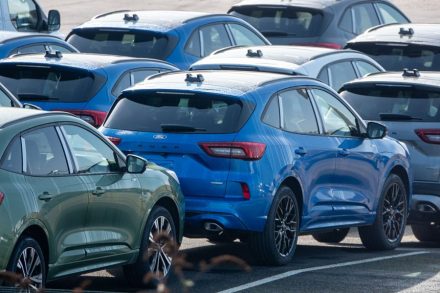
Could there be any greater vindication for the government’s policy of pushing us to buy electric vehicles than the crisis in Iran, which has sent prices of petrol and diesel soaring? That is what the government itself would like us to think, but it is not how the UK car industry sees it. Never mind the pain being suffered at the pumps. The Chief Executive of the Society of Motor Manufacturers and Traders (SMMT), Mike Hawes, chose yesterday to warn that the industry is in ‘deep jeopardy' thanks to the government’s proposal for banning new petrol and diesel cars from 2030 and all remaining hybrids from 2035. At an event in London set up to call for a rethink, he said he didn’t know of a single person in the industry who thinks that the targets on EV sales can be met.

Slavery reparations will be the next Chagos betrayal

From our UK edition

Well, who would have guessed? Emboldened by Mauritius’s success in persuading Keir Starmer to surrender the Chagos Islands – which were never even part of Mauritius in the first place – the African Union is reported to be planning to take Britain to the International Court of Justice (ICJ) to demand reparations for slavery and colonisation. Their case is pretty feeble, and for reasons which ought to be obvious. You can’t compensate slaves who lived 200 years ago by making cash transfers to nations from which they were taken, especially when the tribal kingdoms which existed when the slaves were taken were themselves involved in the slave trade.

What will Ed Miliband do when the lights go out?

From our UK edition

How many times has Ed Miliband told us that his renewable energy policies were helping to free us from ‘fossil fuel dictators’? Wind and solar energy, he assures us, are saving us money and making us more energy-secure. Then we wake up to find that actually, Britain has only two days’ worth of gas left in storage. If the people who run our gas network were to go on all-out strike we wouldn’t last five minutes It has been clear for a long time that Miliband’s claims are somewhat contrary to reality. If Britain’s net zero policies are really helping to bring down prices, then how come UK households – even before the current crisis – were paying twice as much for their gas and two and half times as much for their electricity as US consumers?

Stop sneering at the Brits stuck in Dubai

From our UK edition

Who cares about vacuous influencers whose ghastly apartments in Dubai are being struck by Iranian missiles, wiping the smile off their botoxed lips? Not many of us, to judge by social media, and a few newspaper columns too, over the past few days. Retaliatory strikes by Iran have unleashed a tide of gloating. To give a flavour, one writes: ‘Don’t all those lovely influencers move to Dubai because it is supposed to be so safe? I’ve never been struck by an Iranian missile on my way to Asda.’ Your average influencer may lead a pretty empty life, but they are still UK citizens and we owe them a duty to protect their lives, by evacuating them if necessary What a revolting attitude. Your average influencer may lead a pretty empty life.

Labour’s Gorton defeat shows that Keir Starmer is finished

From our UK edition

In the end it wasn’t even close. The Greens won the Manchester Gorton and Denton by-election with some to spare, winning 40.7 per cent of the vote. Reform UK, who looked the main challengers at the beginning of the campaign came second on 28.7 per cent, and Labour, as had looked likely, were pushed into third on 25.4 per cent. The defeat reflects very badly on Starmer Even taking into account the long history of by-elections producing a protest vote which does not get repeated at a general election, Keir Starmer is pretty well finished as Prime Minister. The defeat reflects very badly on him personally because he intervened to stop a candidate who might well have won the seat: Andy Burnham.

What does the ONS mean by living in ‘good health’?

From our UK edition

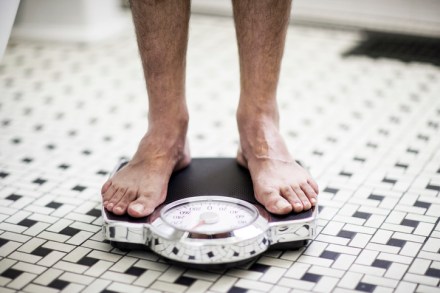
Living longer but spending more of our lives in ill health. That is the rather shocking picture presented by the figures for 'healthy life expectancy’ published by the Office for National Statistics (ONS) yesterday. They show that while life expectancy continues to rise modestly, the proportion of our lives lived in ‘good’ health is falling sharply. Between 2022 and 2024 men enjoyed 60.7 years of good health and women 60.9 years. This was, respectively, 1.8 years and 2.5 years down on the previous period for which data was collected, 2019 to 2020. We now appear to spend less of our lives in good health than we did at any time since the data began to be collected in this form between 2011 and 2013.

Europe is addicted to American energy

There is no member of the Trump administration with greater clarity of thought than Energy Secretary Chris Wright. While opponents rage at Trump’s climate policy, Wright gave a speech to the International Energy Agency this week in which he explained the rationale behind America’s sharp deviation from Europe. In the minds of many people, the world is in the midst of a vast, unstoppable green energy revolution. The age of fossil fuels is over, they assert, leaving behind vast subterranean vats of “stranded assets.” In its place, the world is adopting wind and solar power at breakneck speed. They cite huge investments by China, whose own ventures into renewable energy dwarf those by Europe.

A homegrown Visa card won’t save Britain in a crisis

From our UK edition

It is finally dawning on the government and the banking industry that it is not such a good idea to put the entire economy at the mercy of a couple of large overseas corporations. Today, a consortium of banks are meeting to hammer out a plan to create a homegrown alternative to Visa and Mastercard, which at present have a virtual duopoly on the handling of card payments in Britain and much of the developed world. Their fear, in particular, is that Donald Trump could simply order Visa and Mastercard to switch off their services to any country which displeased him. This is what happened in Russia after the Ukraine invasion, under the Biden administration, when Russian businesses suddenly found themselves unable to handle their customers’ payments.

Just how bad are Nato’s armies?

From our UK edition

Given the relative sizes of their economies, one might conclude that Russia would quake before the military might of Europe’s Nato members. Russia, the ninth-largest economy in the world, is up against the third, sixth, seventh and eighth in the shape of Germany, Britain, France and Italy. Yet the reality is that, militarily, it is the other way around. Russia has the world’s second-strongest military, while France comes sixth, UK eighth, Italy tenth and Germany 12th. To put a few figures on it, Russia has 1.32 million active service personnel, 560 fighter aircraft and 3,941 tanks ready for deployment. For Britain, the corresponding figures are 141,000, 67 and 187; for France 264,000, 178 and 342; and Italy 165,000, 62 and 142.

Morocco should be allowed to cull its stray dogs

From our UK edition

Imagine if spectators at the London Olympics had to gingerly make their way past loose pit bull terriers and XL bullies, some of them rabid. No civilised country would tolerate several million stray dogs on the streets, and indeed we don’t. If a stray dog is found on the streets of London it will be captured and taken to Battersea dogs home, or the equivalent. If it is not claimed or adopted it will likely be euthanised. Logically, a western campaign against culling of stray dogs in Morocco ought to attract the attention of the ‘decolonialisation’ brigade. ‘Enlightened’ western animal lovers seem to expect something rather different from Morocco, however.

Ed Miliband’s delusional energy deal with California

From our UK edition

What a pair Ed Miliband and California governor Gavin Newsom make. Both seem to suffer from the delusion that they are national leaders, meeting up in London on Monday to sign a deal in which they aim to share green technology and finance. Both are committed to what they like to call a 'global race for clean power'. And both are presiding over electricity grids which are heading for disaster. In this, California is a little ahead even of Britain. It provides a frightening picture of what is to come as Miliband tries to decarbonise the grid, mostly with intermittent renewables, by 2030. On Christmas Day, 130,000 homes and businesses in and around San Francisco found themselves without power.

Don’t blame AI for this jobs bloodbath

From our UK edition

No wonder government ministers in recent weeks have started nodding along with fears that AI will take our jobs, with investment minister Lord Stockwood even suggesting that the government has discussed the idea of a universal basic income to provide for people thrown out of work by the technology. God forbid that voters should start to appreciate the real reasons why an expanding jobs market has been thrown into reverse under the Labour government. Labour has destroyed one of the big advantages that the UK had over many of its immediate European neighbours: a flexible jobs market No, it isn’t AI that is to blame for the loss of 171,000 payrolled jobs in the year to November.