
Well, who would have guessed? Emboldened by Mauritius’s success in persuading Keir Starmer to surrender the Chagos Islands – which were never even part of Mauritius in the first place – the African Union is reported to be planning to take Britain to the International Court of Justice (ICJ) to demand reparations for slavery and colonisation. Their case is pretty feeble, and for reasons which ought to be obvious. You can’t compensate slaves who lived 200 years ago by making cash transfers to nations from which they were taken, especially when the tribal kingdoms which existed when the slaves were taken were themselves involved in the slave trade. Moreover, the money being used to pay the reparations would in many cases be coming out of the pockets of UK citizens who were descended from slaves: in many cases it would be the descendants of the innocent paying the descendants of the guilty. As for compensating modern day African nations for colonialisation it takes an enormous leap of the imagination to argue that the people of Africa would be better off now had they never been colonised by Europeans.
This is the argument employed by African Union countries: that slavery and colonisation set them back. In the words of Nana Akufo-Addo, President of Ghana, ‘the entire period of slavery meant that our progress, economically, culturally and psychologically, was stifled.’ In other words, Africa was doing very nicely until Europeans arrived, but they have set us back ever since and stopped us being as wealthy as Europe and North America are now.
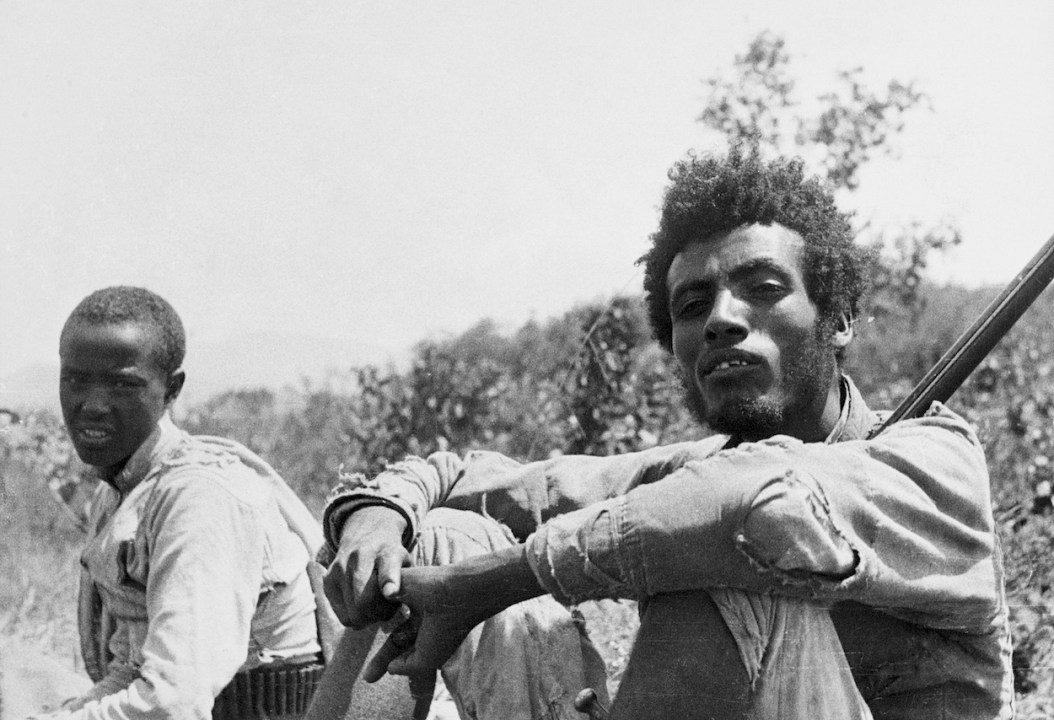
This is quite easily disproved. Ethiopia was never colonised and nor were many slaves taken from there by Europeans – although there was plenty of local slavery, as there was throughout Africa. If Europeans have stifled Africa’s development, Ethiopia ought to be a shining beacon of progress. Instead, it sits at 30 out of 53 when African countries are ranked by GDP per head. At the same time, former colonial countries outside Africa – most of all Singapore, now one of the richest countries in the world – have managed to achieve impressive rates of development since Europeans let go. If Africa remains relatively poor by current global standards (although fantastically rich by historic standards) it is for reasons other than colonialisation.
Yet somehow all this seems a bit beside the point. Such arguments are not going to hold much water with the politicised ICJ. African and Caribbean nations, advised in many cases by British lawyers, are learning how to use the international court and other bodies to their advantage. With Starmer in power and Lord Hermer as his legal sidekick, Britain has become a sitting duck for their outlandish claims. According to Patrick Robinson, a Jamaican who sits on the self-same ICJ, reckons that Britain owes £18.8 trillion in slavery reparations, kindly discounting on what he claims is the true, higher figure. Fine, to whom do we write the cheque? That is six times the size of the UK economy, by the way.
I am not a legal expert, but I am sure it is not common practice in our own courts for judges publicly to announce what they believe the outcome of a trial should be before it is even held. Robinson’s intervention just about sums up the ICJ: it less a real court than an activist organisation. Unfortunately, however, we have a prime minister is drunk on the concept of international law and will find it difficult to do as he should do and defund it by cutting our UN contributions accordingly.
Once Starmer has broken Britain’s public finances even more by coughing up for slavery reparations, that won’t be the end of it. It’ll be climate reparations next.






Comments