
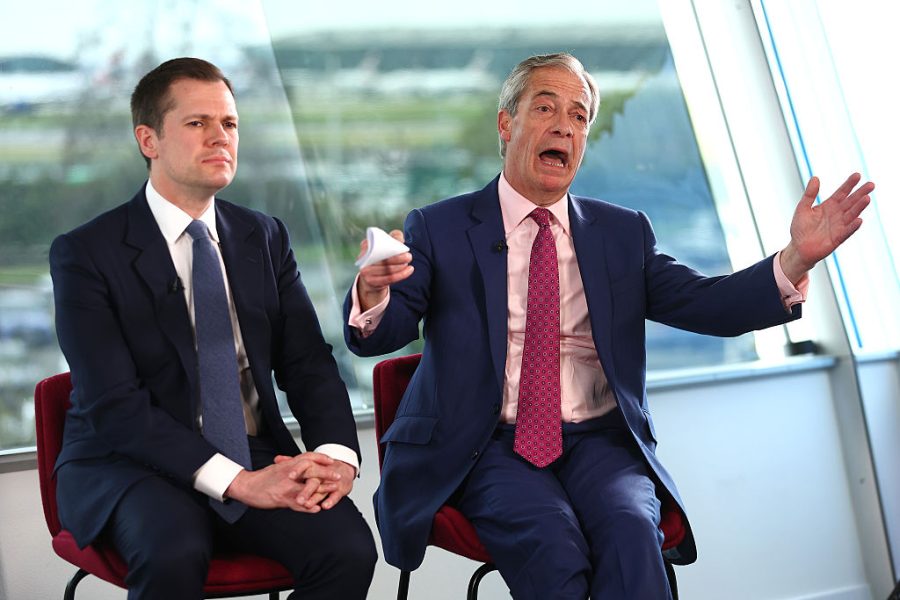
Reform UK has just made what could turn out to be an enormous error. Its Treasury spokesman, Robert Jenrick, has committed the party to retaining the ‘triple lock’ on pensions, whereby the state pension rises each year by either inflation, average earnings or 2.5 per cent, whichever is greater. This follows a period in which Nigel Farage had suggested that the policy was ‘up for discussion’.
It is easy to see the attraction of committing yourself to the triple lock. A recent poll by Lord Ashcroft suggested that six in 10 voters support the policy. What’s more, pensioners tend to be enthusiastic voters. The trouble is that whatever support that the triple lock has now, it is going to look like a very different story when, as is increasingly likely, Britain finds itself in the midst of a serious sovereign debt crisis, possibly on the scale of that which afflicted Greece in 2010. Then, the conversation about public spending is going to have to change dramatically – and Reform UK now looks as if it will be on the wrong side of it.
The triple lock is simply unaffordable
The triple lock is simply unaffordable. It is exerting a ratchet effect on the single largest part of the welfare budget. Between 2011/12 and 2023/24, the state pension rose by inflation on six occasions (once based on RPI and subsequently based on CPI), by 2.5 per cent on four occasions and by average earnings on three. By 2023/24, the state pension was already 10.9 per cent higher than it would have been had it risen with CPI and 10.6 per cent higher than it would have been had it risen with average earnings. The result is that the triple lock is adding around £15 billion a year to public expenditure over and above the level it would be had it never existed and pensions had gone up with either CPI or average earnings instead.
But that, of course, is just the beginning. The longer the triple lock remains in place, the greater the compounded effect on public spending. Given that the state pension can currently rise by more than, but never by less than, average earnings, we would eventually reach a situation in which state pensioners were earning more than the average worker. Young voters would have even more reason to believe that the dice are loaded against them.
The government this year looks like it could end up with a deficit of greater than £150 billion. To pay the interest on accumulated public debt is costing in excess of £100 billion a year – more than we spend on education or defence. Moreover, the cost of servicing government debt is rising inexorably in reaction to the Iran war and the continuing poor management of UK public finances.
No one knows quite how much longer it will take before global bond investors have finally had enough and start dumping UK public debt in droves, but we may not be very far away at all. The Greek crisis began seemingly innocently with a small downgrade in government debt by the ratings agencies. Within months, as yields rose sharply, that debt had become an impossible burden. It took seven years and multiple cuts to pensions and public sector pay before order was restored. The government lost nearly all control: it was the country’s creditors, including the European Central Bank and the IMF, which called the tune.
If that is the future Britain is heading for, the political rewards will fall to whichever party is best prepared for it, which loudly preached public spending constraint in the months and years leading up to the crisis. Until this week, it looked possible that it could be Reform UK. That looks a lot less likely now.





Comments