There is no member of the Trump administration with greater clarity of thought than Energy Secretary Chris Wright. While opponents rage at Trump’s climate policy, Wright gave a speech to the International Energy Agency this week in which he explained the rationale behind America’s sharp deviation from Europe.
In the minds of many people, the world is in the midst of a vast, unstoppable green energy revolution. The age of fossil fuels is over, they assert, leaving behind vast subterranean vats of “stranded assets.”
In its place, the world is adopting wind and solar power at breakneck speed. They cite huge investments by China, whose own ventures into renewable energy dwarf those by Europe. Vast deserts in Inner Mongolia and green hillsides throughout the country have disappeared beneath solar panels. Xi Jinping is clear in his ambition to achieve carbon neutrality by 2060. For most countries, that makes about as much sense economically as it does ecologically. But for China, it’s about technological domination.
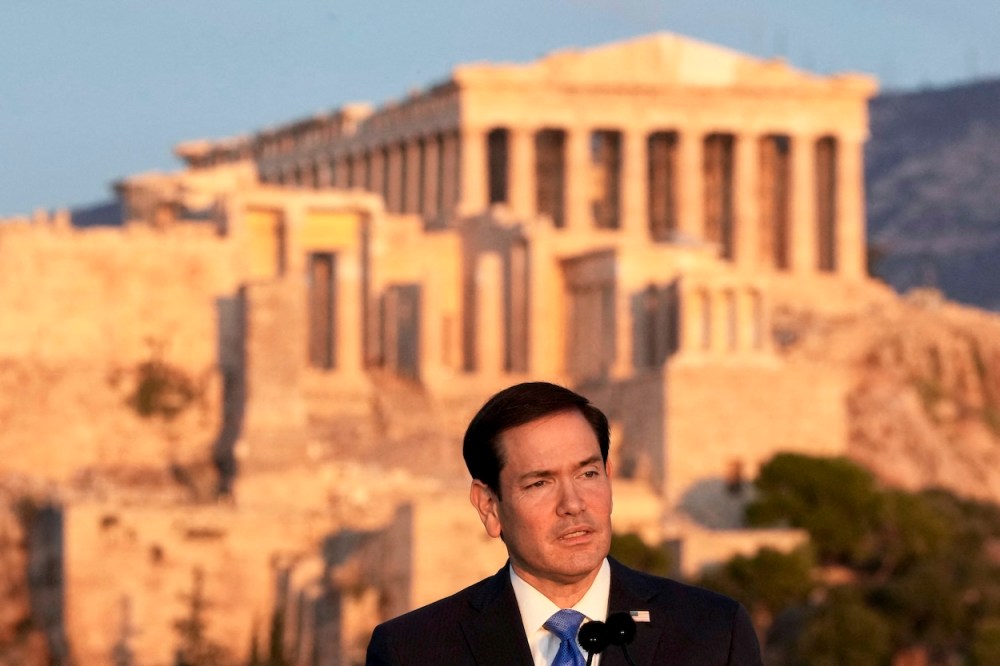
By contrast, Trump has withdrawn from the “endangerment finding” made by the Environmental Protection Agency under Barack Obama in 2009. This provided the legal basis for government policy to reduce carbon emissions. Trump’s America, by this reckoning, is backward and reckless, trying Canute-like to turn back the tide. There is no denying the scale of global investment in green energy. Wright totals it at $10 trillion in recent years.
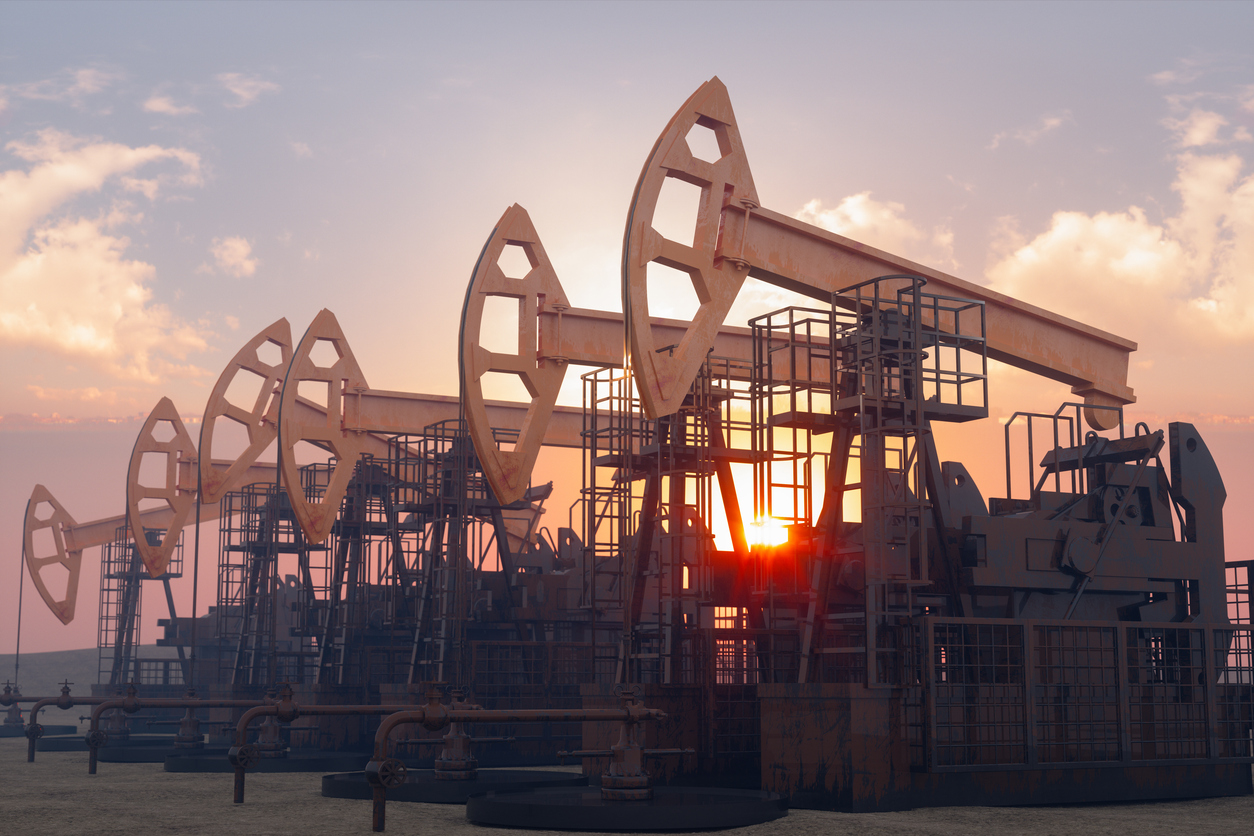
Yet one simple statistic refutes the idea that the world is barreling toward a glorious future in which fossil fuels will be left in the ground. When the IEA was founded during the 1973 energy crisis, fossil fuels met 83 percent of global primary energy demand. In 2025, they still accounted for exactly the same proportion. As for renewables, they make up 2.6 percent. That $10 trillion of investment, in other words, has merely tickled at the edges. The world is still deriving more of its energy from burning wood – 6 percent – than from wind and solar.
Many people overestimate the march of renewables because they make the mistake of equating energy with electricity. Wind and solar now account for around a third of electricity generation in some countries. Britain’s offshore wind turbines offering a notable example. Yet only around a sixth of energy is consumed in the form of electricity. Most of the rest is obtained directly by burning oil, gas, coal, or wood. As for China, for all its investment in renewables, it continues to generate 60 percent of its electricity from coal. Beijing is still investing heavily in that, too. It is a country hungry for energy wherever it comes from.
If there is a green energy revolution going on, the world is only in the very early stages of it. Yet Europe is behaving as if it is virtually complete. The continent has voluntarily abandoned many of its own fossil fuel reserves. Green energy is only making up a small proportion of the lost potential. Far more of the slack is being taken up by imports of fossil fuels. It is deeply ironic that the governments most vociferous in their condemnation of US energy policy are those most dependent on American supplies of oil and liquefied natural gas.
Europe’s self-denial over its own energy resources has played brilliantly into the hands of the Trump administration. One reason Europe has found it so hard to respond to the President’s tariff wars is that it cannot afford to stop importing US gas and oil. Europe could impose all the tariffs it likes on US imports, but it would have a deeply painful effect on European consumers and industries, who are already paying through the nose for their energy. While European governments continue to insist that renewables are cheap, this somewhat flies in the face of real-world evidence.
As Wright noted in a speech in Paris on Tuesday, 15 years ago Europeans were not paying dramatically more for their energy than Americans. Yet the more they tilt toward green energy, the more they pay. As any country that has tried to run a significant part of its electricity from wind and solar has found the hard way, you cannot just look at the marginal cost of generating electricity from intermittent renewables. You have to add the considerable system costs required to store energy or back up wind and solar plants.
Trump foresaw early the opportunities created by European energy policy
As a result of high energy prices, Europe is losing its heavy industries and subjecting its citizens to a needlessly high cost of living. Germany, until recently a global industrial powerhouse, is starting to lose even its iconic car industry. Europe is in danger of losing out, too, on new industries. Artificial intelligence promises to transform many professions, boosting productivity and making the world richer. But it has also proved far more energy-hungry than anyone imagined.
That favors the US, or at least those states that share the same commitment to cheap energy as the White House. The big exception is California, home of the tech industry. But when it comes to energy policy, California looks more like a satellite of Europe thanks to the policies of Democratic Governor Gavin Newsom. It is little wonder that some tech companies are relocating to Texas now that California’s grid has become prone to blackouts.
According to Wright, Trump foresaw early the opportunities created by European energy policy. The President, he says, was not content with achieving national energy self-sufficiency, which had been the policy of administrations before him. He wanted energy abundance, seizing the chance to become Europe’s main supplier of fossil fuels – resources it would otherwise have to source from troubled parts of the world.
If Europe were truly in the grip of a renewables revolution, this would be a failing policy: the continent would not need American fossil fuels, and the wells would be left idle. Trump and Wright, however, are banking on Europe being dependent on fossil fuels for a very long time to come. It is hard to see that they are going to be wrong.




Comments